Artwork
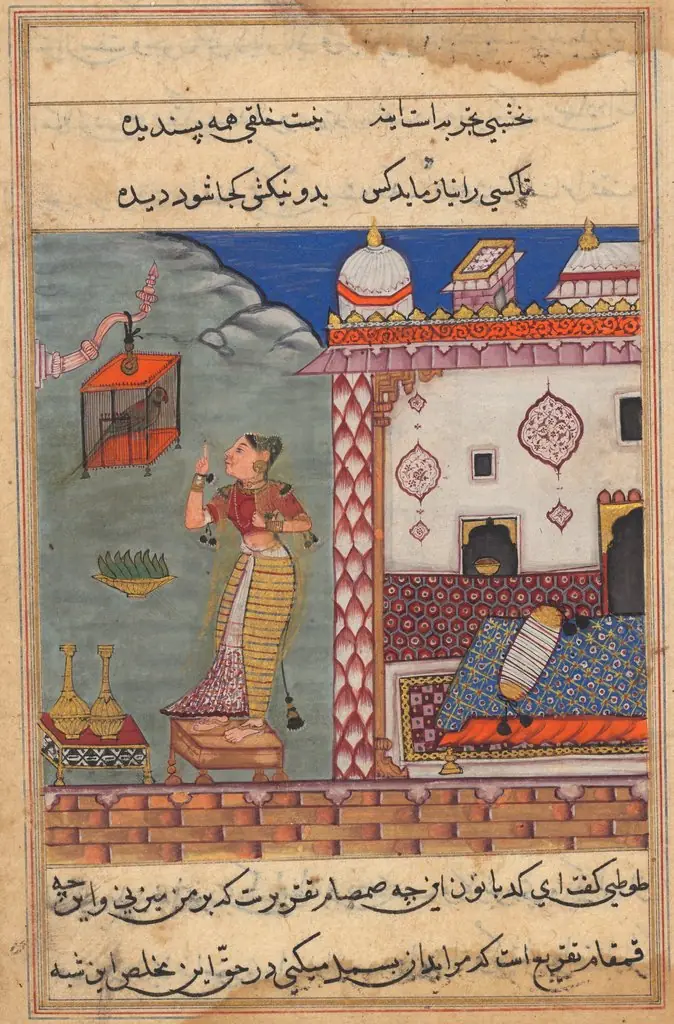
The parrot addresses Khujasta at the beginning of the forty-third night, from a Tuti-nama (Tales of a Parrot)
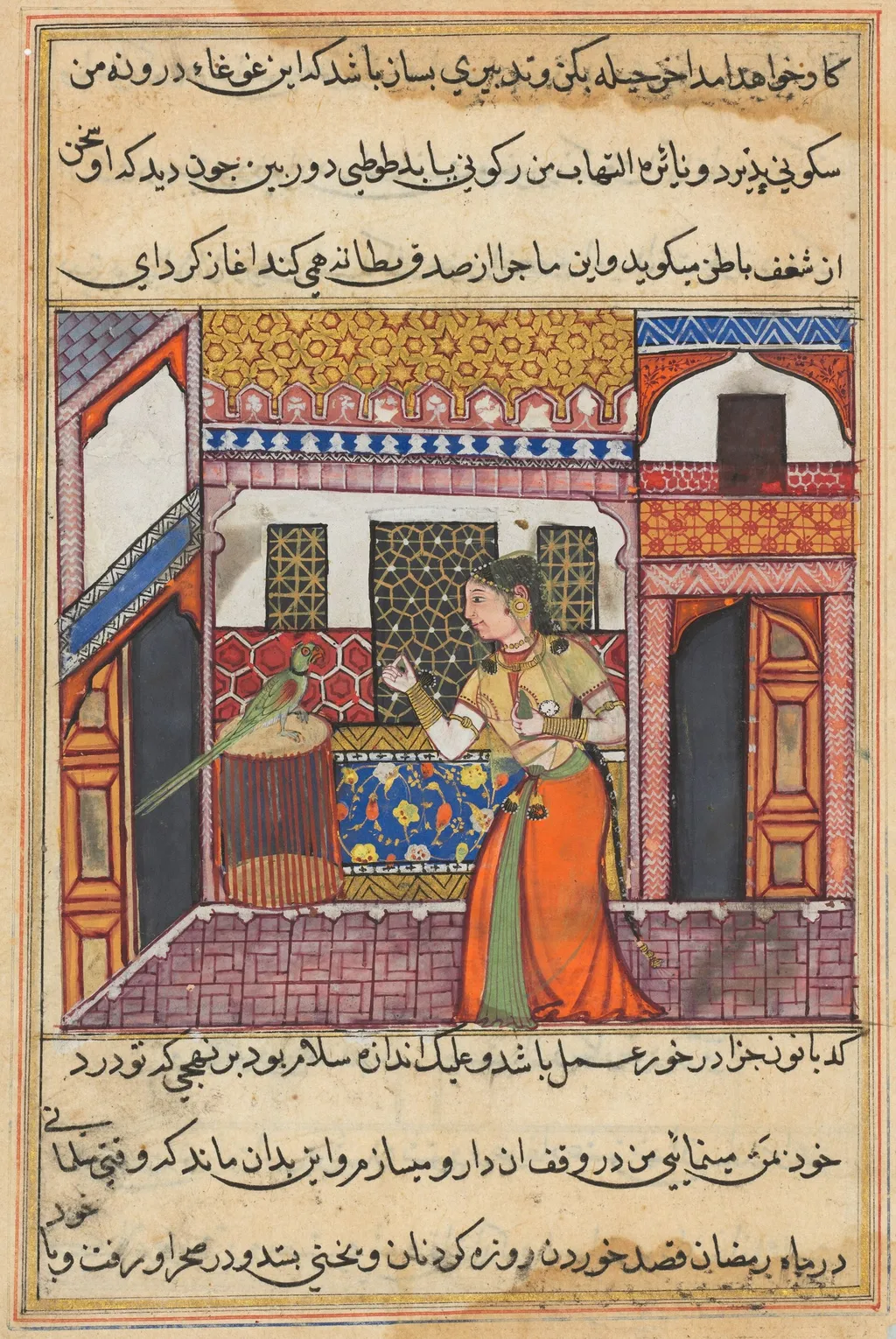
The parrot addresses Khujasta at the beginning of the forty-third night, from a Tuti-nama (Tales of a Parrot) is an unspecified painting. It dates from 1560 and is held in the collection of the Cleveland Museum of Art. The work portrays a woman dressed in vivid orange and green standing within an elaborately tiled interior.
About this work
Overview
She cradles a small bird in one hand while gesturing with the other, and a green parrot perched in a cage rests on a nearby table.
The work portrays a woman dressed in vivid orange and green standing within an elaborately tiled interior. She cradles a small bird in one hand while gesturing with the other, and a green parrot perched in a cage rests on a nearby table. The composition is framed by Arabic calligraphy, and the surrounding architecture features arched doorways and patterned tiles rendered in saturated reds, blues, and golds.
Subject & Meaning
The scene illustrates a moment from the *Tuti‑nama* (Tales of a Parrot), a literary collection in which a talking bird conveys messages to a character named Khujasta. The woman's interaction with the bird suggests a narrative exchange, emphasizing themes of communication and the magical realism characteristic of the tales.
Technique & Style
Executed in a decorative painting style, the piece employs bold, flat areas of color and intricate ornamental motifs typical of Persian miniature traditions. The use of vivid pigments and stylized architectural elements creates a rhythmic visual pattern, while the Arabic script functions both as textual framing and decorative border.
History & Provenance
The painting originates from a manuscript illustration of the *Tuti‑nama*, a genre of Persian storytelling that flourished in the early modern period. Though the precise date and patron remain undocumented, the work reflects the cross‑cultural artistic exchanges between Persian literary culture and the visual arts of the region.
Artist & collection

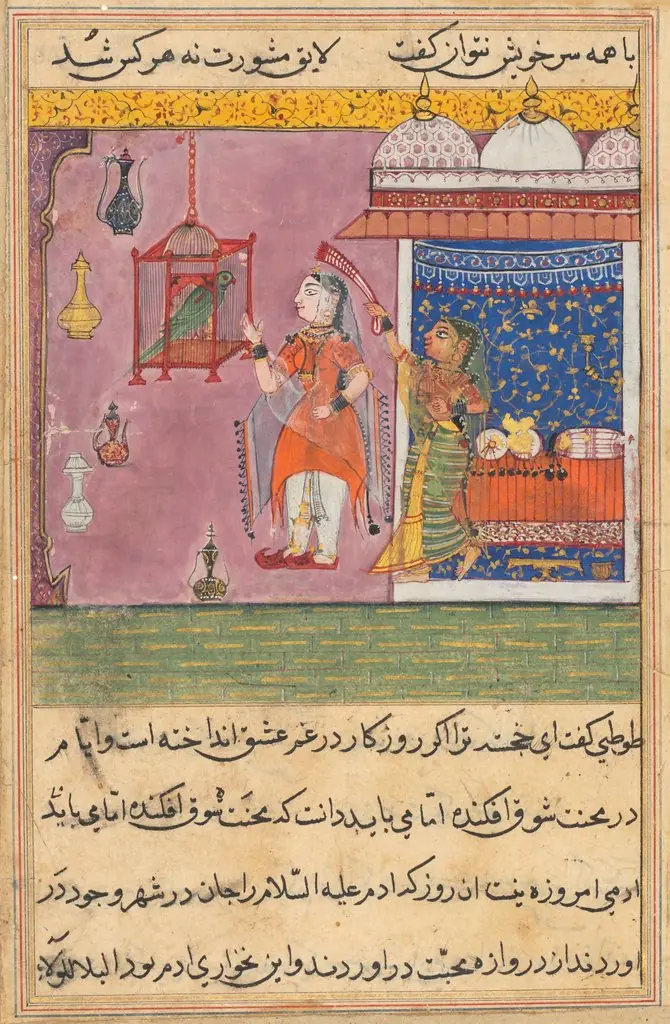 The Parrot Addresses Khujasta at the Beginning of the Nineteenth Night, from a Tuti-nama (Tales of a Parrot)
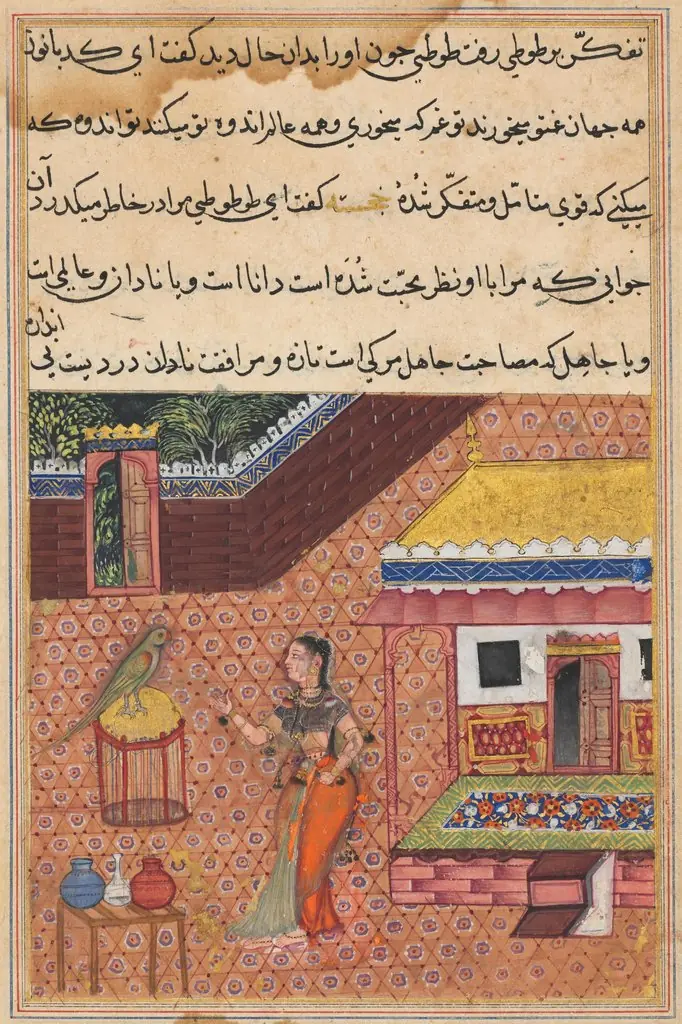 The parrot addresses Khujasta at the beginning of the thirty-fourth night, from a Tuti-nama (Tales of a Parrot)
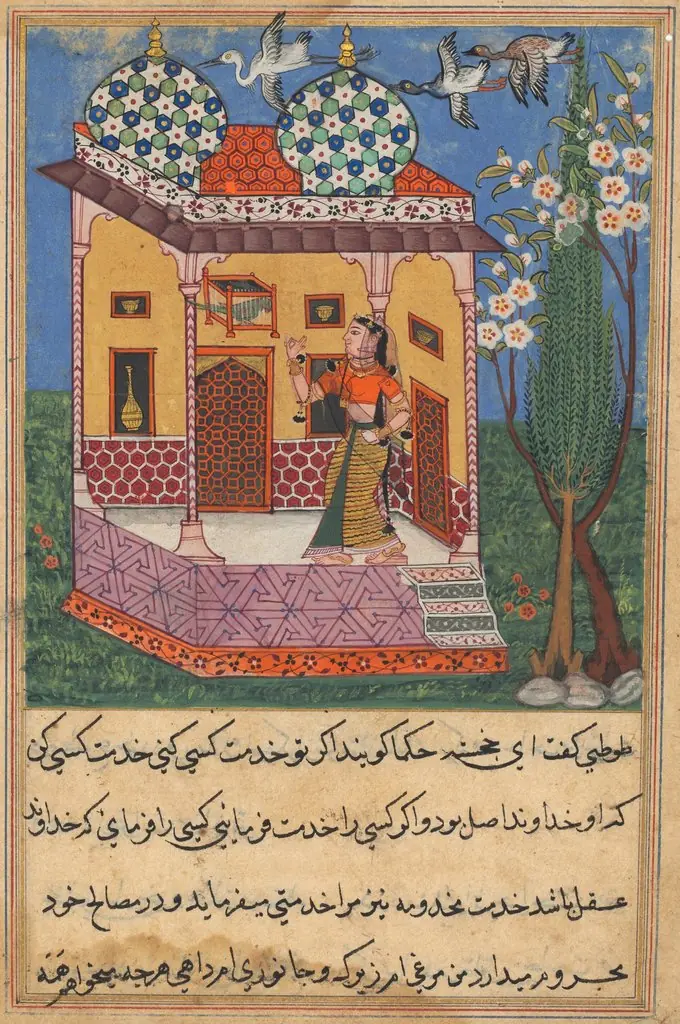 The Parrot Addresses Khujasta at the Beginning of the Twenty-sixth Night, from a Tuti-nama (Tales of a Parrot)
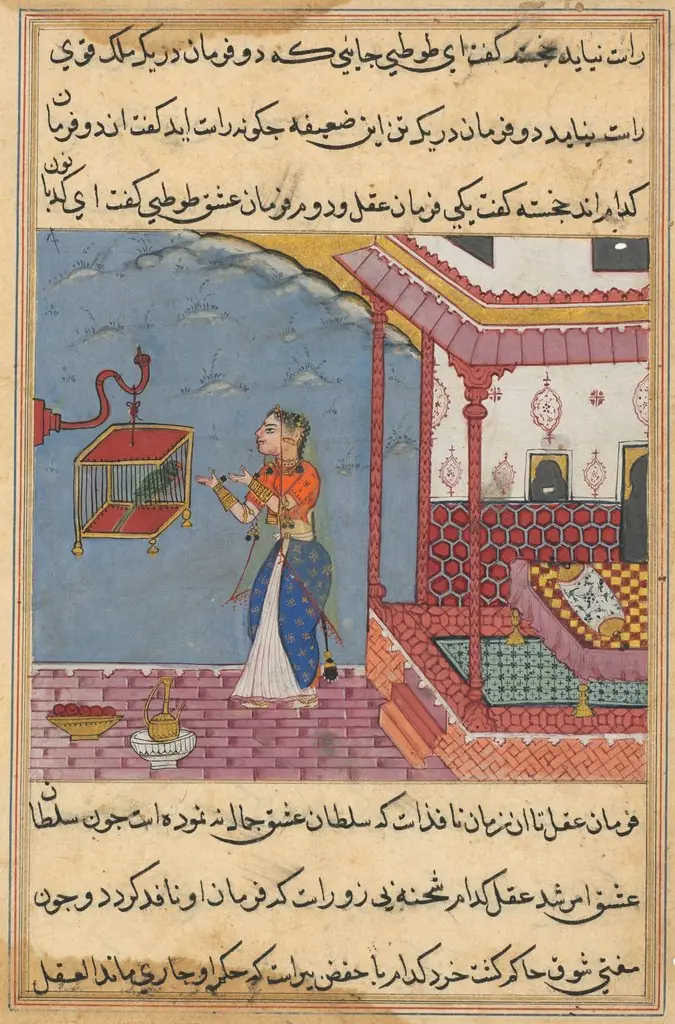 The Parrot Addresses Khujasta at the Beginning of the Twenty-Fourth Night, from a Tuti-nama (Tales of a Parrot)
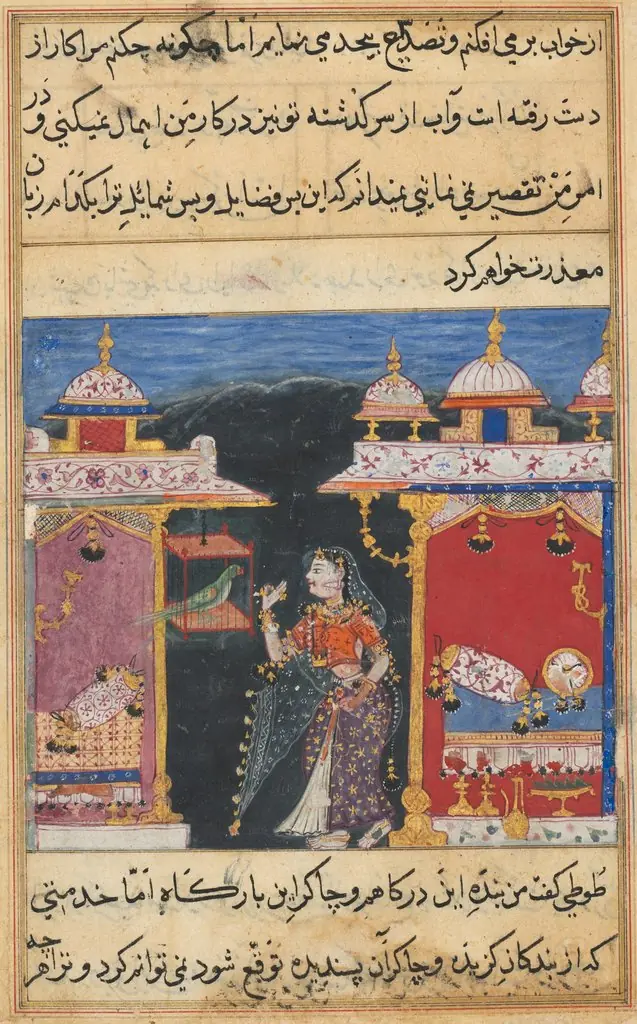 The Parrot Addresses Khujasta at the Beginning of the Seventh Night, from a Tuti-nama (Tales of a Parrot)
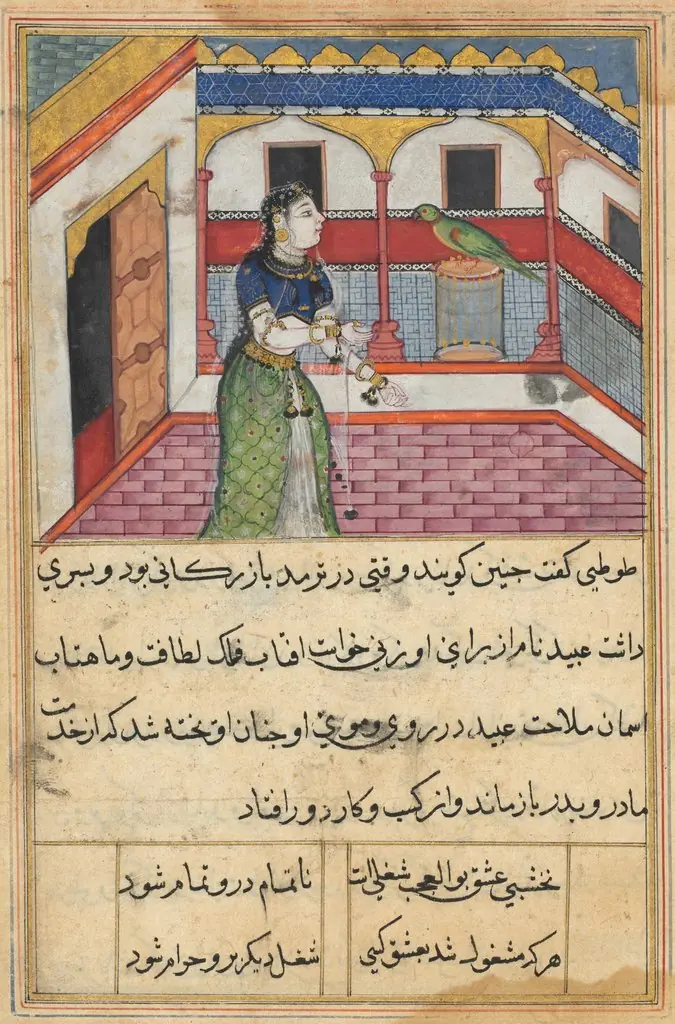 The parrot addresses Khujasta at the beginning of the forty-second night, from a Tuti-nama (Tales of a Parrot)
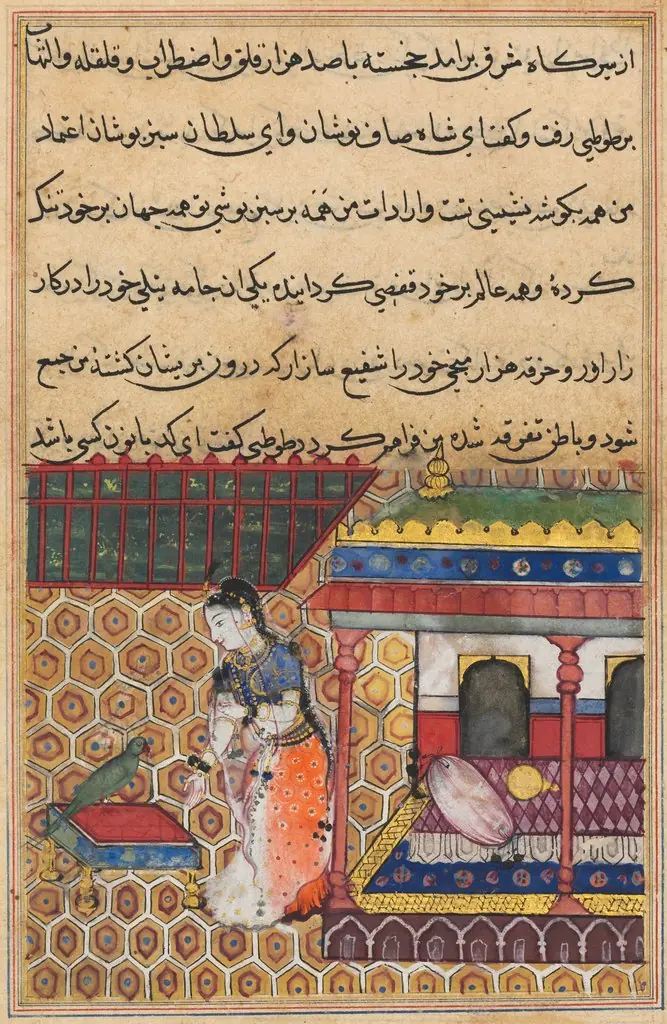 The parrot addresses Khujasta at the beginning of the thirty-eighth night, from a Tuti-nama (Tales of a Parrot)
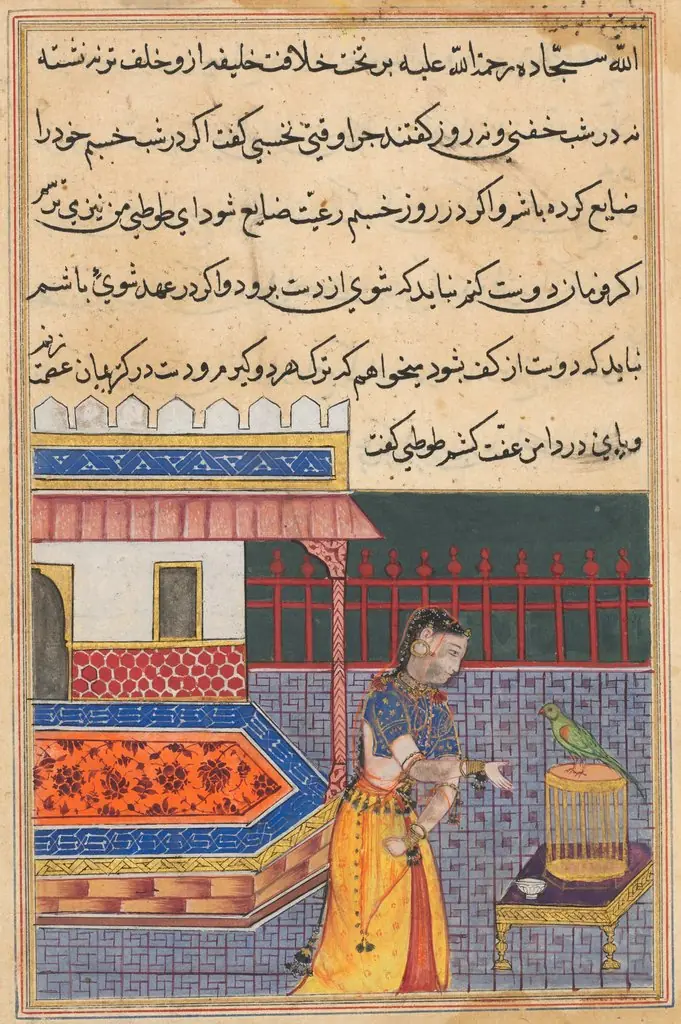 The parrot addresses Khujasta at the beginning of the forty-first night, from a Tuti-nama (Tales of a Parrot): Forty-first Night
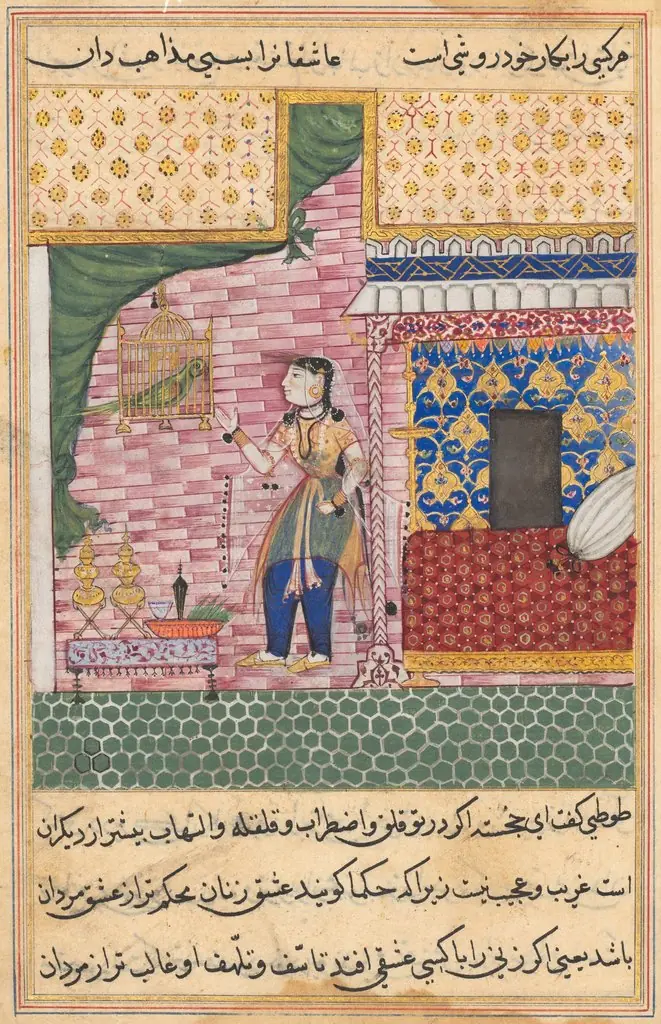 The Parrot Addresses Khujasta at the Beginning of the Seventeenth Night, from a Tuti-nama (Tales of a Parrot)
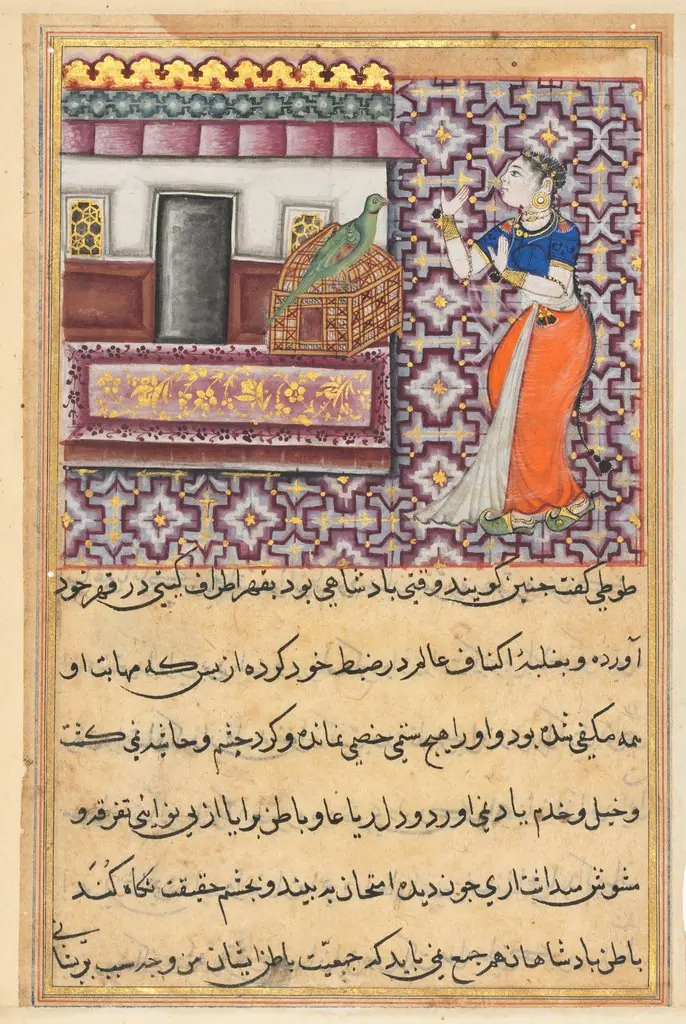 The parrot addresses Khujasta at the beginning of the fiftieth night, from a Tuti-nama (Tales of a Parrot): Fiftieth Night
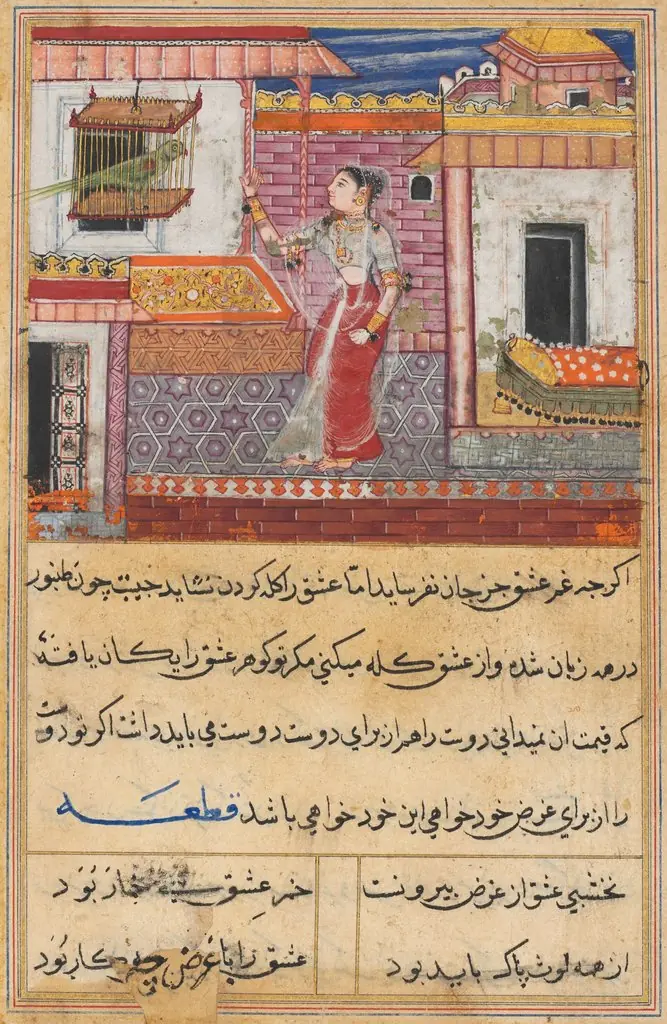 The Parrot Addresses Khujasta at the Beginning of the Thirteenth Night, from a Tuti-nama (Tales of a Parrot)
 The Parrot Addresses Khujasta at the Beginning of the Twenty-seventh Night, form a Tuti-nama (Tales of a Parrot)