Artwork
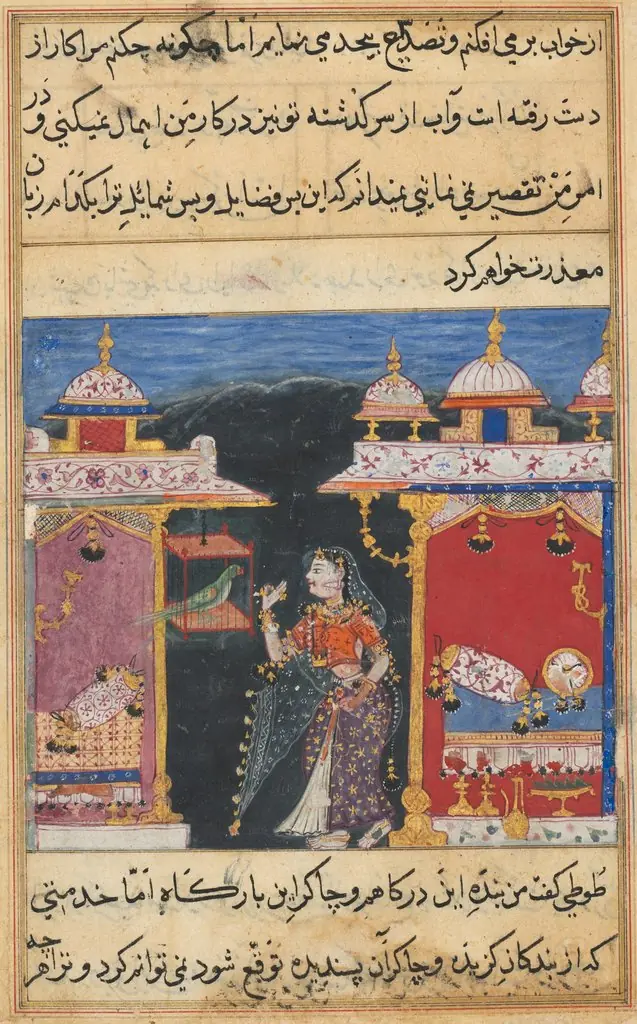
The parrot addresses Khujasta at the beginning of the forty-second night, from a Tuti-nama (Tales of a Parrot)
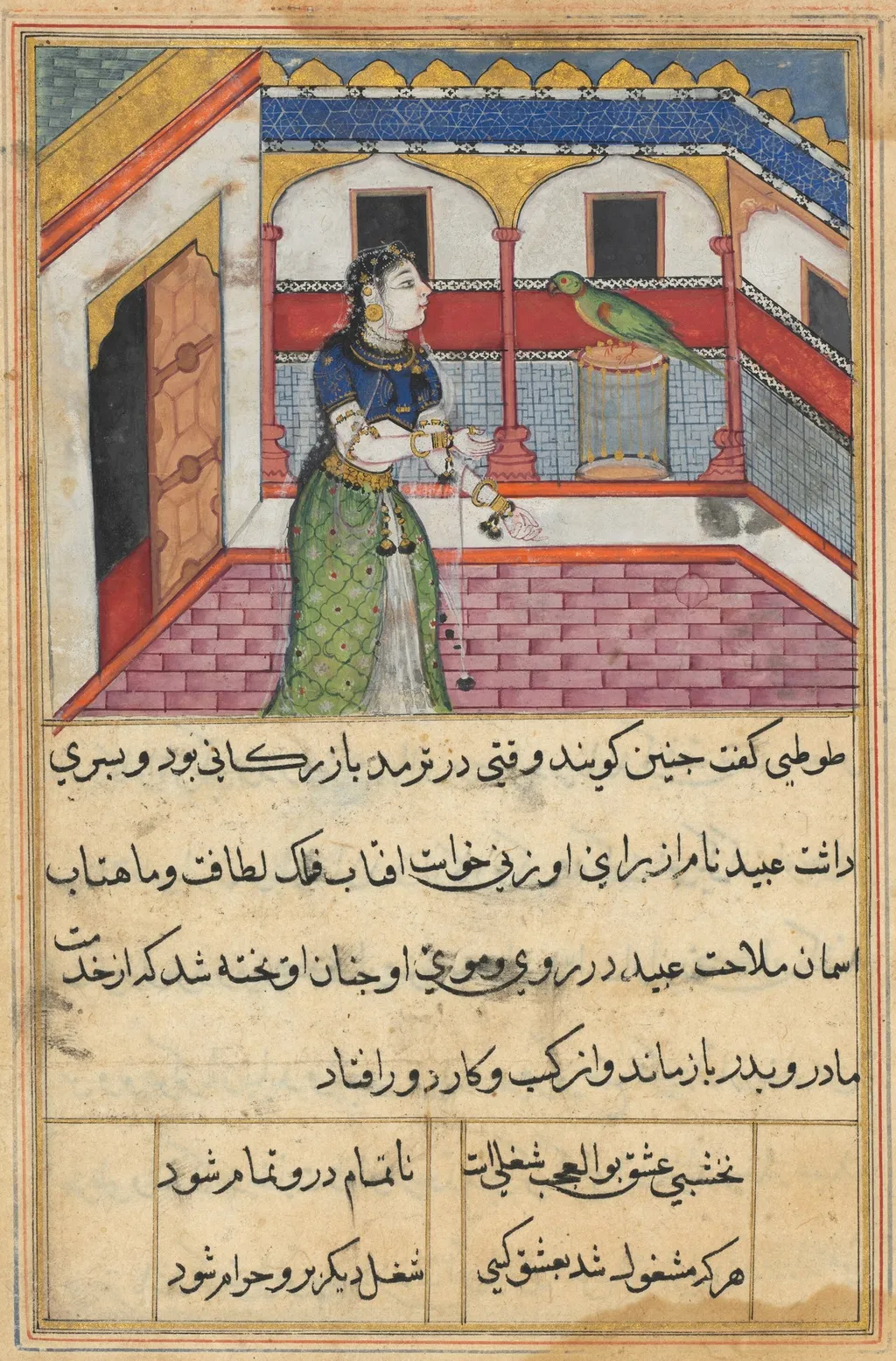
The parrot addresses Khujasta at the beginning of the forty-second night, from a Tuti-nama (Tales of a Parrot) is an unspecified painting. It dates from 1560 and is held in the collection of the Cleveland Museum of Art. The work portrays a seated woman within an elaborately tiled interior, her hands joined before her chest.
About this work
Overview
The work portrays a seated woman within an elaborately tiled interior, her hands joined before her chest. A parrot occupies a cage positioned at her feet, while the surrounding space is defined by a red‑and‑white floor, white walls trimmed in red and blue, and a decorative blue‑and‑gold frieze along the upper edge. The composition is rendered in vivid hues that emphasize the domestic setting.
Subject & Meaning
The central figure, attired in a blue blouse and green skirt and adorned with gold ornaments, appears to be addressing the bird, echoing a narrative moment from the Persian literary collection known as the Tuti‑nama, or "Tales of a Parrot." The interaction suggests a dialogue between human and animal, a motif often employed to explore themes of communication, moral instruction, and the interplay of worldly and spiritual concerns.
Technique & Style
The artist uses a bright palette—dominant blues, greens, reds, and golds—to delineate clothing, furnishings, and architectural elements.
Executed in a detailed interior genre style, the painting employs precise linear perspective to convey depth within the room. The artist uses a bright palette—dominant blues, greens, reds, and golds—to delineate clothing, furnishings, and architectural elements. Fine brushwork renders the patterned tiles and ornamental border, while the parrot’s plumage is treated with delicate highlights that contrast with the matte surfaces of the walls and floor.
Context
The scene derives from the forty‑second night of the Tuti‑nama, a medieval collection of moral anecdotes featuring a talking parrot. Such literary sources were popular in Persianate courts, where they informed visual arts that combined storytelling with decorative interior scenes. The painting reflects this tradition, situating a literary episode within a domestic space that would have resonated with contemporary audiences familiar with the text.
Artist & collection

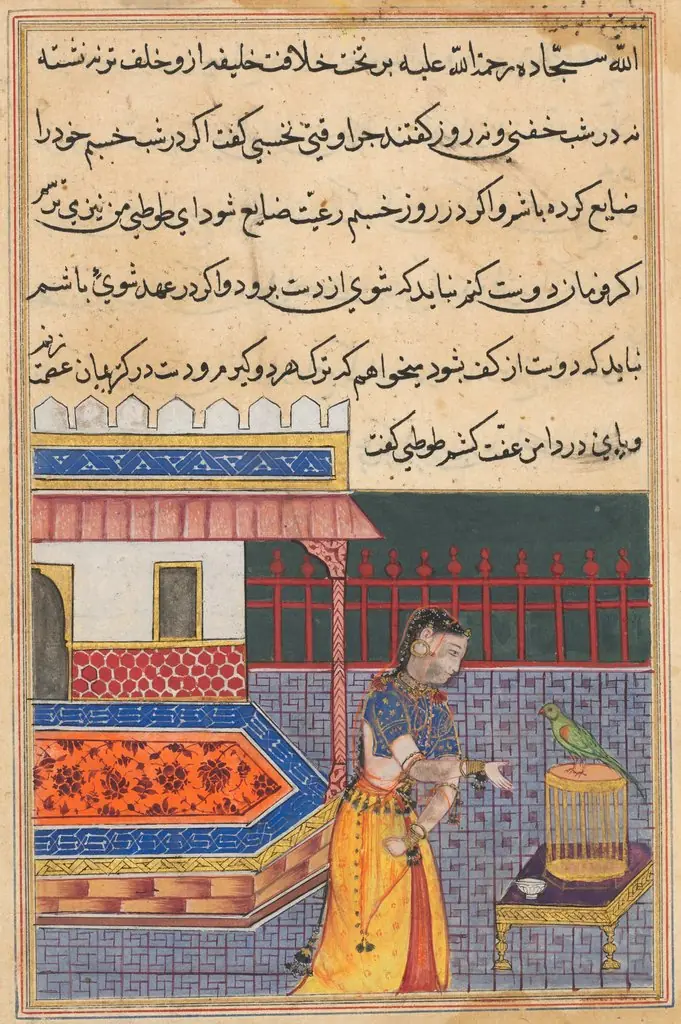 The parrot addresses Khujasta at the beginning of the forty-first night, from a Tuti-nama (Tales of a Parrot): Forty-first Night
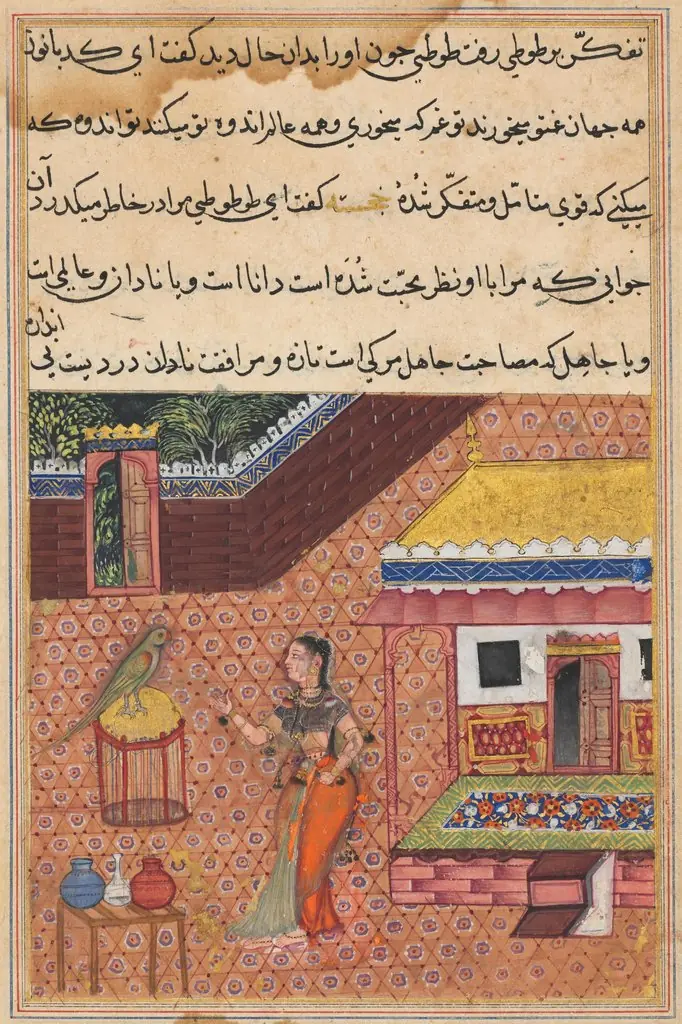 The parrot addresses Khujasta at the beginning of the thirty-fourth night, from a Tuti-nama (Tales of a Parrot)
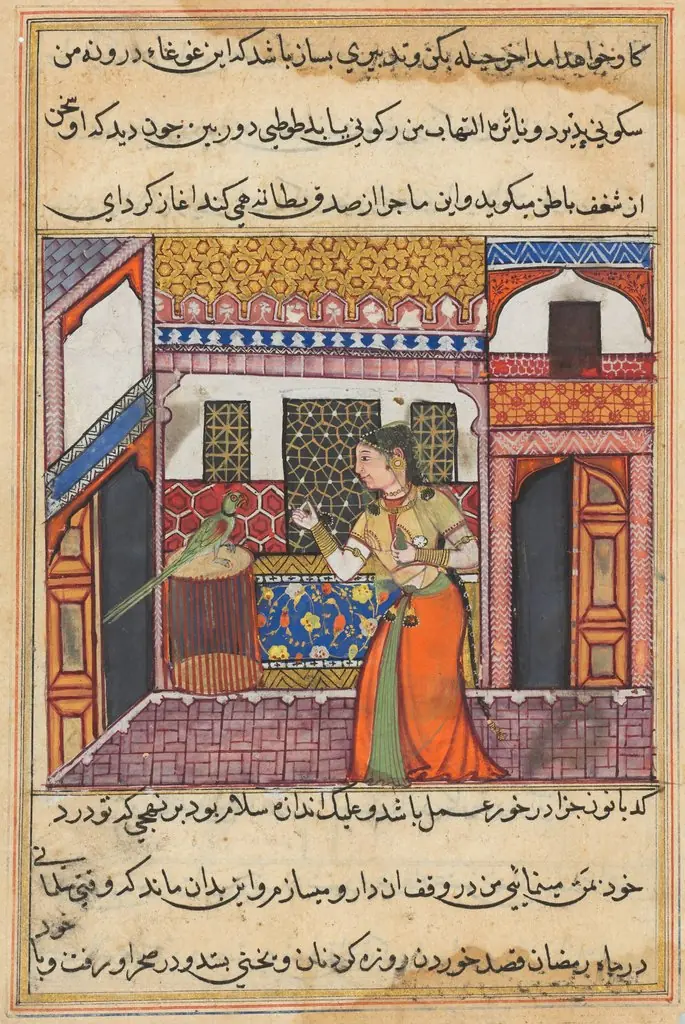 The parrot addresses Khujasta at the beginning of the forty-third night, from a Tuti-nama (Tales of a Parrot)
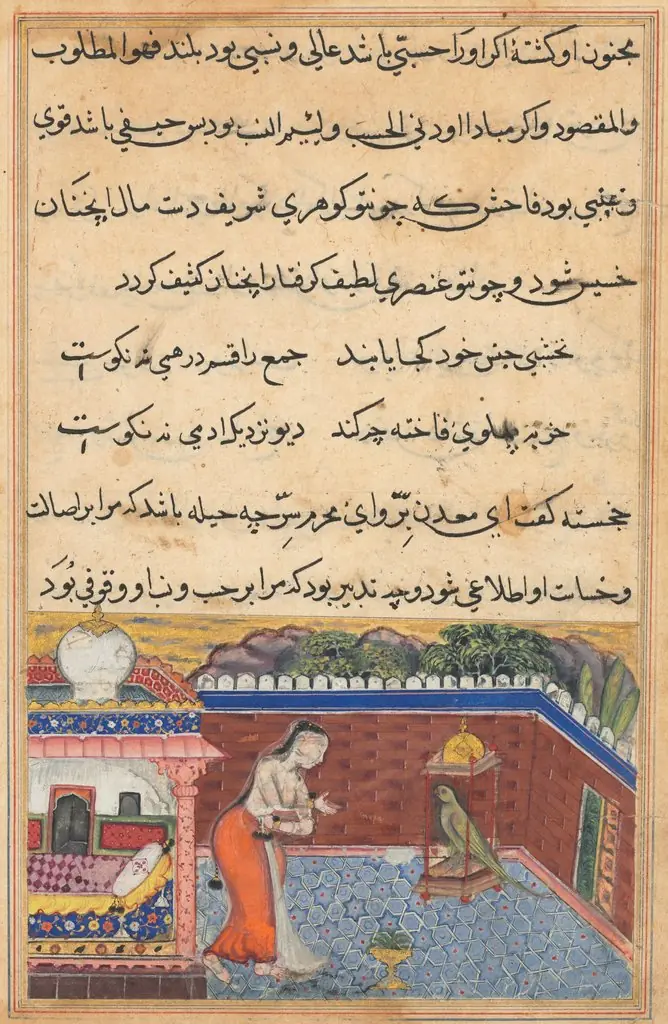 The parrot addresses Khujasta at the beginning of the thirty-first night, from a Tuti-nama (Tales of a Parrot)
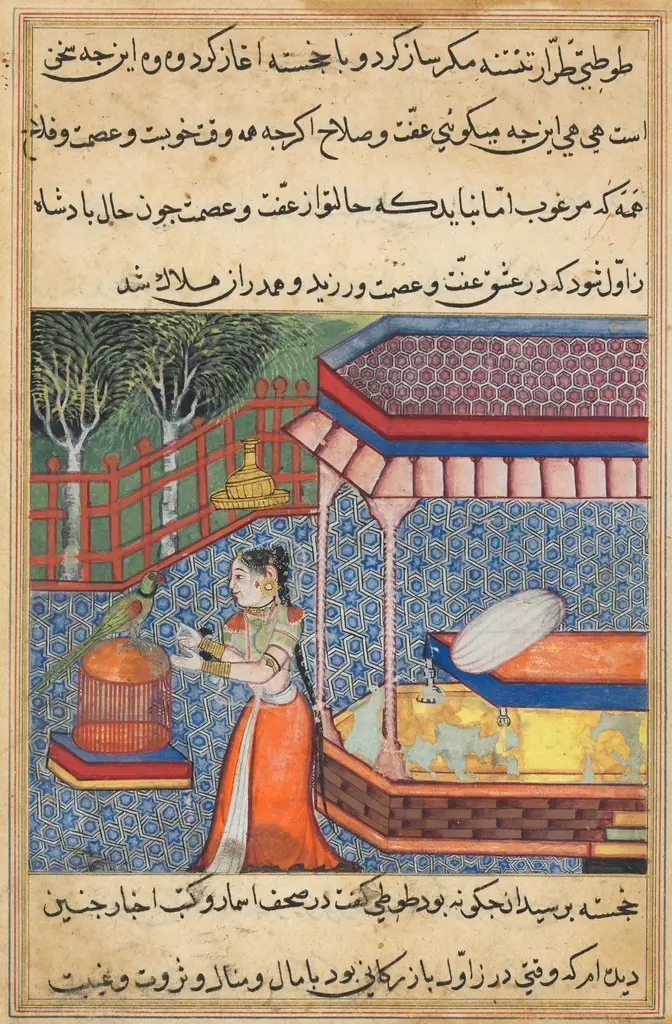 The parrot addresses Khujasta at the beginning of the thirty-sixth night, from a Tuti-nama (Tales of a Parrot)
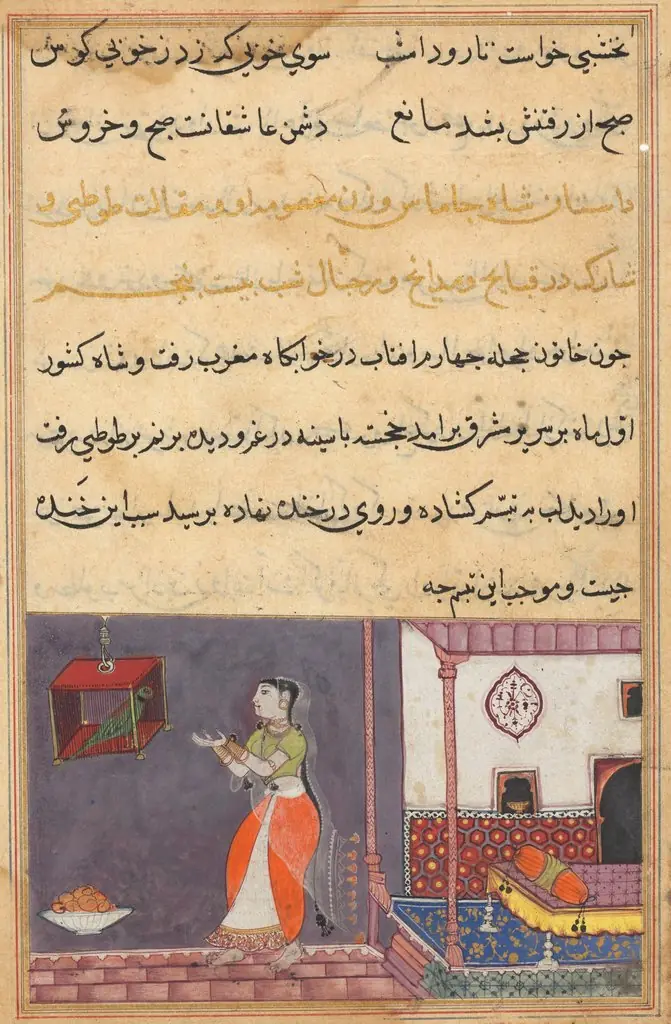 The Parrot Addresses Khujasta at the Beginning of the Twenty-fifth Night, from a Tuti-nama (Tales of a Parrot)
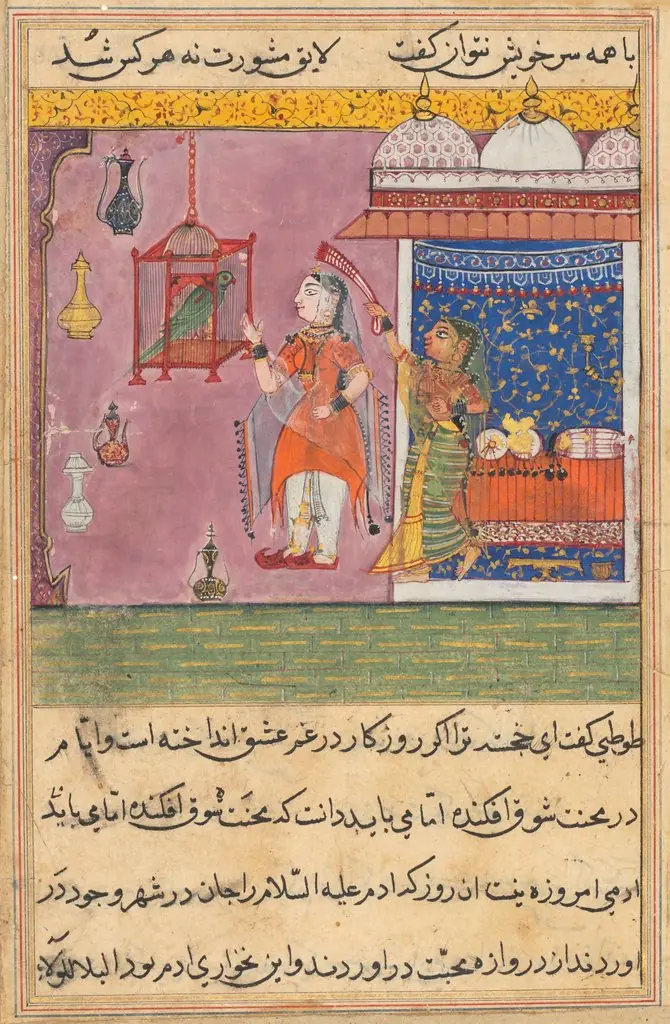 The Parrot Addresses Khujasta at the Beginning of the Nineteenth Night, from a Tuti-nama (Tales of a Parrot)
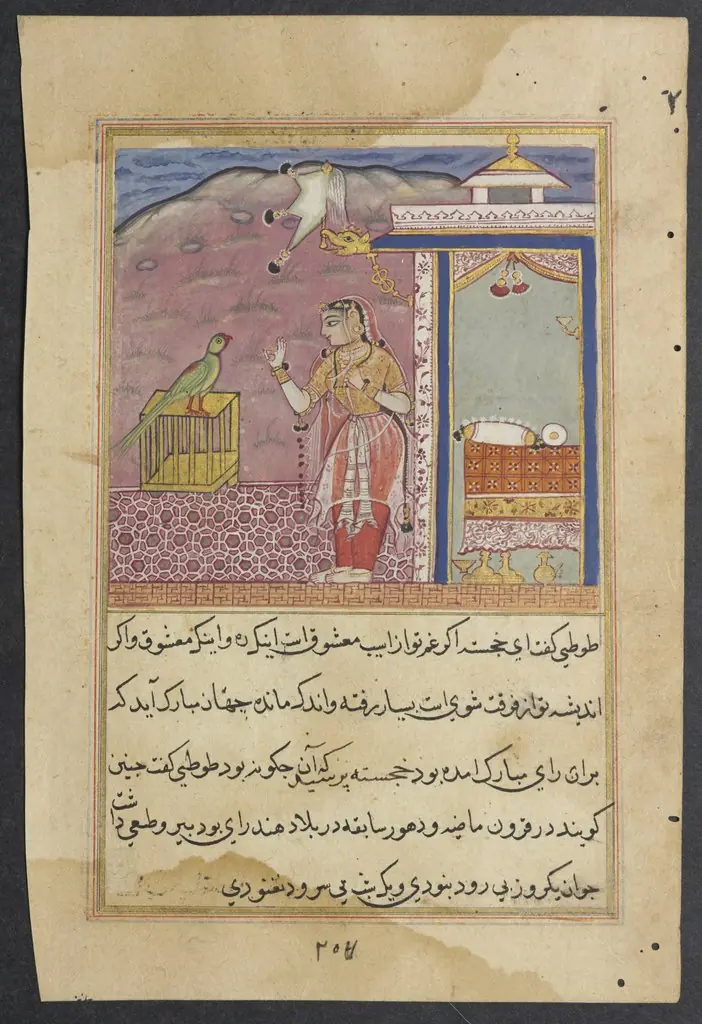 The parrot addresses Khujasta at the beginning of the forty-fourth night, from a Tuti-nama (Tales of a Parrot)
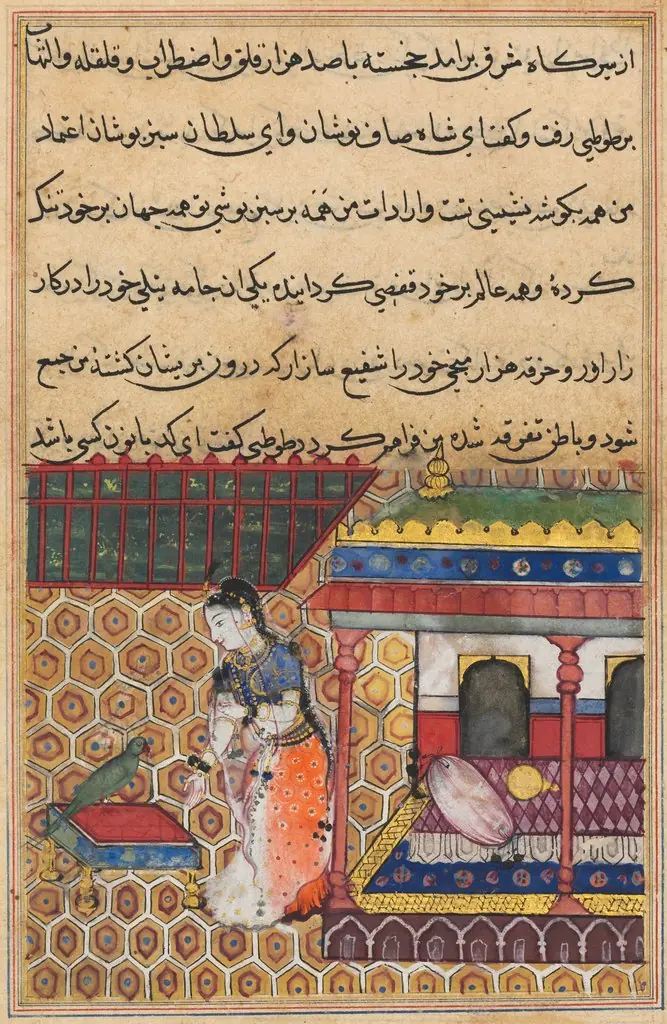 The parrot addresses Khujasta at the beginning of the thirty-eighth night, from a Tuti-nama (Tales of a Parrot)
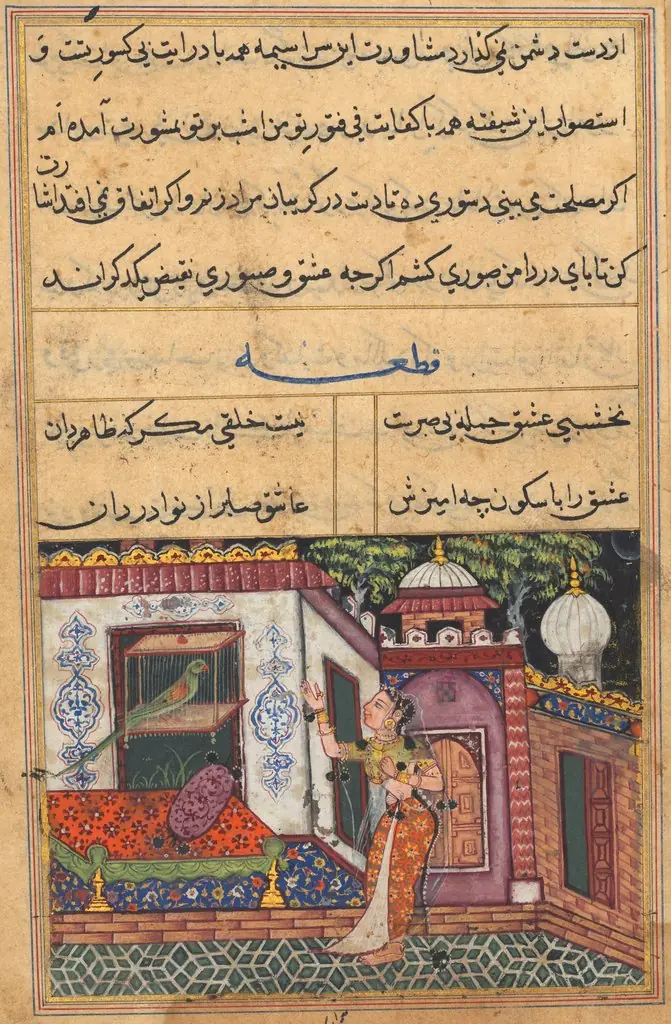 The Parrot Addresses Khujasta at the Beginning of the Eleventh Night, from a Tuti-nama (Tales of a Parrot)
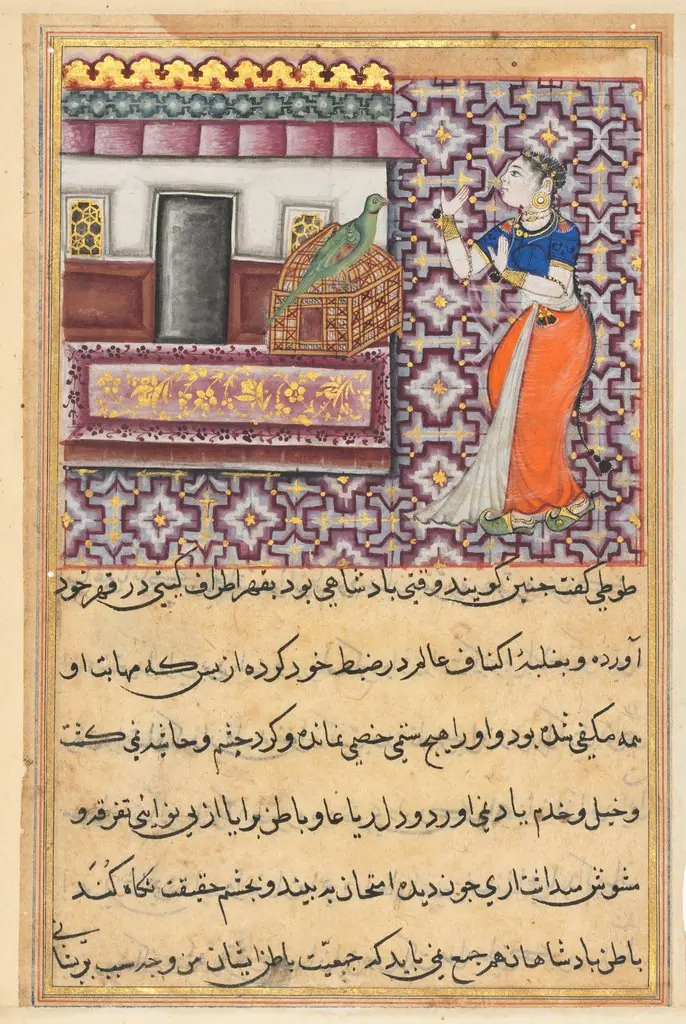 The parrot addresses Khujasta at the beginning of the fiftieth night, from a Tuti-nama (Tales of a Parrot): Fiftieth Night
 The Parrot Addresses Khujasta at the Beginning of the Seventh Night, from a Tuti-nama (Tales of a Parrot)