Artwork
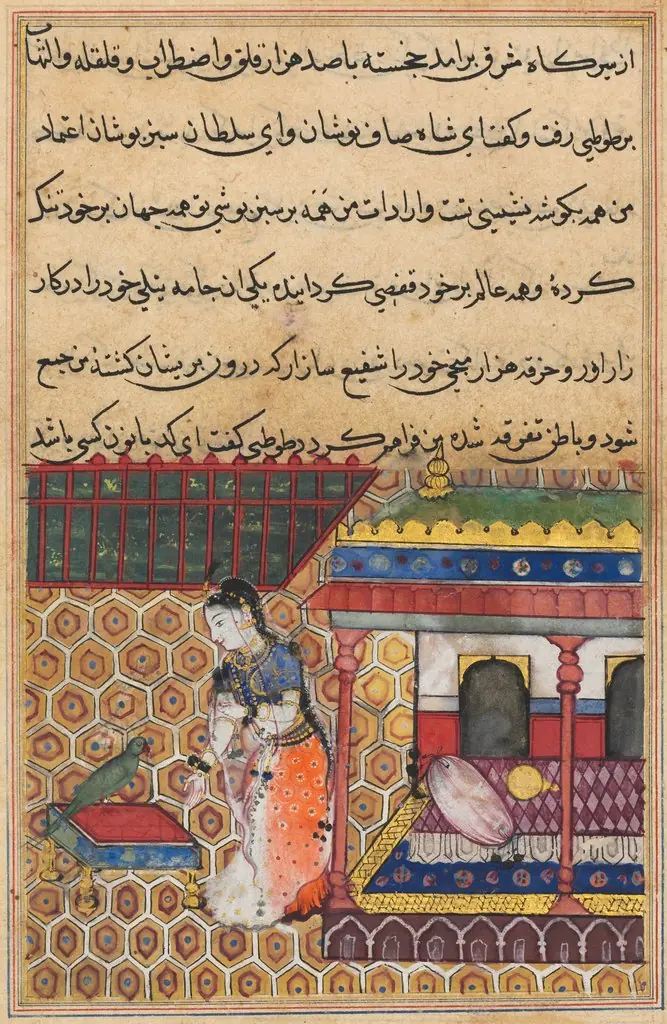
The Parrot Addresses Khujasta at the Beginning of the Seventh Night, from a Tuti-nama (Tales of a Parrot)
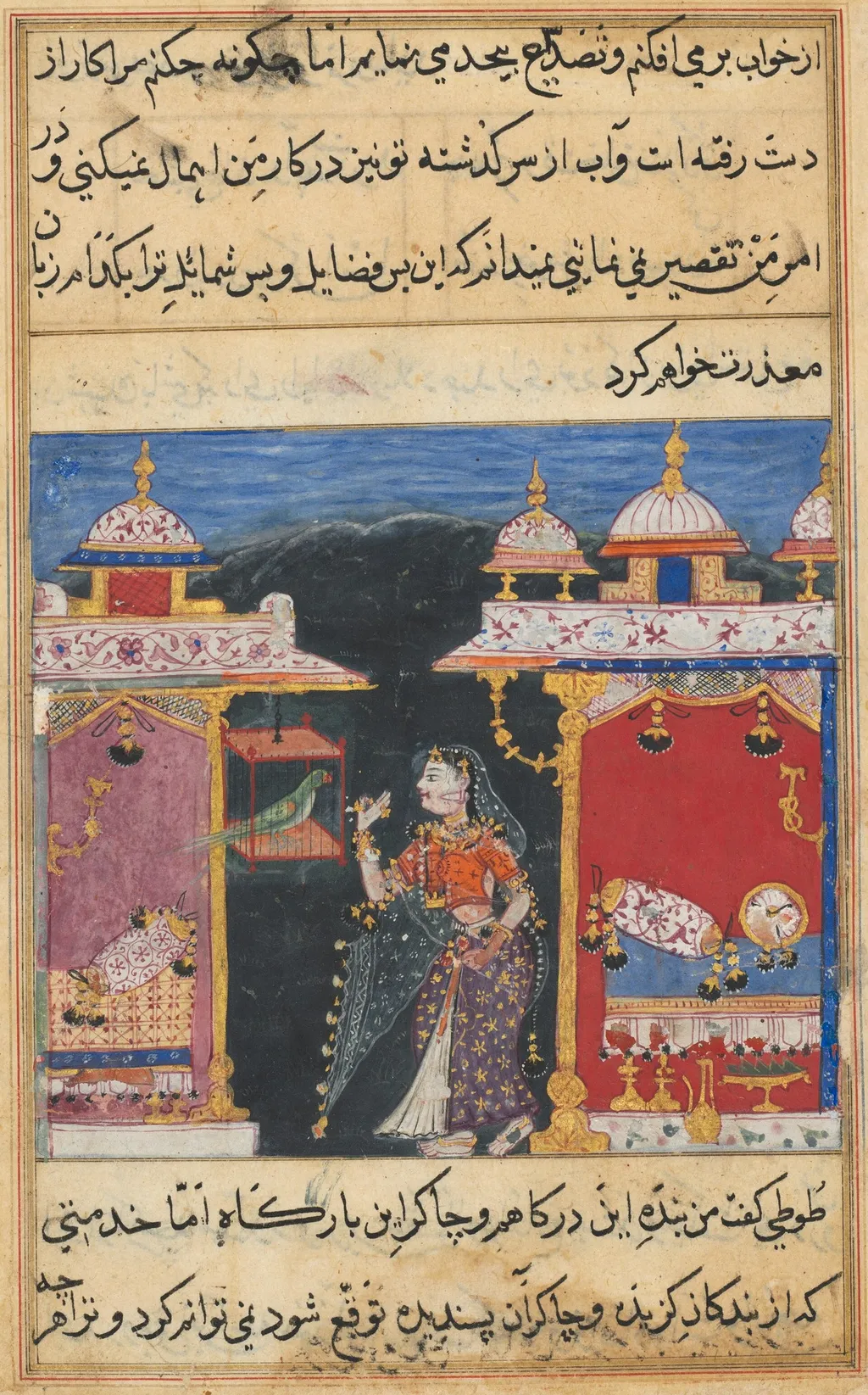
The Parrot Addresses Khujasta at the Beginning of the Seventh Night, from a Tuti-nama (Tales of a Parrot) is an unspecified painting. It dates from 1560 and is held in the collection of the Cleveland Museum of Art.
About this work
Overview
The work illustrates a scene from a Persian narrative collection known as a Tuti‑nama, depicting a moment when a parrot addresses a woman named Khujasta on the seventh night of the tale. The composition centers on a brightly dressed female figure within an opulently adorned interior, while a black parrot perched in a cage draws the viewer’s attention as the apparent speaker.
Subject & Meaning
The painting captures the dialogue between the parrot and Khujasta, a motif common in medieval Persian literature where talking birds convey moral or romantic messages. The woman's red and purple garments and the attentive bird suggest a moment of intimate communication, emphasizing the story’s themes of love, wit, and the supernatural.
Technique & Style
Rendered in vivid pigments, the artist employs flat areas of color and intricate gold patterning on the walls, characteristic of miniature painting traditions. Linear outlines define the figures and architectural elements, while the delicate brushwork on the parrot’s feathers and the fruit on the table adds texture within the stylized, decorative framework.
Context
Tuti‑nama manuscripts were popular in the Islamic world from the 15th to 18th centuries, combining prose, poetry, and illustration to entertain elite audiences. The depicted interior, with its domed rooftops and minarets visible through the window, reflects an idealized urban setting typical of such narrative scenes, merging domestic and architectural motifs.
Legacy
Illustrations like this one contributed to the visual vocabulary of Persian storytelling, influencing later manuscript production and informing modern understandings of courtly aesthetics. The work remains a valuable example of how narrative art conveyed literary content through richly detailed, symbolic imagery.
Artist & collection

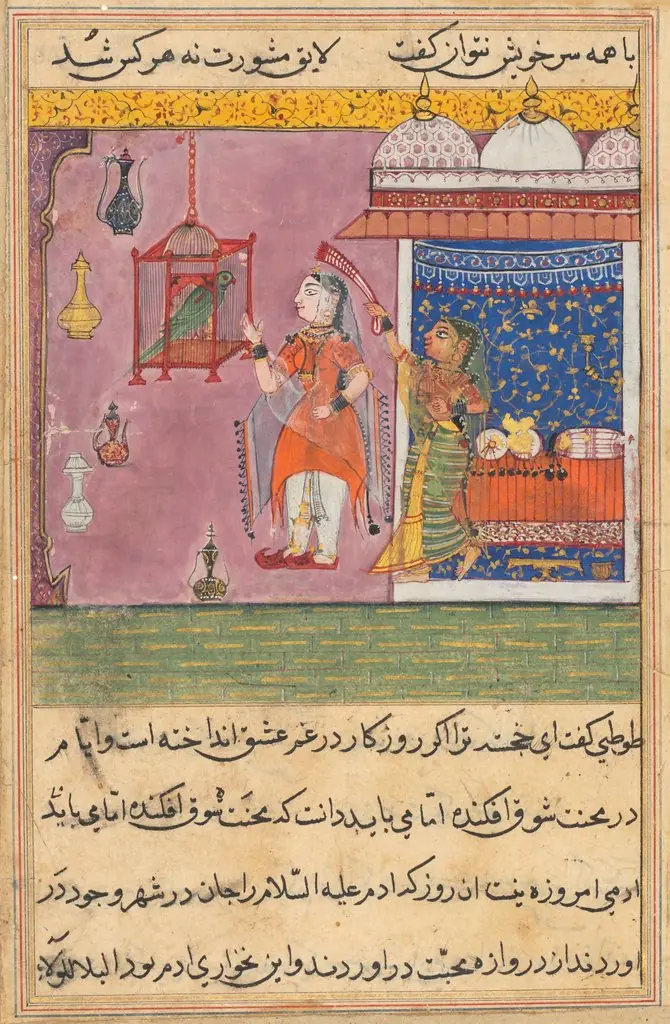 The Parrot Addresses Khujasta at the Beginning of the Nineteenth Night, from a Tuti-nama (Tales of a Parrot)
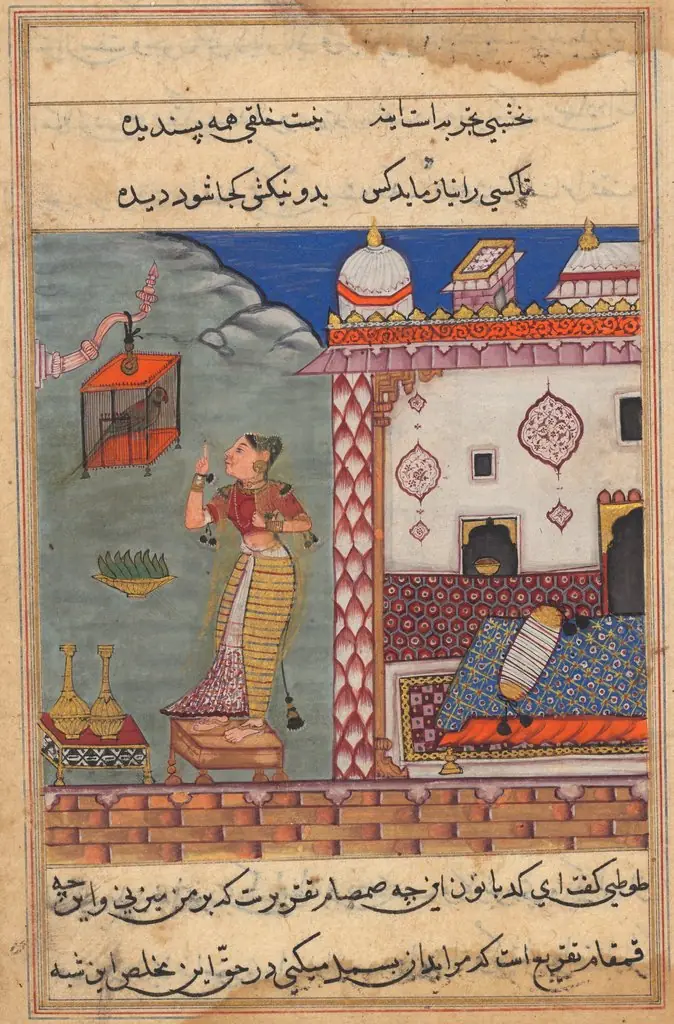 The Parrot Addresses Khujasta at the Beginning of the Twenty-seventh Night, form a Tuti-nama (Tales of a Parrot)
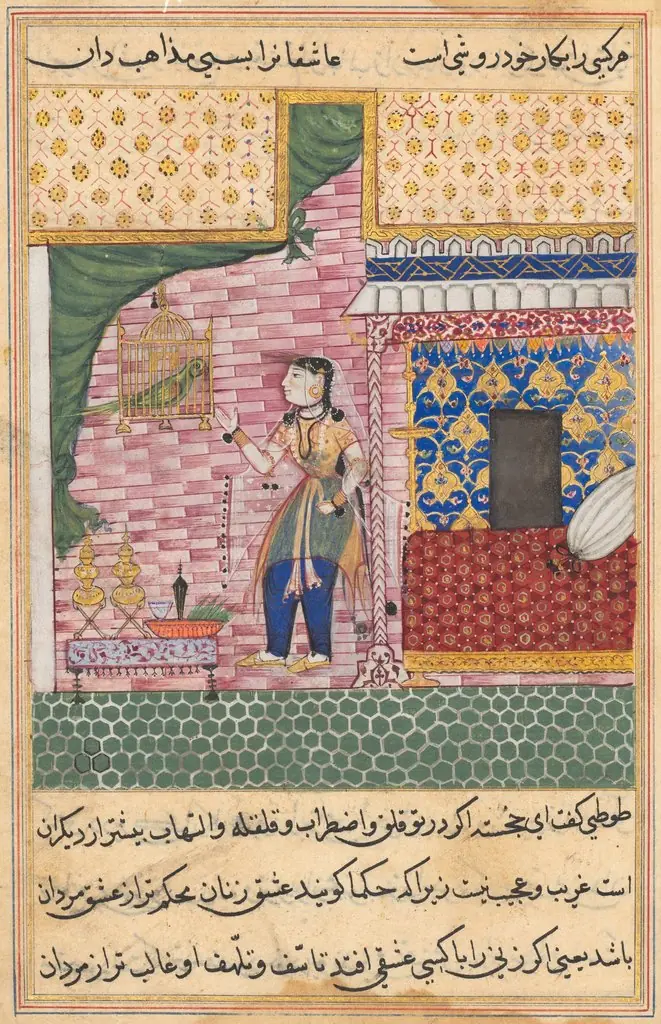 The Parrot Addresses Khujasta at the Beginning of the Seventeenth Night, from a Tuti-nama (Tales of a Parrot)
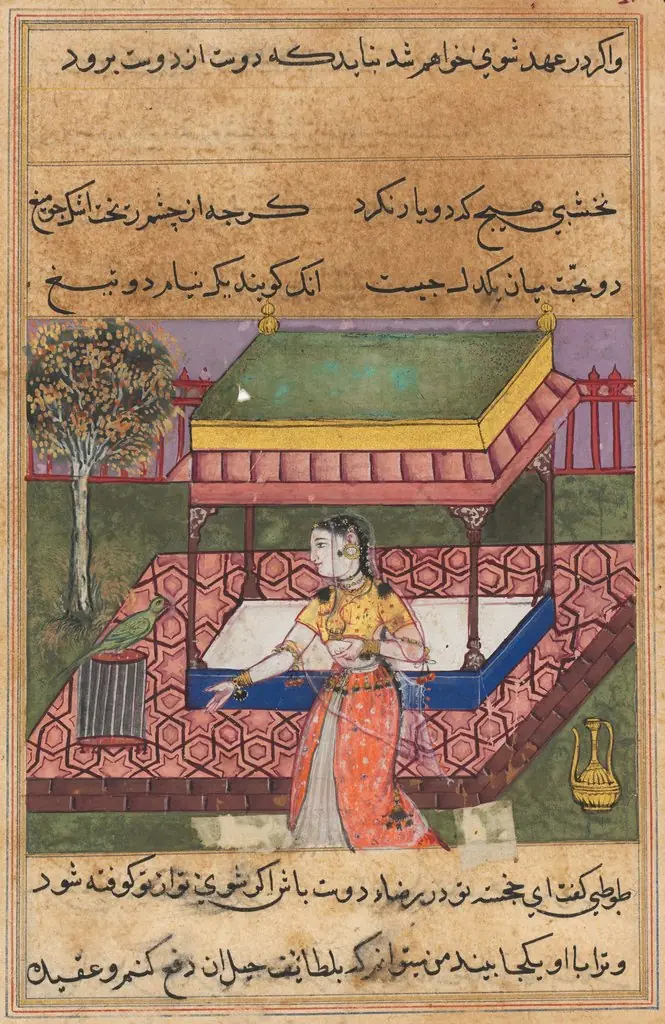 The parrot addresses Khujasta at the beginning of the fortieth night, from a Tuti-nama (Tales of a Parrot)
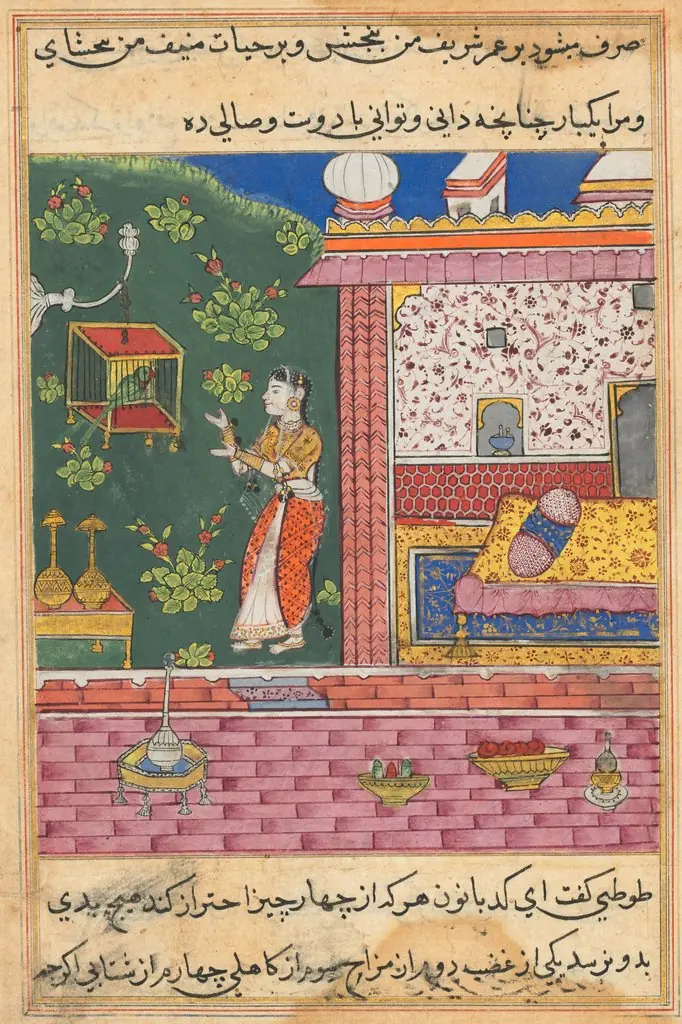 The Parrot Addresses Khujasta at the Beginning of the Thirtieth Night, from a Tuti-nama (Tales of a Parrot)
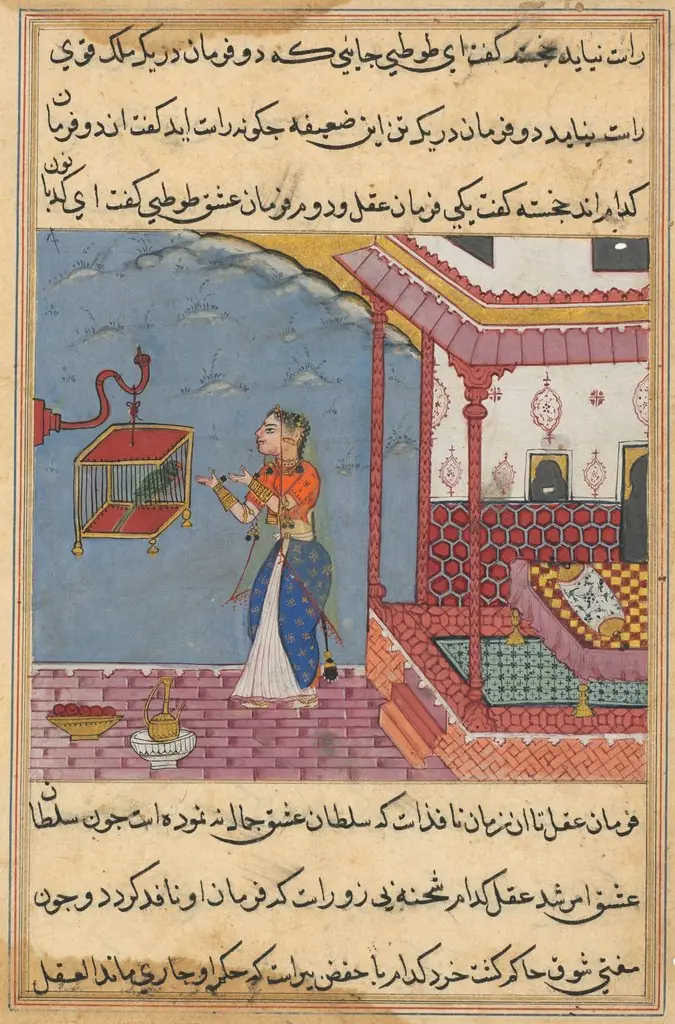 The Parrot Addresses Khujasta at the Beginning of the Twenty-Fourth Night, from a Tuti-nama (Tales of a Parrot)
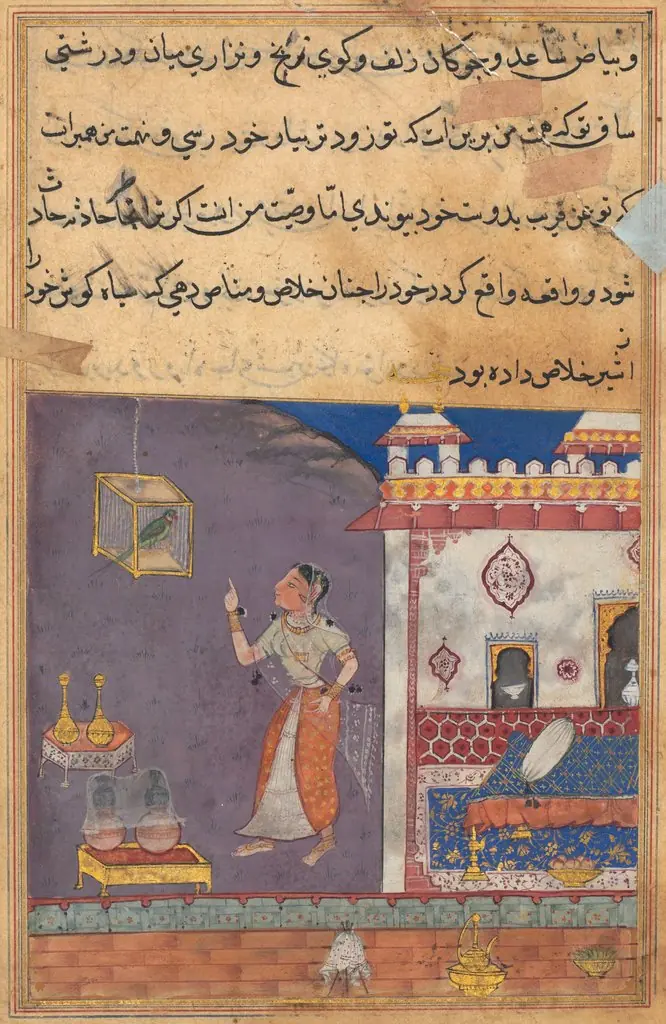 The Parrot Addresses Khujasta at the Beginning of the Twenty-ninth Night, from a Tuti-nama (Tales of a Parrot)
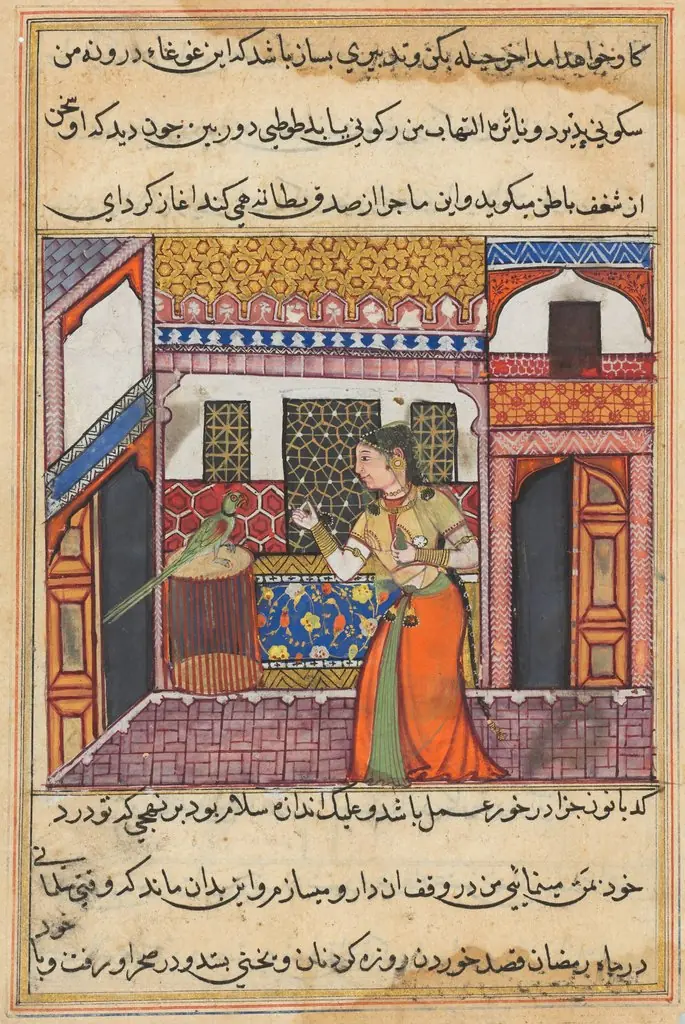 The parrot addresses Khujasta at the beginning of the forty-third night, from a Tuti-nama (Tales of a Parrot)
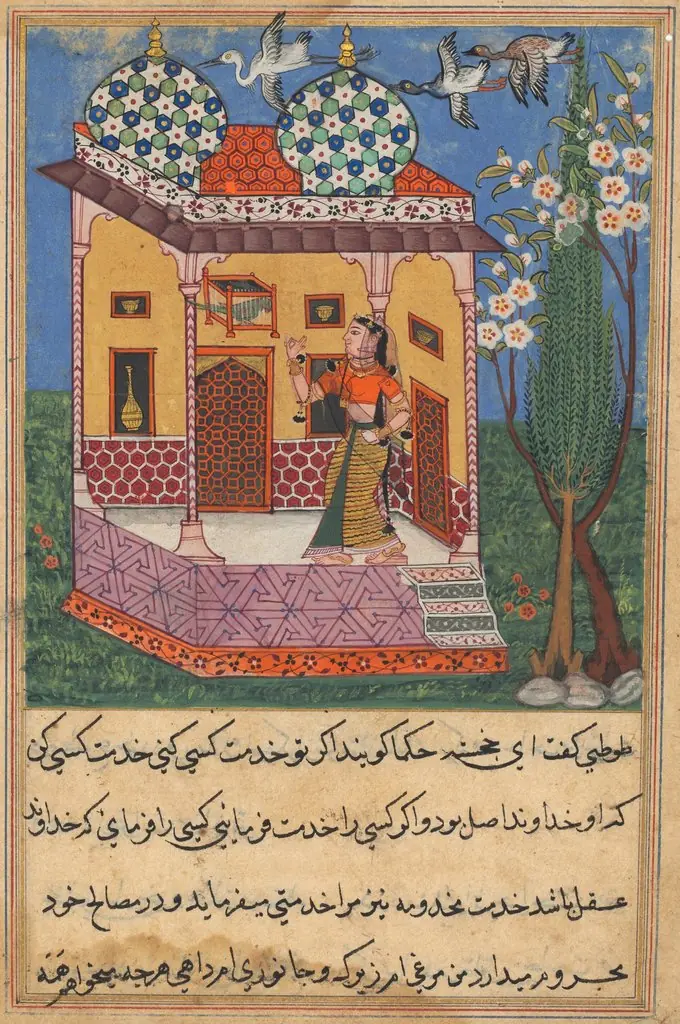 The Parrot Addresses Khujasta at the Beginning of the Twenty-sixth Night, from a Tuti-nama (Tales of a Parrot)
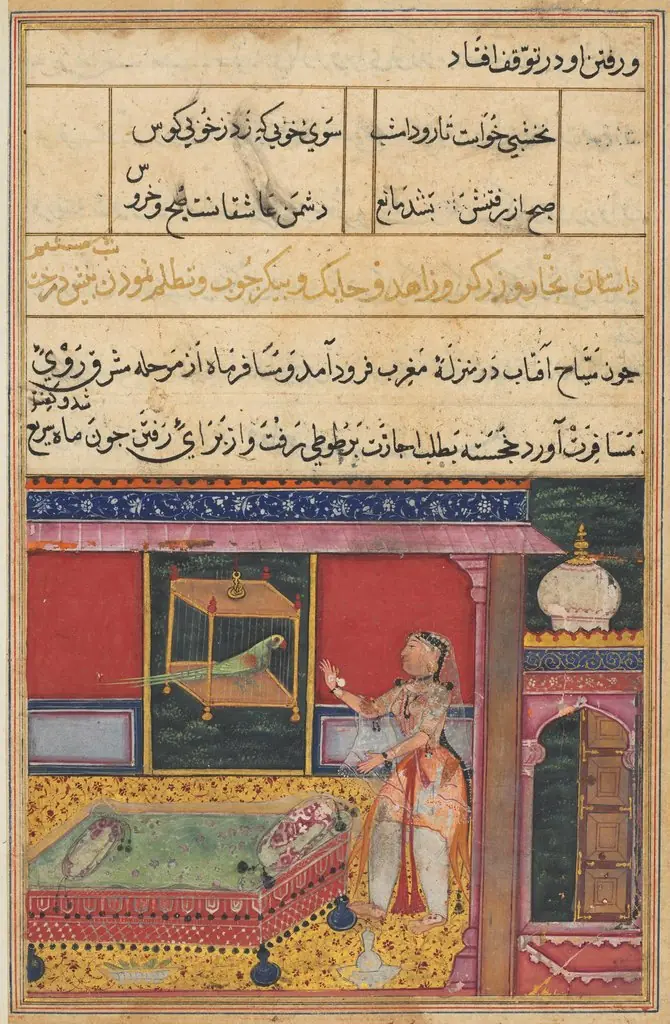 The Parrot Addresses Khujasta at the Beginning of the Sixth Night, from a Tuti-nama (Tales of a Parrot)
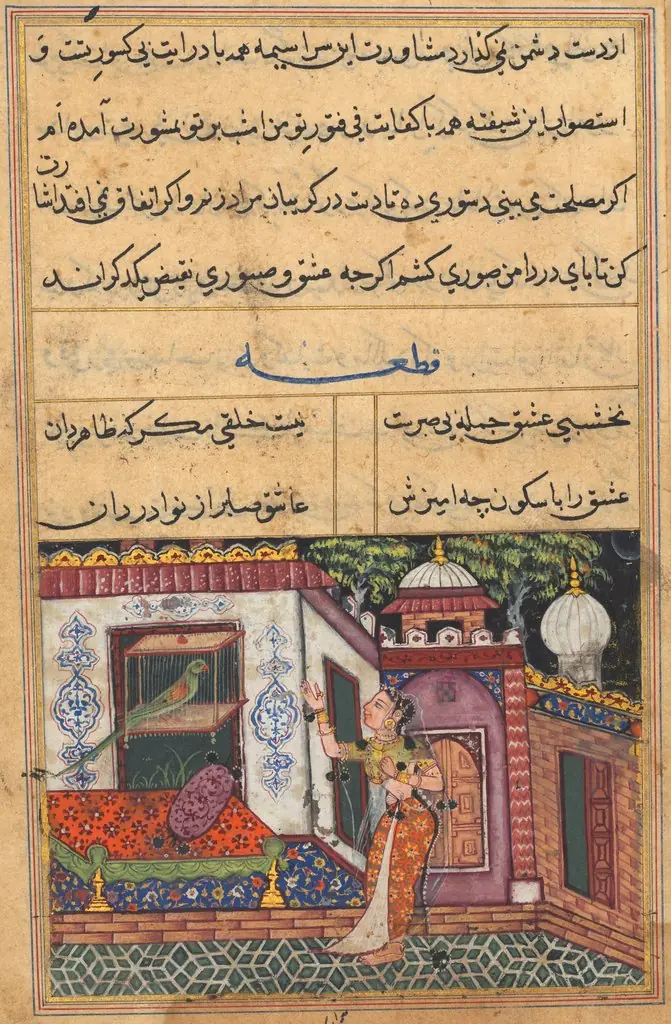 The Parrot Addresses Khujasta at the Beginning of the Eleventh Night, from a Tuti-nama (Tales of a Parrot)
 The parrot addresses Khujasta at the beginning of the thirty-eighth night, from a Tuti-nama (Tales of a Parrot)