Artwork
The Parrot Addresses Khujasta at the Beginning of the Twenty-Fourth Night, from a Tuti-nama (Tales of a Parrot)
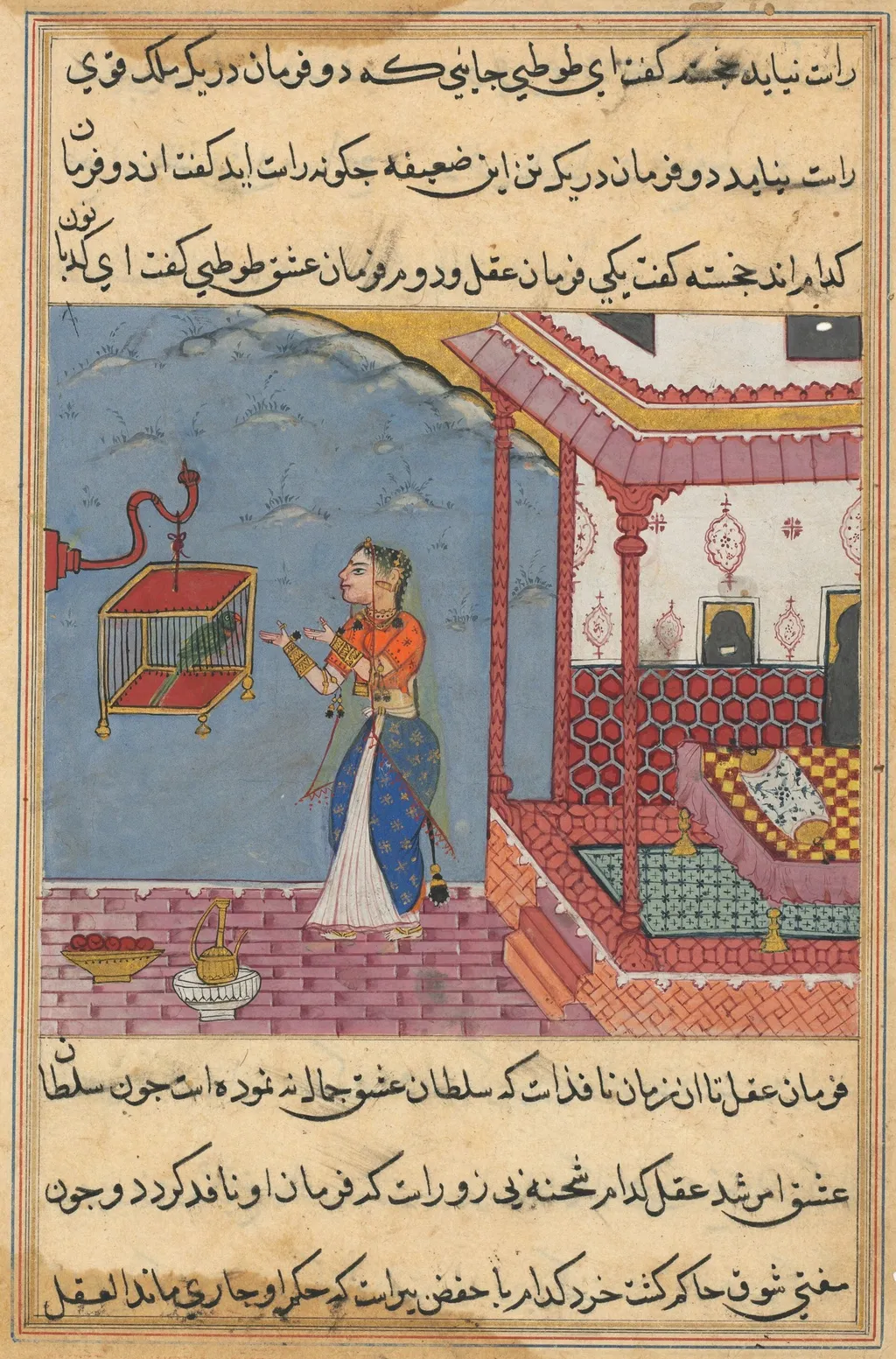
The Parrot Addresses Khujasta at the Beginning of the Twenty-Fourth Night, from a Tuti-nama (Tales of a Parrot) is an unspecified painting. It dates from 1560 and is held in the collection of the Cleveland Museum of Art. The work depicts a woman dressed in vivid red and blue garments, positioned within an interior space of red walls and a patterned floor.
About this work
Overview
The work depicts a woman dressed in vivid red and blue garments, positioned within an interior space of red walls and a patterned floor. She holds a red cage containing a parrot that appears to be speaking to her. A small table nearby bears fruit and a golden pitcher, while a window reveals a blue sky with clouds. A raised bed with cushions and a framed picture complete the scene.
Subject & Meaning
The composition illustrates a moment from a narrative in which a parrot addresses a character named Khujasta, drawn from a Tuti‑nama, or "Tales of a Parrot." The interaction between the bird and the woman suggests a dialogue that is central to the story, emphasizing themes of communication and perhaps the moral lessons typical of such illustrated tales.
Technique & Style
Rendered in a detailed, flat decorative manner, the painting employs bright, contrasting colors—particularly reds, blues, and golds—to highlight clothing, furnishings, and the bird's cage. Fine line work defines the patterned floor and architectural elements, while the script surrounding the image is executed in an Arabic‑ or Persian‑style calligraphy, integrating text and image in a unified visual narrative.
History & Provenance
The piece originates from a manuscript tradition of illustrated Persian literature, specifically a Tuti‑nama. While the exact date and original patron are not specified, such works were commonly produced for elite audiences in the Islamic world, where illustrated books combined literary and visual art.
Context
Illustrated tales featuring talking parrots were popular in Persian literary culture, serving both entertainment and didactic purposes. The visual conventions—rich textiles, ornate interiors, and integrated calligraphic captions—reflect the aesthetic preferences of manuscript illumination in the region during the period.
Legacy
Works of this type contribute to the broader understanding of narrative illustration in Persian art, demonstrating how text and image were interwoven to convey stories. Their preservation offers insight into the material culture, artistic techniques, and literary themes valued in historical Islamic societies.
Artist & collection

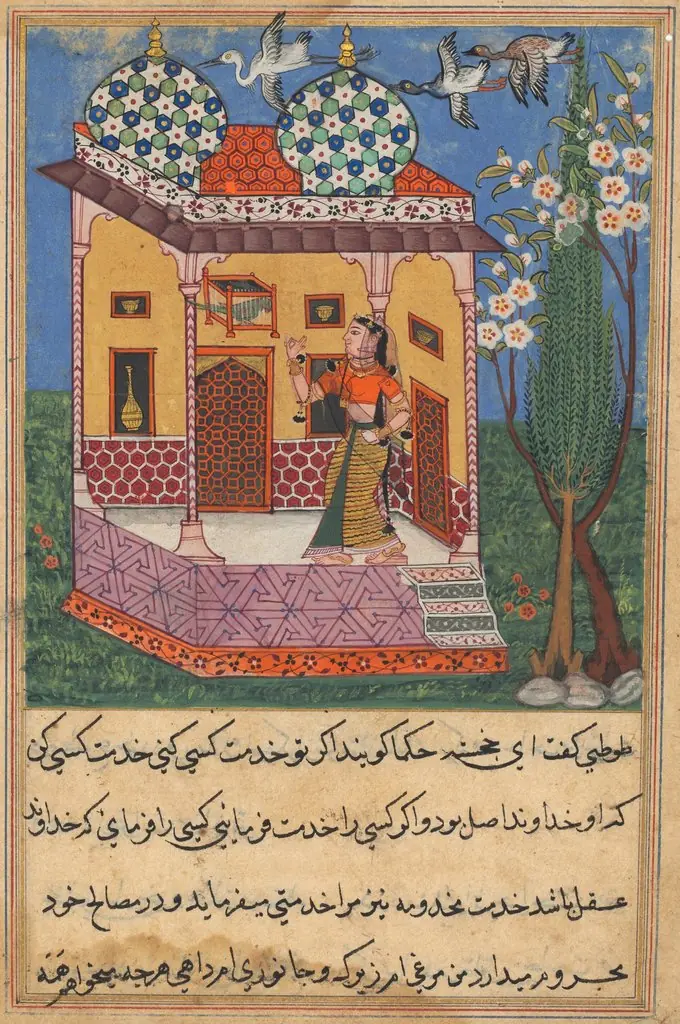 The Parrot Addresses Khujasta at the Beginning of the Twenty-sixth Night, from a Tuti-nama (Tales of a Parrot)
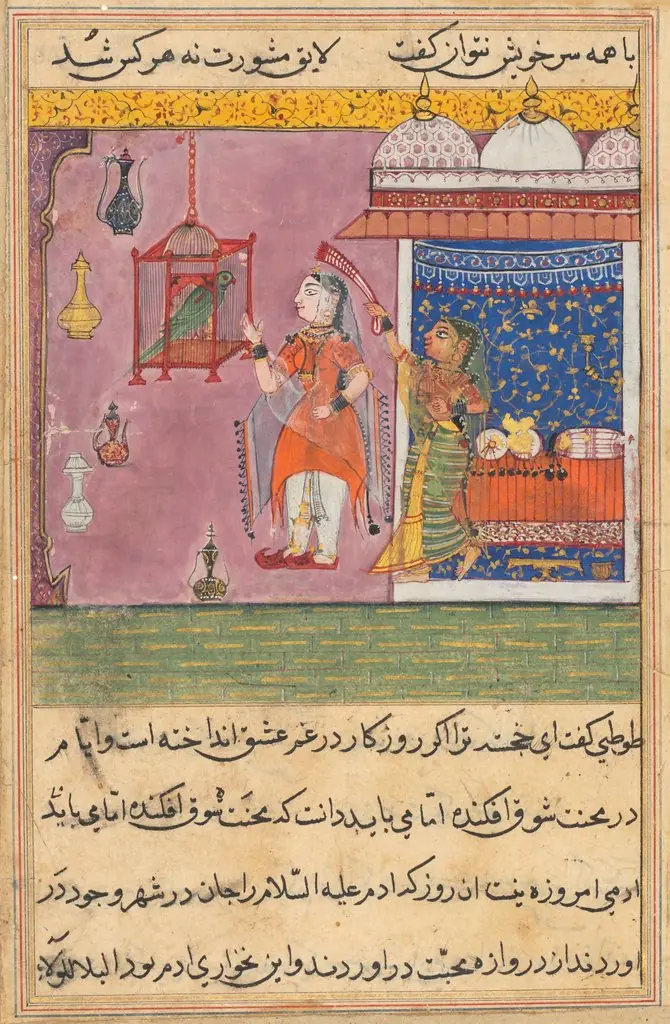 The Parrot Addresses Khujasta at the Beginning of the Nineteenth Night, from a Tuti-nama (Tales of a Parrot)
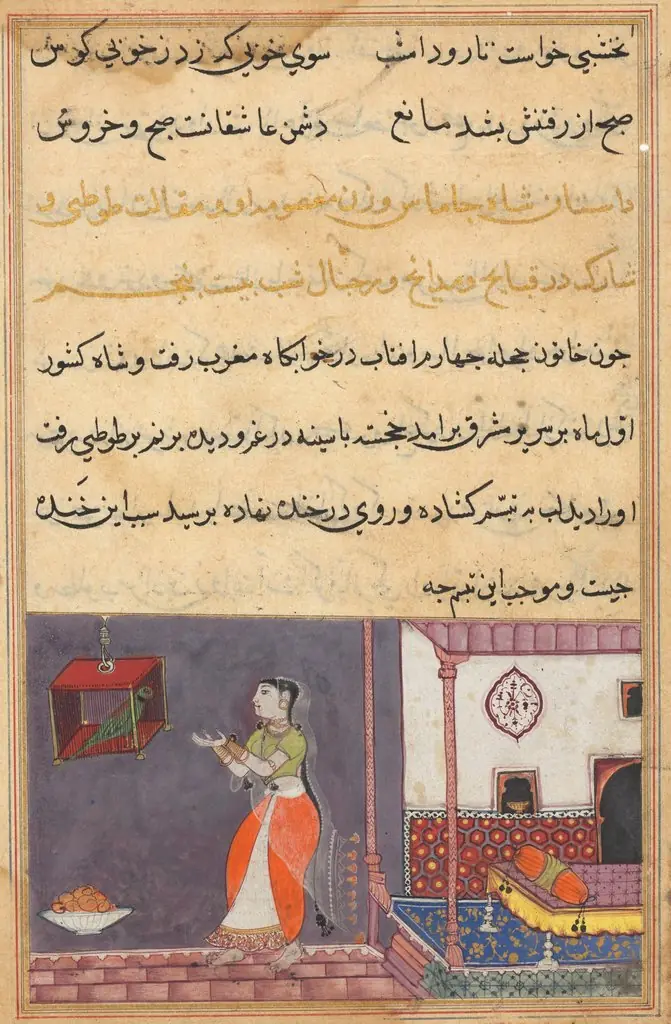 The Parrot Addresses Khujasta at the Beginning of the Twenty-fifth Night, from a Tuti-nama (Tales of a Parrot)
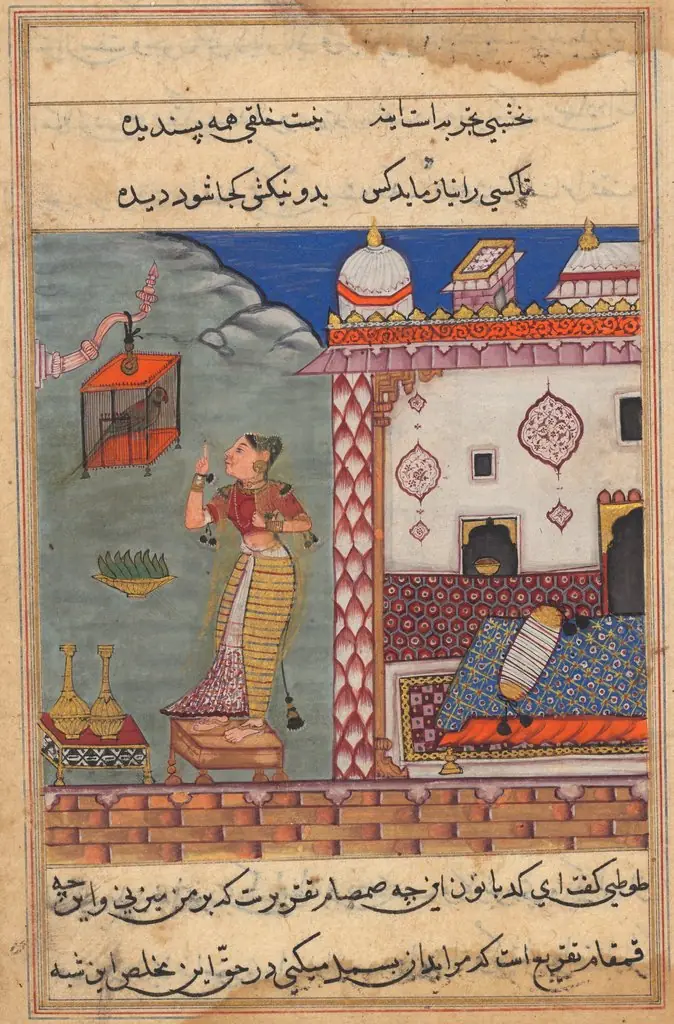 The Parrot Addresses Khujasta at the Beginning of the Twenty-seventh Night, form a Tuti-nama (Tales of a Parrot)
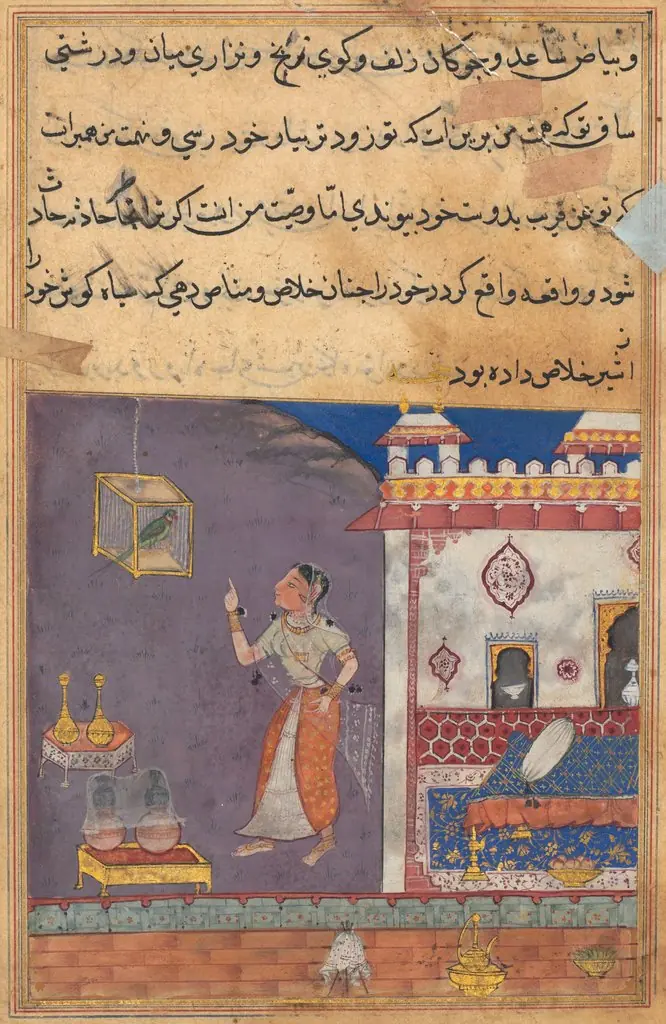 The Parrot Addresses Khujasta at the Beginning of the Twenty-ninth Night, from a Tuti-nama (Tales of a Parrot)
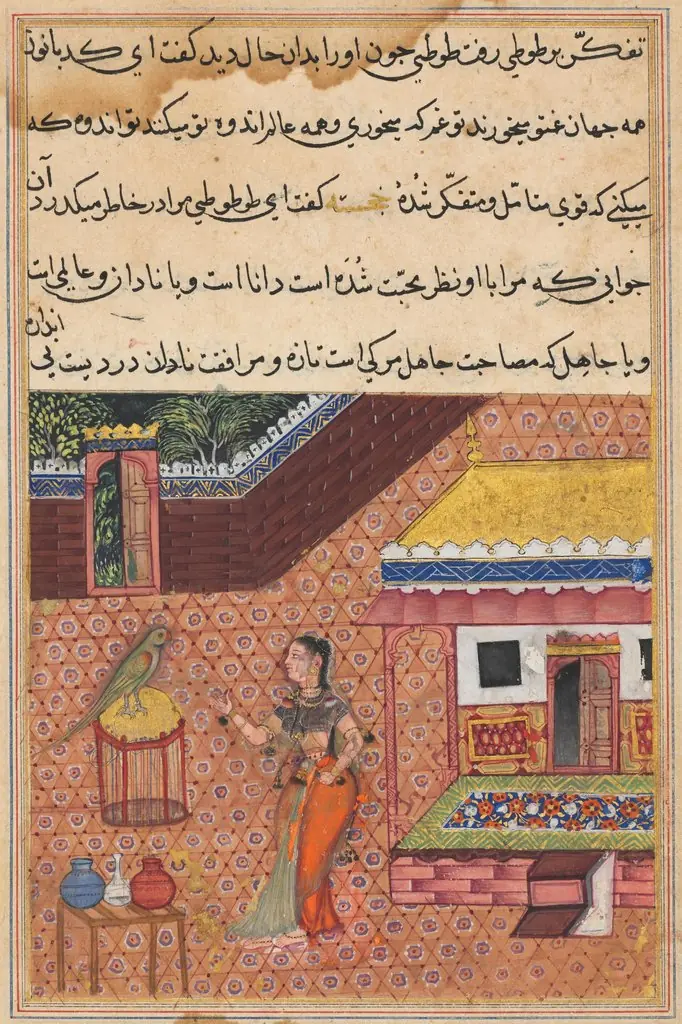 The parrot addresses Khujasta at the beginning of the thirty-fourth night, from a Tuti-nama (Tales of a Parrot)
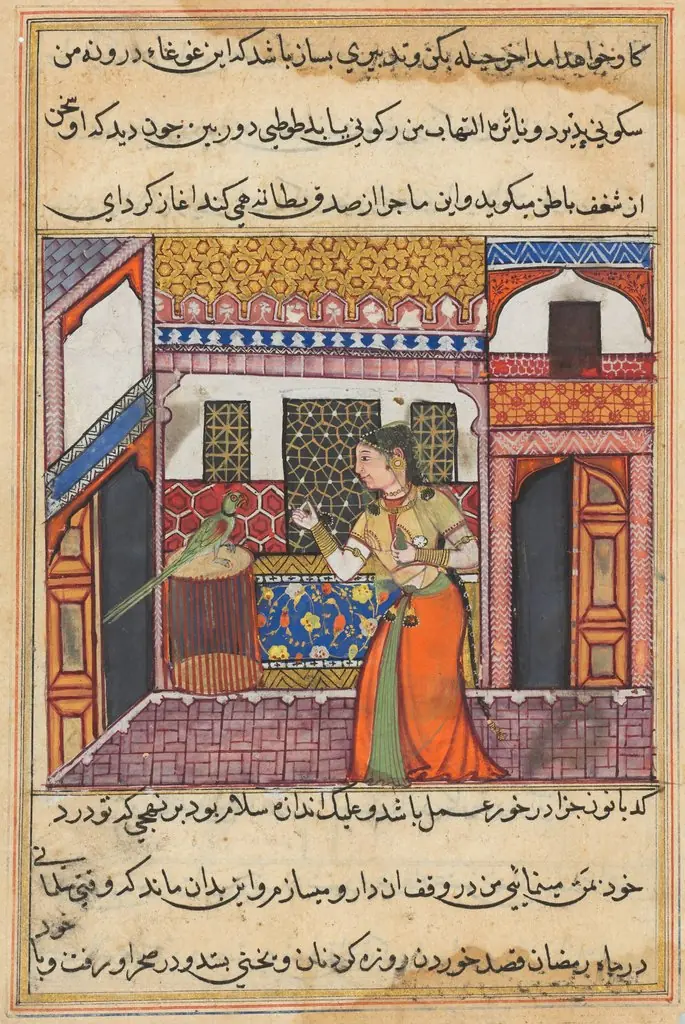 The parrot addresses Khujasta at the beginning of the forty-third night, from a Tuti-nama (Tales of a Parrot)
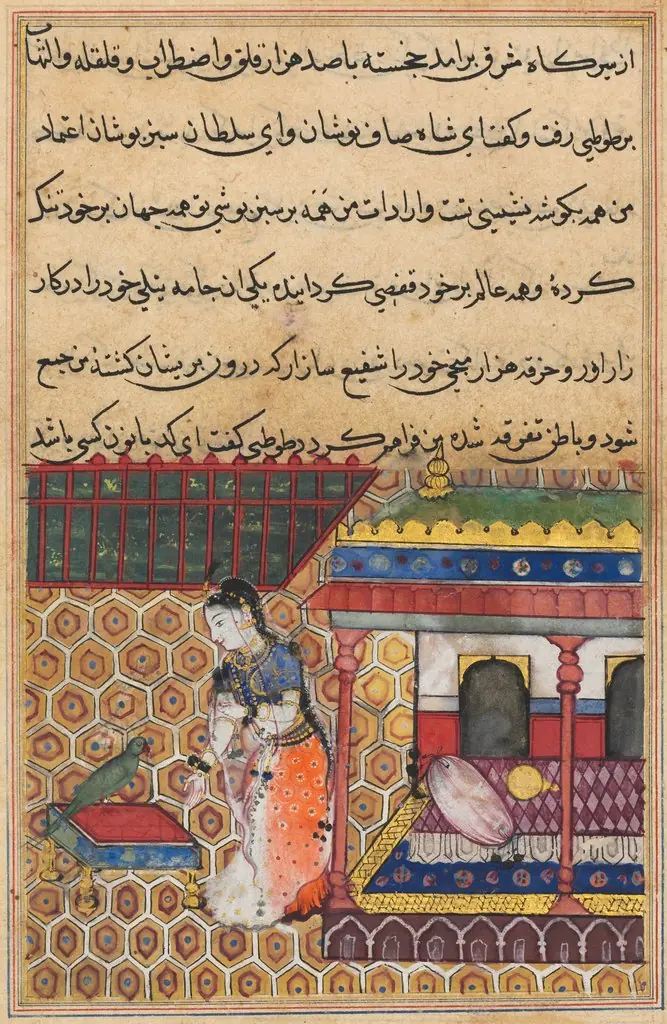 The parrot addresses Khujasta at the beginning of the thirty-eighth night, from a Tuti-nama (Tales of a Parrot)
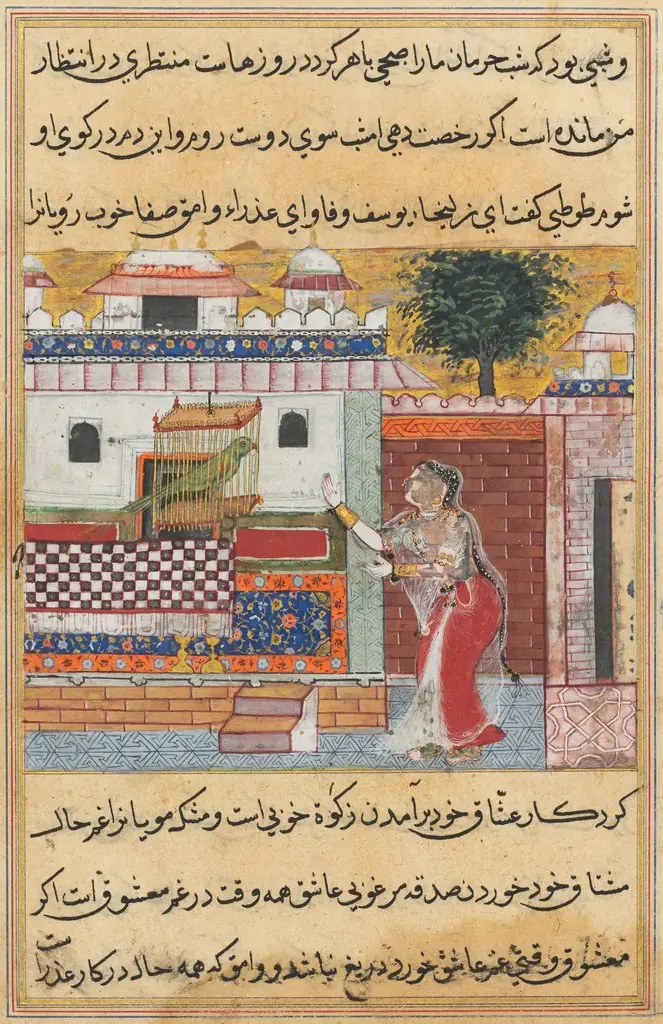 The Parrot Addresses Khujasta at the Beginning of the Twelfth Night, from a Tuti-nama (Tales of a Parrot)
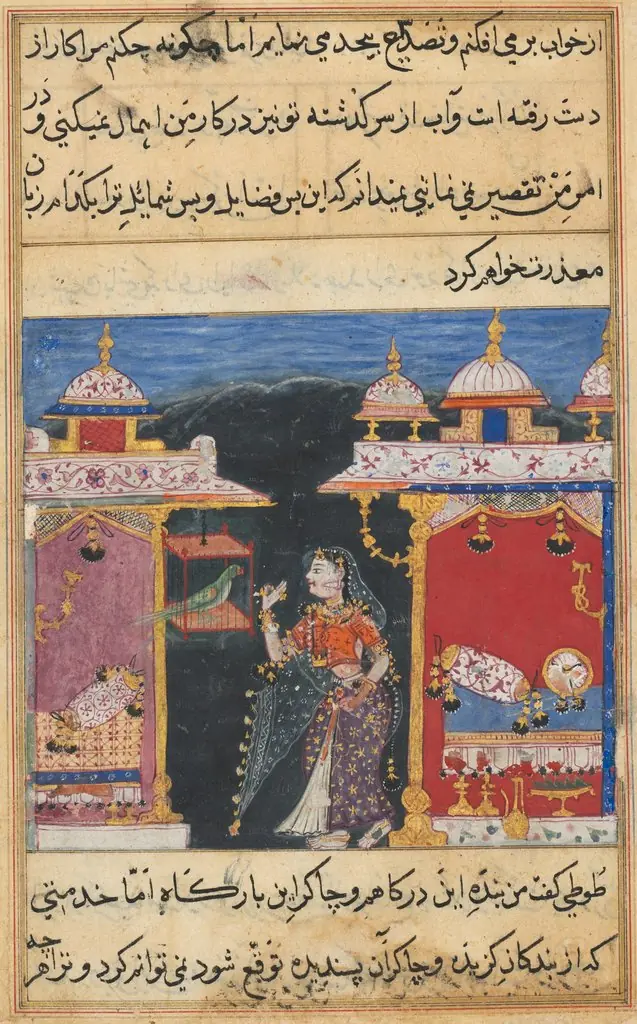 The Parrot Addresses Khujasta at the Beginning of the Seventh Night, from a Tuti-nama (Tales of a Parrot)
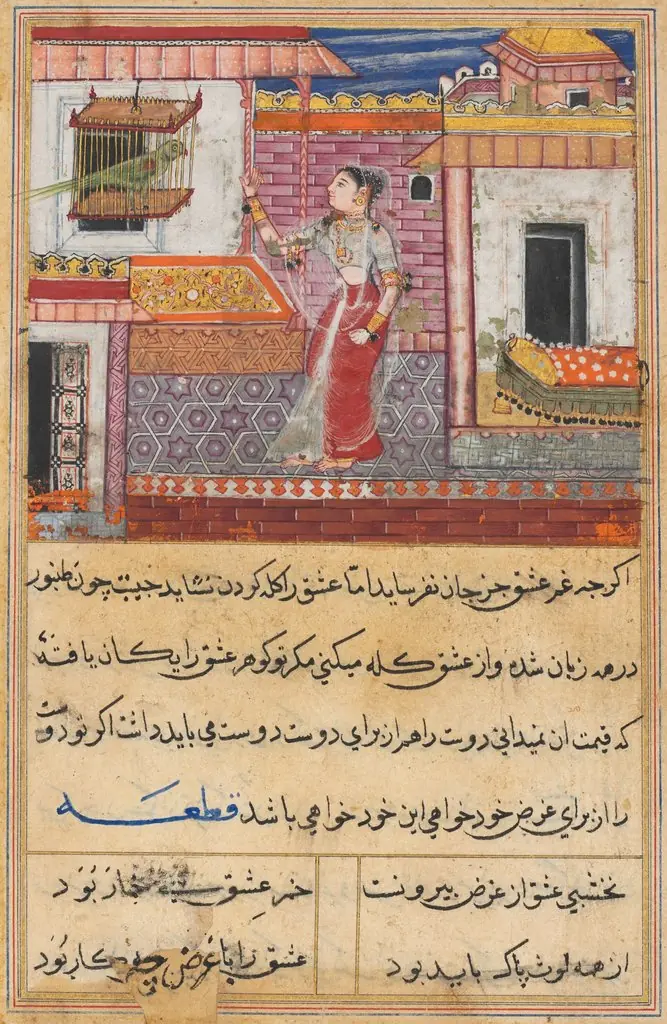 The Parrot Addresses Khujasta at the Beginning of the Thirteenth Night, from a Tuti-nama (Tales of a Parrot)