Artwork
The parrot addresses Khujasta at the beginning of the fiftieth night, from a Tuti-nama (Tales of a Parrot): Fiftieth Night
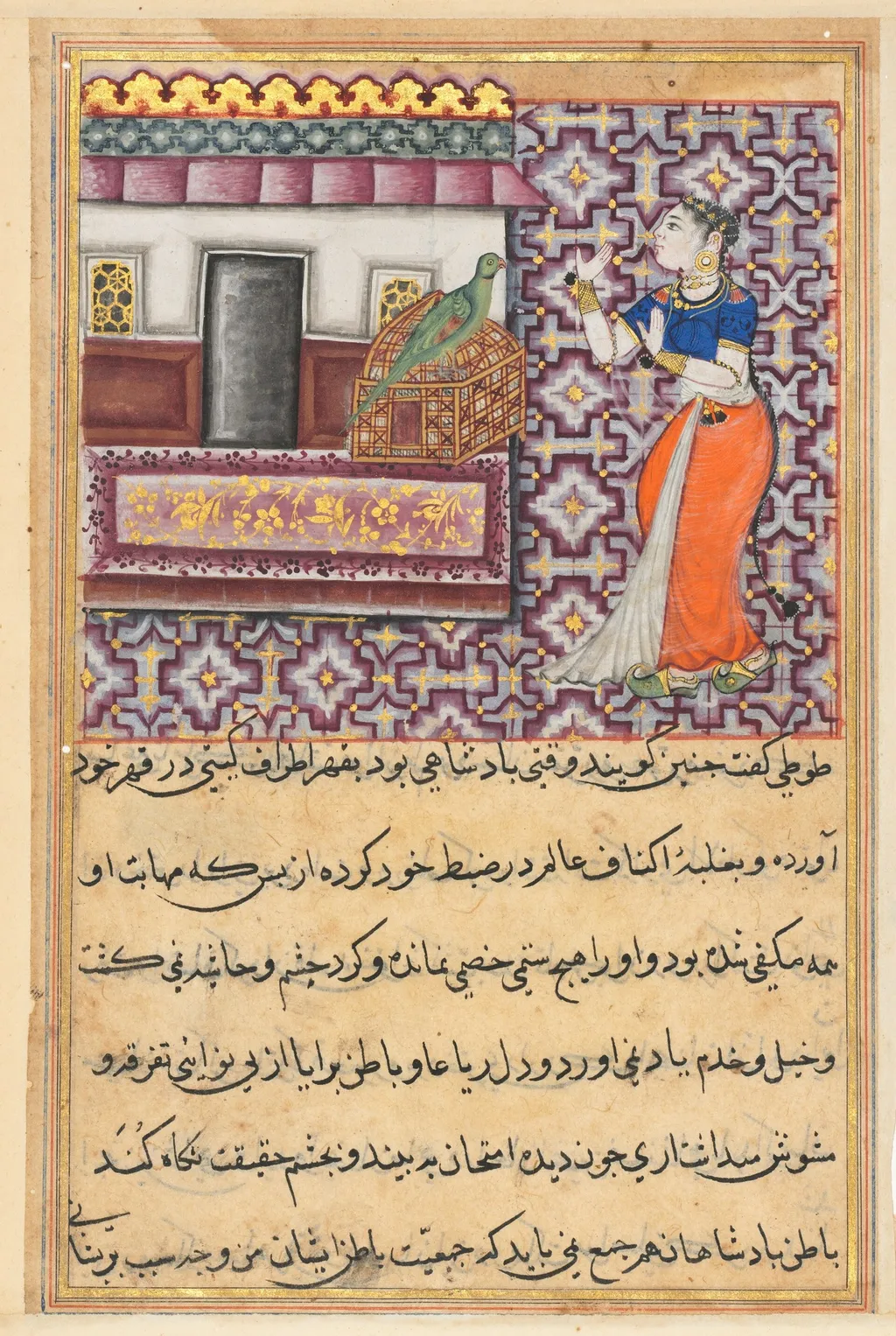
The parrot addresses Khujasta at the beginning of the fiftieth night, from a Tuti-nama (Tales of a Parrot): Fiftieth Night is an unspecified painting. It dates from 1560 and is held in the collection of the Cleveland Museum of Art. The work portrays a seated woman framed by a richly patterned wall.
About this work
Overview
The work portrays a seated woman framed by a richly patterned wall. She wears a blue blouse and an orange skirt, accented with gold ornaments, while a parrot perched in a cage to her right catches her attention. A window and door open onto a deeper interior space, lending the composition a sense of cultivated domesticity.
Subject & Meaning
The scene derives from a tale in the Tuti‑nama, a collection of stories featuring a talking parrot. The woman’s focused gaze toward the bird suggests a moment of communication or revelation, echoing the narrative moment when the parrot addresses Khujasta at the start of the fiftieth night. The setting underscores themes of dialogue and intrigue within a refined household.
Technique & Style
Rendered with careful brushwork, the painting balances decorative surface patterning on the wall with the smoother modeling of the figures.
Rendered with careful brushwork, the painting balances decorative surface patterning on the wall with the smoother modeling of the figures. The contrast of cool blues and warm oranges, together with the gleam of gold jewelry, creates a harmonious palette. Linear perspective is suggested by the receding wall, window, and door, providing depth without abandoning the ornamental emphasis typical of Persian narrative art.
Context
Illustrative scenes from the Tuti‑nama were popular in Persian manuscript traditions, often serving both decorative and didactic purposes. By translating a literary episode into a painted tableau, the artist aligns with a broader cultural practice of visualizing moral and romantic stories for elite audiences, reflecting the taste for refined storytelling in courtly environments.
Artist & collection

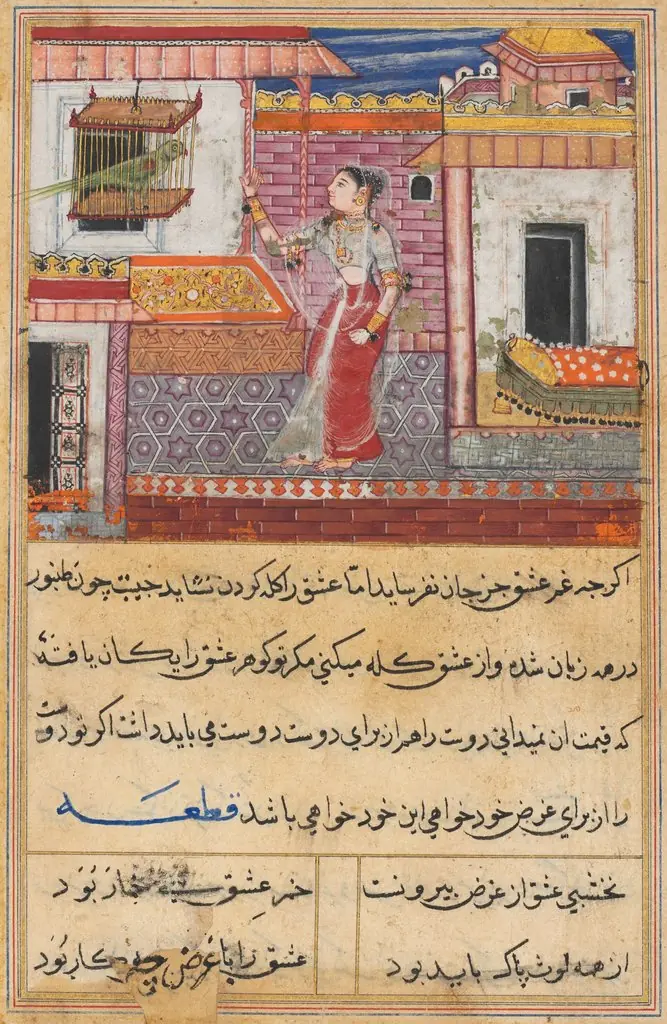 The Parrot Addresses Khujasta at the Beginning of the Thirteenth Night, from a Tuti-nama (Tales of a Parrot)
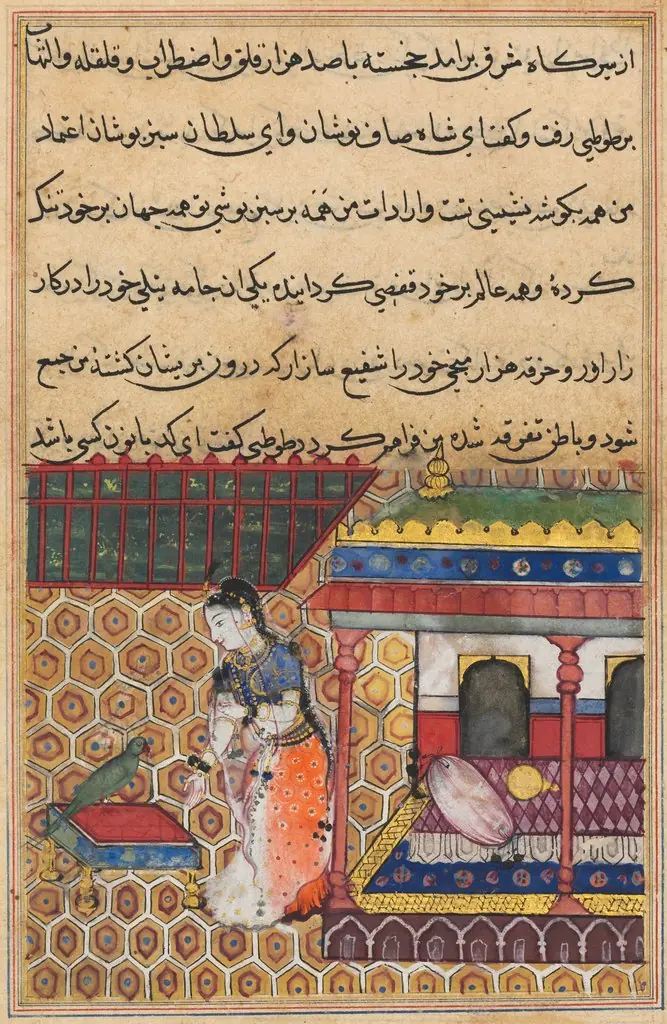 The parrot addresses Khujasta at the beginning of the thirty-eighth night, from a Tuti-nama (Tales of a Parrot)
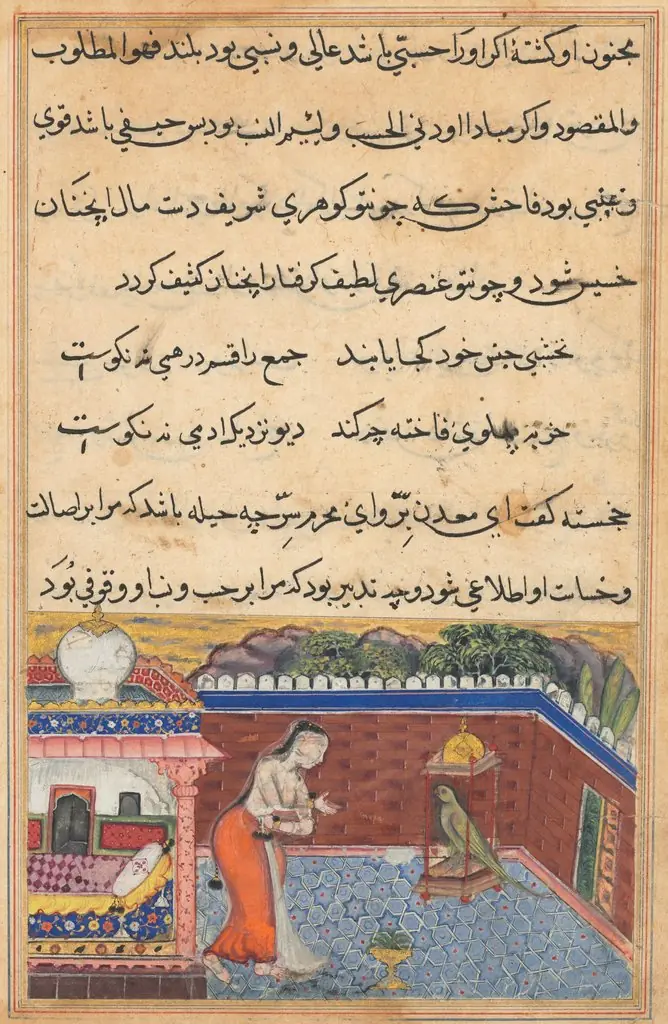 The parrot addresses Khujasta at the beginning of the thirty-first night, from a Tuti-nama (Tales of a Parrot)
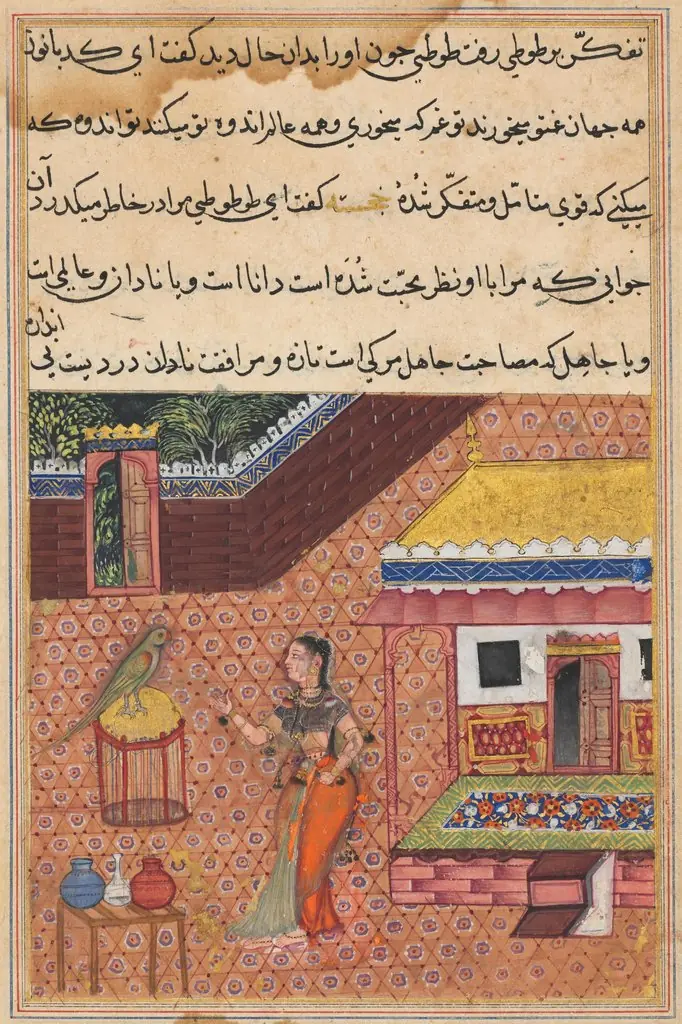 The parrot addresses Khujasta at the beginning of the thirty-fourth night, from a Tuti-nama (Tales of a Parrot)
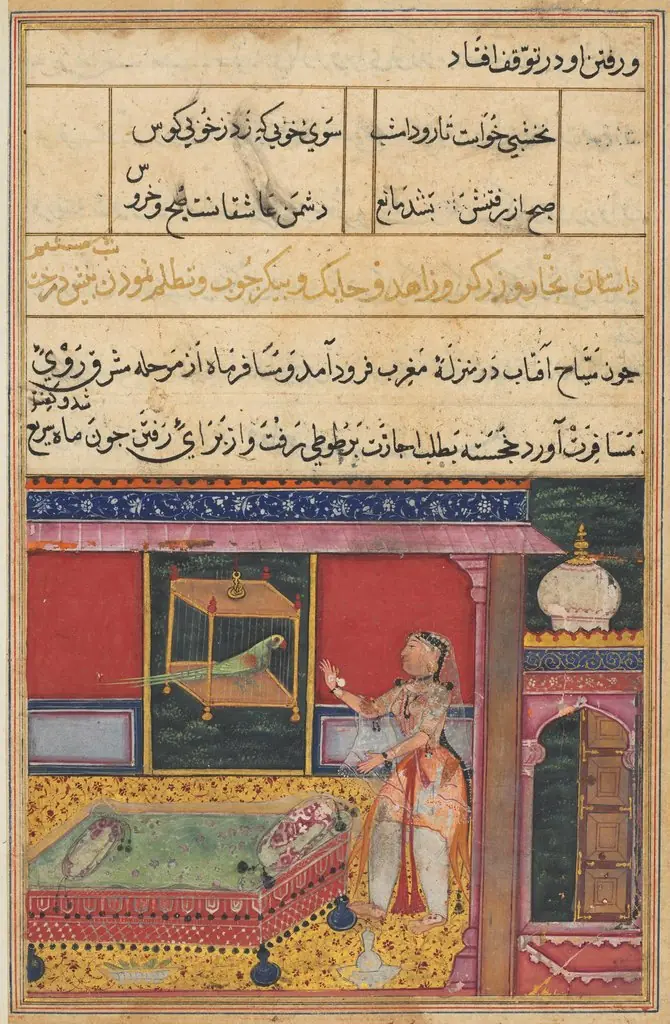 The Parrot Addresses Khujasta at the Beginning of the Sixth Night, from a Tuti-nama (Tales of a Parrot)
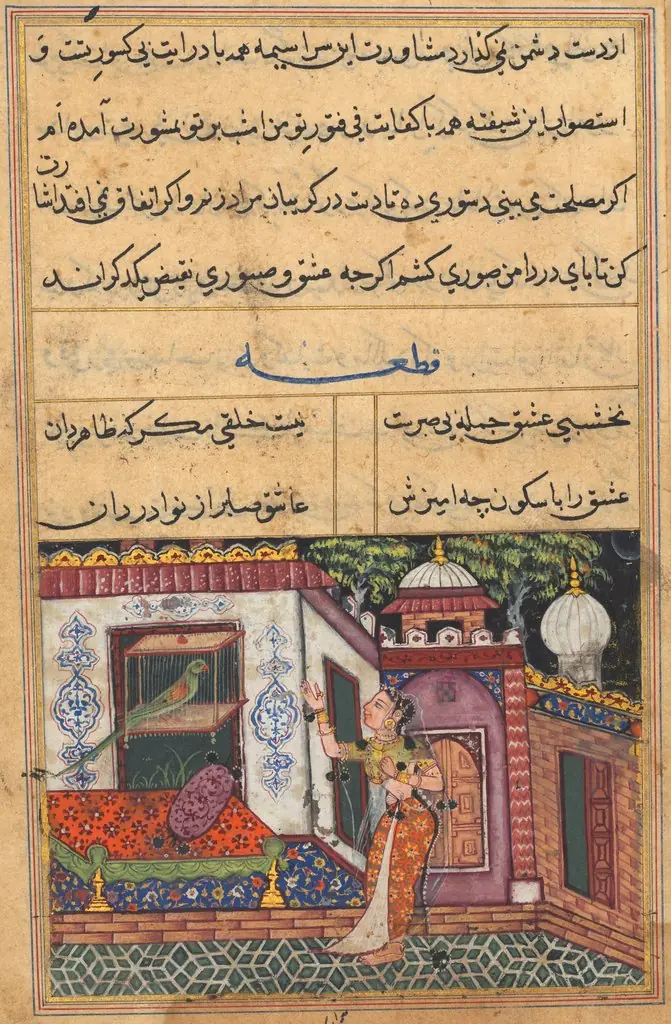 The Parrot Addresses Khujasta at the Beginning of the Eleventh Night, from a Tuti-nama (Tales of a Parrot)
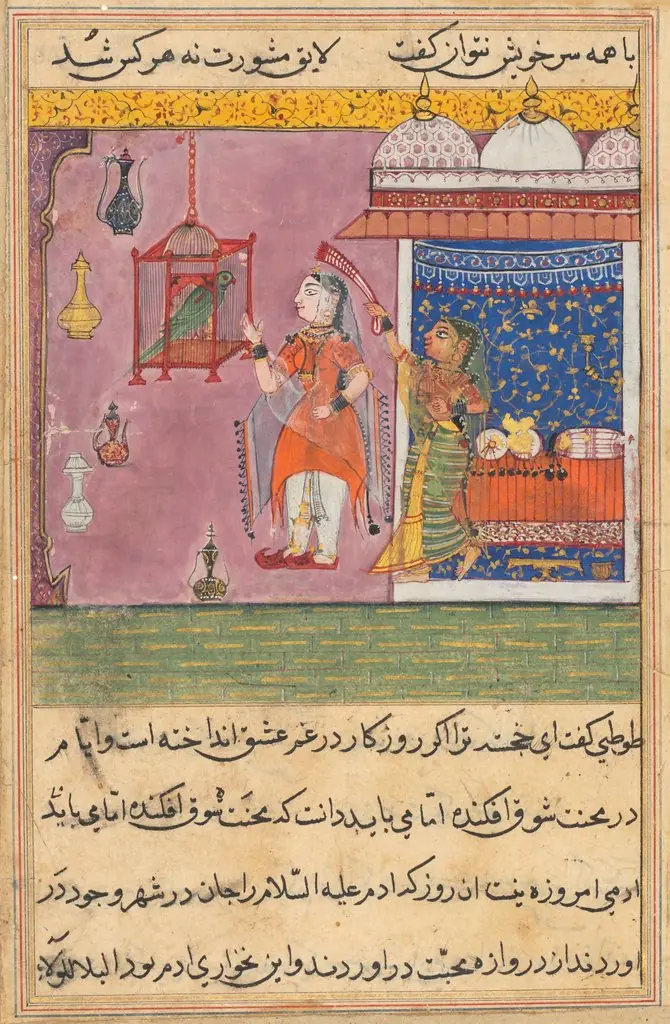 The Parrot Addresses Khujasta at the Beginning of the Nineteenth Night, from a Tuti-nama (Tales of a Parrot)
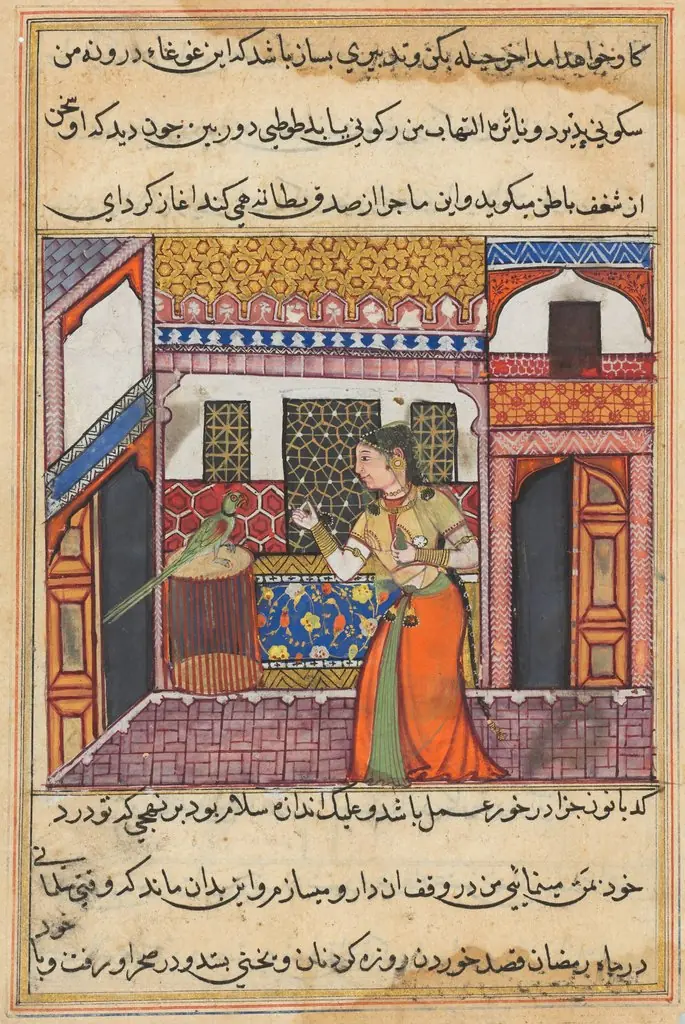 The parrot addresses Khujasta at the beginning of the forty-third night, from a Tuti-nama (Tales of a Parrot)
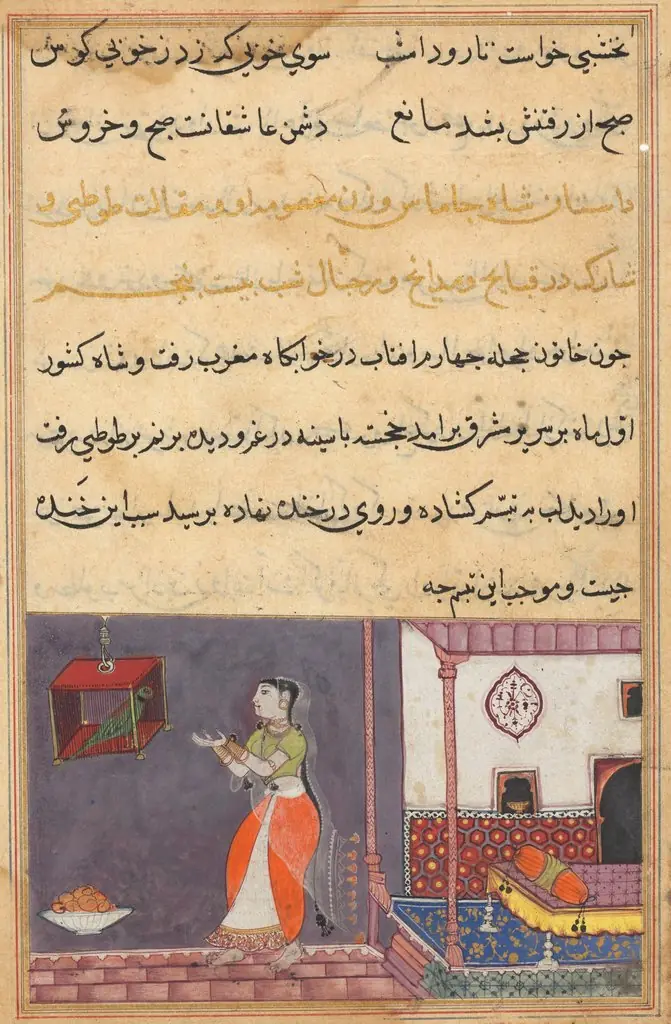 The Parrot Addresses Khujasta at the Beginning of the Twenty-fifth Night, from a Tuti-nama (Tales of a Parrot)
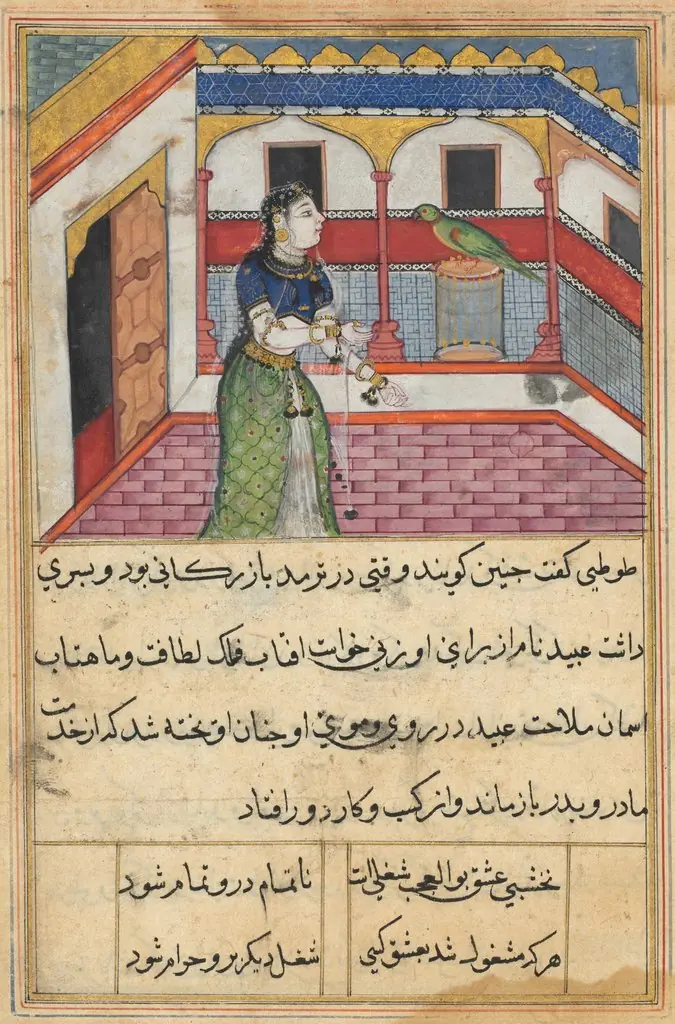 The parrot addresses Khujasta at the beginning of the forty-second night, from a Tuti-nama (Tales of a Parrot)