Artwork
Legend of Durga
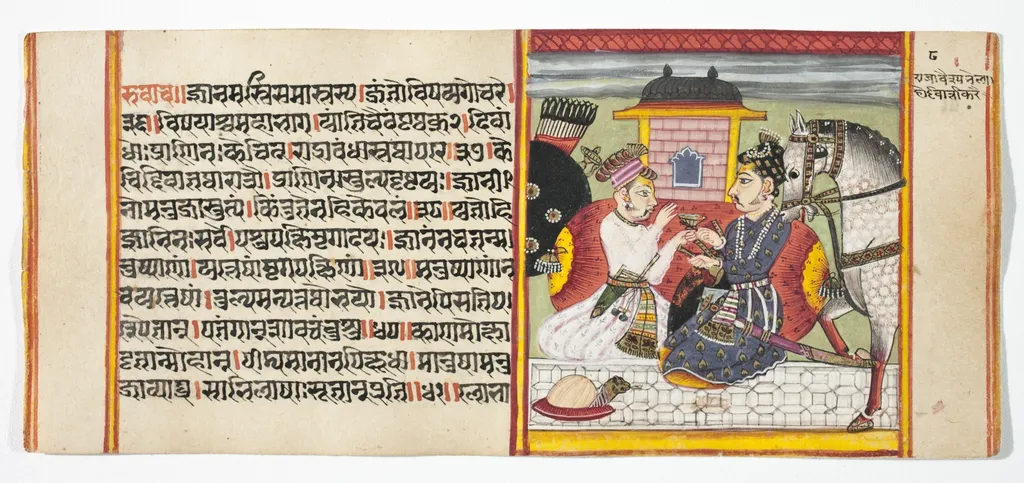
Legend of Durga is an unspecified painting by Unknown. It is held in the collection of the Detroit Institute of Arts.
About this work
Overview
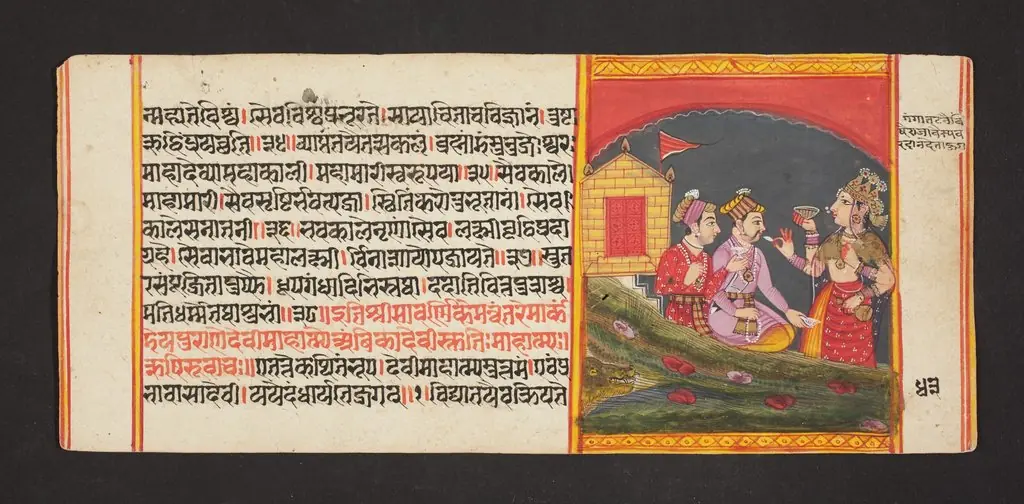
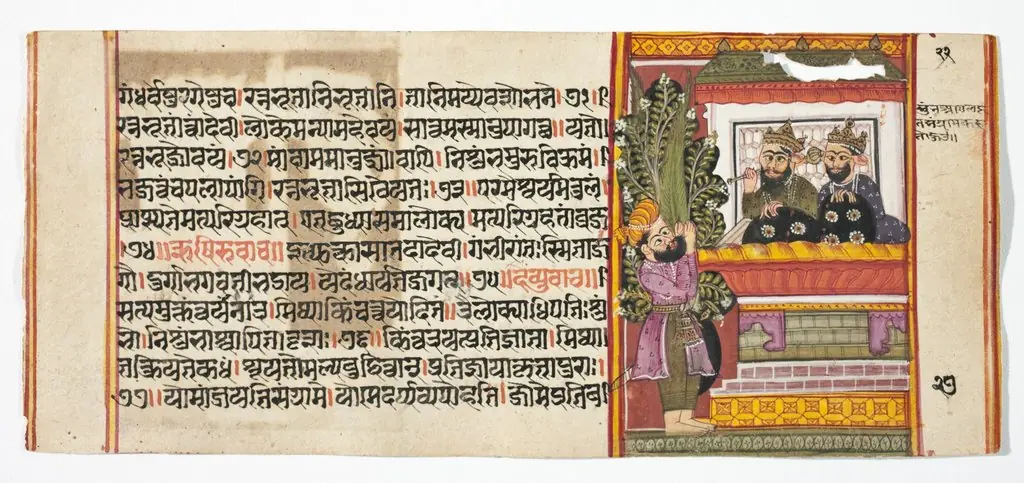
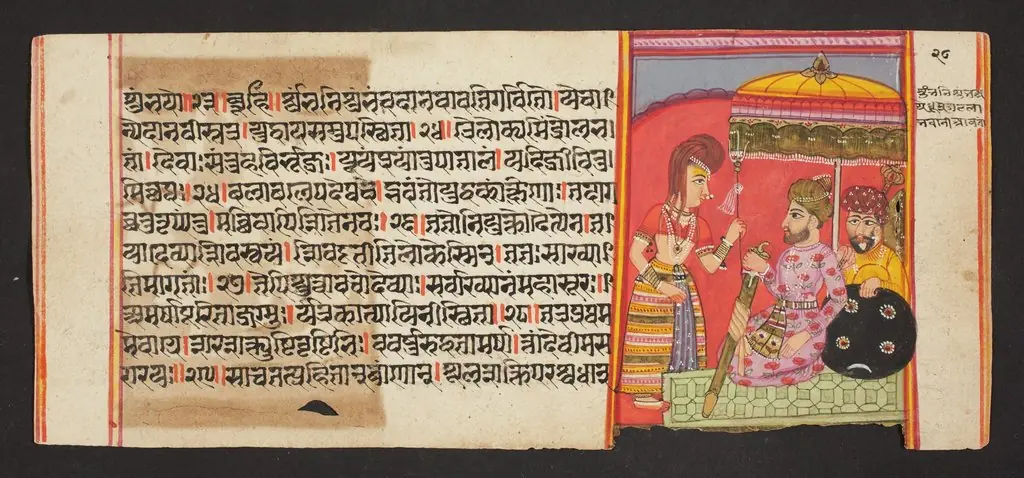
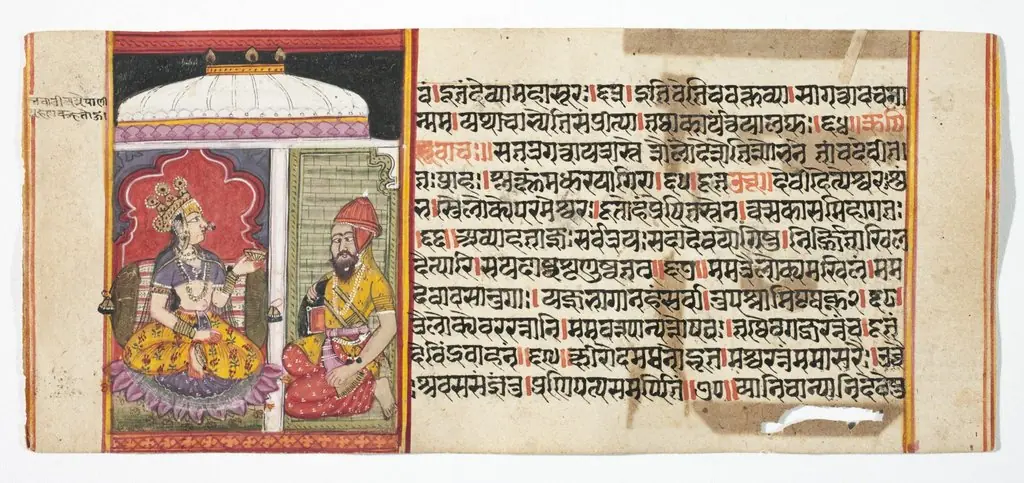
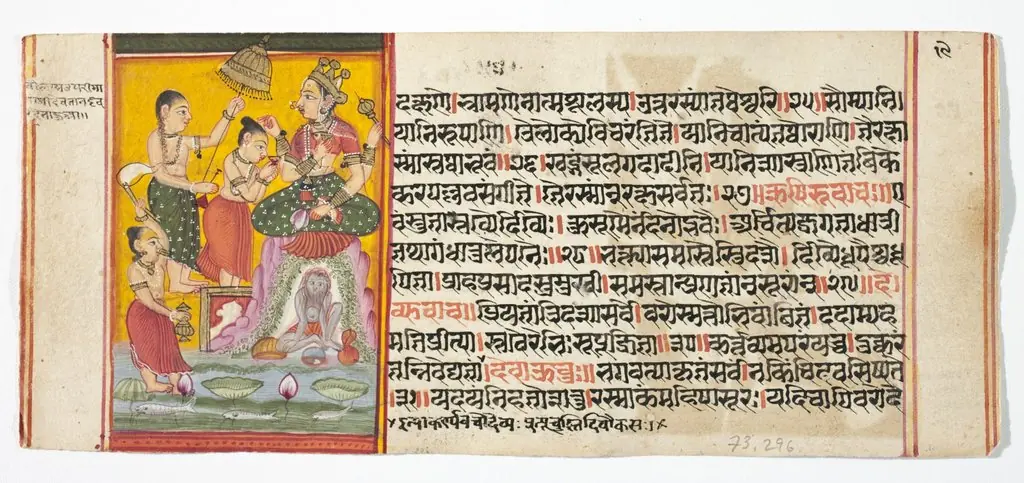
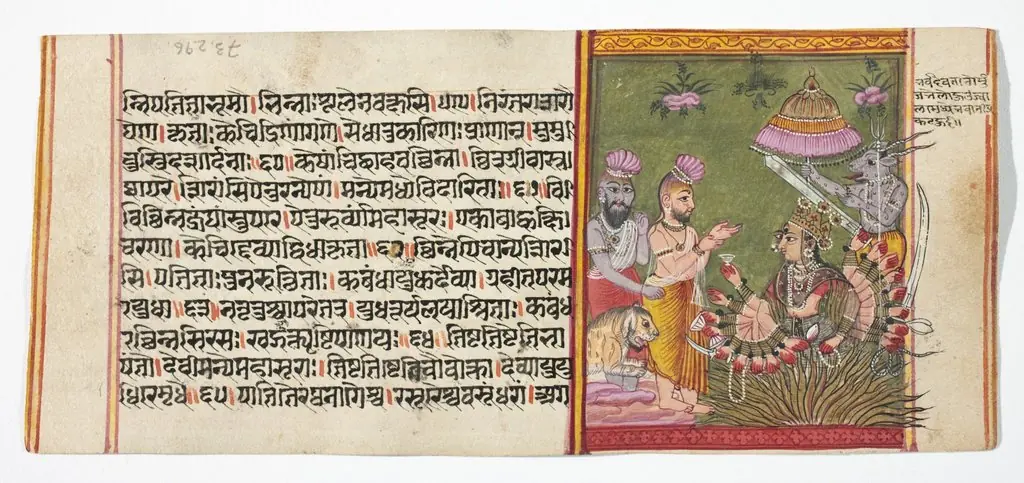
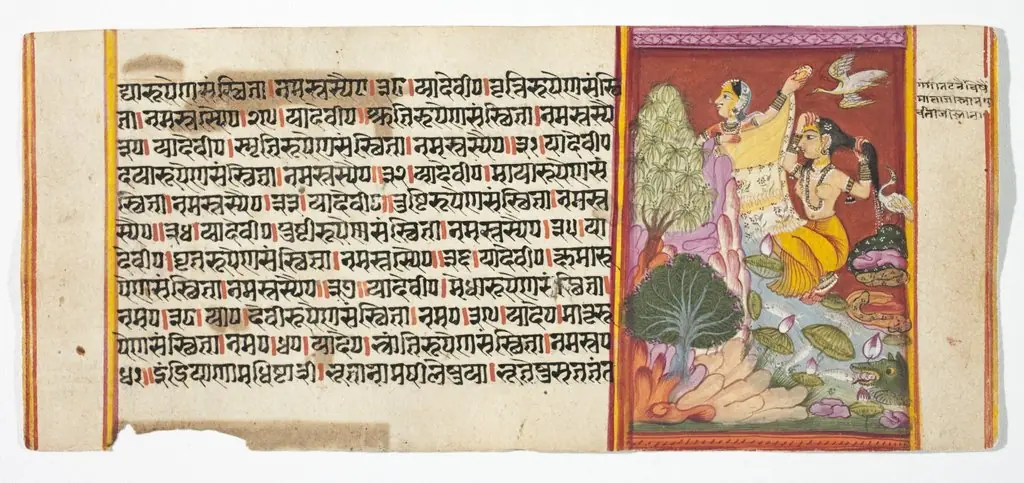
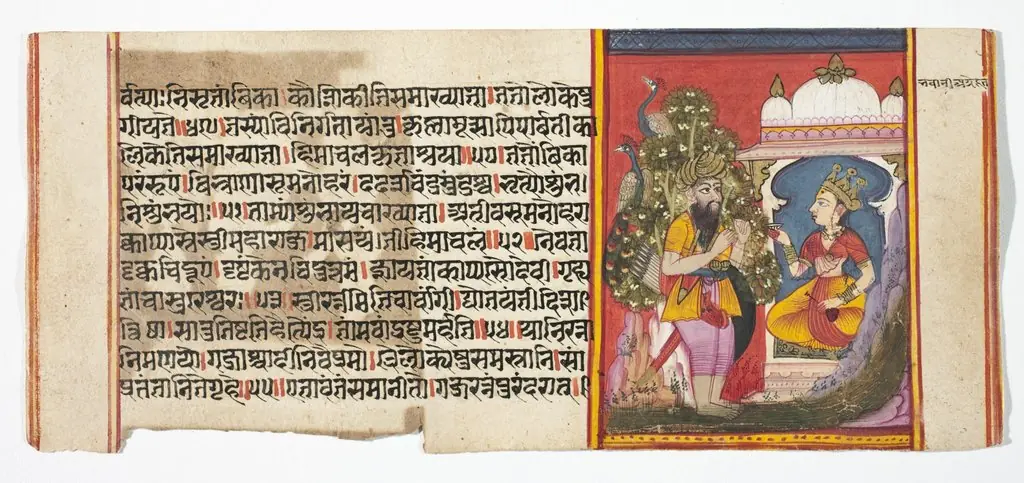
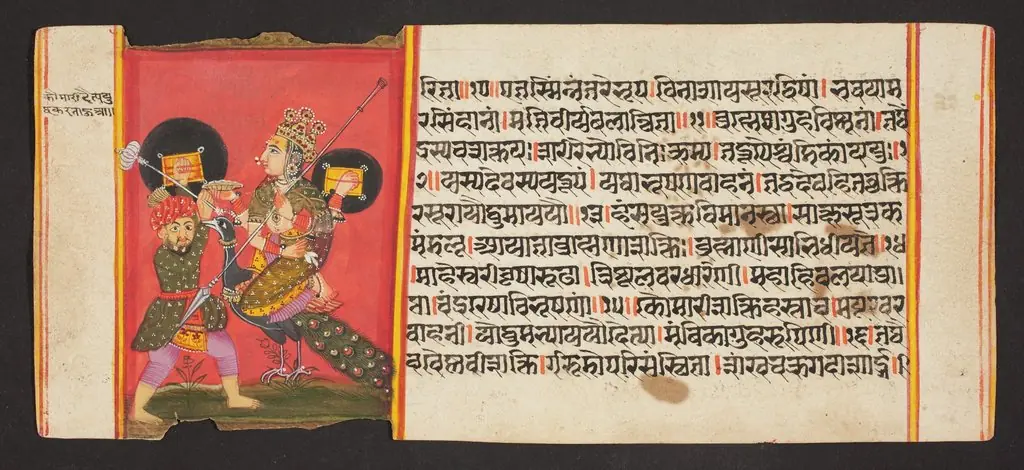
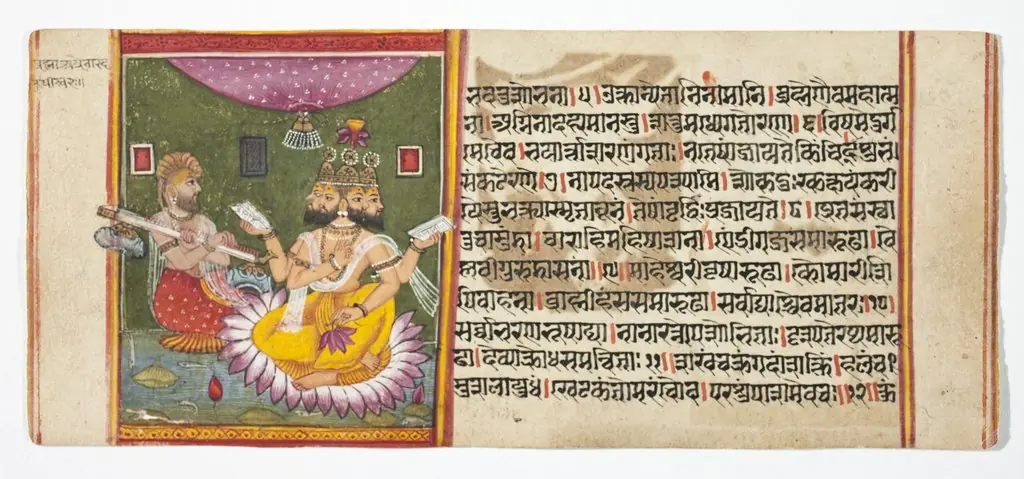
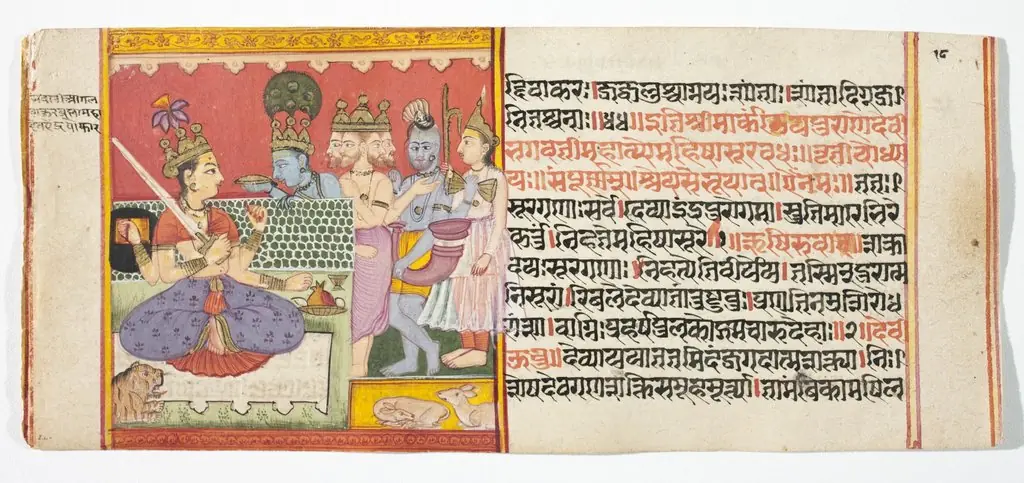
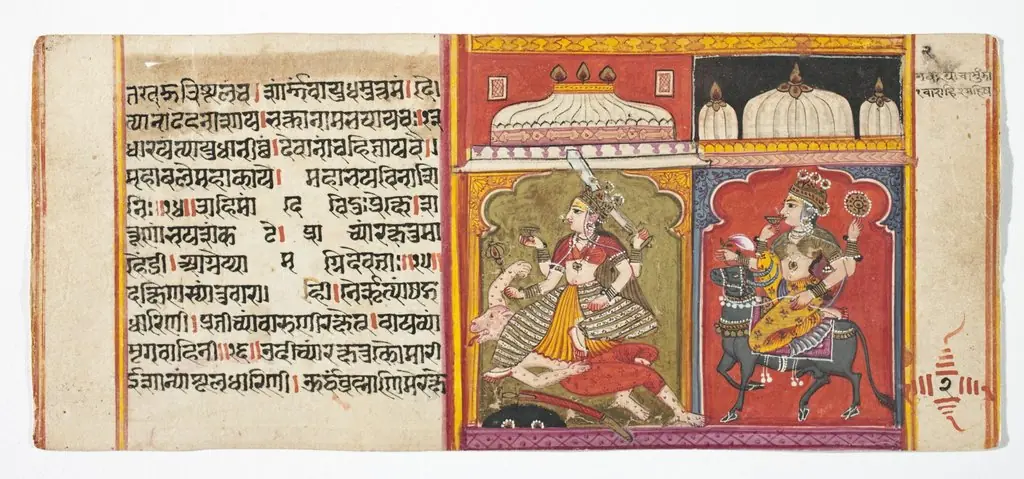
A framed textual panel on the left, written in an undeciphered script, indicates the work’s function as an illustrated manuscript page.
This painting depicts a narrative scene from the Legend of Durga, rendered in a stylized regional tradition. Two figures sit atop a white stone wall, one gesturing while the other holds a cup, suggesting a moment of dialogue or ritual. A horse with ornate harnessing stands behind them, and a red structure with a yellow frame and black roof forms the backdrop. A framed textual panel on the left, written in an undeciphered script, indicates the work’s function as an illustrated manuscript page.
Subject & Meaning
The figures likely represent divine or royal characters from the Durga legend, possibly engaged in a moment of counsel or invocation. The cup may symbolize offering or sanctity, while the horse, richly adorned, could signify power or divine transport. The presence of script suggests the image is part of a larger textual narrative, where visual and written elements work together to convey mythological events tied to Durga’s triumph over evil.
Technique & Style
The painting employs flat, saturated colors with minimal shading, characteristic of manuscript illustration traditions. Outlines are crisp, and decorative elements—such as the horse’s harness and the bordering red and yellow frames—are rendered with precision. The architectural backdrop is simplified, emphasizing symbolic form over spatial realism. The script’s integration into the composition reflects a seamless union of text and image typical of illustrated religious manuscripts.
History & Provenance
The work originates from a manuscript tradition in northern India, likely produced in a royal or temple-associated atelier between the 17th and 19th centuries. Its format—illustrated page with bordered text—aligns with regional practices of preserving sacred narratives. The undeciphered script suggests a local language or dialect, possibly linked to a specific court or religious community. Its survival indicates continued reverence for the Durga legend in devotional contexts.
Context
This painting belongs to a broader corpus of illustrated Hindu manuscripts that visually narrate episodes from the Devi Mahatmya, a text central to the worship of Durga. Such works were used in ritual settings, scholarly study, or courtly display. The inclusion of a horse and architectural elements reflects contemporary aesthetics and social hierarchies, while the script’s presence underscores the importance of textual authority in transmitting religious stories.
Legacy
Though the script remains untranslated and the artist unidentified, the painting preserves a localized interpretation of the Durga legend, offering insight into regional artistic practices and devotional culture. It contributes to the understanding of how mythological narratives were visually encoded in manuscript form, bridging oral tradition, written scripture, and pictorial art in pre-modern South Asia.
Artist & collection

 Domestic Scene
 Giacomo and Cardinal Marco, investing Andrea, Abbot of San Zeno, with his Benefice
 The Nymph of Fontainebleau
 Portrait of a Woman
 Madonna and Child with Saints in the Enclosed Garden
 Venus and Minerva
 Family Group of Four on Sofa
 Wall painting from Room H of the Villa of P. Fannius Synistor at Boscoreale