Artwork
Legend of Durga
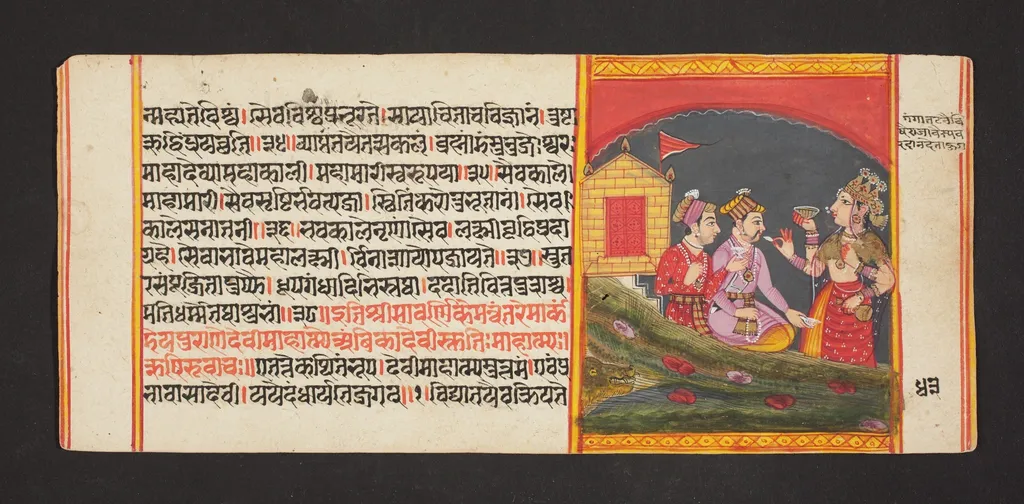
Legend of Durga is an unspecified painting by Unknown. It is held in the collection of the Detroit Institute of Arts.
About this work
Overview
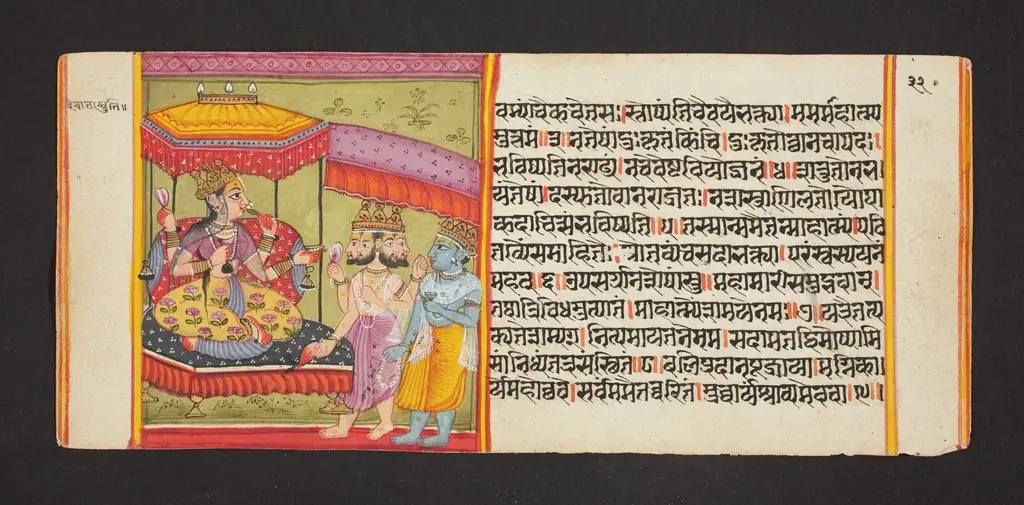
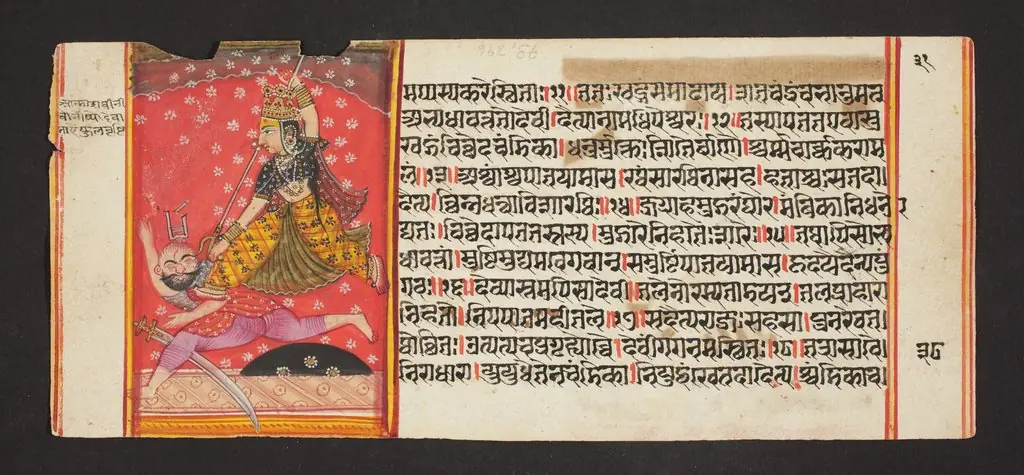
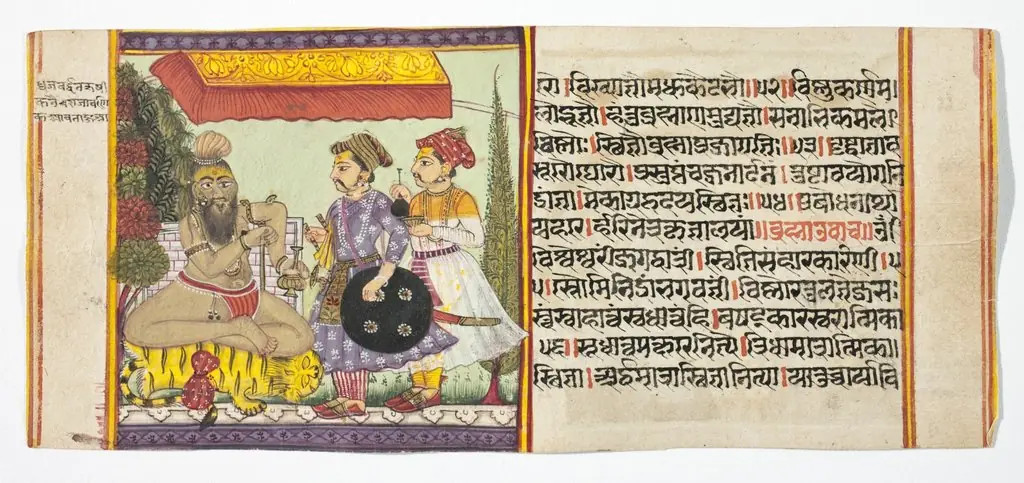
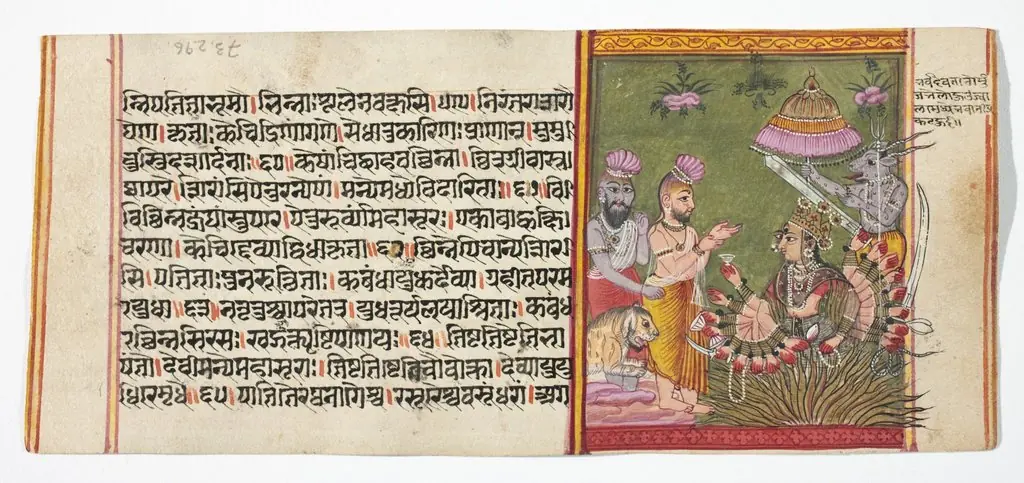
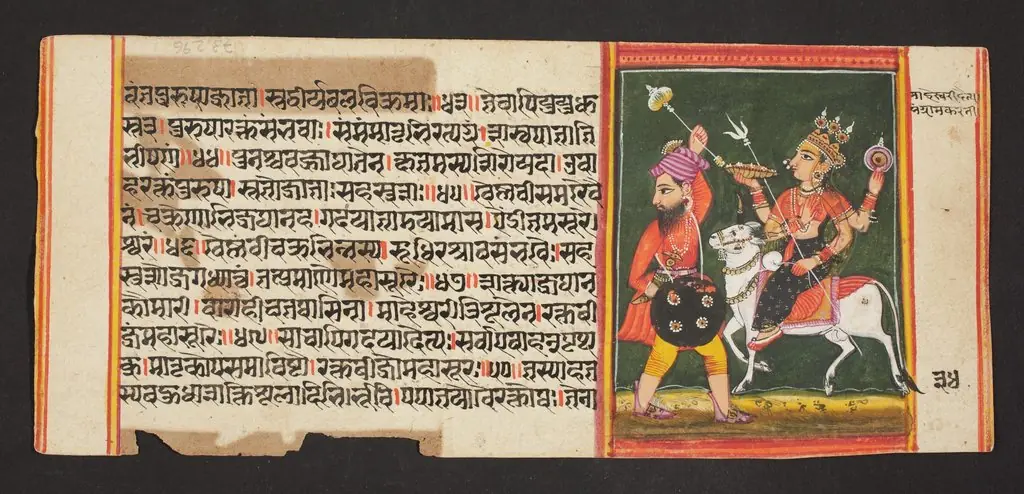
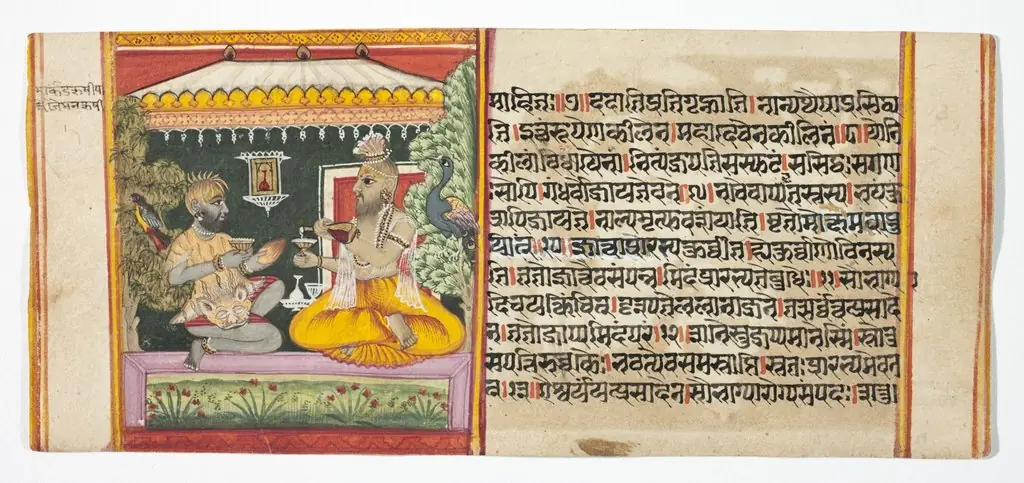
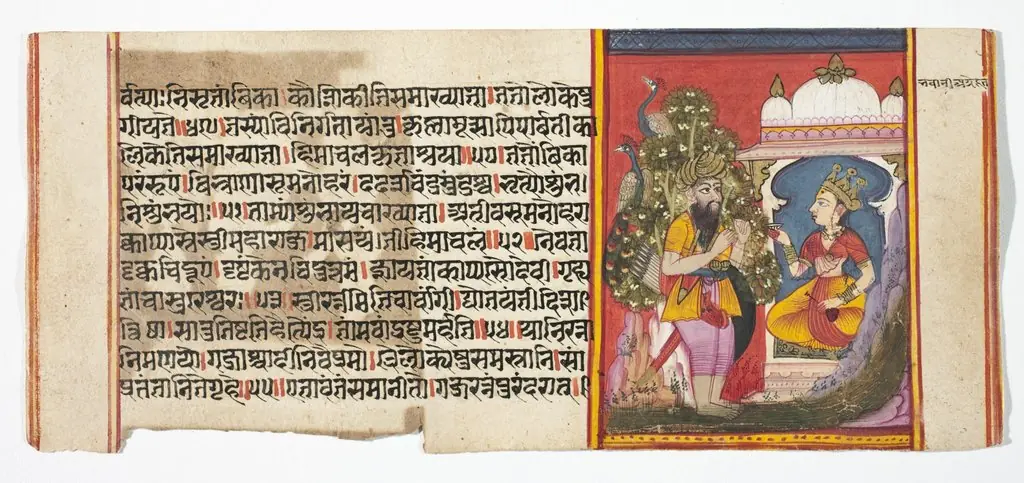
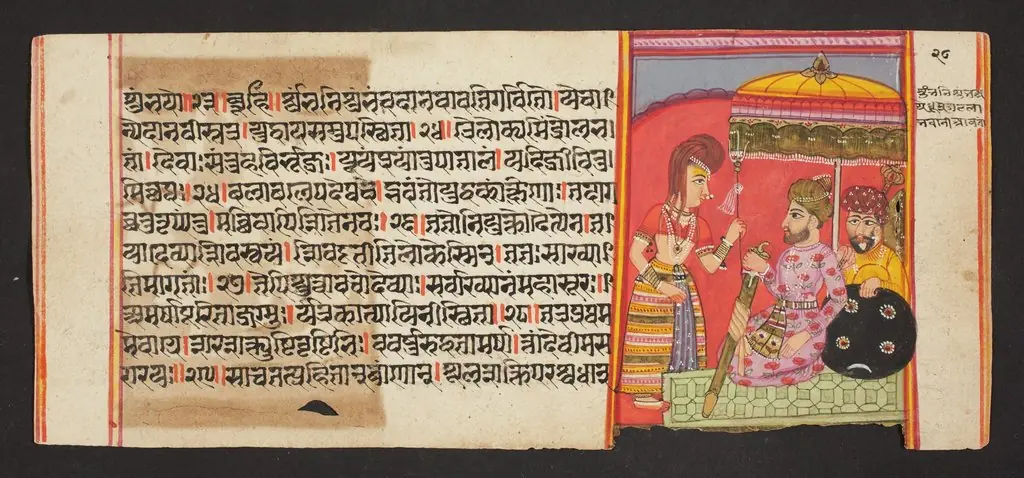
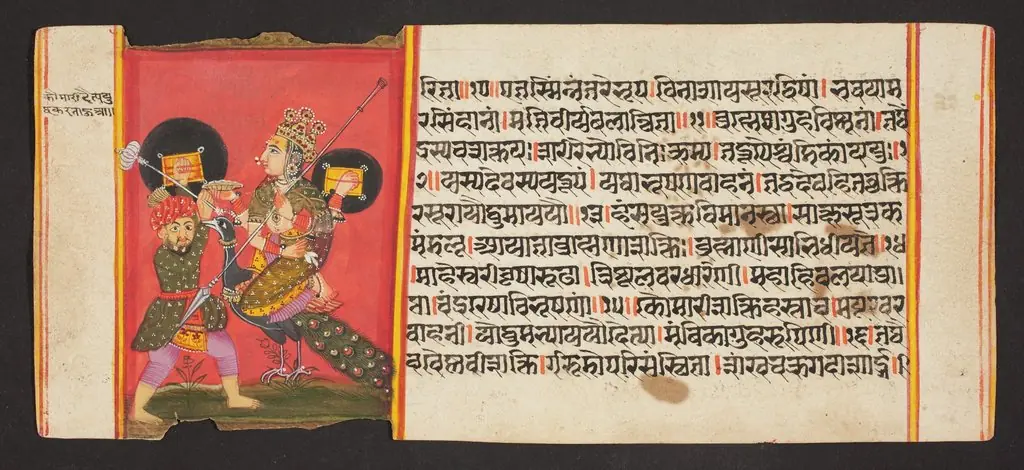
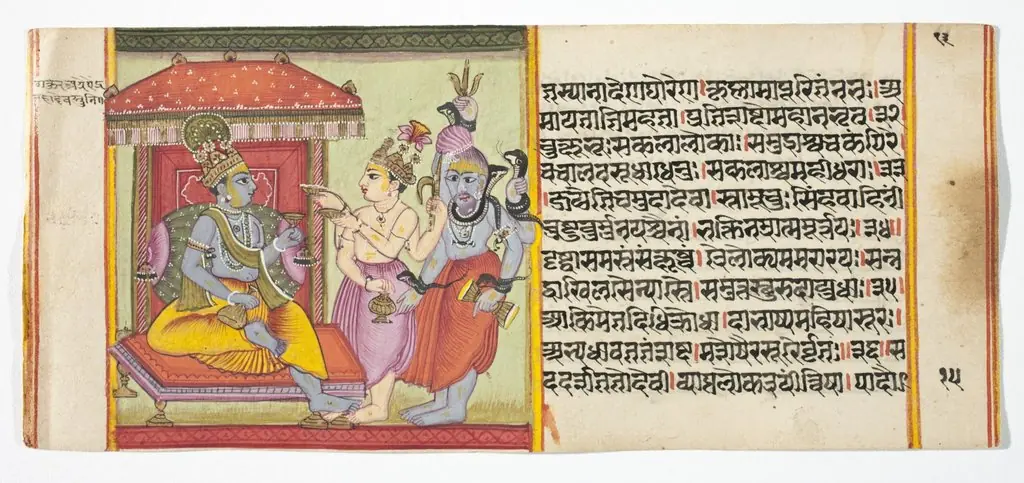
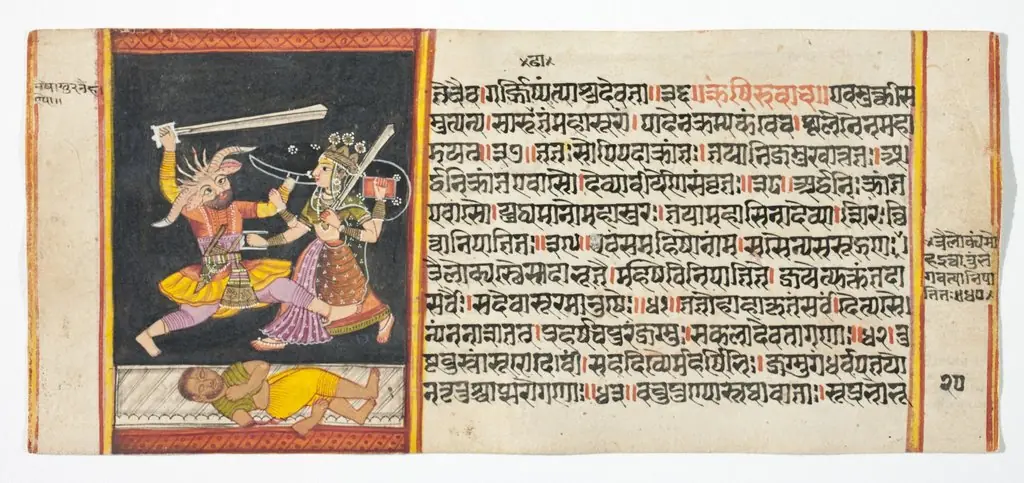
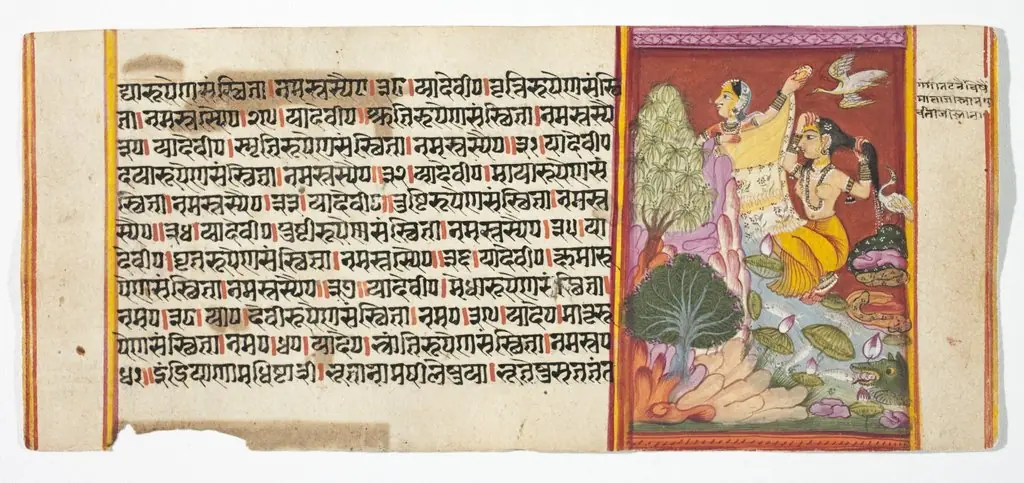
This painting illustrates a moment from the Legend of Durga, rendered in a traditional Indian artistic idiom. Three figures stand before a structured edifice under a dark, unmodeled background, emphasizing their presence through vivid color and precise outline. The composition avoids perspective depth, instead relying on symbolic placement and chromatic contrast to convey narrative importance.
Subject & Meaning
The central figure, adorned with a pink robe and crown, represents the goddess Durga, flanked by two attendants in red and green robes. The building with its red door and yellow wall, crowned by a red flag, may symbolize a divine abode or temple. The scene captures a moment of divine authority, likely from a moment of triumph or invocation in the mythic narrative of Durga’s victory over evil.
Technique & Style
The work employs bold, clean outlines and saturated pigments typical of regional Indian miniature or folk painting traditions. Details in fabric, jewelry, and architecture are rendered with meticulous care, while the absence of shading and flat color fields enhance the decorative rhythm. Movement is suggested through dynamic drapery and directional gaze, not spatial depth.
History & Provenance
The painting’s origin is likely from a north Indian or Rajasthani atelier active in the 18th or 19th century, where devotional narratives were commonly illustrated for private or temple use. No documented provenance is available, but its stylistic features align with regional schools that preserved mythological themes through generations of artisan practice.
Context
Paintings like this served both ritual and educational roles, reinforcing mythic narratives for communities with limited textual access.
Depictions of Durga were central to Hindu devotional culture, especially during festivals like Navaratri. Paintings like this served both ritual and educational roles, reinforcing mythic narratives for communities with limited textual access. The emphasis on color and symbolic architecture reflects a visual language developed over centuries to communicate sacred stories without reliance on written scripture.
Legacy
This work exemplifies the endurance of indigenous Indian painting traditions in portraying religious epics. Though modern art movements shifted toward abstraction and realism, such compositions continue to influence contemporary Indian illustrators and revivalist artists who seek to preserve pre-colonial visual vocabularies rooted in spiritual storytelling.
Artist & collection

 Domestic Scene
 Giacomo and Cardinal Marco, investing Andrea, Abbot of San Zeno, with his Benefice
 The Nymph of Fontainebleau
 Portrait of a Woman
 Madonna and Child with Saints in the Enclosed Garden
 Venus and Minerva
 Family Group of Four on Sofa
 Wall painting from Room H of the Villa of P. Fannius Synistor at Boscoreale