Artwork
Samurai
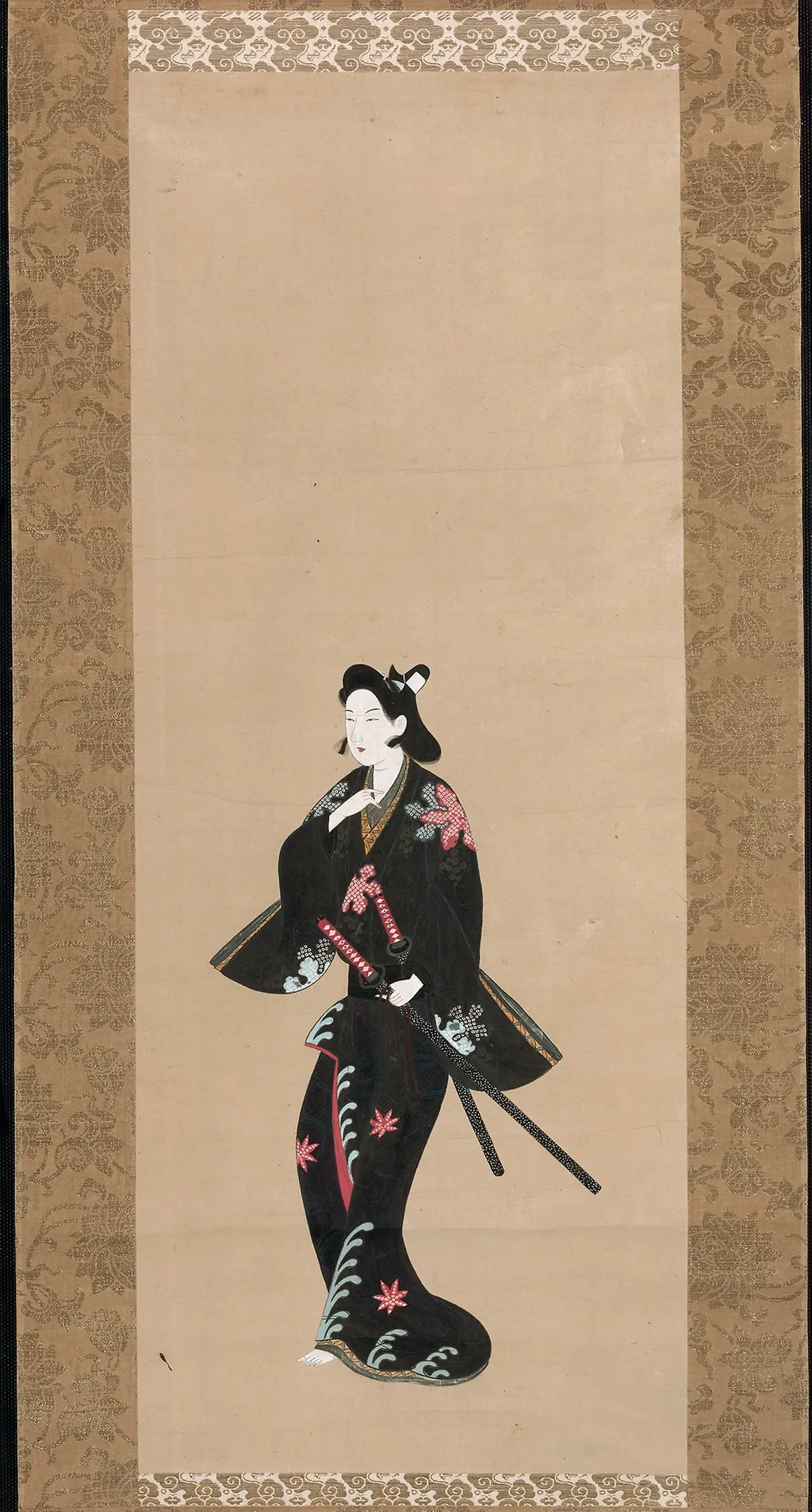
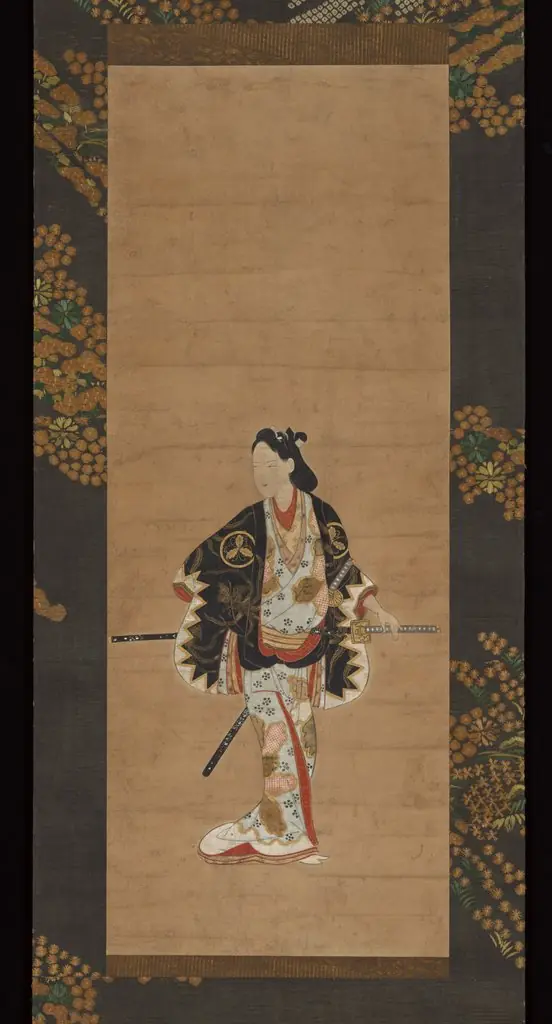
Samurai is an unspecified painting by the Rococo painting artist Unknown. It dates from 1762 and is held in the collection of the Art Institute of Chicago.
About this work
Overview
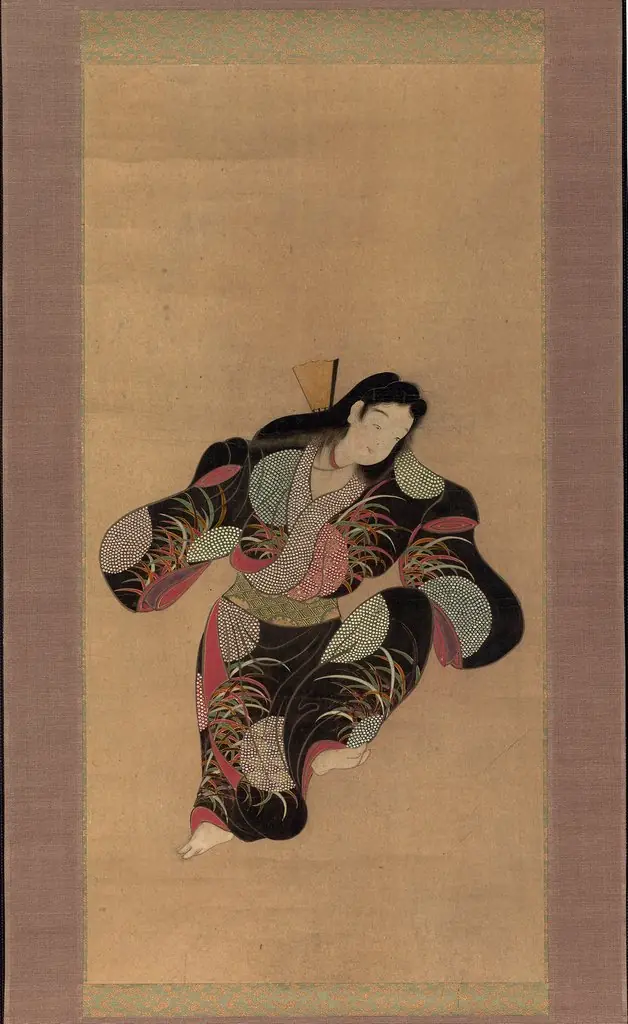
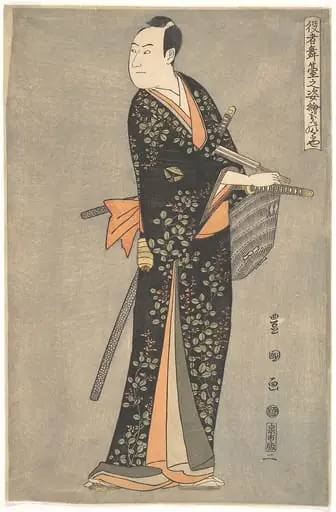
She wears a black kimono decorated with pink and white floral motifs, accented by a red lining at the hem and a patterned white obi.
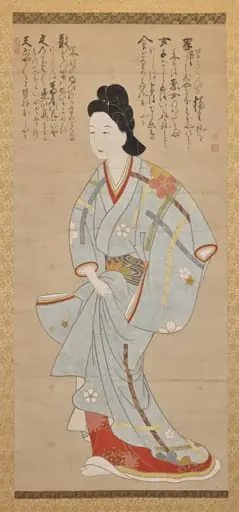
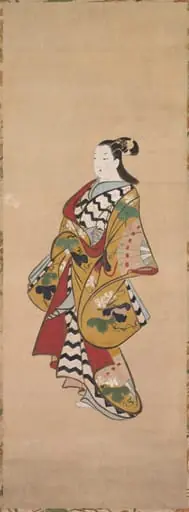
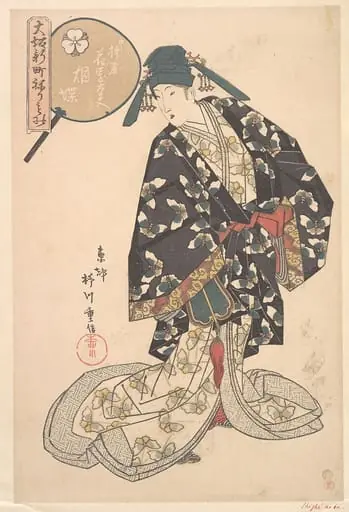
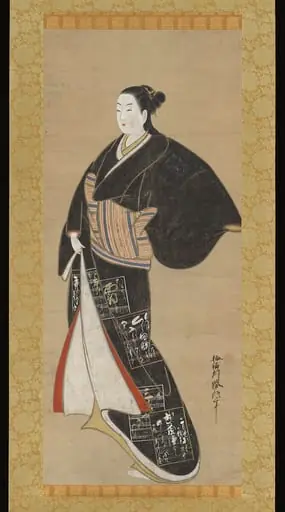
This painting portrays a woman dressed as a samurai, blending traditional Japanese attire with martial symbolism. She wears a black kimono decorated with pink and white floral motifs, accented by a red lining at the hem and a patterned white obi. Her sword, with a red handle, is held firmly in her right hand. The subdued brown background and ornate border frame her poised figure, emphasizing composure and quiet strength.
Subject & Meaning
The figure challenges conventional gender roles by assuming the identity of a warrior, traditionally male in Japanese culture. Her elegant appearance contrasts with the weapon she carries, suggesting a fusion of beauty and discipline. The floral patterns may symbolize transience or resilience, reinforcing themes of inner fortitude within refined form. The image invites contemplation of identity, duty, and the duality of grace and power.
Technique & Style
The artist employs fine brushwork to render the kimono’s intricate patterns and the subtle gradations of fabric texture. The red lining and sword handle provide deliberate accents against the muted palette, drawing focus to key elements. The background’s light brown tone and bordered floral motif reflect ukiyo-e traditions, while the composition’s stillness and symmetry convey a sense of controlled serenity.
History & Provenance
The painting’s origin and creator remain undocumented in publicly available records. It entered the collection of the Art Institute of Chicago, where it is preserved as part of their broader holdings in Japanese art. Its provenance suggests it may have been produced in the late Edo or early Meiji period, a time when depictions of female warriors gained renewed cultural interest.
Context
During the late 19th century, Japanese art increasingly featured reinterpretations of historical and mythological figures, including female warriors like those from folklore or kabuki theater. This work aligns with a broader trend of visual storytelling that reimagined gender roles amid rapid social change. Such images served both aesthetic and symbolic purposes, reflecting shifting societal values.
Legacy
The painting contributes to a visual archive that redefines samurai identity beyond masculinity. It continues to inform contemporary discussions on gender, representation, and cultural memory in Japanese art. Its presence in a major Western museum underscores its role as a bridge between traditional aesthetics and evolving interpretations of power and poise.
Artist & collection

 Domestic Scene
 Giacomo and Cardinal Marco, investing Andrea, Abbot of San Zeno, with his Benefice
 The Nymph of Fontainebleau
 Portrait of a Woman
 Madonna and Child with Saints in the Enclosed Garden
 Venus and Minerva
 Family Group of Four on Sofa
 Wall painting from Room H of the Villa of P. Fannius Synistor at Boscoreale