Artwork
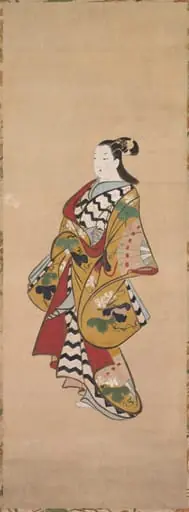
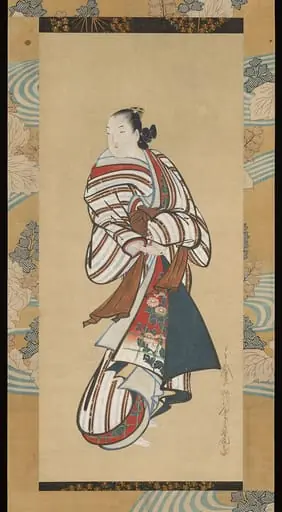
Figure of a Woman
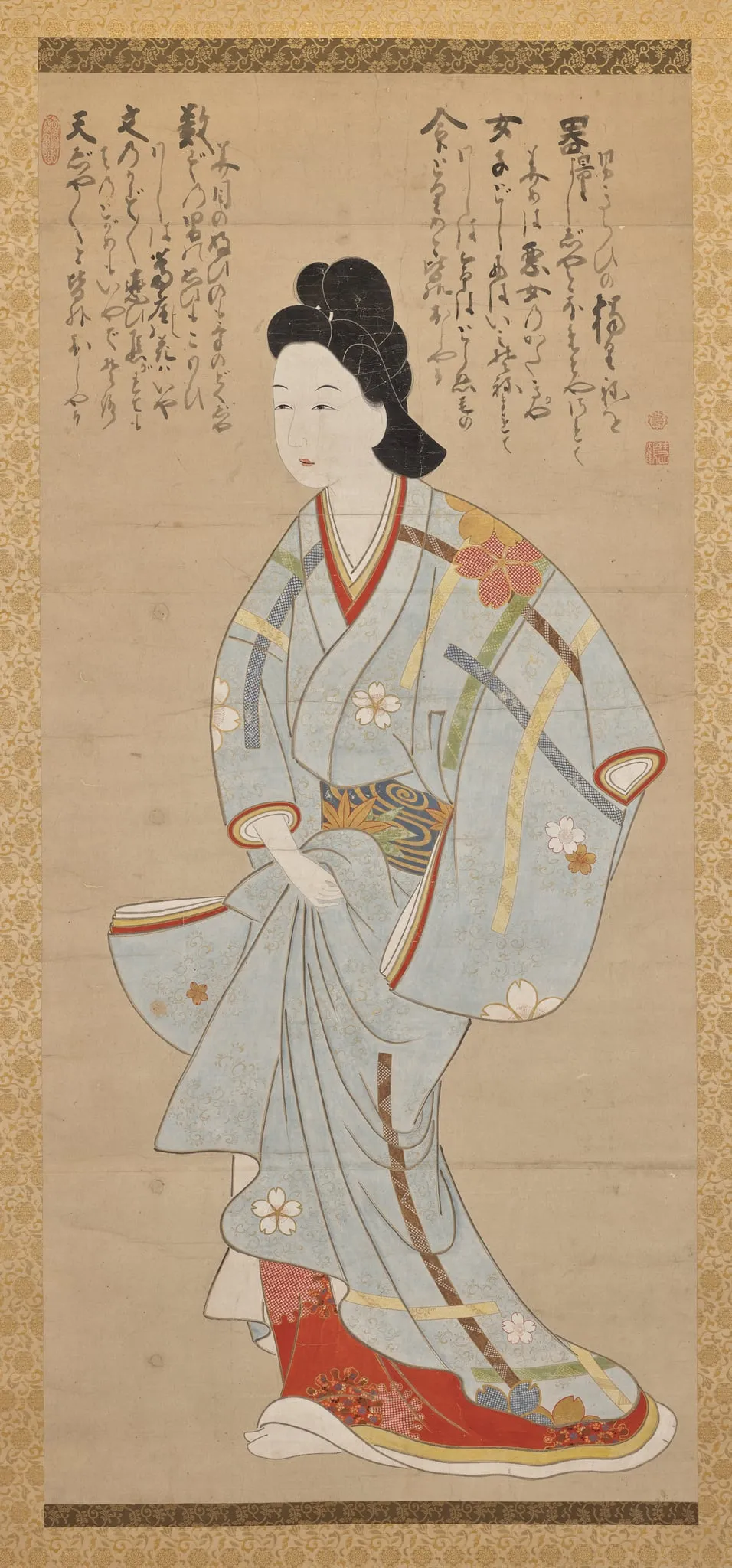
Figure of a Woman is an unspecified painting by the Baroque artist Hakuin Ekaku. It dates from 1704 and is held in the collection of the Cleveland Museum of Art.
About this work
Overview
Figure of a Woman is a Japanese painting attributed to the Zen monk‑artist Hakuin Ekaku, executed around 1704. The work is part of the collection of the Cleveland Museum of Art. It presents a solitary female figure in profile, rendered with a delicate balance of line and colour that typifies early eighteenth‑century Japanese portraiture.
Subject & Meaning
The composition depicts a woman dressed in a light‑blue kimono, her black hair styled in a traditional fashion. She holds the front edge of her robe, a gesture that emphasizes the garment’s texture and pattern. The presence of floral and vegetal motifs on the kimono suggests an association with seasonal or poetic symbolism common in Japanese visual culture.
Technique & Style
Hakuin employs ink outlines combined with mineral pigments to achieve vivid reds, yellows, blues and greens across the kimono’s decorative fields. The background is rendered in a muted beige, allowing the patterned garment to dominate the visual field. Brushwork varies from fine, controlled lines for the facial features to broader, more expressive strokes that convey the movement of the fabric.
History & Provenance
Created in the early Edo period, the painting entered the Cleveland Museum of Art’s holdings through acquisition in the twentieth century, though the exact path of ownership prior to that remains undocumented in public records. Its attribution to Hakuin Ekaku aligns with the artist’s known practice of integrating Zen themes with secular portraiture.
Artist & collection


 Courtesan
 Untitled
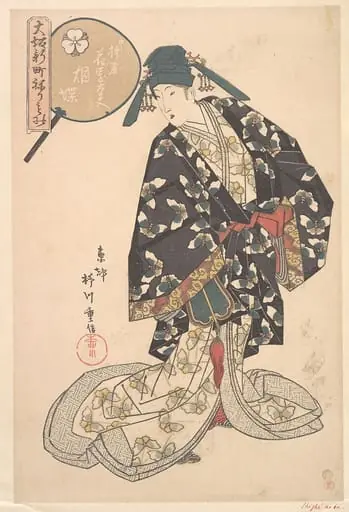 Untitled
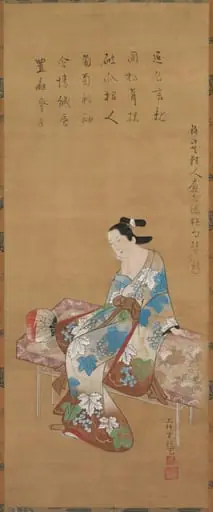 Courtesan Seated on a Bench Enjoying the Evening Cool in Summer
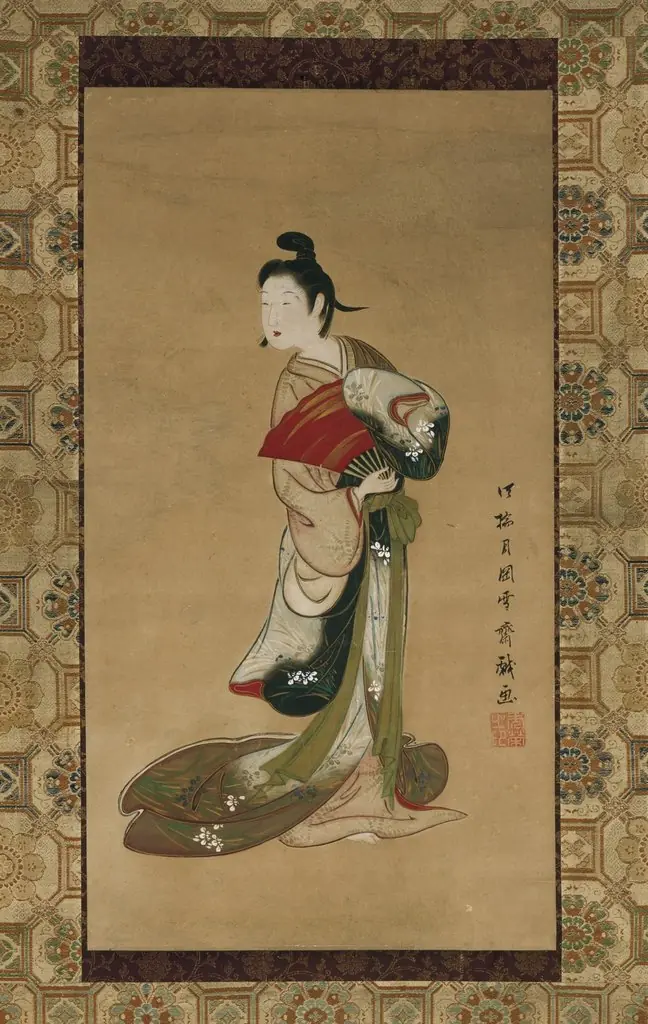 Courtesan
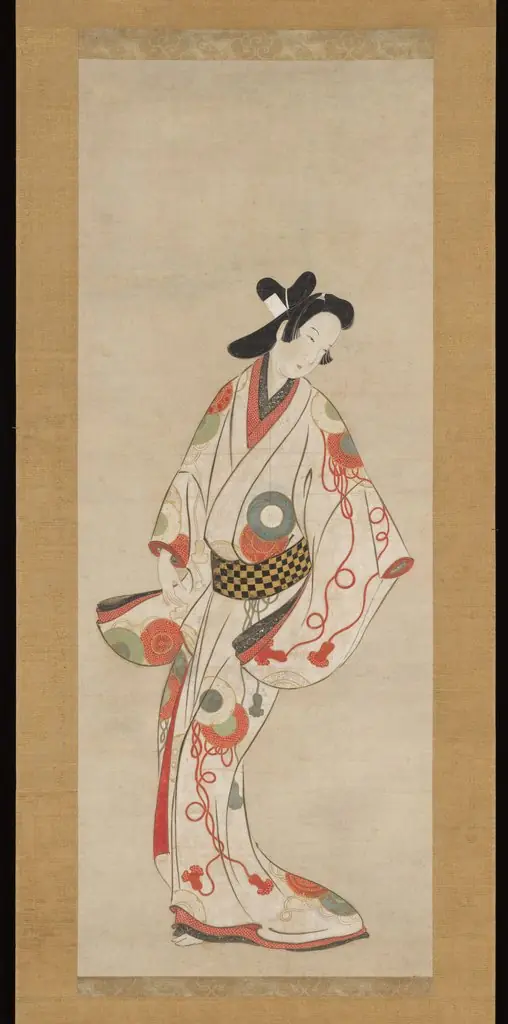 Elegantly Garbed Male Youth
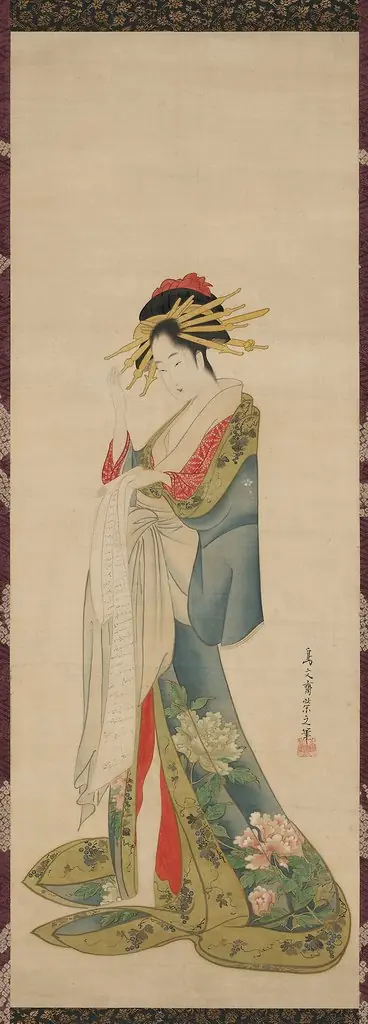 A Courtesan Reading a Letter
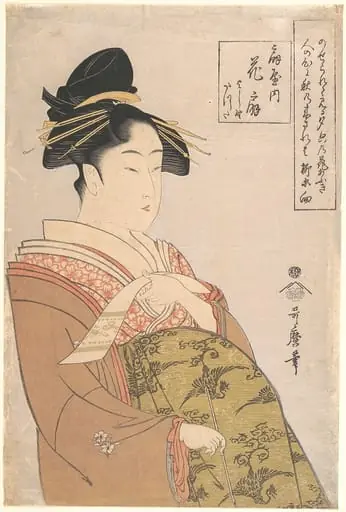 「扇屋内花扇図」|The Courtesan Hanaōgi of the Ōgiya Brothel in Yoshiwara (Ōgiya uchi Hanaōgi, Yoshino, Tatsuta)
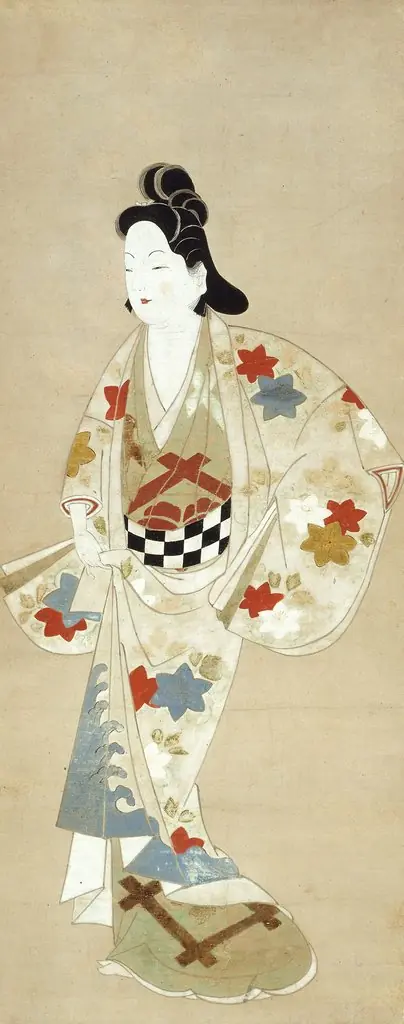 Standing Beauty
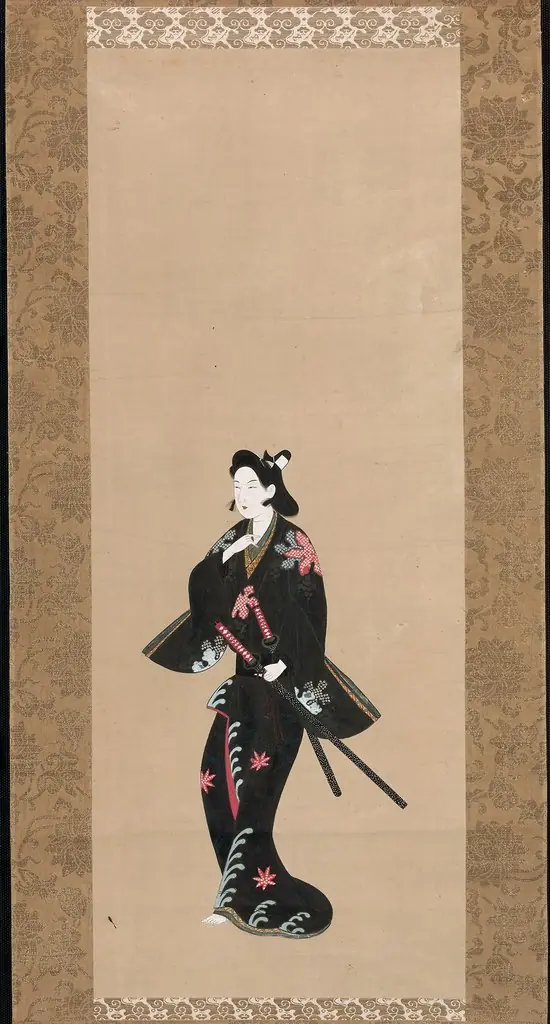 Samurai
 Untitled
 Kureha of Gakuiseya, from Selection of Beauties from the Pleasure Quarters