Artwork
Tantric Manuscript, "Sangrahani Sutra"
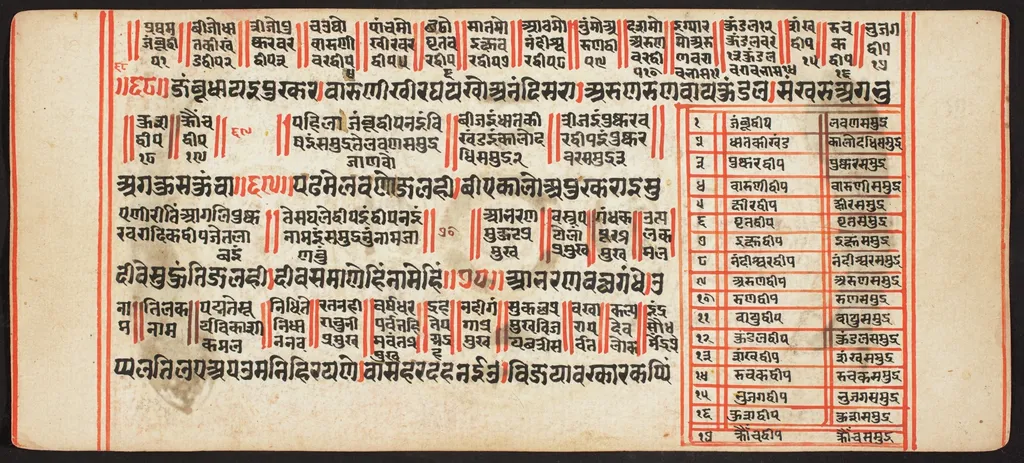
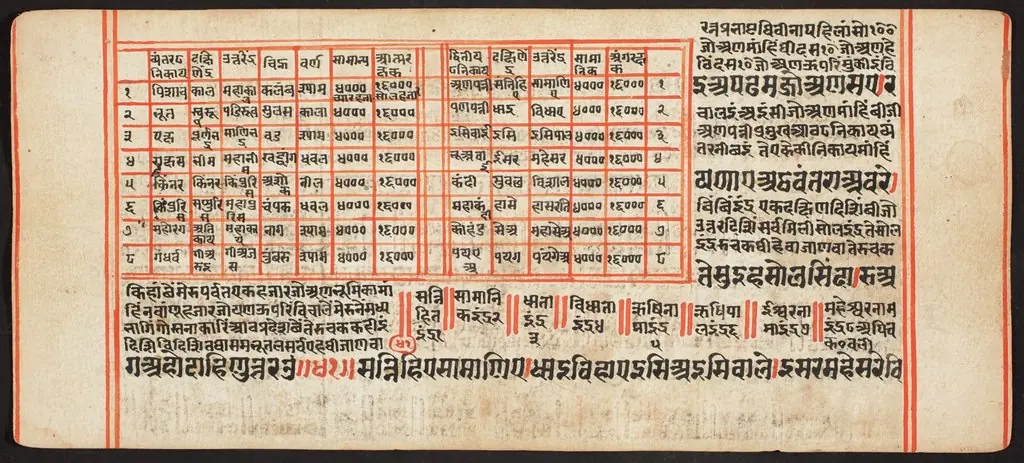
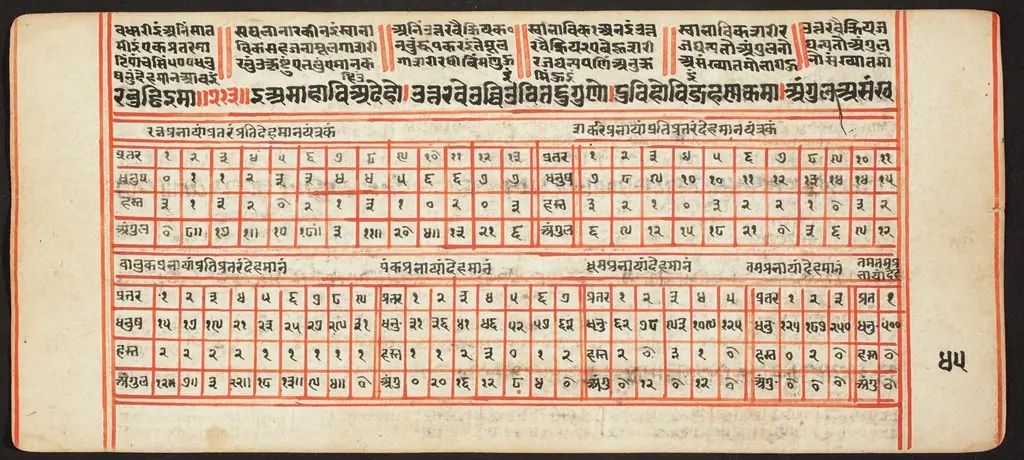
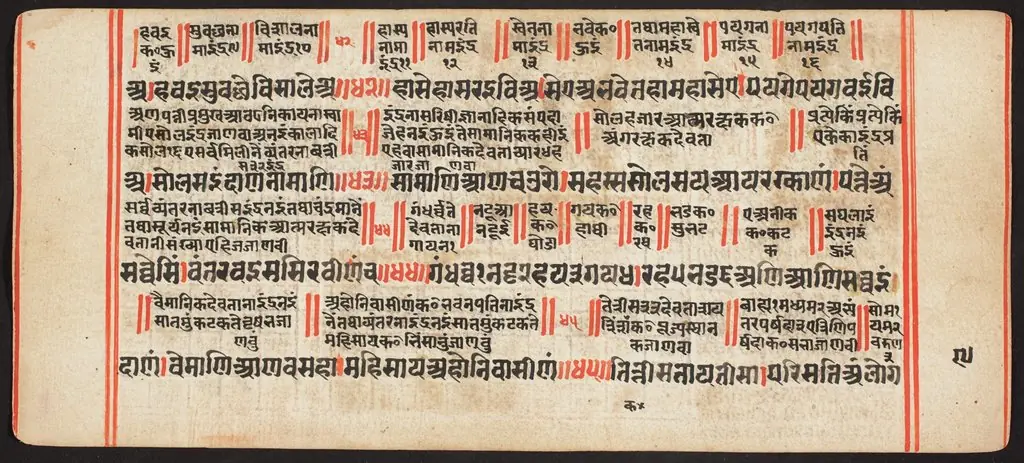
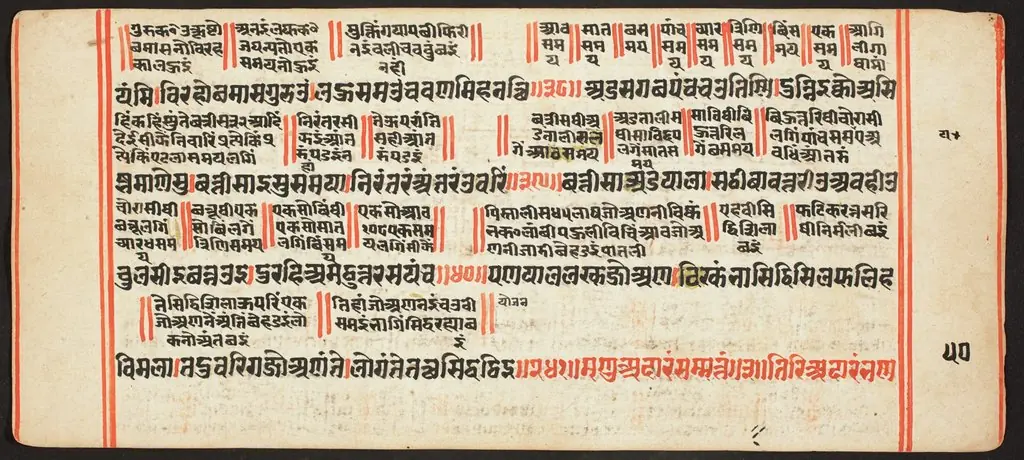
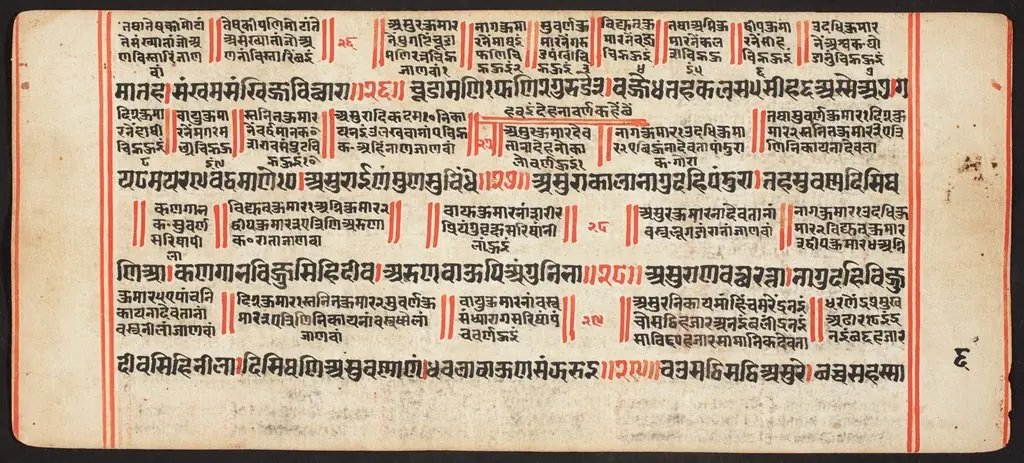
Tantric Manuscript, "Sangrahani Sutra" is an unspecified painting by Unknown. It is held in the collection of the Detroit Institute of Arts. This page originates from a handwritten religious manuscript known as the Sangrahani Sutra, produced in a South Asian context.
About this work
Overview
This page originates from a handwritten religious manuscript known as the Sangrahani Sutra, produced in a South Asian context.
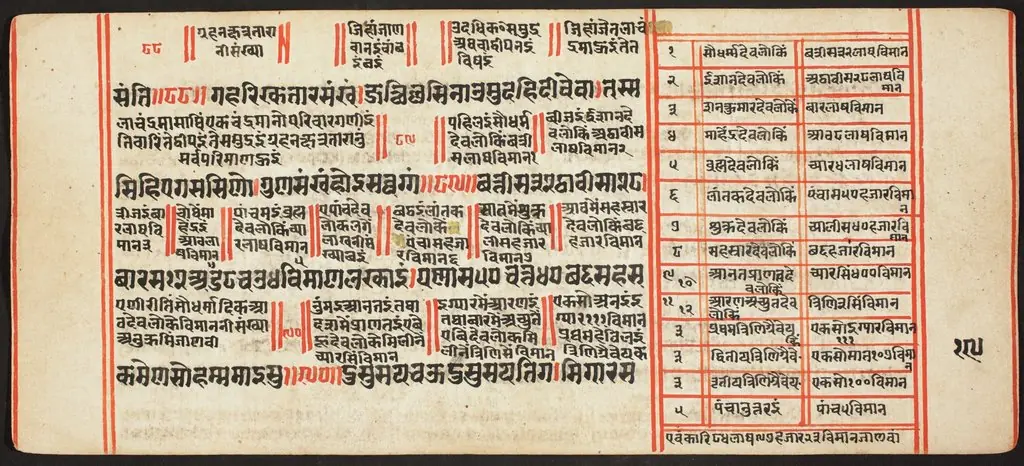
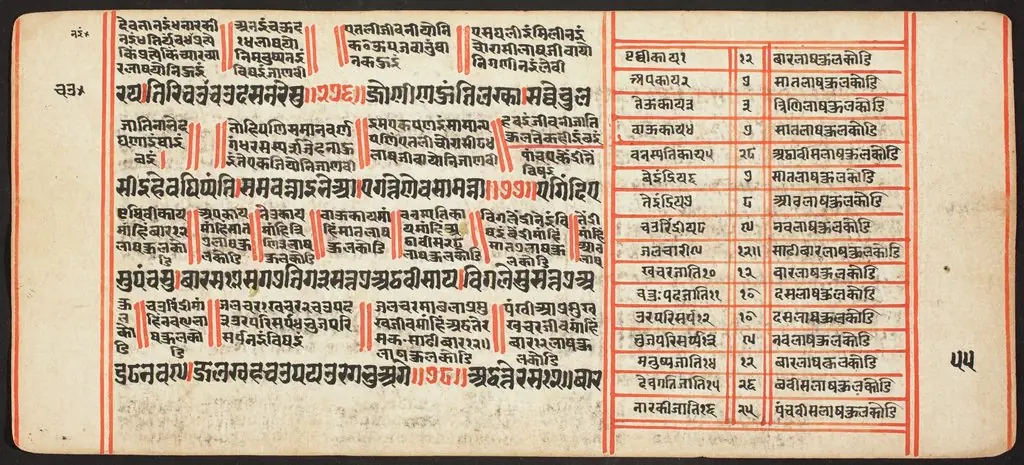
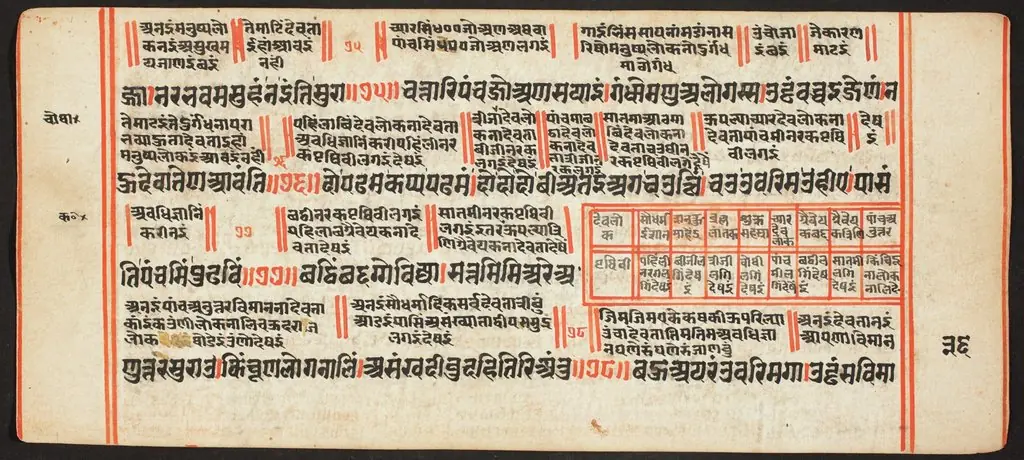
This page originates from a handwritten religious manuscript known as the Sangrahani Sutra, produced in a South Asian context. The surface is dominated by dense script in black ink, arranged in orderly rows across a pale beige ground. Red ink is used for punctuation, section markers, and decorative lines, indicating a ritual or liturgical function. The precision of the writing and the restrained palette reflect a tradition of devotional manuscript production.
Subject & Meaning
The text is a doctrinal compilation likely drawn from Buddhist or Hindu tantric literature, though the specific script remains unidentified. Its content was intended for recitation, meditation, or ritual use, with the physical form itself serving as an object of veneration. The consistent use of red accents—often symbolic of energy or sacred power—reinforces the spiritual gravity of the words, treating the page as both vessel and offering.
Technique & Style
The script is meticulously rendered in fine brushwork, with uniform letterforms and consistent spacing. Red lines demarcate verses and structural divisions, while occasional flourishes suggest scribal training in standardized calligraphic forms. No illustrations are present; emphasis is placed entirely on textual integrity. The materials—organic ink on handmade paper—align with regional manuscript traditions where material quality reflected textual sanctity.
History & Provenance
The manuscript page likely dates to the medieval period, produced in a monastic or royal scriptorium across the Indian subcontinent. Its survival suggests it was preserved in a religious institution or private collection, possibly due to its liturgical utility. No documented provenance exists beyond its physical characteristics, which align with known examples from eastern or northeastern India.
Context
This page belongs to a broader tradition of sacred manuscript culture in South Asia, where handwritten texts were reproduced with ritual care, often by trained scribes under monastic supervision. Unlike printed books, each copy was unique, imbued with the spiritual presence of its maker. The absence of imagery reflects a textual emphasis common in tantric practices, where the word itself held transformative power.
Legacy
Though the specific lineage of this manuscript is unrecorded, it exemplifies a durable practice of sacred writing that persisted for centuries across Buddhist and Hindu communities. Surviving fragments like this one offer insight into the material culture of religious study, where the act of copying was as spiritually significant as the content itself.
Artist & collection

 Domestic Scene
 Giacomo and Cardinal Marco, investing Andrea, Abbot of San Zeno, with his Benefice
 The Nymph of Fontainebleau
 Portrait of a Woman
 Madonna and Child with Saints in the Enclosed Garden
 Venus and Minerva
 Family Group of Four on Sofa
 Wall painting from Room H of the Villa of P. Fannius Synistor at Boscoreale
 Tantric Manuscript, "Sangrahani Sutra"
 Tantric Manuscript, "Sangrahani Sutra"
 Tantric Manuscript, "Sangrahani Sutra"
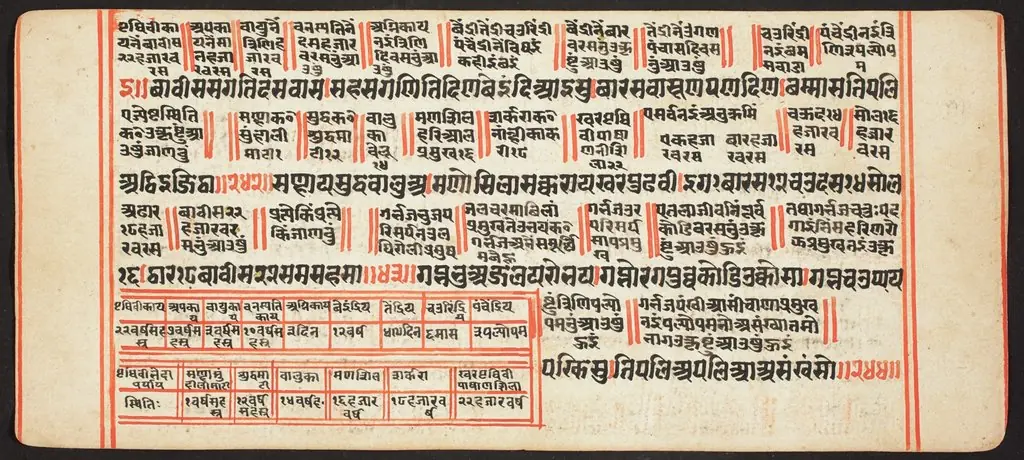 Tantric Manuscript, "Sangrahani Sutra"
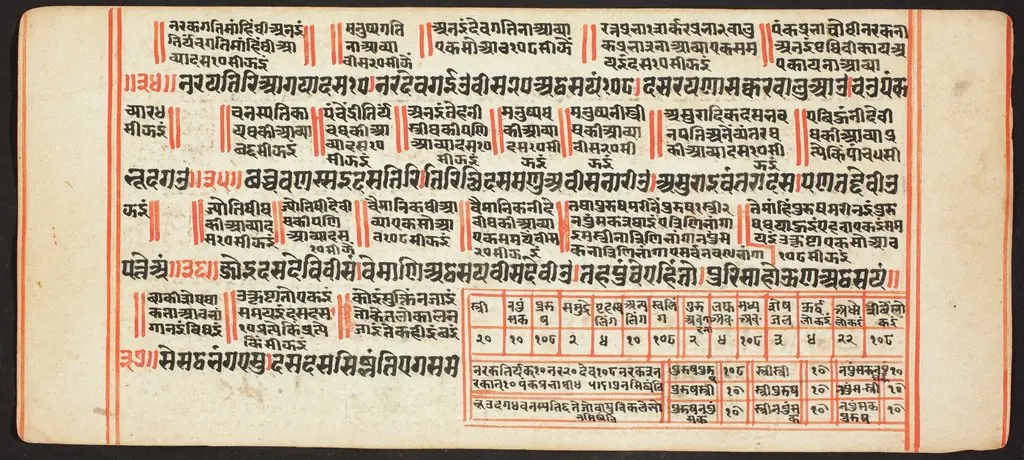 Tantric Manuscript, "Sangrahani Sutra"
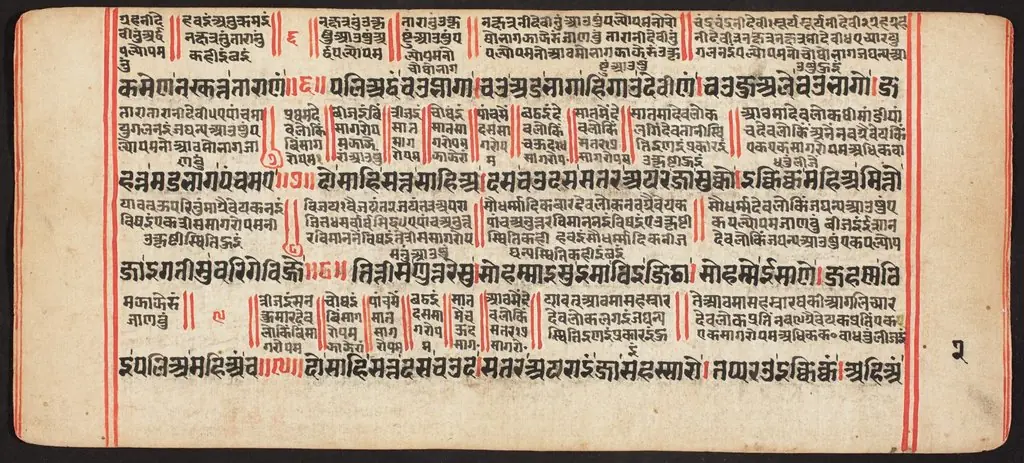 Tantric Manuscript, "Sangrahani Sutra"
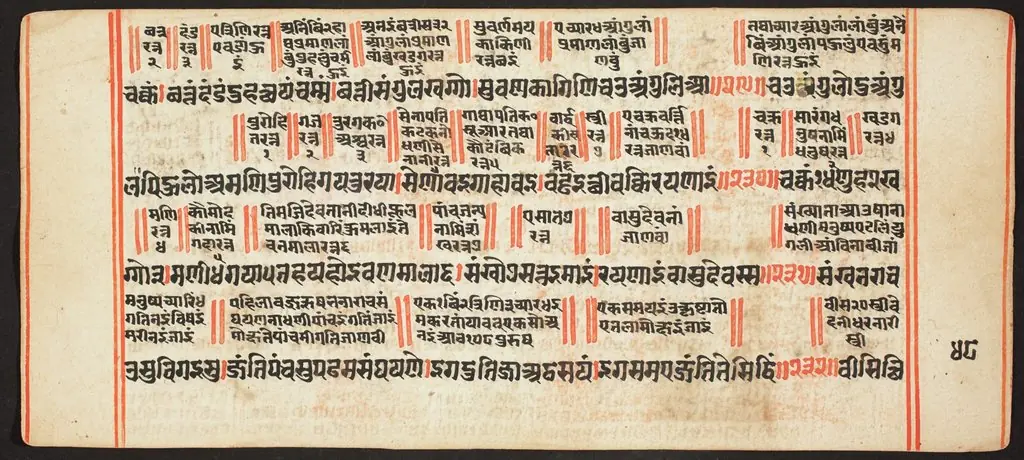 Tantric Manuscript, "Sangrahani Sutra"
 Tantric Manuscript, "Sangrahani Sutra"
 Tantric Manuscript, "Sangrahani Sutra"
 Tantric Manuscript, "Sangrahani Sutra"
 Tantric Manuscript, "Sangrahani Sutra"
 Tantric Manuscript, "Sangrahani Sutra"