Artwork
King Enthroned in Pavilion and Retainers
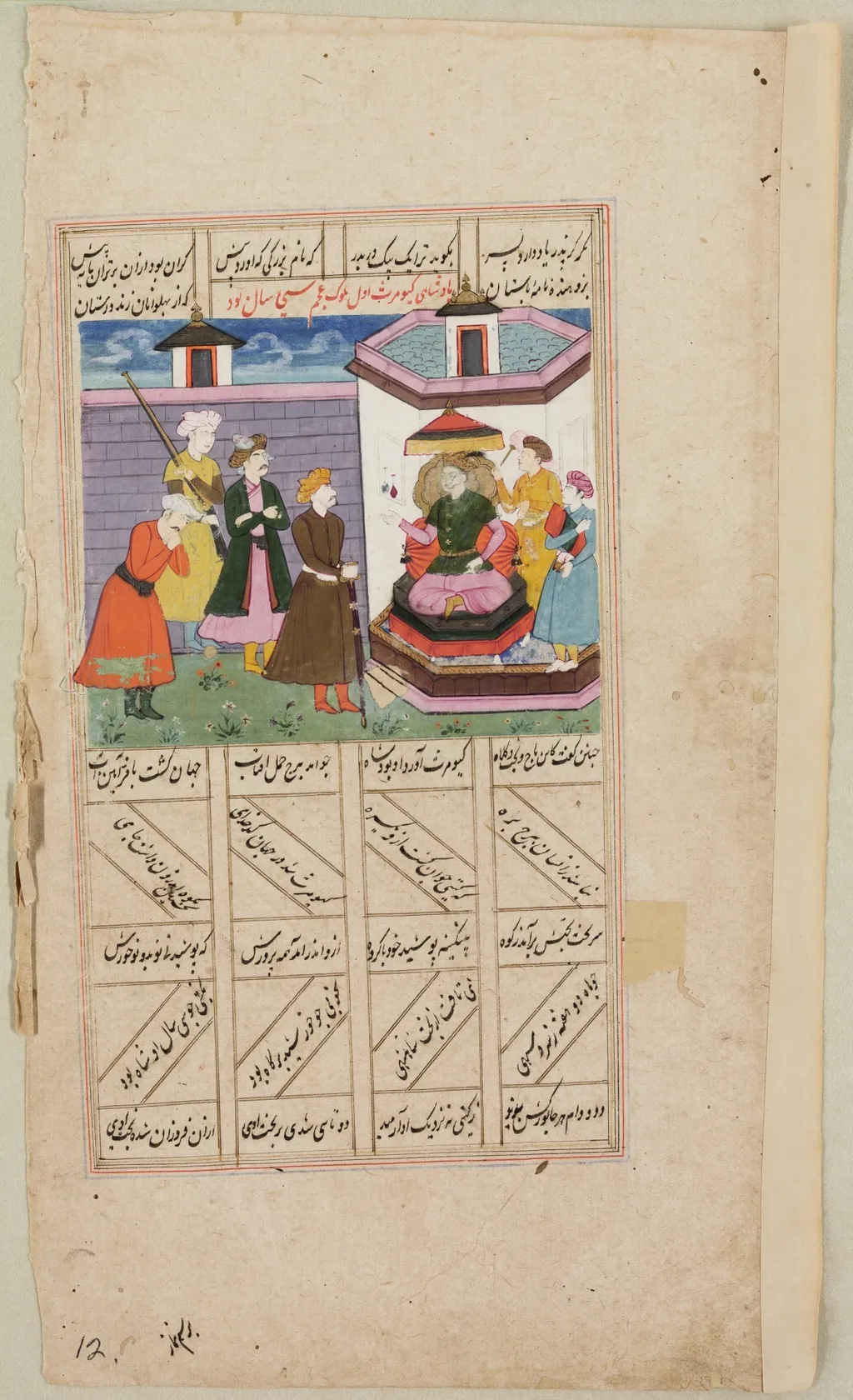
King Enthroned in Pavilion and Retainers is an unspecified painting by the Mughal Painting artist Unknown. It dates from 1620 and is held in the collection of the Detroit Institute of Arts. This painting portrays a royal figure seated on a throne inside an octagonal pavilion, flanked by four attendants.
About this work
Overview
The composition emphasizes hierarchy through spatial arrangement and costume, with the king centrally positioned and surrounded by figures in varied attire.
This painting portrays a royal figure seated on a throne inside an octagonal pavilion, flanked by four attendants. The composition emphasizes hierarchy through spatial arrangement and costume, with the king centrally positioned and surrounded by figures in varied attire. A fifth attendant stands outside the structure, reinforcing the sense of layered courtly presence. The background includes a simple brick wall and distant architecture, framed by a clear blue sky.
Subject & Meaning
The scene likely represents royal authority and ceremonial order, with the king as the focal point of power. The attendants, armed with swords and spears, suggest both protection and ritual function. The pavilion, a symbol of elevated status, isolates the monarch from the outer world, reinforcing his separation and dignity. The presence of weapons implies readiness for duty, not aggression, aligning with courtly ideals of controlled sovereignty.
Technique & Style
The work employs fine brushwork to render textures of fabric, metal, and stone with precision. Colors are vivid but not garish—green, pink, and muted tones create a harmonious palette. The architectural elements are rendered with geometric clarity, while the sky and clouds are softly modeled. The flatness of the background contrasts with the detailed foreground, a common feature in courtly painting traditions emphasizing symbolic space over naturalism.
History & Provenance
The painting originates from a courtly tradition in South or Southeast Asia, likely from the 17th or 18th century. Its style aligns with regional miniature painting practices, where royal patrons commissioned works to document ceremonial life. Though its exact origin and early ownership are undocumented, its materials and technique suggest production in a royal atelier, possibly linked to a regional kingdom with strong artistic patronage.
Context
In contemporary court culture, such images served to affirm the ruler’s legitimacy and divine right through visual symbolism. The pavilion, weapons, and orderly arrangement of attendants reflect established protocols of courtly display. Similar compositions appear in manuscripts and wall paintings from neighboring regions, indicating shared visual languages among elite circles, where art functioned as both record and assertion of power.
Legacy
This painting contributes to a broader corpus of courtly portraiture that influenced later regional styles. While not widely known outside specialized collections, it exemplifies how power was visually codified in pre-modern Asian courts. Its preservation offers insight into the aesthetics of authority and the role of visual culture in sustaining political hierarchy, informing scholarly understanding of non-Western royal imagery.
Artist & collection

 Domestic Scene
 Giacomo and Cardinal Marco, investing Andrea, Abbot of San Zeno, with his Benefice
 The Nymph of Fontainebleau
 Portrait of a Woman
 Madonna and Child with Saints in the Enclosed Garden
 Venus and Minerva
 Family Group of Four on Sofa
 Wall painting from Room H of the Villa of P. Fannius Synistor at Boscoreale
 Capture of King of Hamareram
 Caesarean Birth of Rustam
 King Slaying Enemy with a Dagger
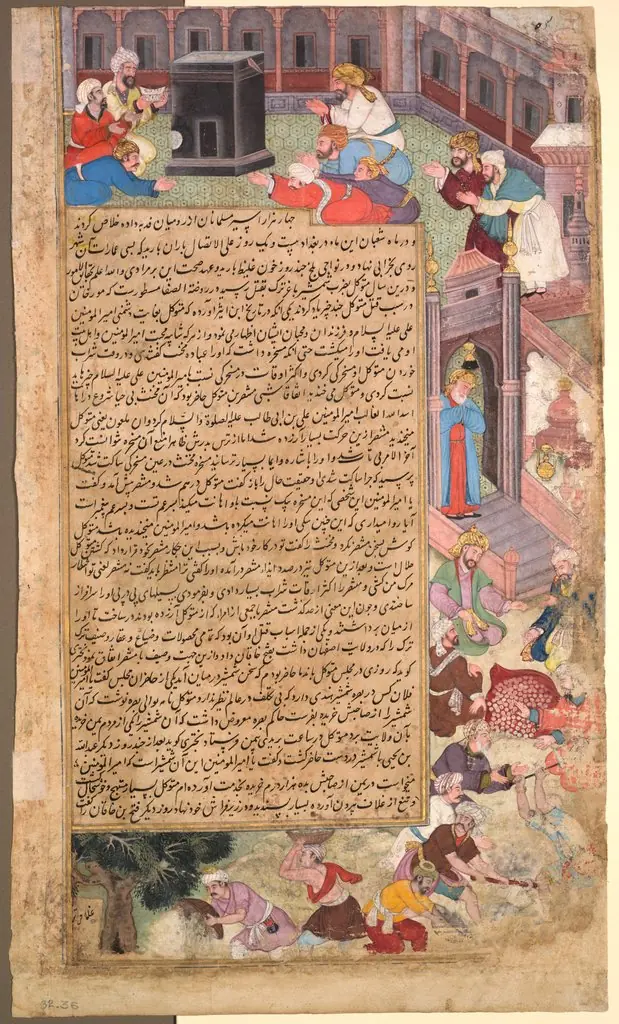 Page of disasters, from the Tarikh-i Alfi (History of a Thousand Years)
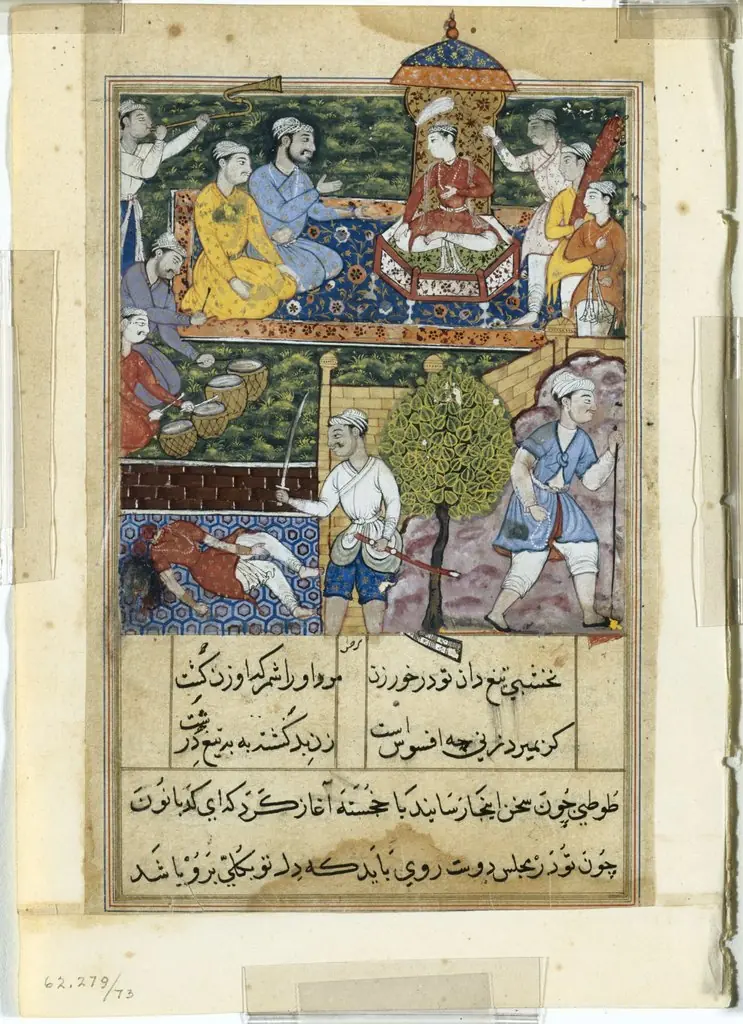 The young prince is crowned and the wicked handmaiden is executed, from a Tuti-nama (Tales of a Parrot): Eighth Night
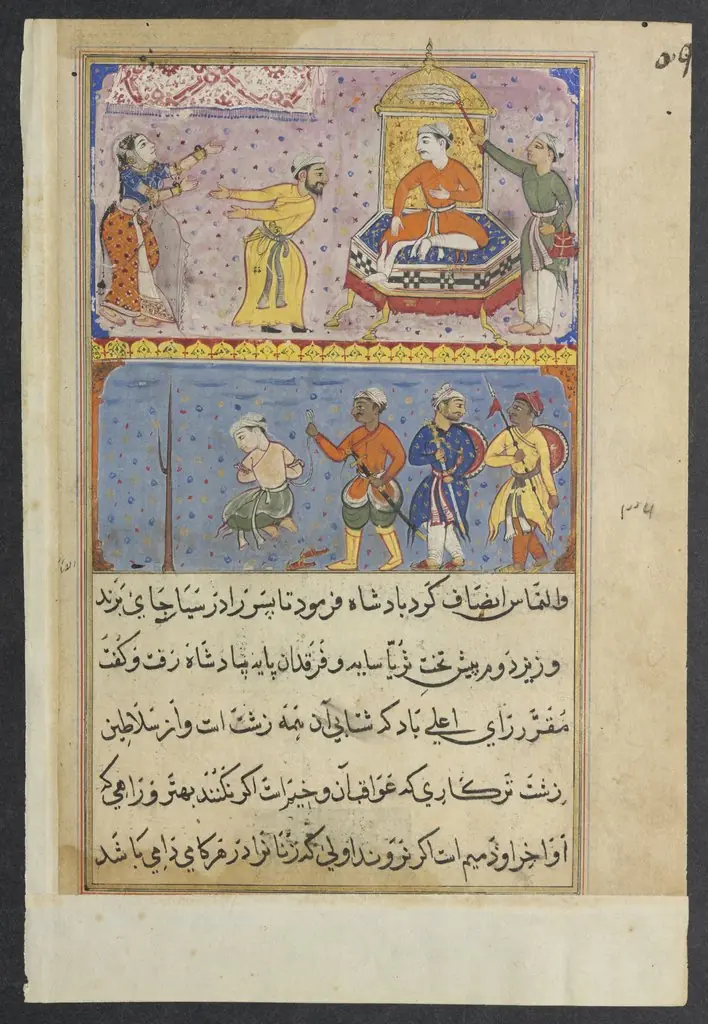 The prince, once reprieved, is returned to the palace of execution a second time on the plea of the king’s handmaiden, from a Tuti-nama (Tales of a Parrot): Eighth Night
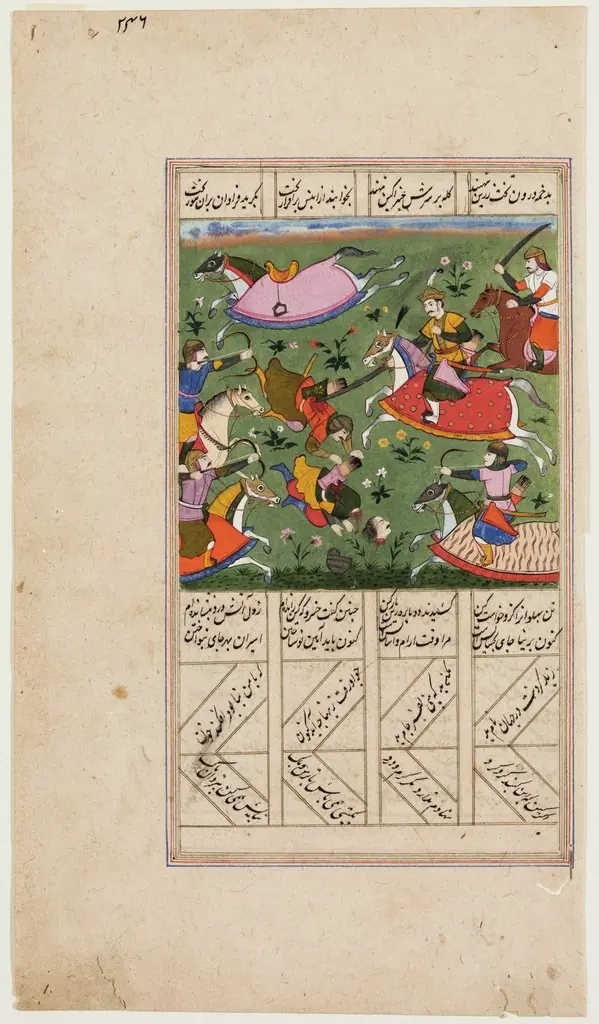 Cavalry Battle with Beheaded Warrior
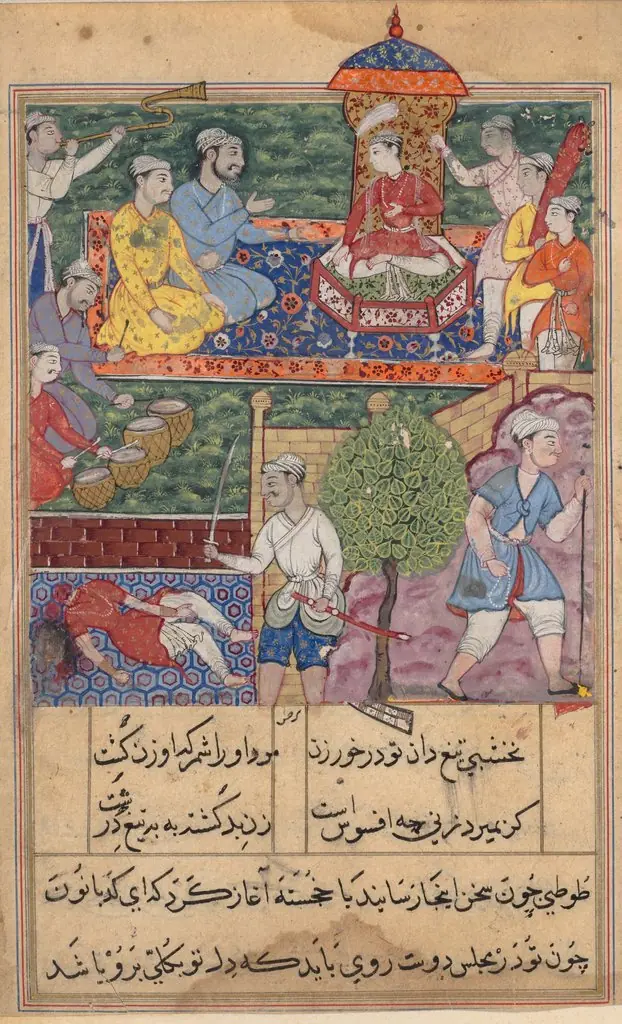 Page from Tales of a Parrot (Tuti-nama): text page
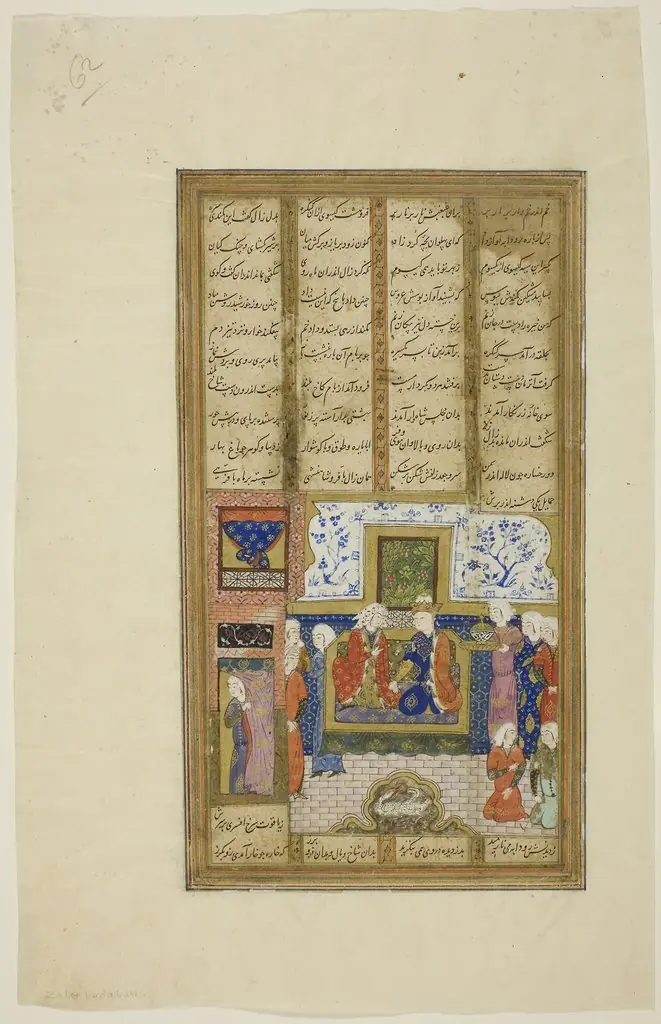 Zal and Rudaba in a Palace, page from a copy of the Shahnama of Firdausi