Artwork
King Slaying Enemy with a Dagger
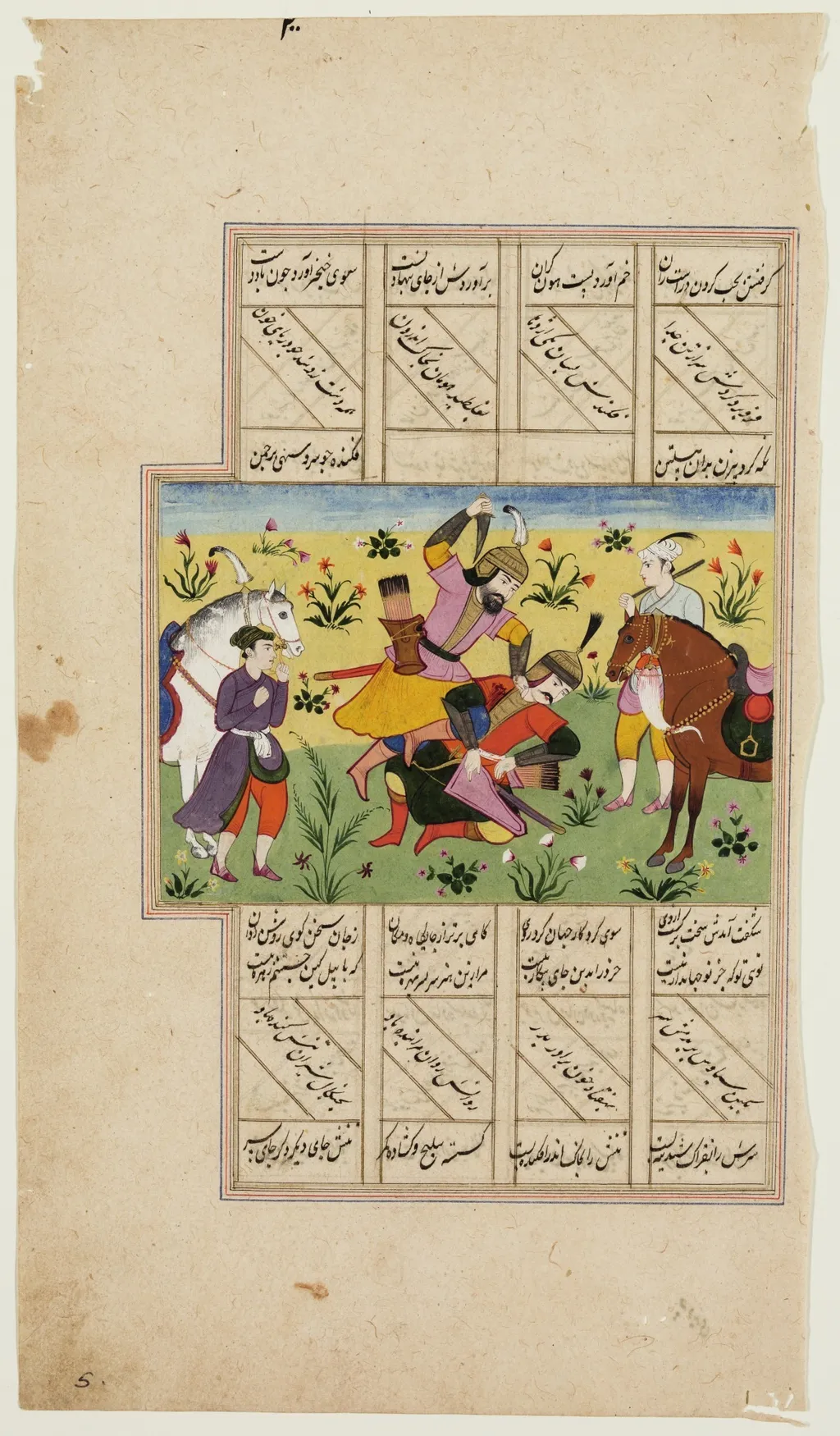
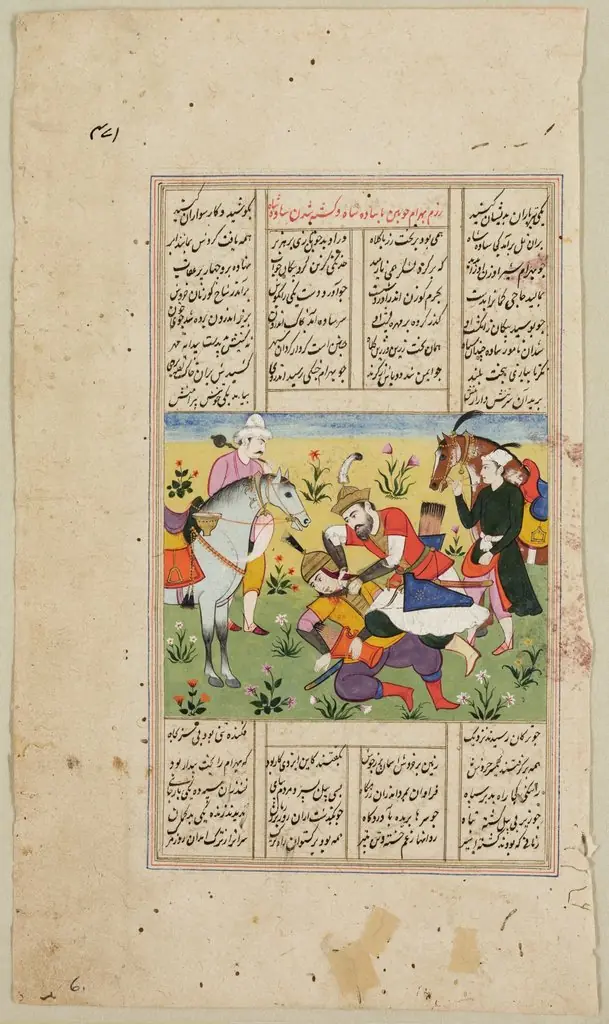
King Slaying Enemy with a Dagger is an unspecified painting by the Mughal Painting artist Unknown. It dates from 1620 and is held in the collection of the Detroit Institute of Arts. This painting captures a moment of violent confrontation between a monarch and a fallen adversary.
About this work
Overview
The scene unfolds in an open, flower-strewn landscape, where the king’s dynamic posture and the enemy’s prone form suggest a decisive, close-quarters combat.
This painting captures a moment of violent confrontation between a monarch and a fallen adversary. The scene unfolds in an open, flower-strewn landscape, where the king’s dynamic posture and the enemy’s prone form suggest a decisive, close-quarters combat. The composition centers on the king’s aggressive motion, framed by vivid clothing and a nearby white horse, while a second rider appears distantly on a brown steed.
Subject & Meaning
The king’s act of slaying an enemy with a dagger symbolizes personal valor and sovereign authority. The contrast between his bright yellow and pink garments and the adversary’s red attire reinforces a moral or hierarchical dichotomy. The setting, though idyllic, serves as a stage for violence, implying that power is asserted even amid natural beauty, perhaps reflecting ideals of divine right or martial duty.
Technique & Style
Color is used expressively rather than naturalistically, with saturated hues drawing attention to key figures. The king’s pose conveys motion through angular limbs and tilted torso, while the enemy’s body lies in stillness, creating visual tension. Though chiaroscuro is not overtly evident, the sharp distinction in color and posture functions similarly to isolate the central drama from the background.
History & Provenance
The painting’s origin and artist remain undocumented in available records. Its style suggests possible influence from regional courtly traditions, perhaps from South or Southeast Asia, where such scenes of royal combat were occasionally depicted in miniature or mural formats. No documented provenance or exhibition history has been established.
Context
Depictions of rulers in combat were common in pre-modern court art, serving to legitimize authority through visual narrative. This image aligns with broader traditions where kings were portrayed as warriors, even when actual rule was administrative. The inclusion of a landscape and secondary figures may reflect local aesthetic preferences, blending heroic action with environmental harmony.
Legacy
Without clear attribution or documented influence, the painting’s legacy remains localized. It contributes to a visual vocabulary of sovereign power in non-Western traditions, where martial prowess and regal dignity were intertwined. Its survival suggests continued cultural value, though it has not entered broader art-historical discourse.
Artist & collection

 Domestic Scene
 Giacomo and Cardinal Marco, investing Andrea, Abbot of San Zeno, with his Benefice
 The Nymph of Fontainebleau
 Portrait of a Woman
 Madonna and Child with Saints in the Enclosed Garden
 Venus and Minerva
 Family Group of Four on Sofa
 Wall painting from Room H of the Villa of P. Fannius Synistor at Boscoreale
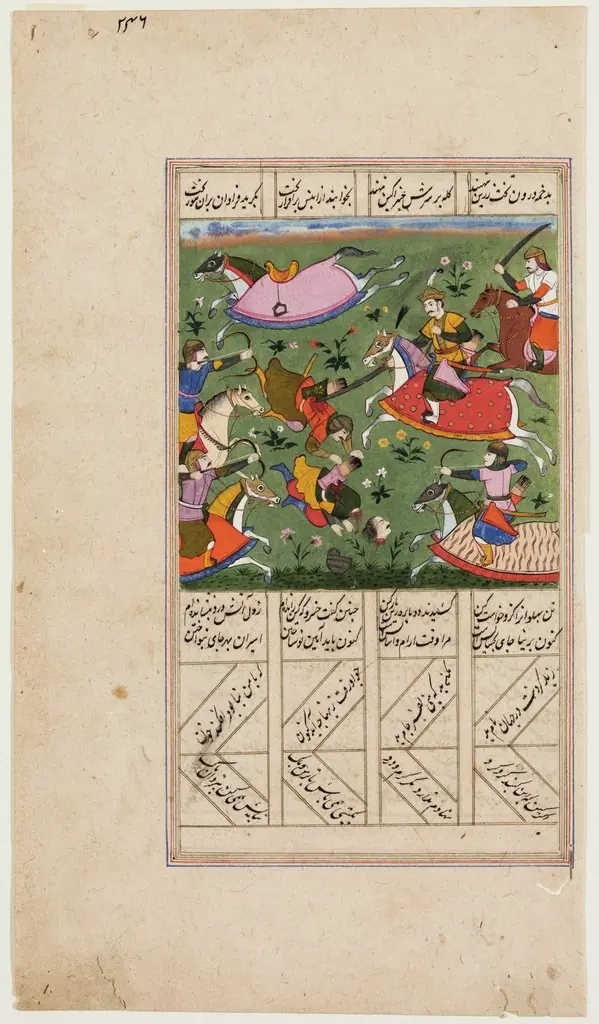 Cavalry Battle with Beheaded Warrior
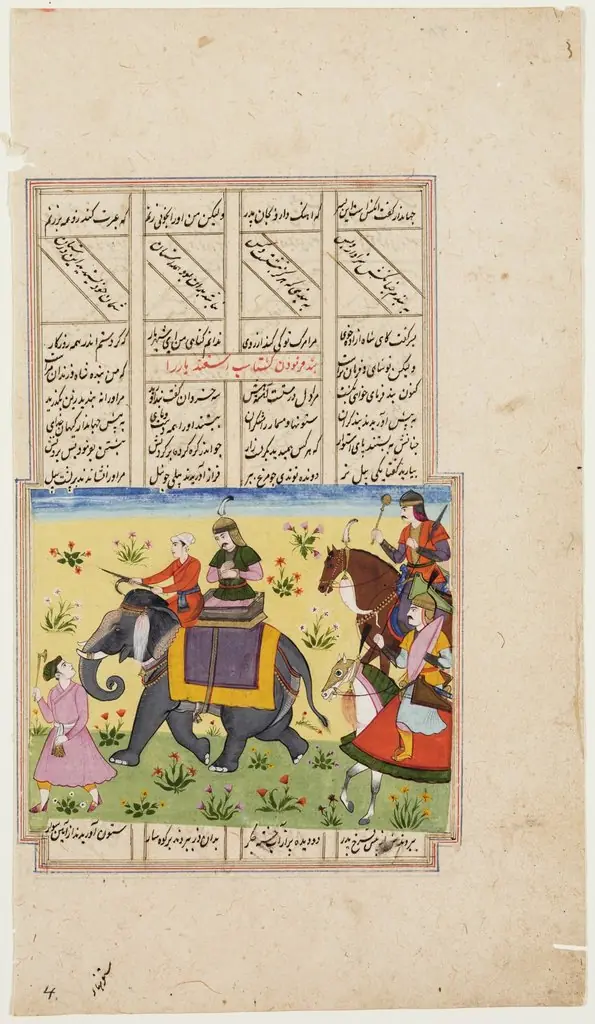 Capture of King of Hamareram
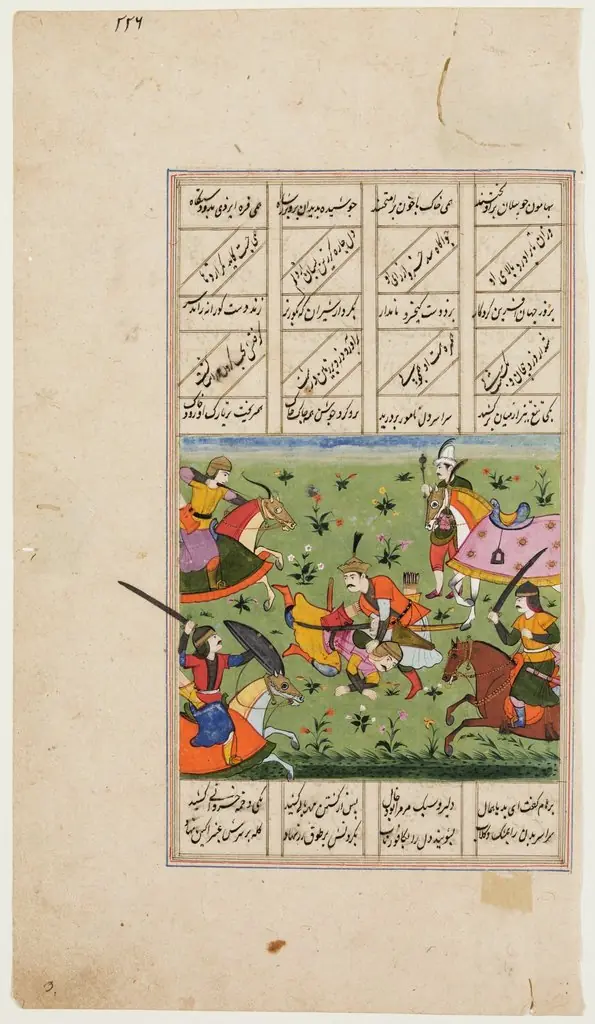 Cavalry Battle with Dismounted Combat
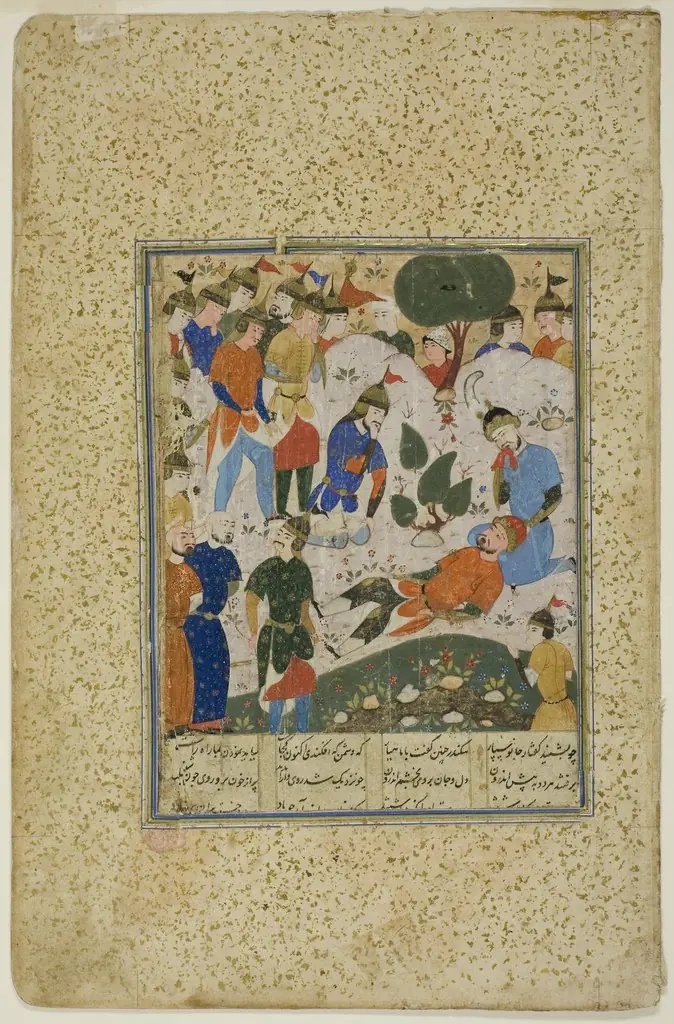 Iskander Comforts the Dying Darius
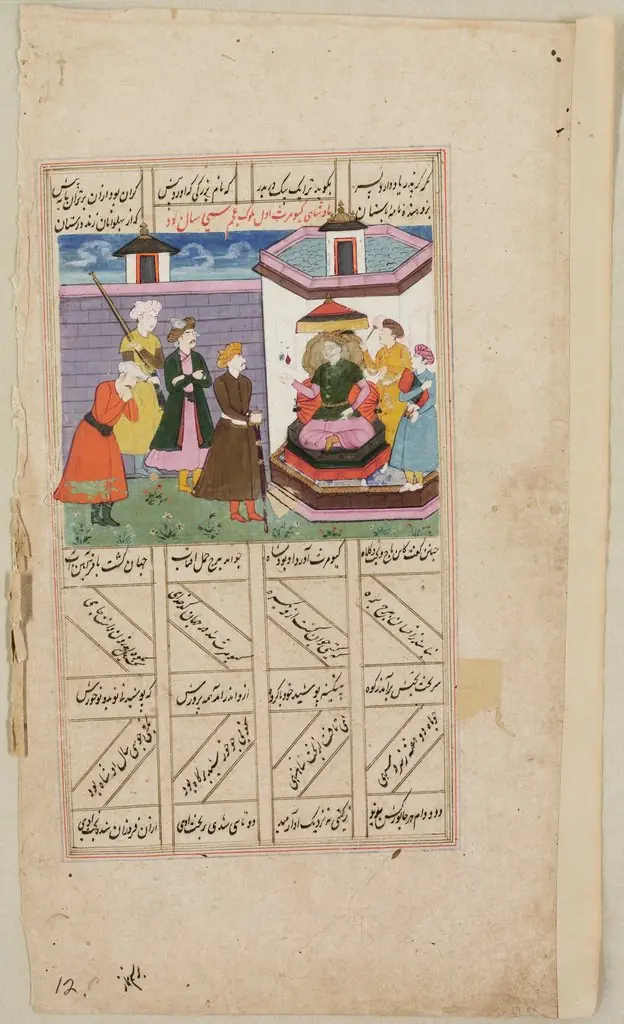 King Enthroned in Pavilion and Retainers
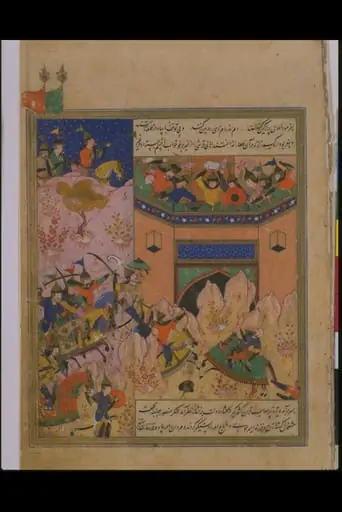 Attack on a walled city
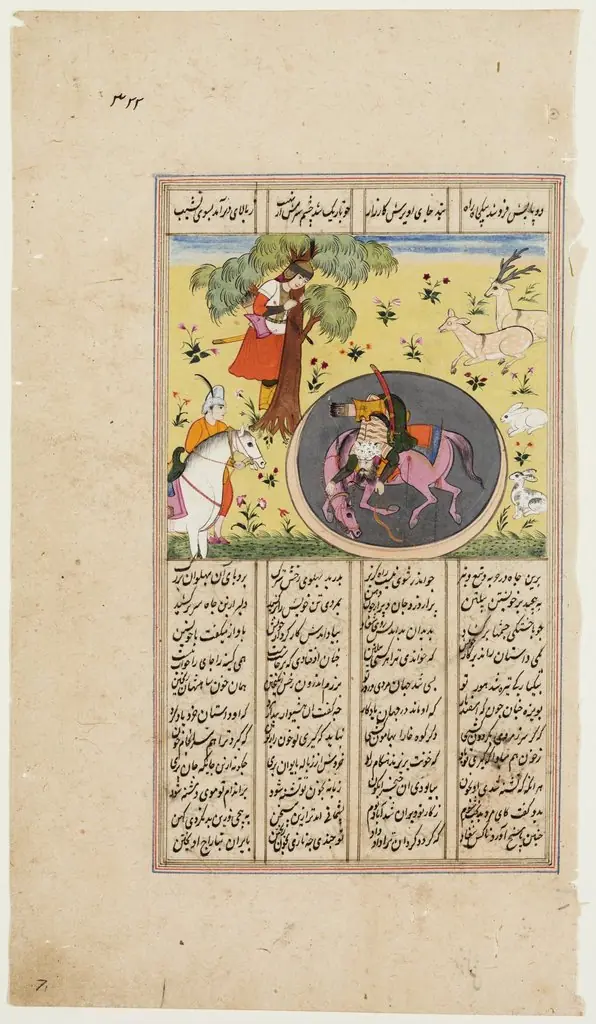 Rustam and Raksh Entrapped
 Mu'nim Khan
 Cavalry Battle with Fallen Warrior
 Farhad Carrying Shirin and Her Horse, from a copy of the Khamsa of Nizami
 The prince sent back to the place of execution for the sixth time, from a Tuti-nama (Tales of a Parrot): Eighth Night
 King Beheading Enemy