Artwork
Deposition
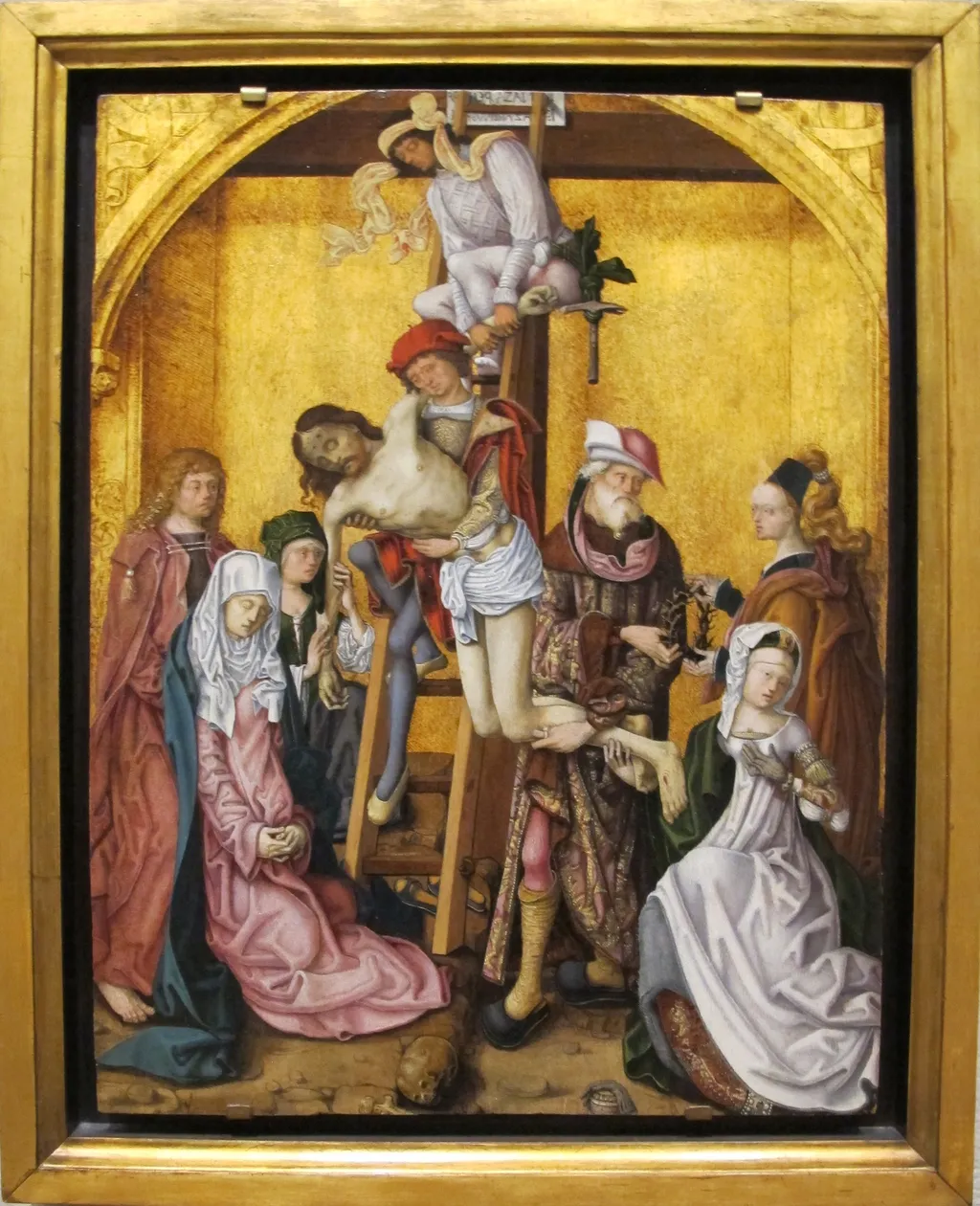
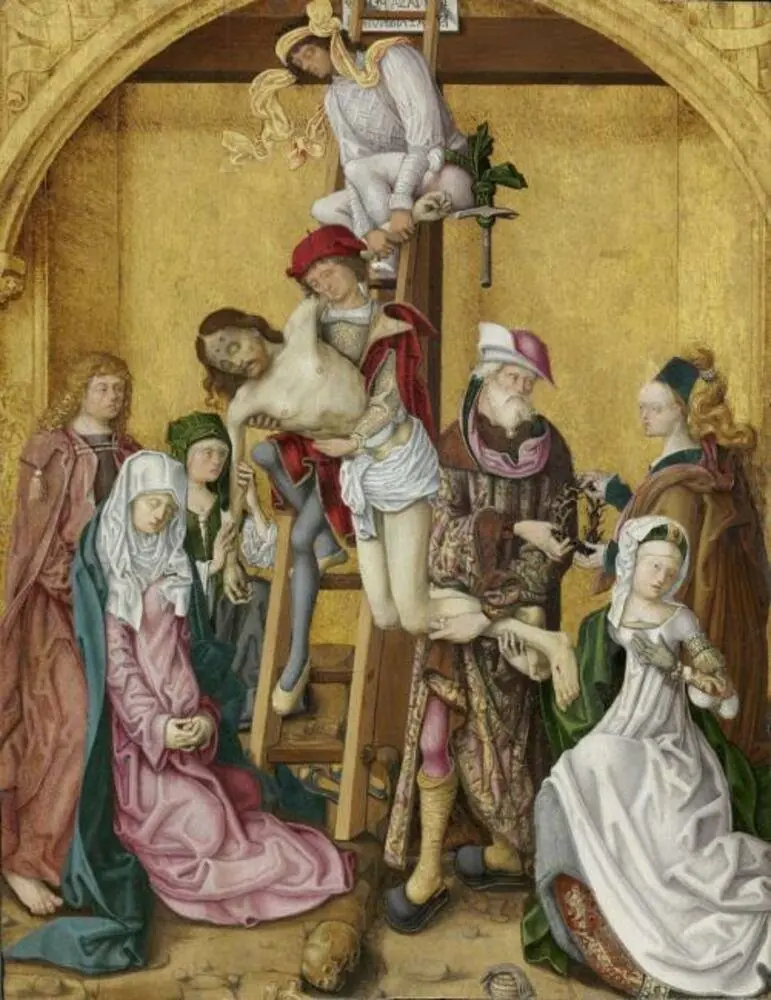
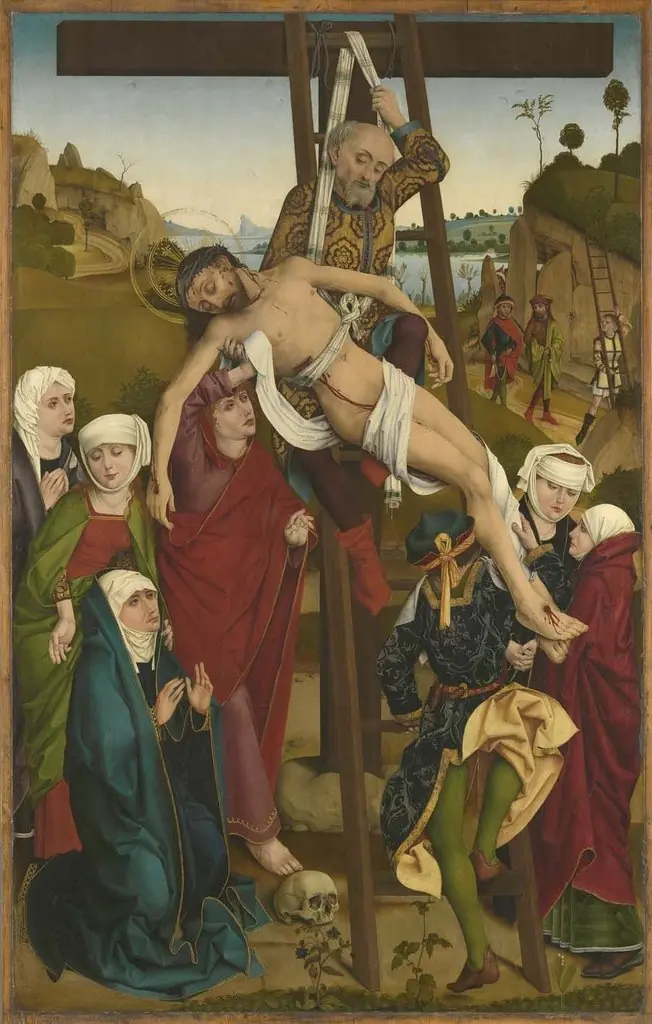
Deposition is an unspecified painting by the Early Renaissance artist Unknown. It dates from 1498 and is held in the collection of the Philadelphia Museum of Art. This painting captures a moment of quiet ritual centered on a figure being lowered from a ladder.
About this work
Overview
Warm tones in the background and detailed clothing enhance the spatial depth, while the stillness of the scene conveys a sense of reverence without overt drama.
This painting captures a moment of quiet ritual centered on a figure being lowered from a ladder. The composition directs attention to the central body, surrounded by a group of figures in varied attire, their gestures suggesting care and solemnity. Warm tones in the background and detailed clothing enhance the spatial depth, while the stillness of the scene conveys a sense of reverence without overt drama.
Subject & Meaning
The scene likely represents a moment of removal or preparation of a body, possibly from a crucifix or similar structure. The figures surrounding the central act appear to be participants in a ceremonial rite, their postures indicating grief or respect. The presence of kneeling and seated women, along with a man holding a small object, suggests ritual observance, possibly tied to religious or communal mourning practices.
Technique & Style
The artist employs a restrained palette with concentrated use of red, white, and green to distinguish key figures against a warm yellow ground. Soft modeling of forms and careful placement of figures create a shallow but coherent space. Brushwork is precise yet unobtrusive, emphasizing emotional stillness over theatricality, with attention to fabric folds and subtle light shifts to ground the scene in tangible reality.
History & Provenance
The painting’s origins are not fully documented, but its style and subject align with late medieval or early Renaissance devotional works from northern Europe. It may have been commissioned for private devotion or a local chapel. Its survival suggests it was preserved within a religious or aristocratic collection, though its early ownership remains unverified.
Context
Created during a period when depictions of Christ’s removal from the cross were common in Christian art, this work reflects a broader tradition of emphasizing human grief and ritual care. Unlike grand altarpieces, its intimate scale and domestic setting suggest it was intended for personal or small-group contemplation, aligning with growing trends in private piety during the late Middle Ages.
Legacy
Though not widely known today, the painting contributes to the understanding of how religious narratives were rendered in quieter, more human terms outside major ecclesiastical commissions. Its focus on ordinary gestures and unidealized figures offers insight into the visual language of devotion among non-elite communities, influencing later regional traditions of narrative painting.
Artist & collection

 Domestic Scene
 Giacomo and Cardinal Marco, investing Andrea, Abbot of San Zeno, with his Benefice
 The Nymph of Fontainebleau
 Portrait of a Woman
 Madonna and Child with Saints in the Enclosed Garden
 Venus and Minerva
 Family Group of Four on Sofa
 Wall painting from Room H of the Villa of P. Fannius Synistor at Boscoreale