Artwork
Legnica polyptych
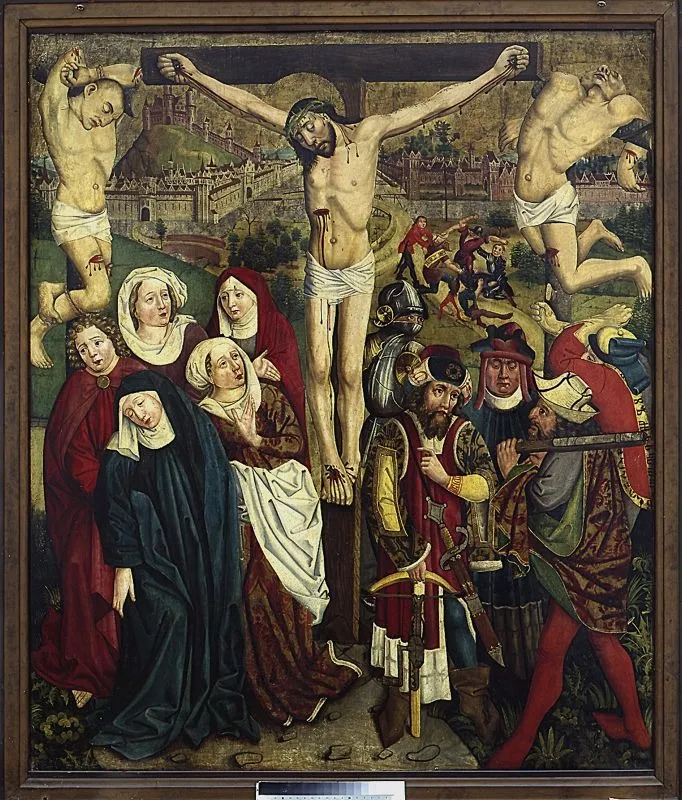
Legnica polyptych is an unspecified painting by the Northern Renaissance artist Mikołaj Obilman. It dates from 1466 and is held in the collection of the National Museum in Warsaw.
About this work
Overview
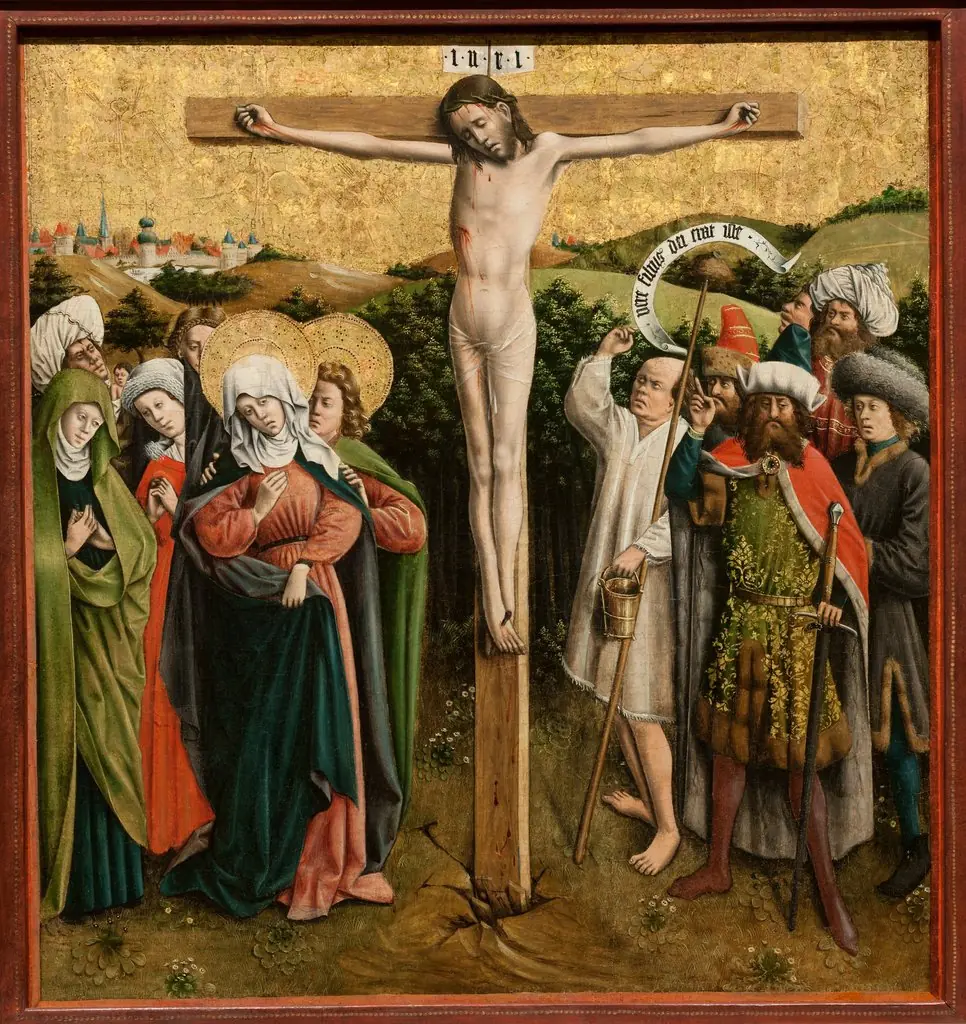
Created in 1466 by the Polish painter Mikołaj Obilman, the Legnica polyptych is a multi-panel religious work originally commissioned for a church in Legnica. It now resides in the National Museum in Warsaw. The composition centers on the crucifixion, framed by figures arranged symmetrically to emphasize spiritual hierarchy and solemnity, reflecting late medieval devotional priorities.
Subject & Meaning
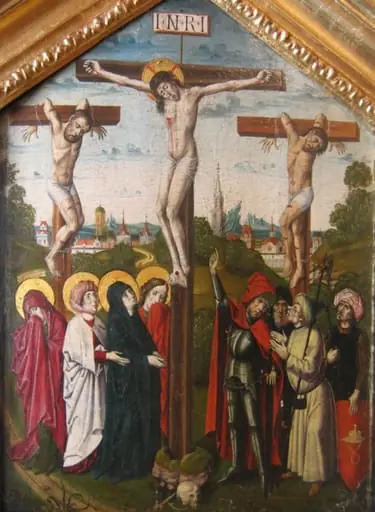
To the left, three women in somber attire express grief, likely representing the Virgin Mary and her companions.
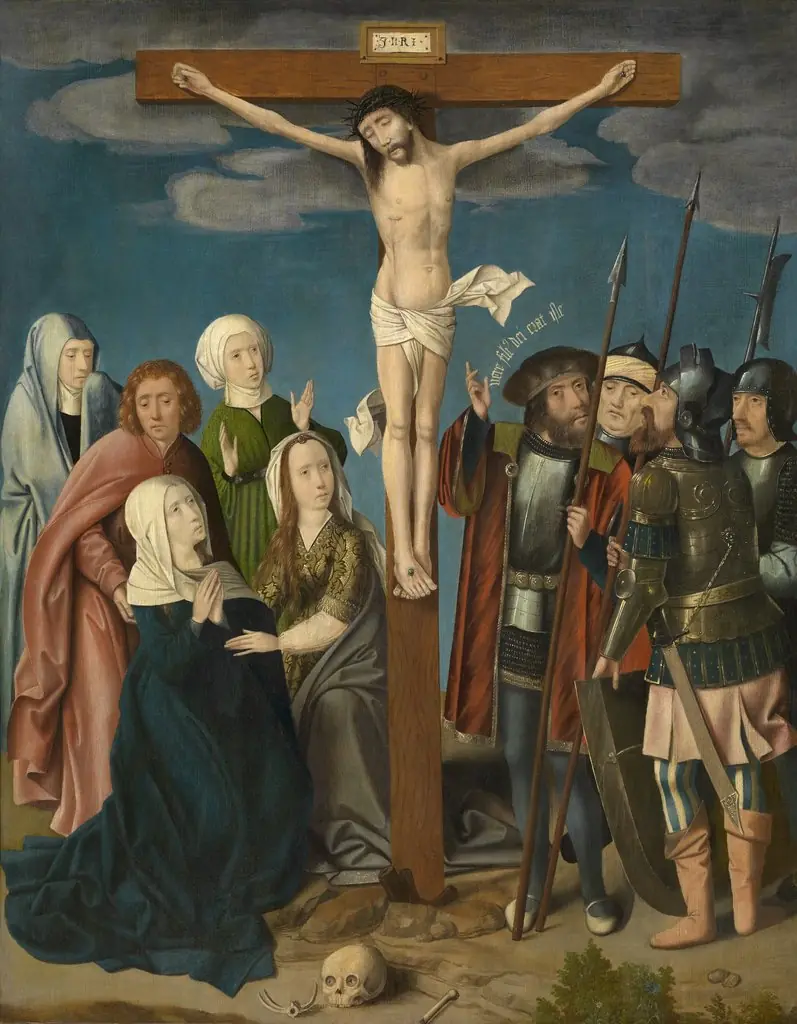
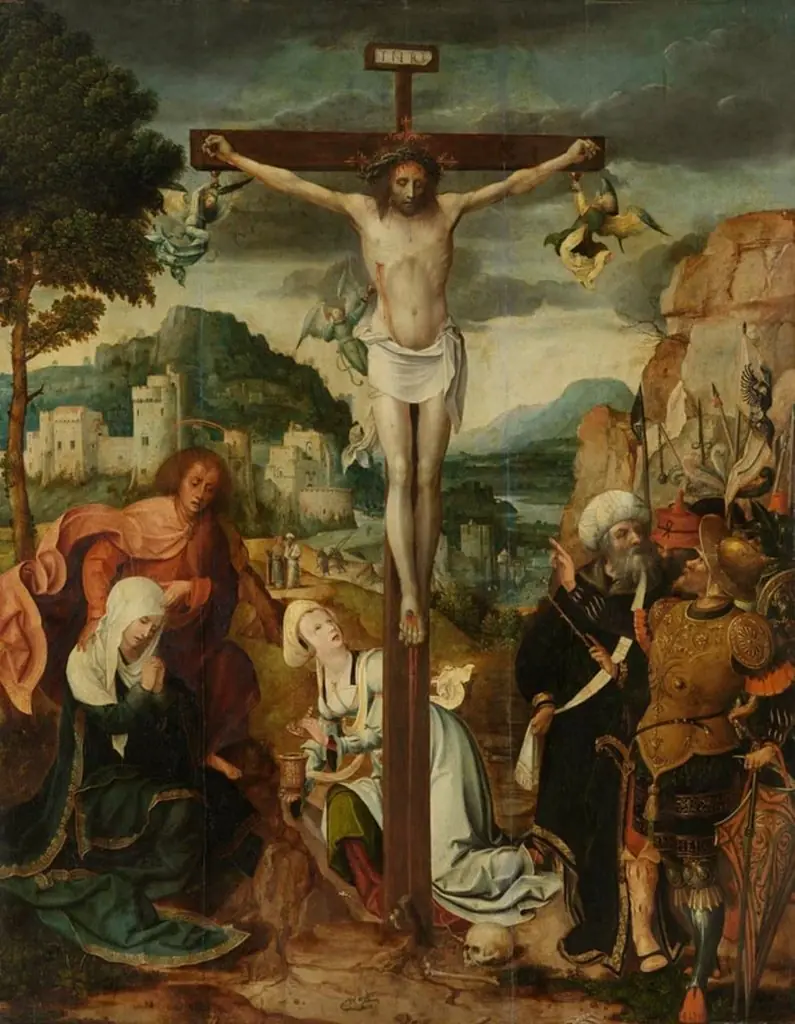
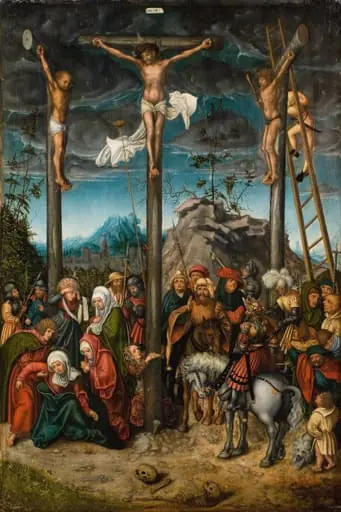
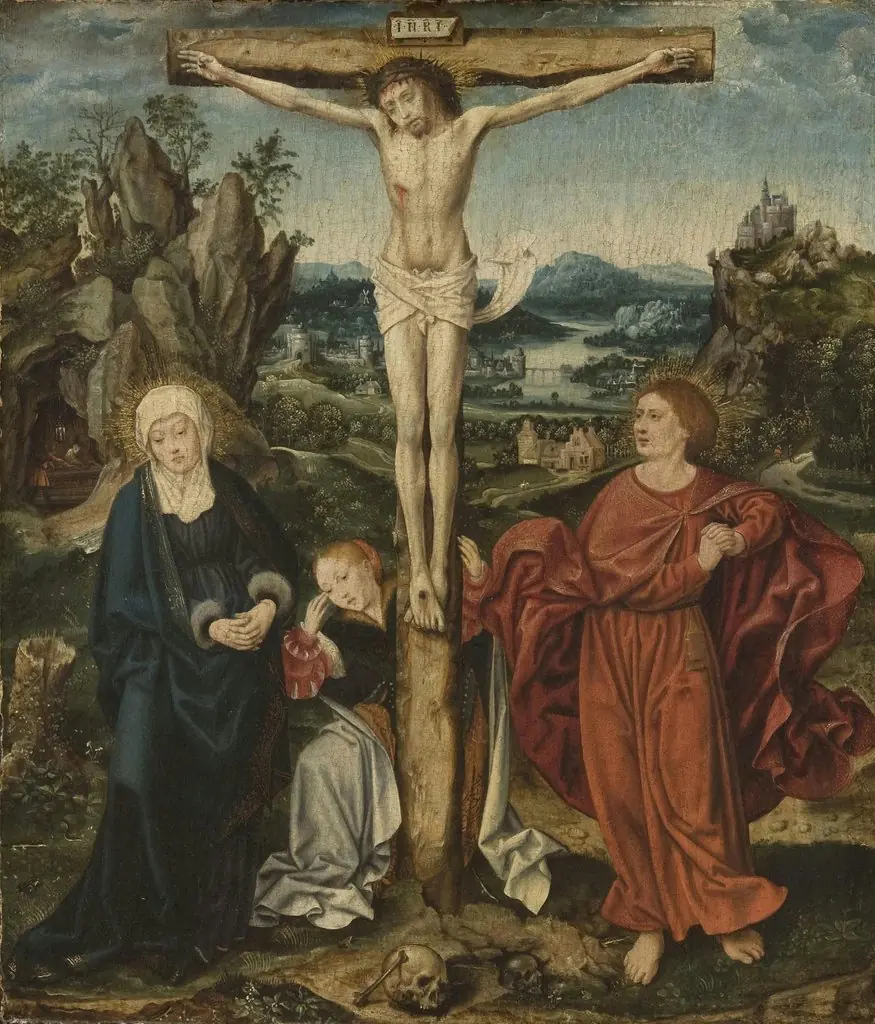
The central image depicts Christ on the cross, surrounded by mourners and witnesses. To the left, three women in somber attire express grief, likely representing the Virgin Mary and her companions. On the right, Roman soldiers and a figure in ornate dress symbolize earthly authority and complicity. The scene functions as both narrative and meditation, inviting contemplation of sacrifice and divine judgment.
Technique & Style
Obilman employs a stylized approach typical of late Gothic art: figures are rigid, faces expressionless, and forms outlined with clarity rather than modeled in depth. Colors are vivid—crimson, ultramarine, and gold—applied flatly to enhance symbolic weight over naturalism. The background city is rendered in simplified, almost decorative tones, reinforcing the spiritual over the earthly realm.
History & Provenance
The polyptych was originally installed in the Church of the Holy Cross in Legnica, then part of the Duchy of Legnica. It was moved to Warsaw after World War II, following the reorganization of Poland’s cultural collections. Its survival through centuries of political change underscores its enduring significance as a regional religious artifact.
Context
Produced during a period of intense religious devotion in Central Europe, the work aligns with broader trends in Gothic altarpieces that prioritized emotional resonance through symbolic form. Local patrons commissioned such pieces to affirm faith and social order. Obilman’s style reflects both regional traditions and influences from neighboring German and Bohemian workshops.
Legacy
The Legnica polyptych remains one of the few surviving large-scale religious panels from 15th-century Silesia. It provides insight into the visual language of piety in medieval Poland and serves as a reference for understanding the transition from Gothic to Renaissance aesthetics in Eastern Europe, though it retains its distinct regional character.
Artist & collection
Artist
This late-medieval painter created the Legnica polyptych, a five-panel altarpiece from 1466.

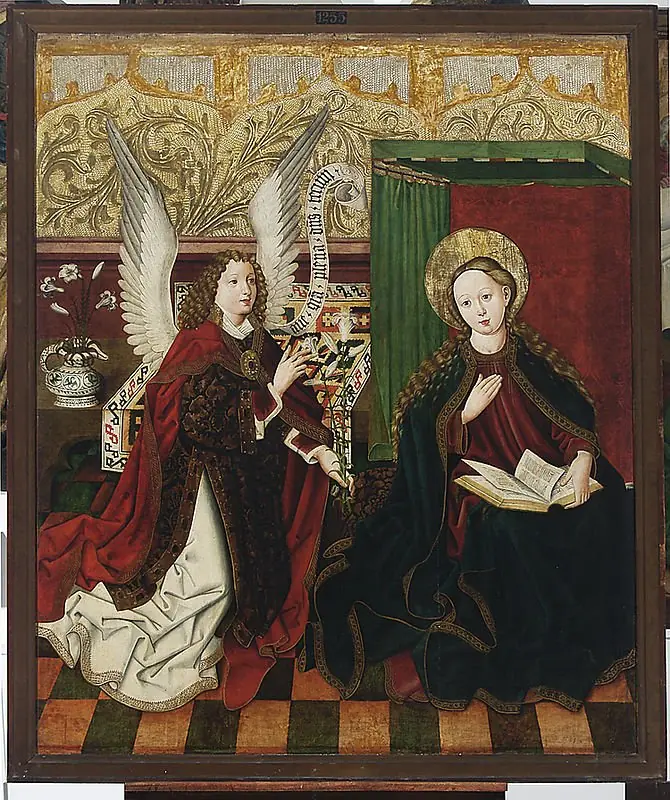 Legnica polyptych - left wing internal - upper panel - obverse: Annunciation; reverse: St Lawrence, St Vincent the Levite. St John the Baptist
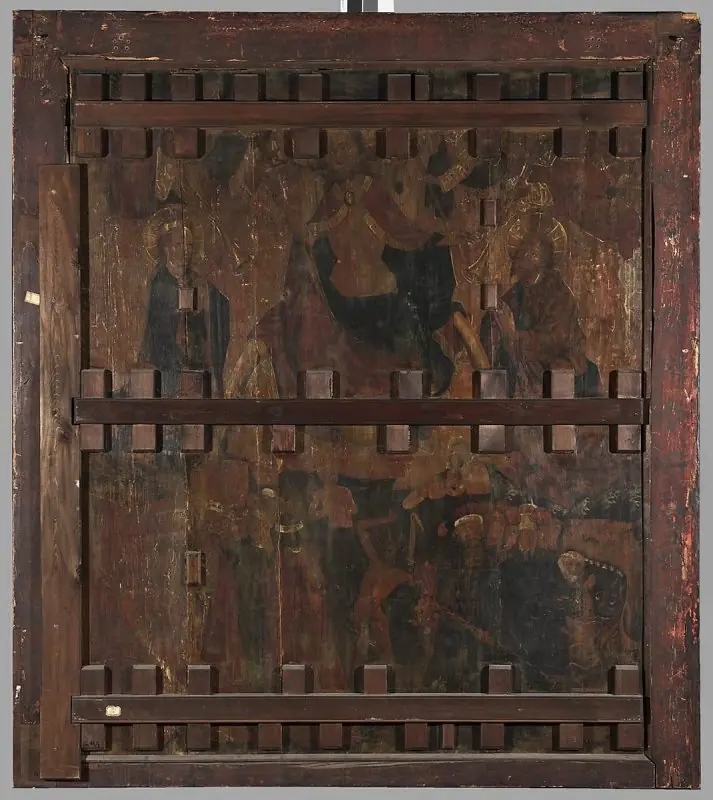 Legnica polyptych - right wing external - lower panel - obverse: Resurrection of Christ; reverse: Last judgement
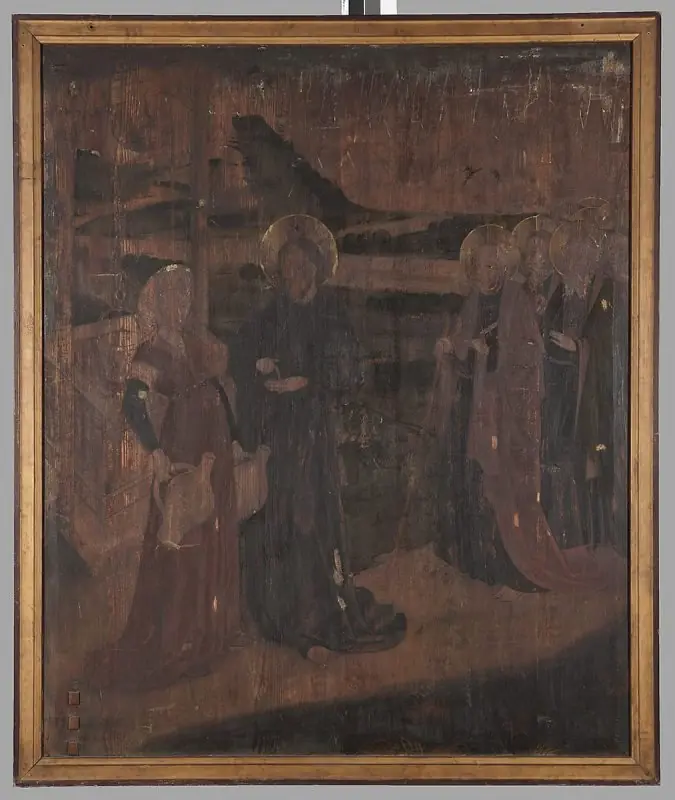 Legnica polyptych - right wing external - upper panel - obverse: St Barbara, St Catherine, St Dorothy; reverse: Christ and the Samaritan
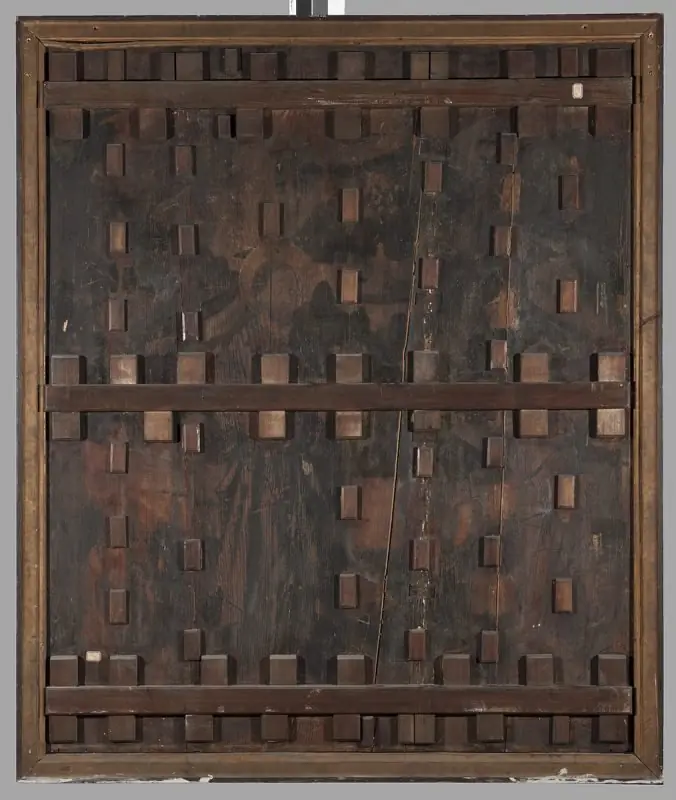 Legnica polyptych - left wing external - upper panel - obverse: St Henry, St Nicholas, St Stephen; reverse: temptation of Christ