Artwork
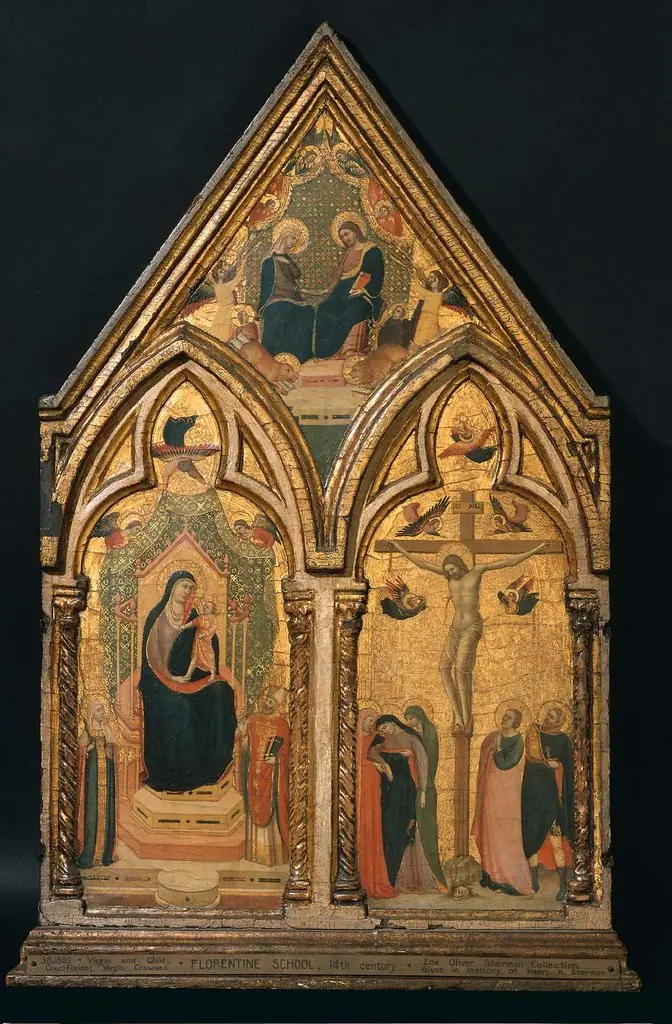
The Crucifixion with the Virgin and Child among Saints, Angels and the Symbols of the Evangelists
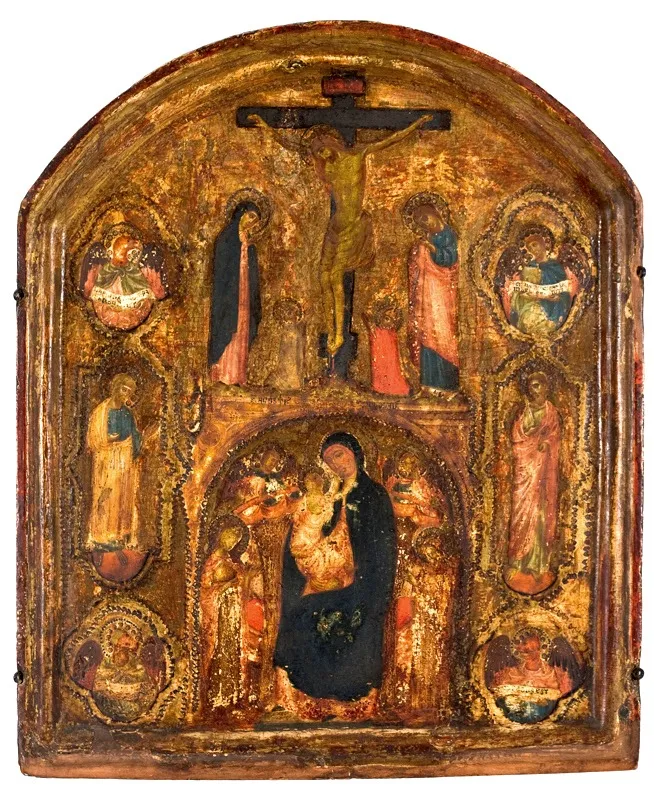
The Crucifixion with the Virgin and Child among Saints, Angels and the Symbols of the Evangelists is a tempera painting by the Byzantine icon painting artist Unknown. It dates from 1299 and is held in the collection of the São Paulo Museum of Art. The work presents a complex crucifixion scene in which Christ hangs upon the cross at the uppermost level.
About this work
Overview
The work presents a complex crucifixion scene in which Christ hangs upon the cross at the uppermost level. Beneath him the Virgin Mary and the infant Jesus are shown together, encircled by a host of saints, angels and the traditional symbols associated with the four Evangelists. The composition is rendered in tempera, employing vivid robes and gold detailing to emphasize the sacred narrative.
Subject & Meaning
The central focus on the crucified Christ underscores the theological significance of redemption, while the presence of the Virgin and Child conveys a dual emphasis on suffering and hope. The surrounding saints and angelic figures serve as intercessors, and the Evangelists’ symbols—often a man, lion, ox, and eagle—reinforce the scriptural foundation of the scene.
Technique & Style
Executed in egg‑tempera, the painting achieves a luminous surface through the binding of pigments with egg yolk. This medium allows for fine, layered brushwork that creates a subtle depth of color and a radiant sheen, especially evident in the gold accents that highlight garments and halos.
History & Provenance
The piece is part of the collection of the São Paulo Museum of Art, where it has been displayed as an example of tempera practice within the museum’s European holdings. Its acquisition history and earlier owners are not detailed in the available records.
Context
Tempera was a dominant medium before the widespread adoption of oil paint in the 15th century, valued for its quick drying time and bright, enduring colors. Works of this type often served devotional purposes, placed in chapels or private altars, and reflected the iconographic conventions of late medieval and early Renaissance religious art.
Artist & collection

 Domestic Scene
 Giacomo and Cardinal Marco, investing Andrea, Abbot of San Zeno, with his Benefice
 The Nymph of Fontainebleau
 Portrait of a Woman
 Madonna and Child with Saints in the Enclosed Garden
 Venus and Minerva
 Family Group of Four on Sofa
 Wall painting from Room H of the Villa of P. Fannius Synistor at Boscoreale
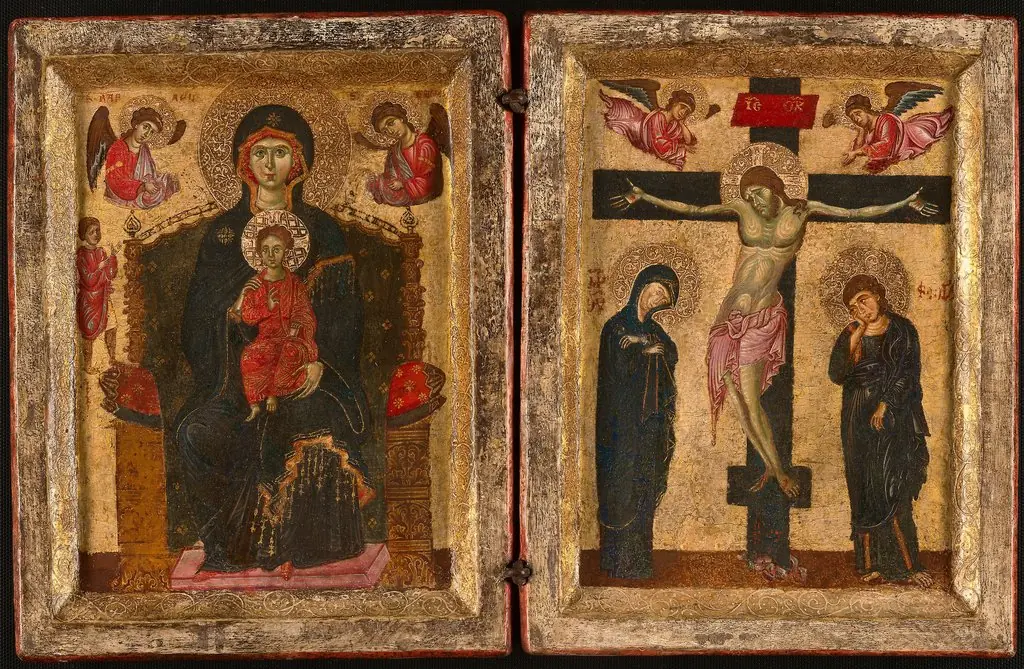 Diptych with the Virgin and Child Enthroned and the Crucifixion
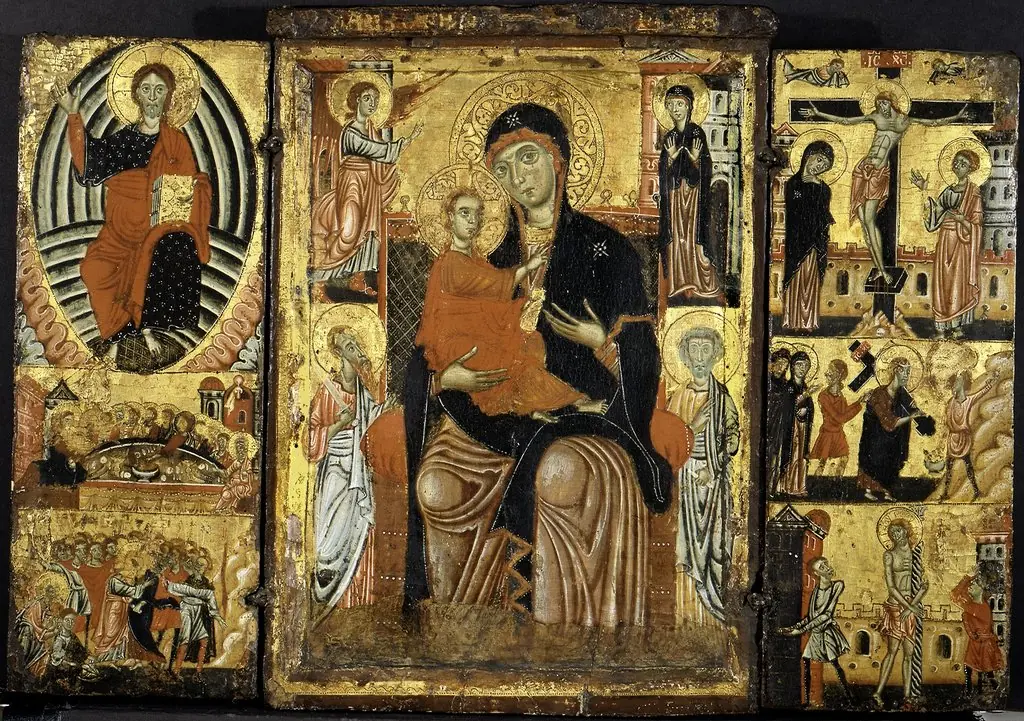 Madonna and Child Enthroned
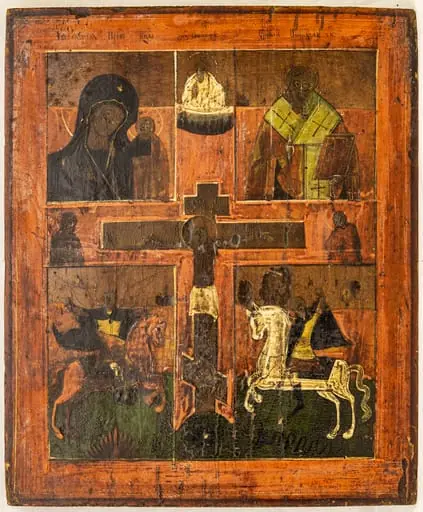 Icoană în patru registre, în centru Iisus Crucificat
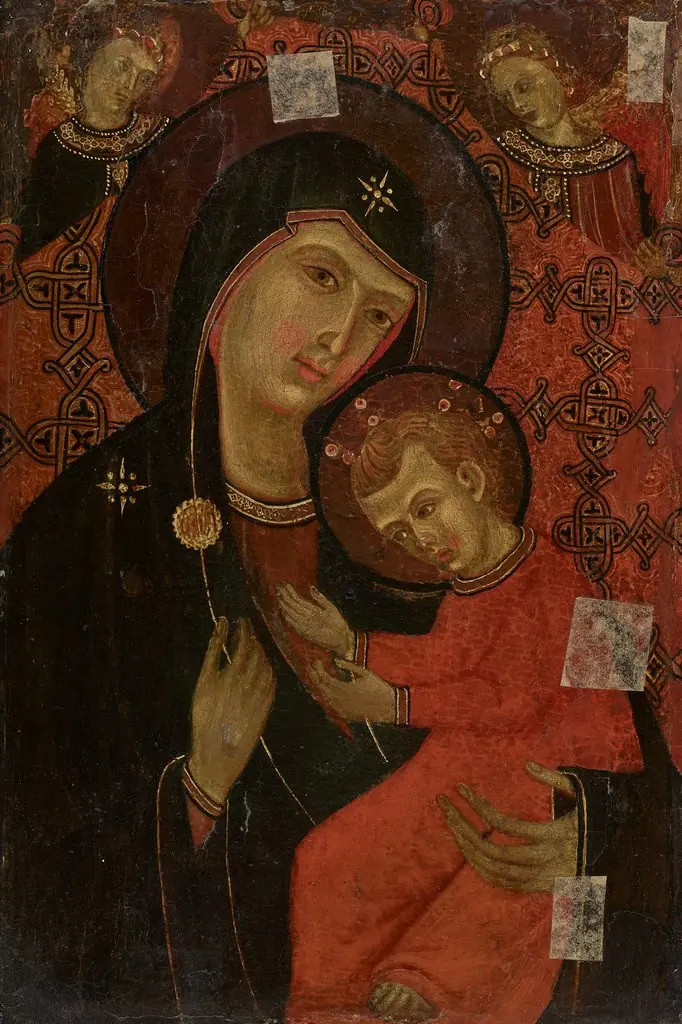 The Virgin and Child
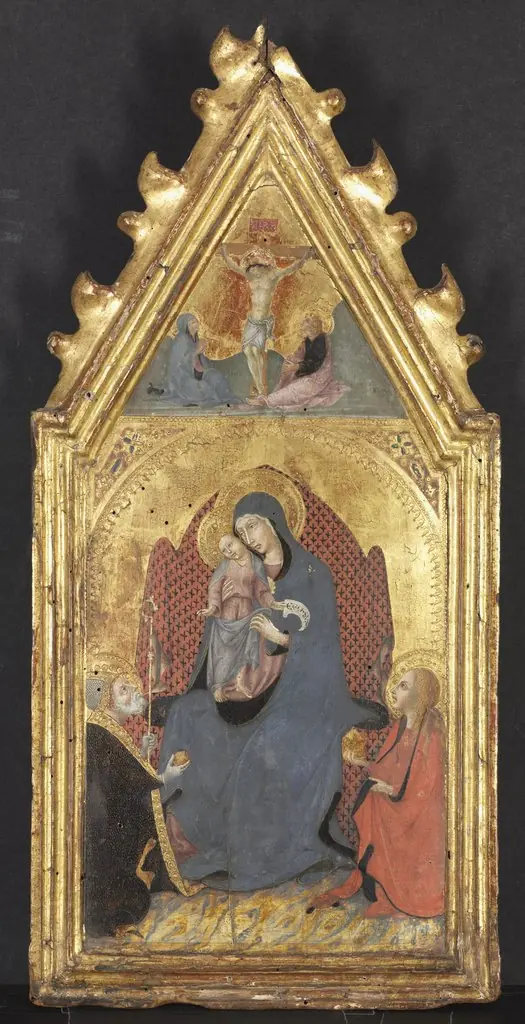 Virgin and Child Adored by Saints Mary Magdalene and Nicolas of Bari; Christ Crucified with the Virgin and Saint John the Evangelist
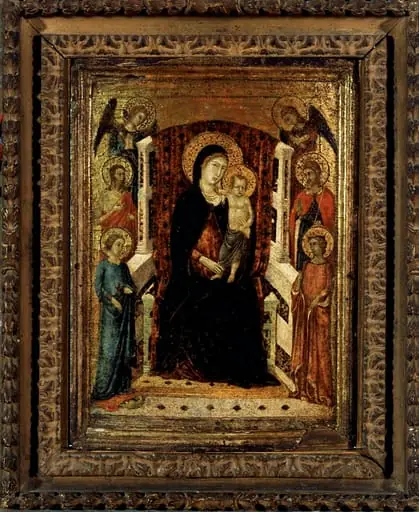 Madonna ja lapsi valtaistuimella
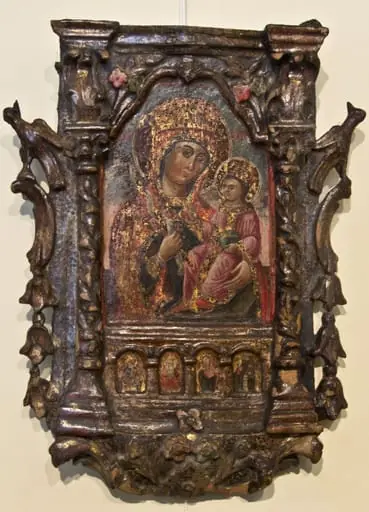 Maica Domnului cu pruncul Rodon to amaranton; Trandafirul neveștejit
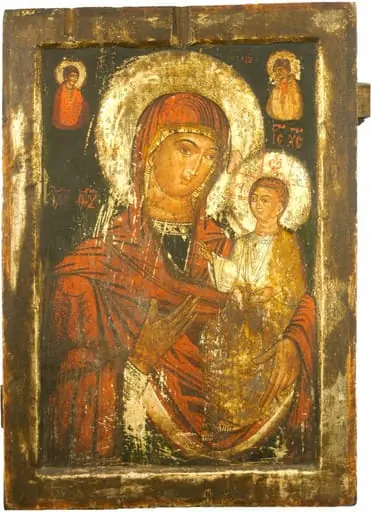 Maica Domnului cu Pruncul
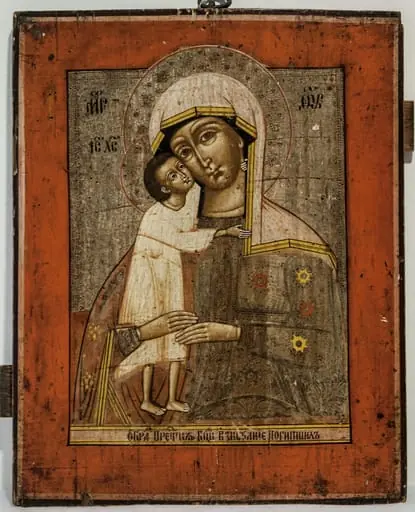 Maica Domnului, tipul Eleusa(dulcea sărutare, Mângâietoarea) îl ține strâns în brațe pe Iisus prunc, în picioare, cu obrazul lipit de cel al Maicii și o mână petrecută pe după gâtul ei. Iisus are nimbul cruciger, marcat cu motive florale punctate, Este înveșmântat într-o tunică 3/4 alb-gălbuie, care lasă să i se vadă picioarele. Maica poartă un maforion alb, bordat cu galben, partea din stânga a veșmântului din foiță metalică, decorată cu motive florale pictate cu roșu și galben, motive fitomorfe și geometrice incizate. În partea dreaptă veșmântul este roșu, decorat cu motive florale de culoare galbenă, foița fiind prezentă doar la mânecă. Nimbul decorat cu motive florale punctate în stratul de foiță metalică, Figurile modelate din culoare (alb, ocru) cu accente grafice fine, albe, sunt specifice icoanei rusești. Cromatica: alb, galben, roșu, auriu, brun, negru, foiță metalică, chenar roșu deschis, mărginit de două linii în nuanțe de roșu deschis și brun.Chenarul interior dublat de două șiruri de cercuri ștanțate în foiță. Inscripția dispusă pe o bandă dreptunghiulară în partea de jops a icoanei : Icoana Preacuratei Fecioare Prevăzând Jertfa (lui Iisus).
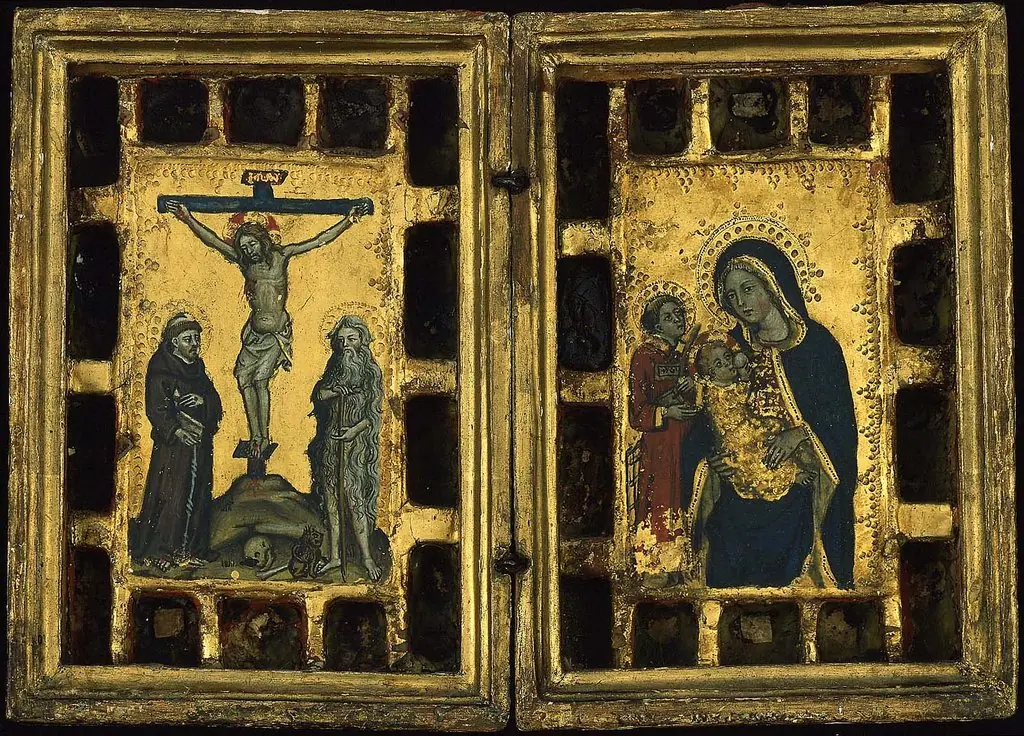 Christ on the Cross with Saints Francis and Onophrius; The Virgin and Child with Saint Lawrence
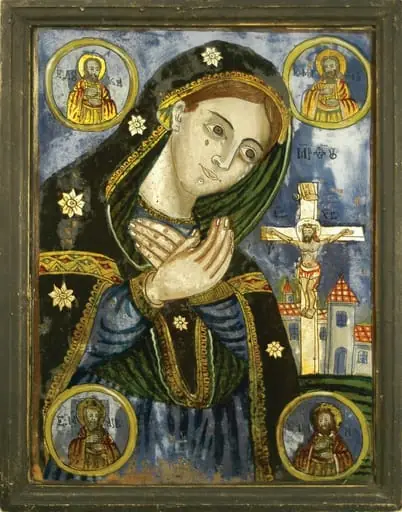 Maica Domnului îndurerată
 Virgin and Child Enthroned with Saints; Crucifixion; Coronation of the Virgin