Artwork
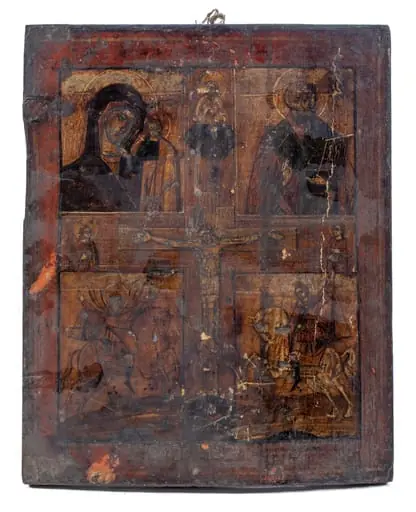
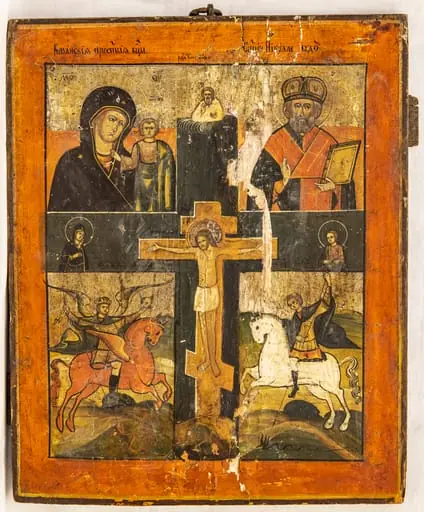
Icoană în patru registre, în centru Iisus Crucificat
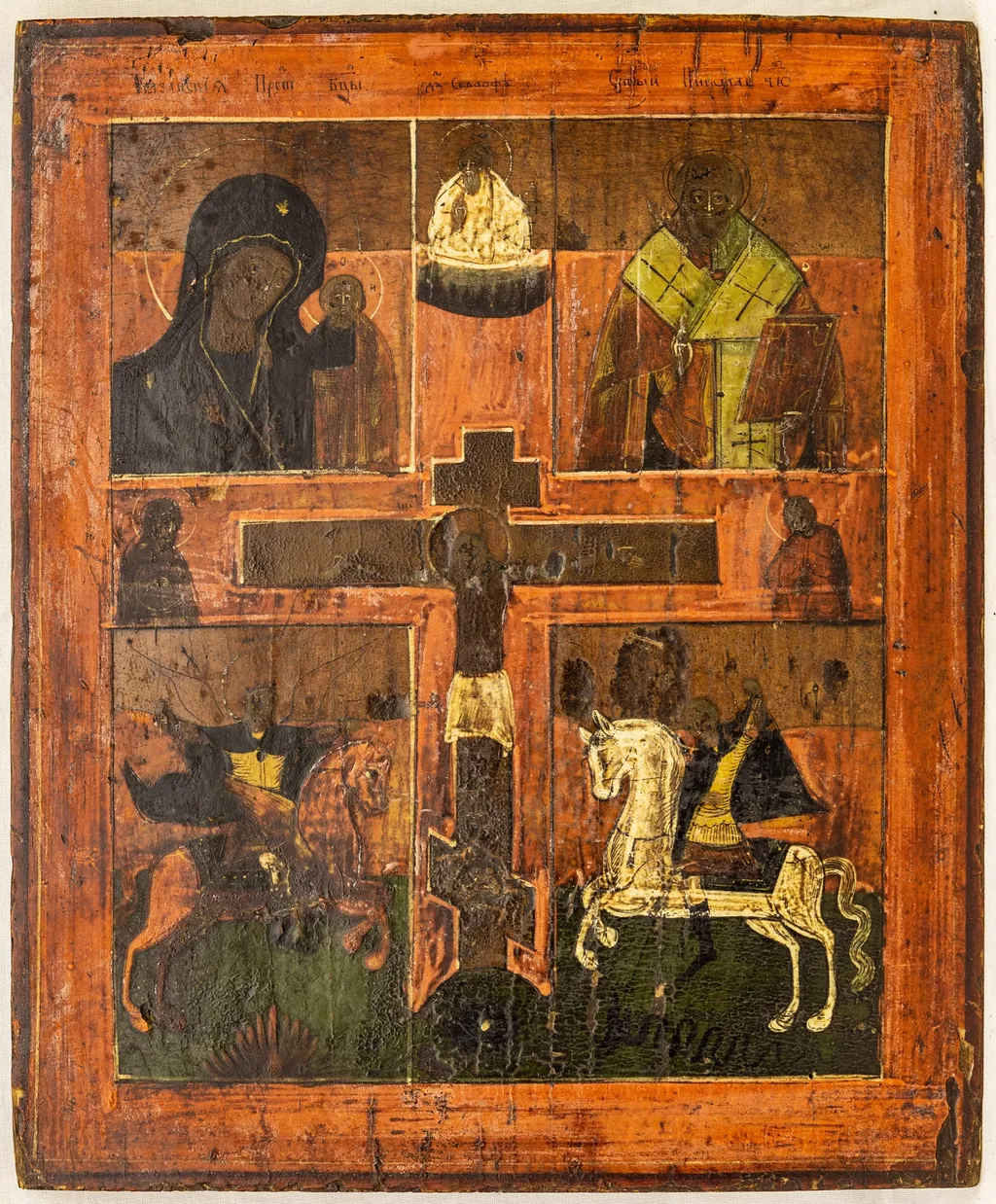
Icoană în patru registre, în centru Iisus Crucificat is a drawing by Unknown. It dates from 1850 and is held in the collection of the Gavrila Simion Eco-Museum Research Institute Tulcea. This icon presents four distinct narrative panels arranged around a central crucifixion scene.
About this work
Overview
The figures, rendered in flat, stylized forms, lack naturalistic perspective, aligning with Eastern Orthodox devotional conventions.
This icon presents four distinct narrative panels arranged around a central crucifixion scene. Each quadrant contains a single figure or event, framing the cross as both visual and spiritual anchor. The composition follows traditional Byzantine iconographic structure, using symmetry to emphasize theological order. The figures, rendered in flat, stylized forms, lack naturalistic perspective, aligning with Eastern Orthodox devotional conventions.
Subject & Meaning
The central crucifixion signifies Christ’s sacrifice, while the surrounding scenes likely represent witnesses or symbolic figures from scripture. The woman in black may symbolize the Virgin Mary in mourning; the man in green could be John the Evangelist. The horseman and white horse may allude to apocalyptic imagery or saints in motion, reinforcing themes of divine judgment and redemption through structured visual hierarchy.
Technique & Style
Painted with tempera on wood, the work employs gold leaf accents and limited color palettes typical of medieval Eastern Christian art. Figures are elongated, faces serene and frontal, with minimal shading. Details like folds in garments and horse trappings are rendered with precise, linear brushwork, prioritizing spiritual clarity over physical realism. The borders between panels are clearly defined, enhancing the icon’s didactic function.
History & Provenance
The icon’s origin is likely from a Byzantine-influenced region such as the Balkans or Romania, dating to the late medieval period. Its survival suggests it was venerated in a monastery or private chapel. No documented provenance exists beyond stylistic analysis, but its preservation indicates continued liturgical use or familial devotion, common among Orthodox communities through centuries of political change.
Context
This icon reflects the liturgical and theological priorities of Eastern Orthodoxy, where images served as windows to the divine rather than mere decoration. The four-part structure echoes the tetramorph of the Evangelists or the four corners of the earth, reinforcing Christ’s universal sovereignty. Such icons were used in personal prayer and feast-day processions, anchoring faith in visual form during times of instability.
Legacy
Though not widely known outside regional collections, this icon exemplifies a persistent tradition of sacred panel painting that endured beyond the fall of Constantinople. Its compositional clarity and symbolic density influenced later Orthodox iconographers and remain studied for their integration of narrative, theology, and form. It stands as a quiet testament to the endurance of devotional art in Eastern Christian culture.
Artist & collection
Museum
Gavrila Simion Eco-Museum Research Institute Tulcea
Continue through works from the same source collection.
 Domestic Scene
 Giacomo and Cardinal Marco, investing Andrea, Abbot of San Zeno, with his Benefice
 The Nymph of Fontainebleau
 Portrait of a Woman
 Madonna and Child with Saints in the Enclosed Garden
 Venus and Minerva
 Family Group of Four on Sofa
 Wall painting from Room H of the Villa of P. Fannius Synistor at Boscoreale
 Prăznicar, "Răstignirea”
 Răst res
 Răstrile
 Scene biblice
 Răstignirea
 The Crucifixion with the Virgin and Child among Saints, Angels and the Symbols of the Evangelists
 Neitsyt Marian ilmestyminen pyhittäjä Aleksanteri Syväriläiselle kirkon perustuksella
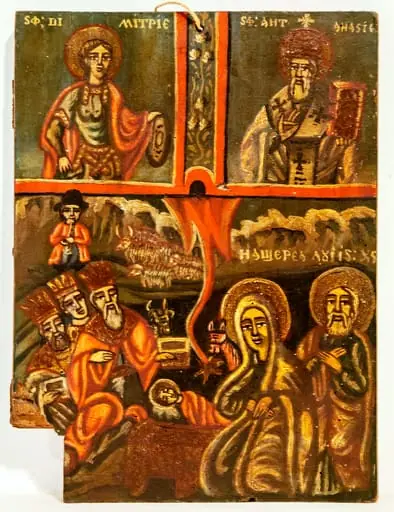 Câmpul icoanei împărțit în 2 registre orizontale inegale(cel de se 1/3 din suprafața icoanei, la rândul lui împărțit în 2 casete separate de o bandă verticală pe care este pictat un lujer cu flori albe. În registru inferior: Nașterea Domnului. În prim plan, Maria si Iosif îngenuncheați, central Pruncul Isus înfășat, așezat în iesle, în stânga lui cei trei magi, cu coroane împărătești pe cap, aducându-i daruri, în plan îndepărtat un cioban(în veșminte orășenești, cu pălărie neagră pe cap, cântând din fluier turmei de oi. În spatele Pruncului se văd capetele animalelor din grajd și o iesle. Steaua își revarsă razele asupra Pruncului(zonă incandescentă, terminată cu o stea deasupra acestuia). Pe fundalul întunecat, nori cu marginile albe. Sfinții din registrul superior sunt redați 3/4, sfântul Dimitrie tânăr, în veșminte militare, lorică, mantie roșie, scut în stânga, suliță în dreapta, Sfântul Atanasie, în veșminte arhierești, binecuvintează cu dreapta, în stânga ține cartea Evangheliilor ridicată. Părul și barba albe, mustățile lungi, veșmintele deschise la culoare, mitra înaltă, surmontată de o cruce albă. Cromatica: roșu, brun, alb, albastru, galben. Colț stânga jos lipsă. Stil naiv, popular.
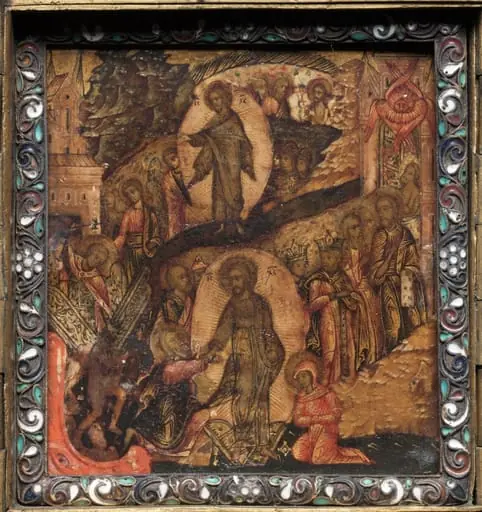 Portable Triptych Icon: The Resurrection and Anastasis
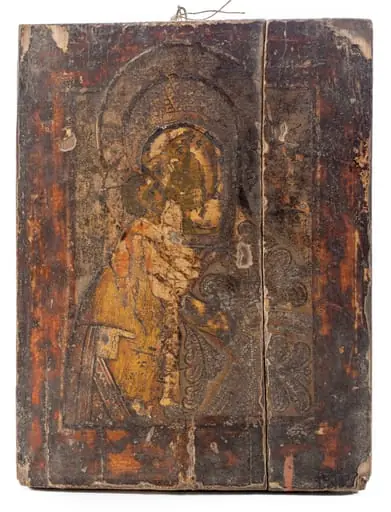 Maica Domnului cu Pruncul Iisus
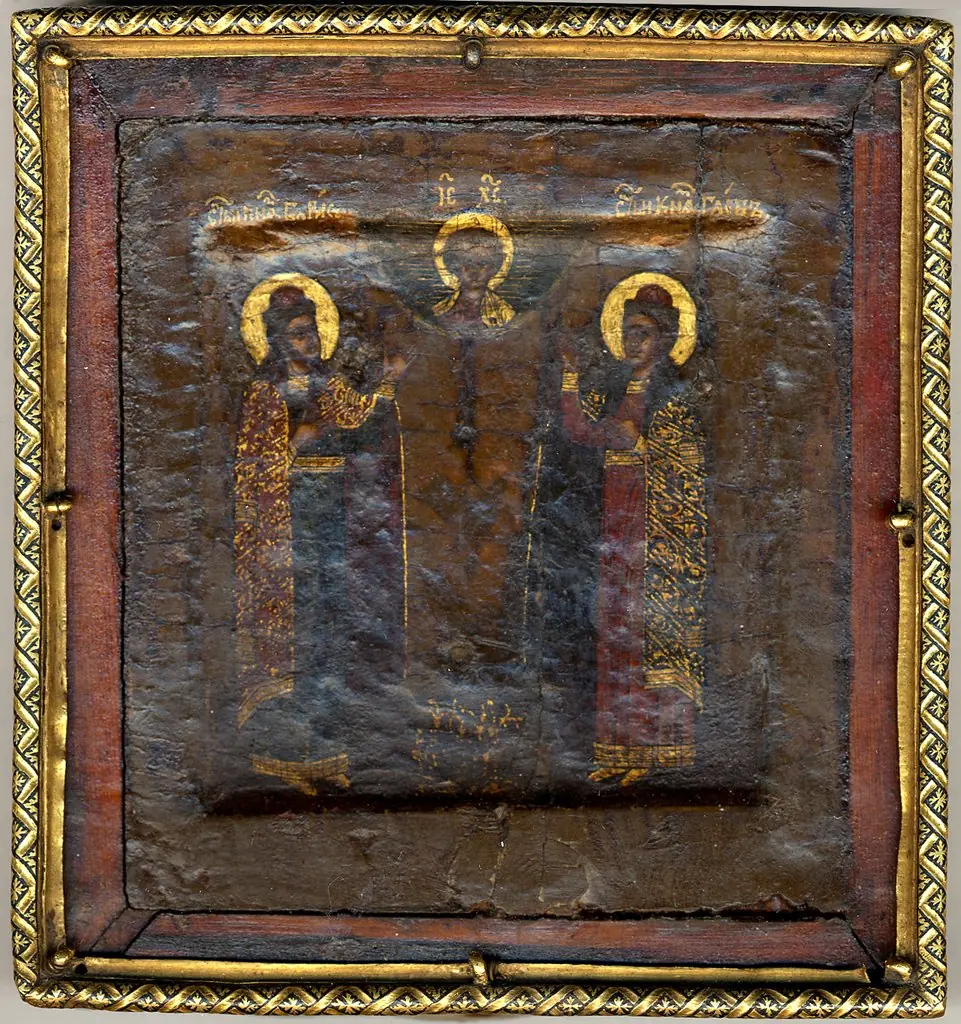 The Christ Child with Saints Boris and Gleb
 Icoană în patru registre, în centru Iisus Răstignit