Artwork
Page from Tales of a Parrot (Tuti-nama): text page
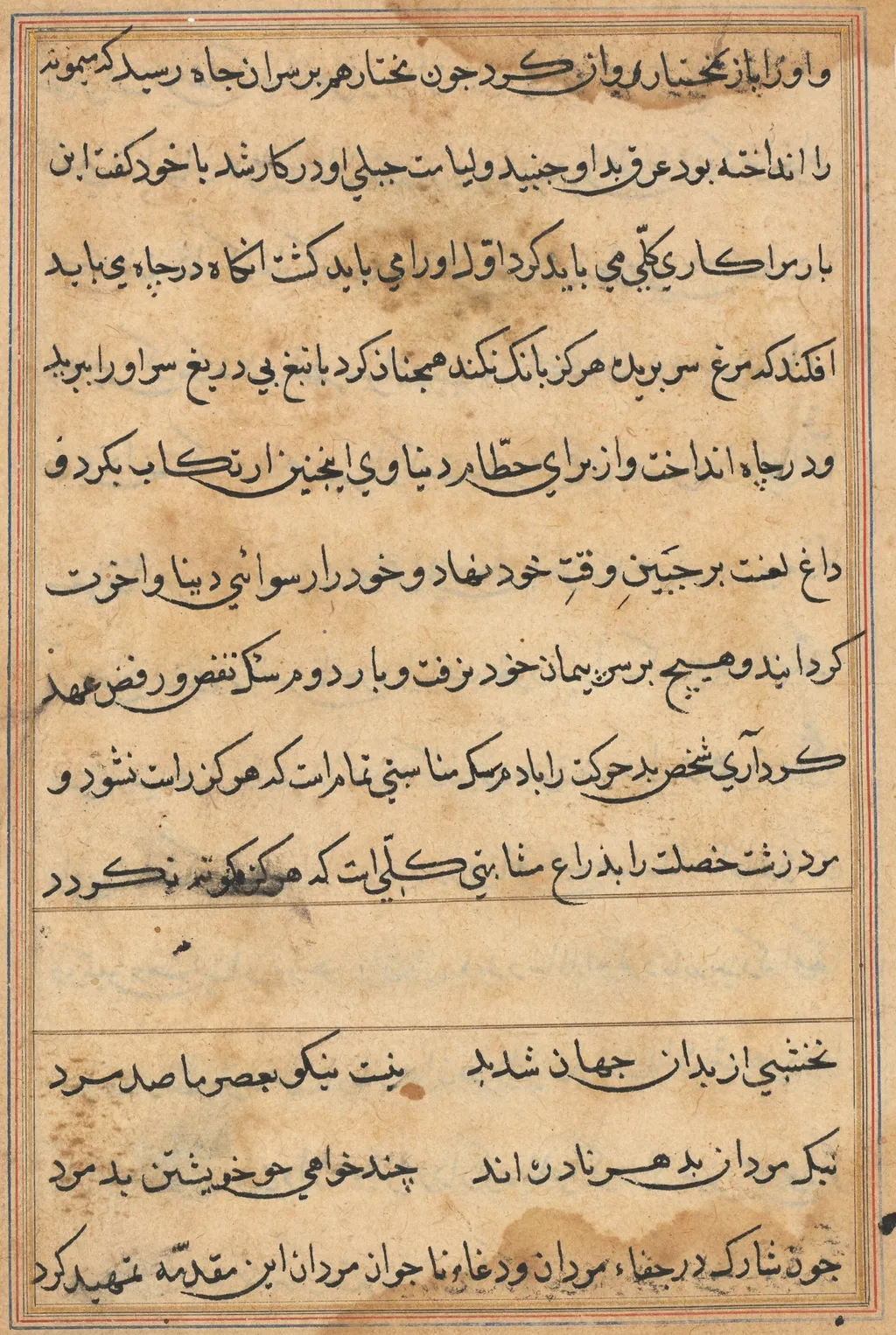
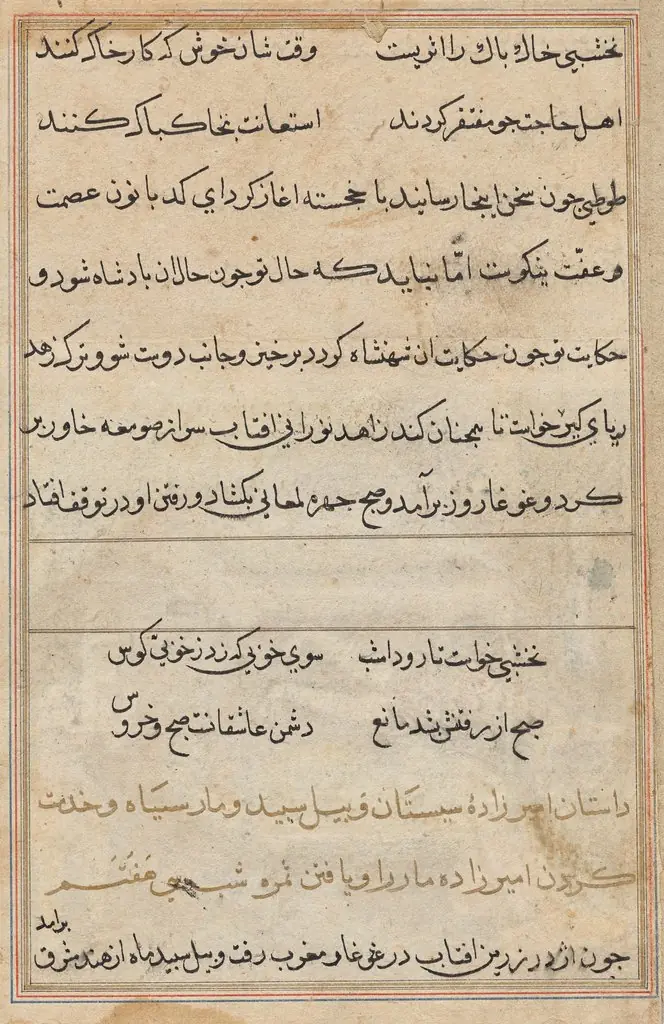
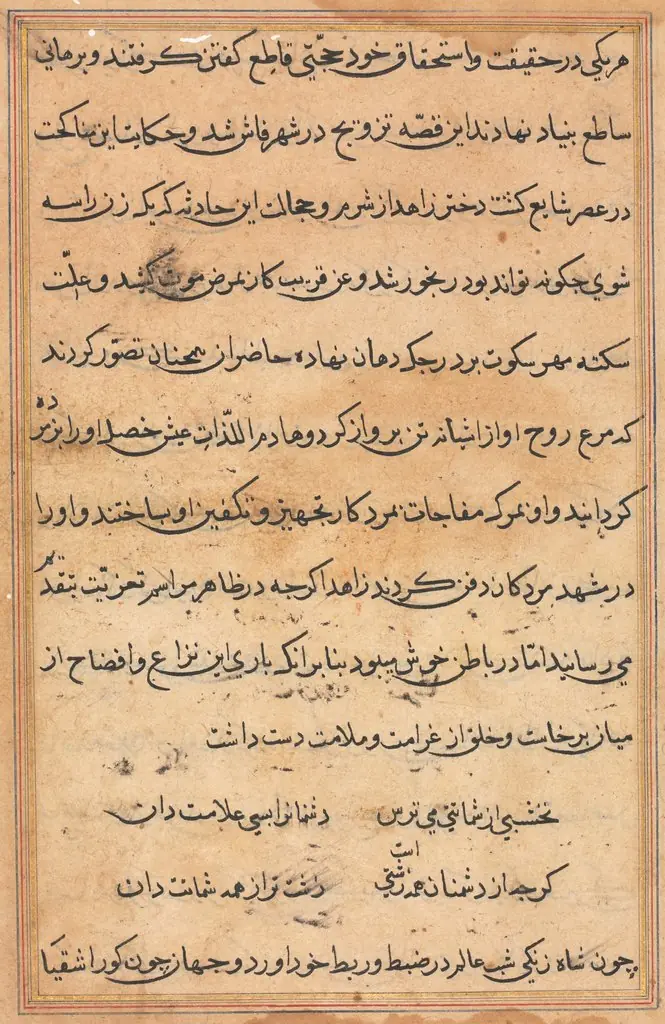
Page from Tales of a Parrot (Tuti-nama): text page is an unspecified painting. It dates from 1560 and is held in the collection of the Cleveland Museum of Art. This object is a single folio from the illustrated manuscript *Tales of a Parrot* (Tuti‑nama).
About this work
Overview
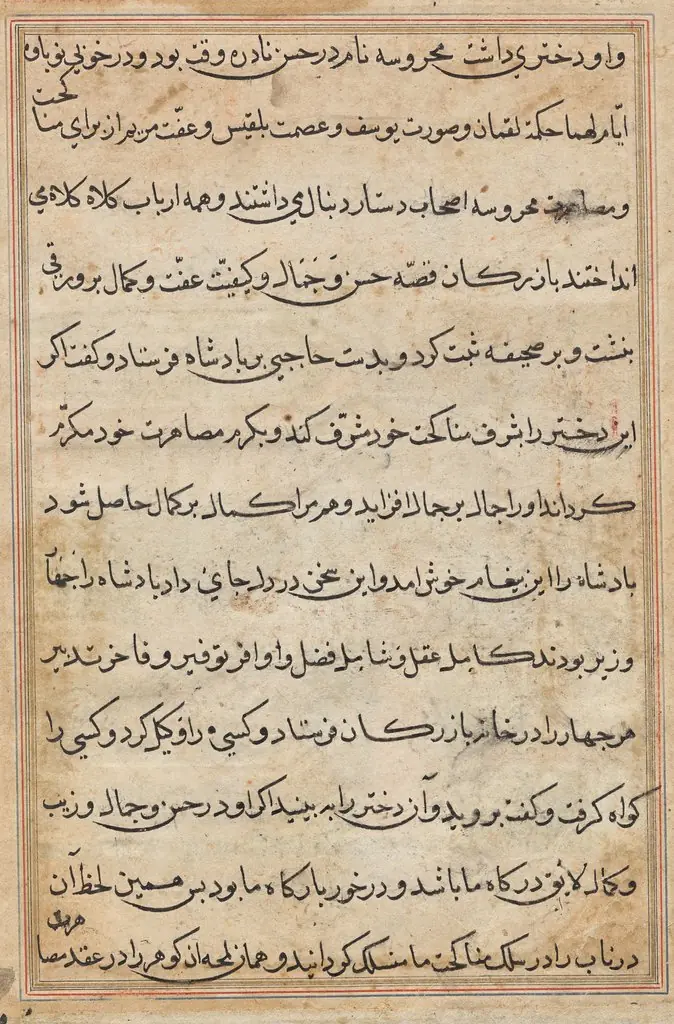
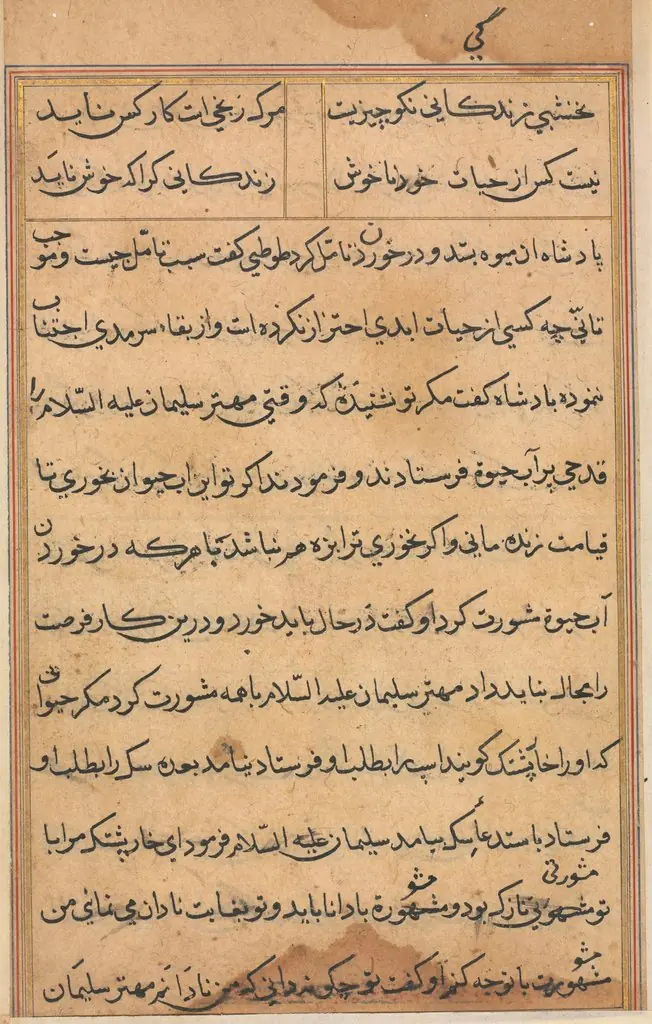
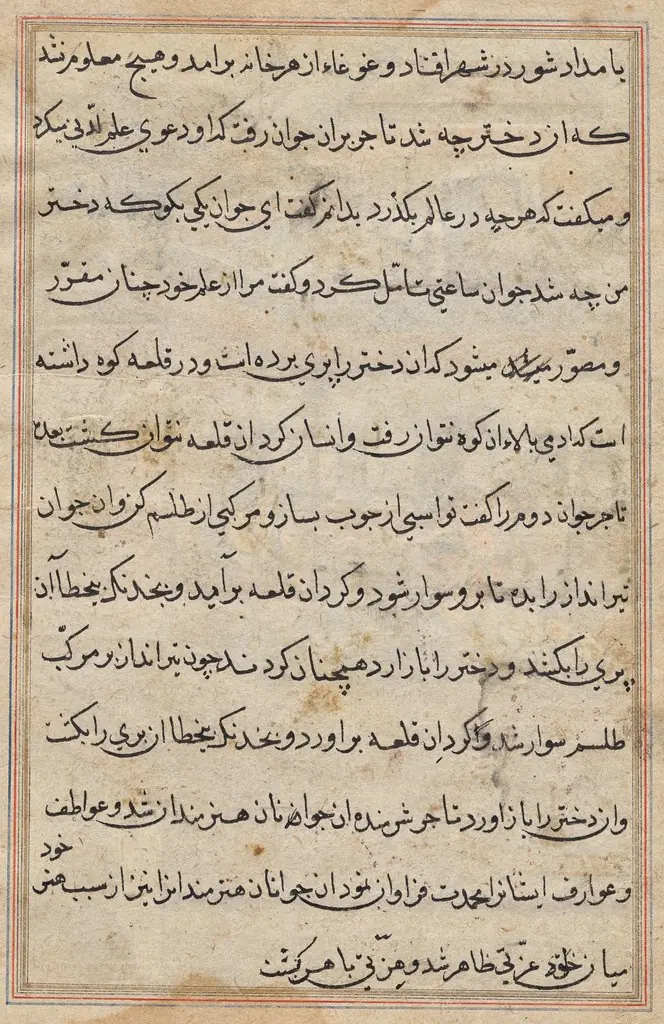
This object is a single folio from the illustrated manuscript *Tales of a Parrot* (Tuti‑nama). The page consists primarily of dense black calligraphic text, arranged in tight, orderly rows across the surface. A thin red line runs along the margin, framing the composition, while the paper itself shows the warm tones and minor brown stains characteristic of an aged document.
Subject & Meaning
The written passage forms part of a narrative created for Prince Salim, a member of the Mughal court. The story, known as *Tales of a Parrot*, combines moral instruction with entertainment, employing the parrot as a vehicle for dialogue and allegory. The precise, rhythmic script reflects the courtly emphasis on literary refinement and the prince’s cultivated taste.
Technique & Style
The calligraphy is executed in black ink that varies in intensity, producing occasional bleed‑through and faded spots that reveal the hand of a skilled scribe.
The calligraphy is executed in black ink that varies in intensity, producing occasional bleed‑through and faded spots that reveal the hand of a skilled scribe. The lettering balances curvilinear strokes with angular accents, generating a visual cadence that mirrors the poetic flow of the text. A narrow red border, applied with pigment, delineates the page’s edge without detracting from the script.
History & Provenance
The folio originates from a Mughal-era manuscript produced for Prince Salim, the son of Emperor Akbar, in the late 16th or early 17th century. The paper’s warm patina and staining indicate long-term storage, and the piece has since entered a museum collection, where it is displayed as an example of courtly literary art.
Context
Manuscript production in the Mughal court blended Persian artistic traditions with indigenous Indian influences, resulting in richly illustrated texts. While this page contains only text, its elaborate calligraphic style and decorative border align with the broader aesthetic of illuminated manuscripts that accompanied royal patronage and education.
Artist & collection

 Page from Tales of a Parrot (Tuti-nama): text page
 Page from Tales of a Parrot (Tuti-nama): text page
 Page from Tales of a Parrot (Tuti-nama): text page
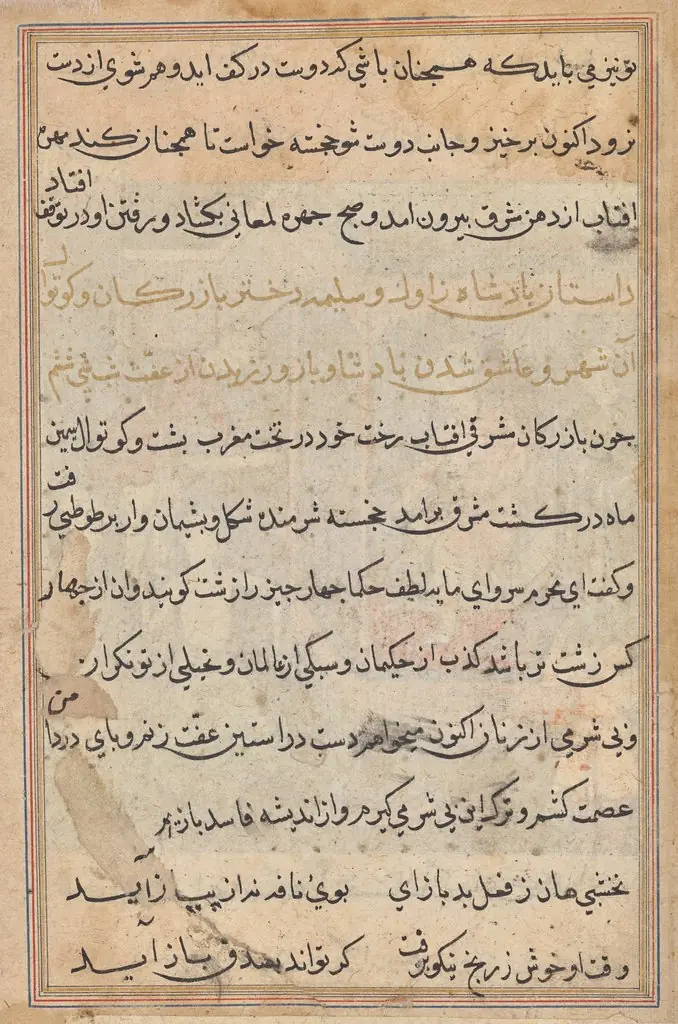 Page from Tales of a Parrot (Tuti-nama): text page
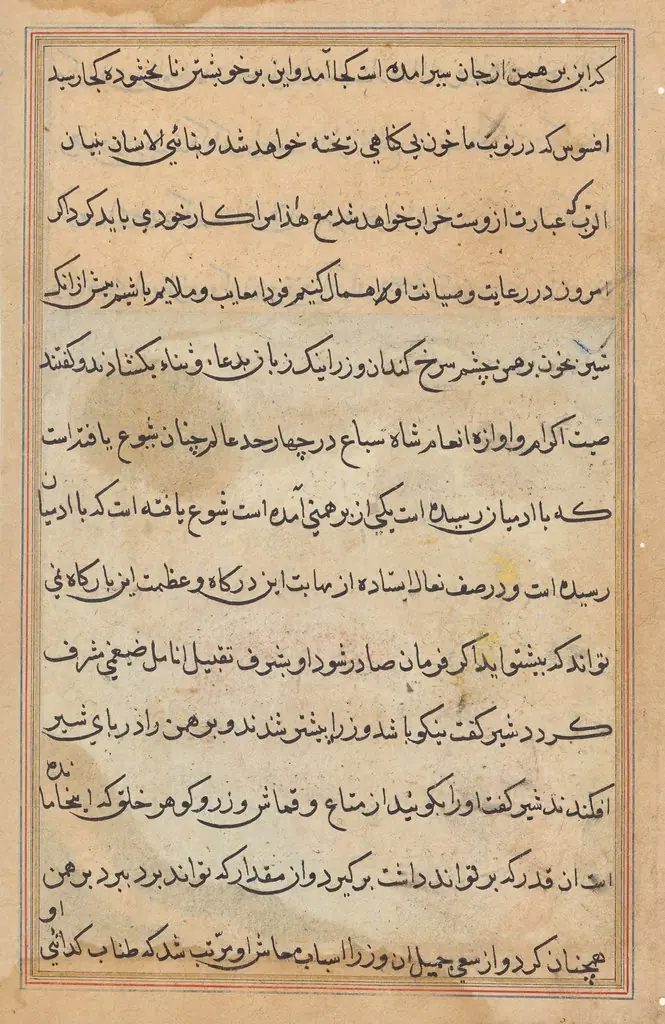 Page from Tales of a Parrot (Tuti-nama): text page
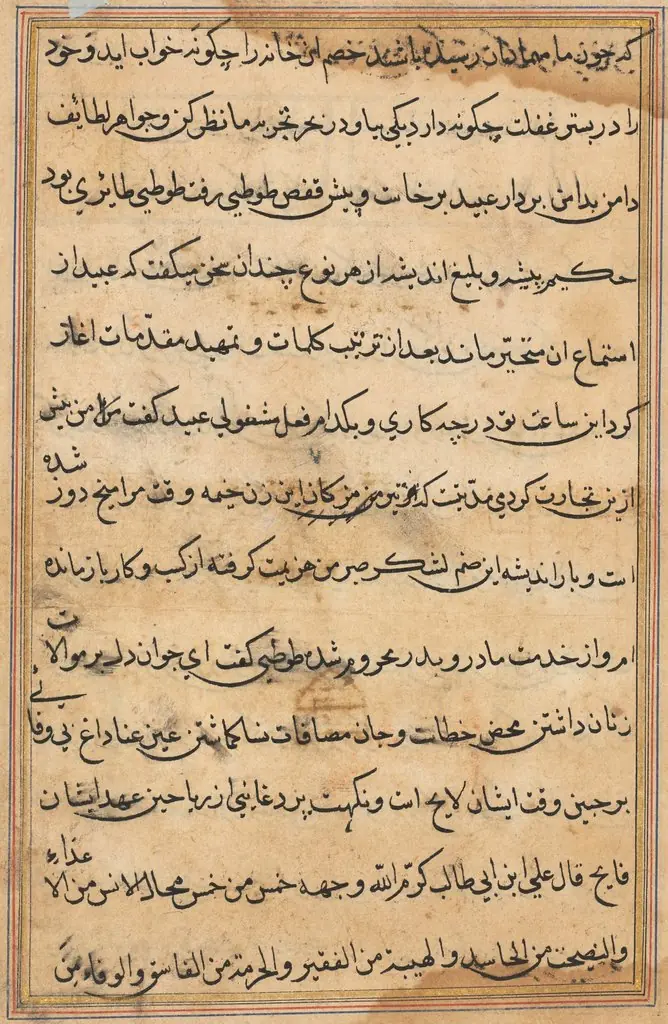 Page from Tales of a Parrot (Tuti-nama): text page
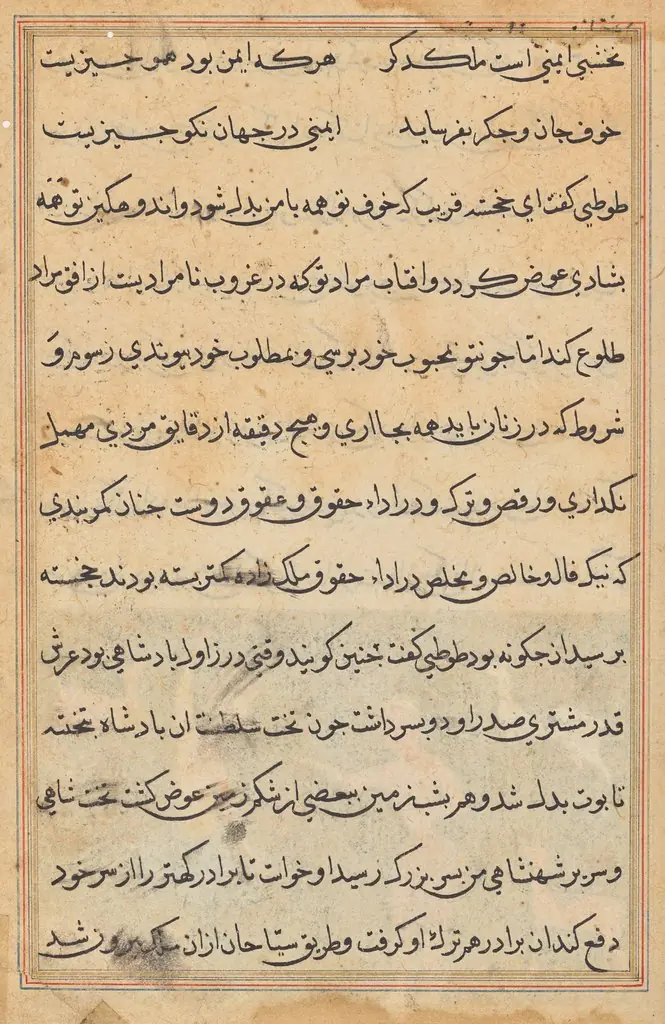 Page from Tales of a Parrot (Tuti-nama): text page
 Page from Tales of a Parrot (Tuti-nama): text page
 Page from Tales of a Parrot (Tuti-nama): text page