Artwork
Lake George
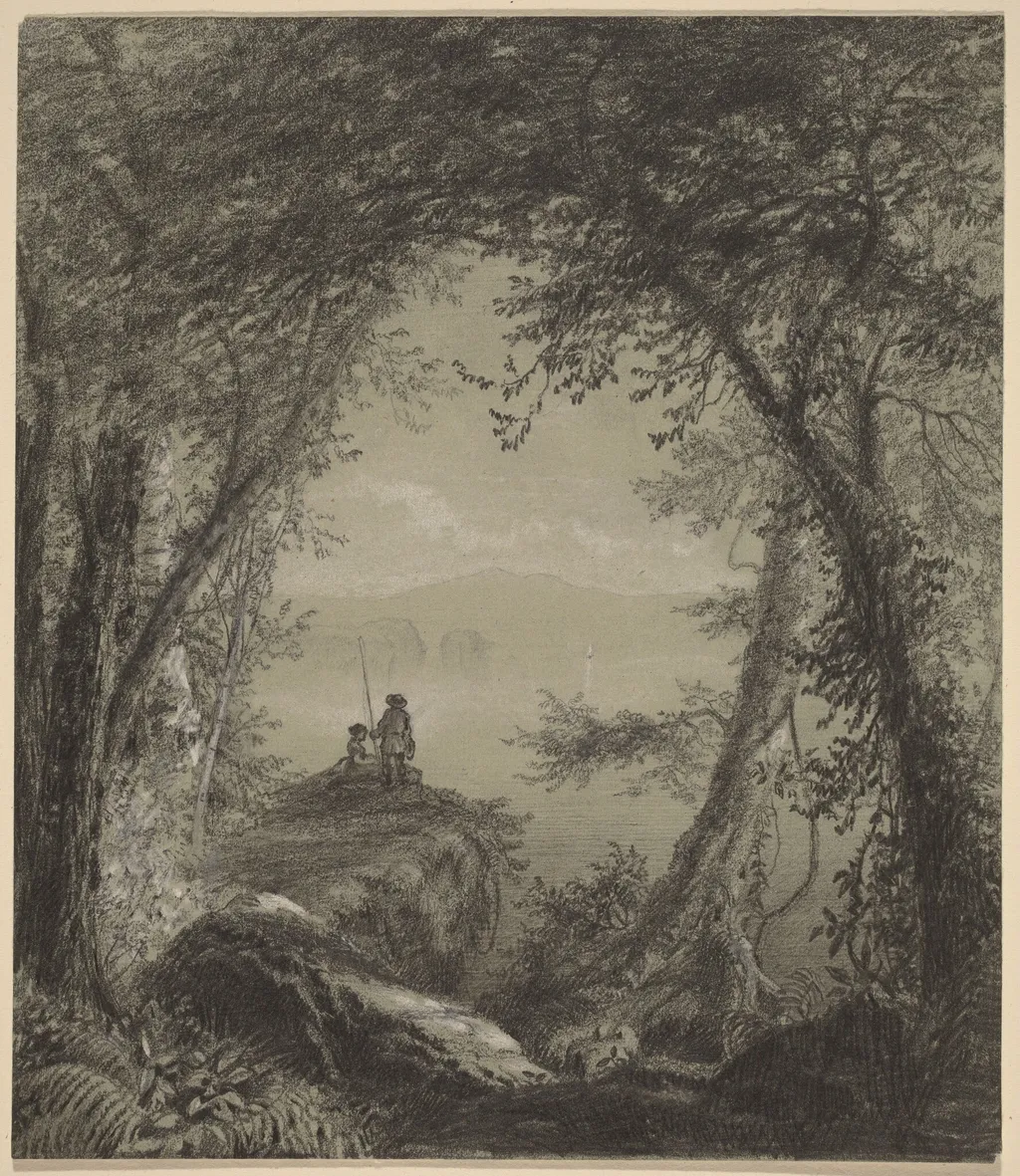
Lake George is a graphite drawing by the Impressionist artist Richard William Hubbard. It dates from 1860 and is held in the collection of the National Gallery of Art.
About this work
Overview
Lake George is a graphite and white chalk drawing on green wove paper, created by Richard William Hubbard around 1860. The work depicts a serene outdoor scene with two figures on a rocky hillside overlooking a lake.
Subject & Meaning
The drawing shows two individuals on a hillside, one standing with a long stick and the other seated, set against a backdrop of trees, a lake, and a soft sky. The composition emphasizes the relationship between the figures and their natural surroundings.
Technique & Style
Hubbard employed graphite and white chalk on distinctive green wove paper, resulting in a sketchy, high-contrast appearance. The dark, framed trees juxtaposed with the pale lake create visual tension, drawing attention to the central figures through subtle chiaroscuro effects.
History & Provenance
Created circa 1860 by Richard William Hubbard, specific details regarding the work's history and ownership prior to its current status are not provided.
Context
Lake George reflects mid-19th-century artistic inclinations towards capturing everyday life within natural landscapes, potentially aligning with emerging interests in outdoor themes during this period.
Legacy
The enduring significance or influence of Lake George within Hubbard's oeuvre or broader artistic movements is not explicitly outlined in available information.
Artist & collection

Artist
Richard William Hubbard (1816–1888) was an American artist, born in Middletown.

 Italian Landscape
 Oeuvres de A. Calame: No. 52
 Wooded Landscape beside a River
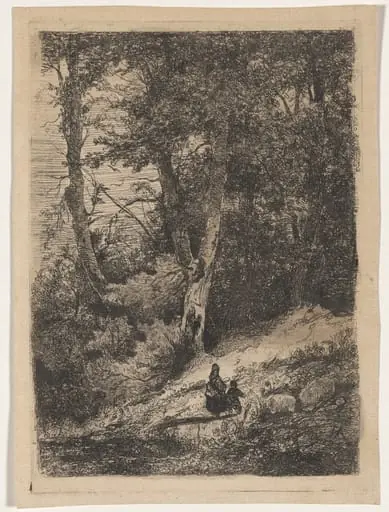 The Inner Forest (Intérieur du bois)
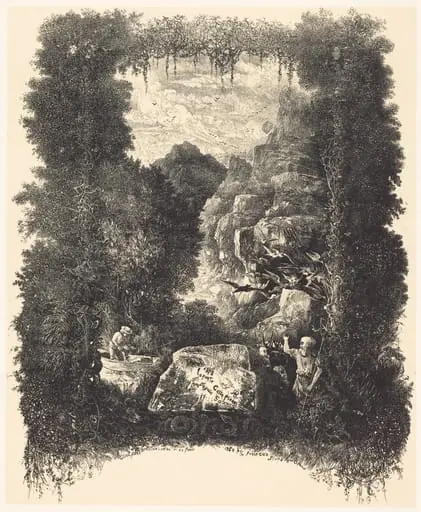 Frontispiece
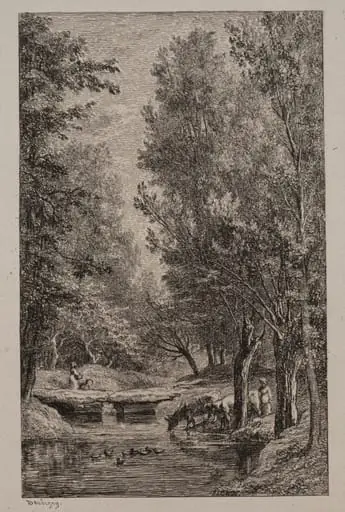 Brook in the Val Mondois
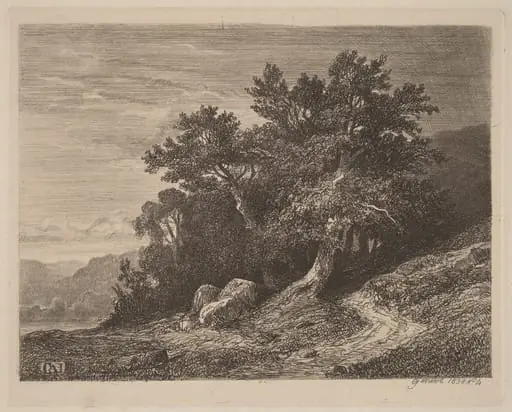 Ancient Trees on a Hillside
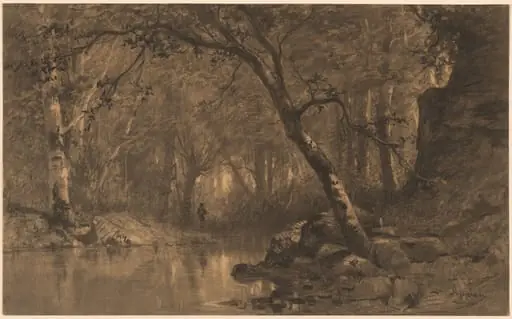 A Woodland River with a Fisherman
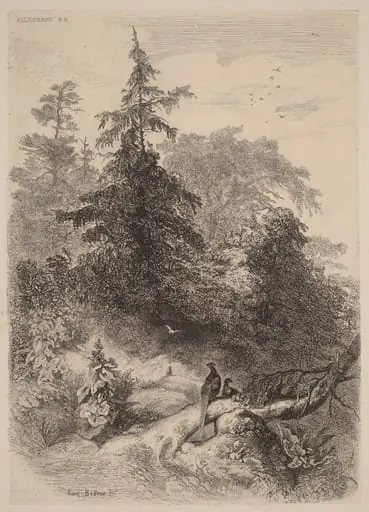 Les Faisans
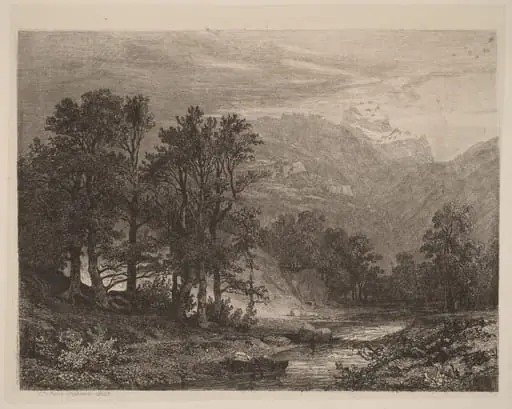 Mountain Stream
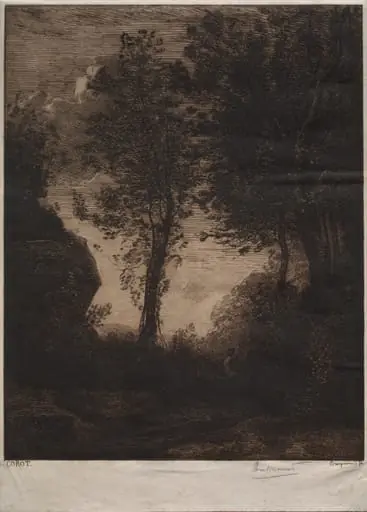 Landscape: Sunset, after Corot
 First frontispiece for Fables and Fairy-Tales by Thierry-Faletans