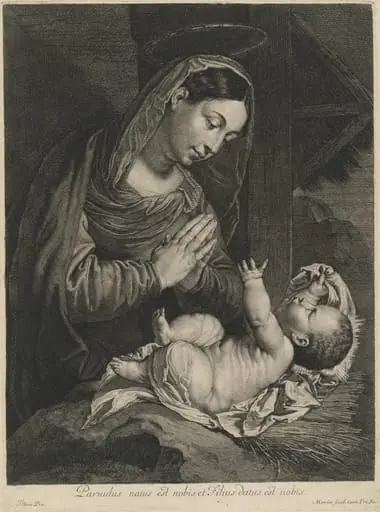
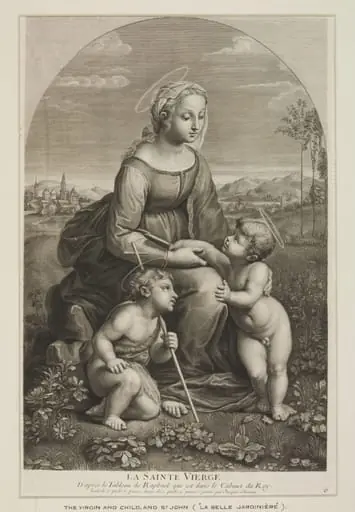
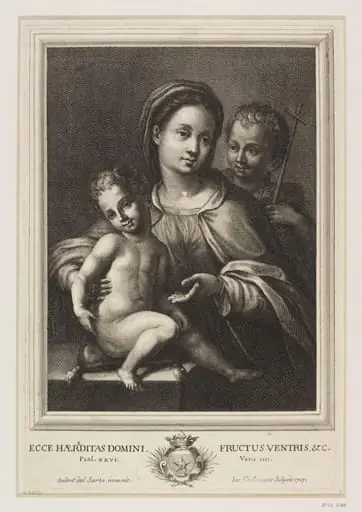
Artwork
The Virgin Mary
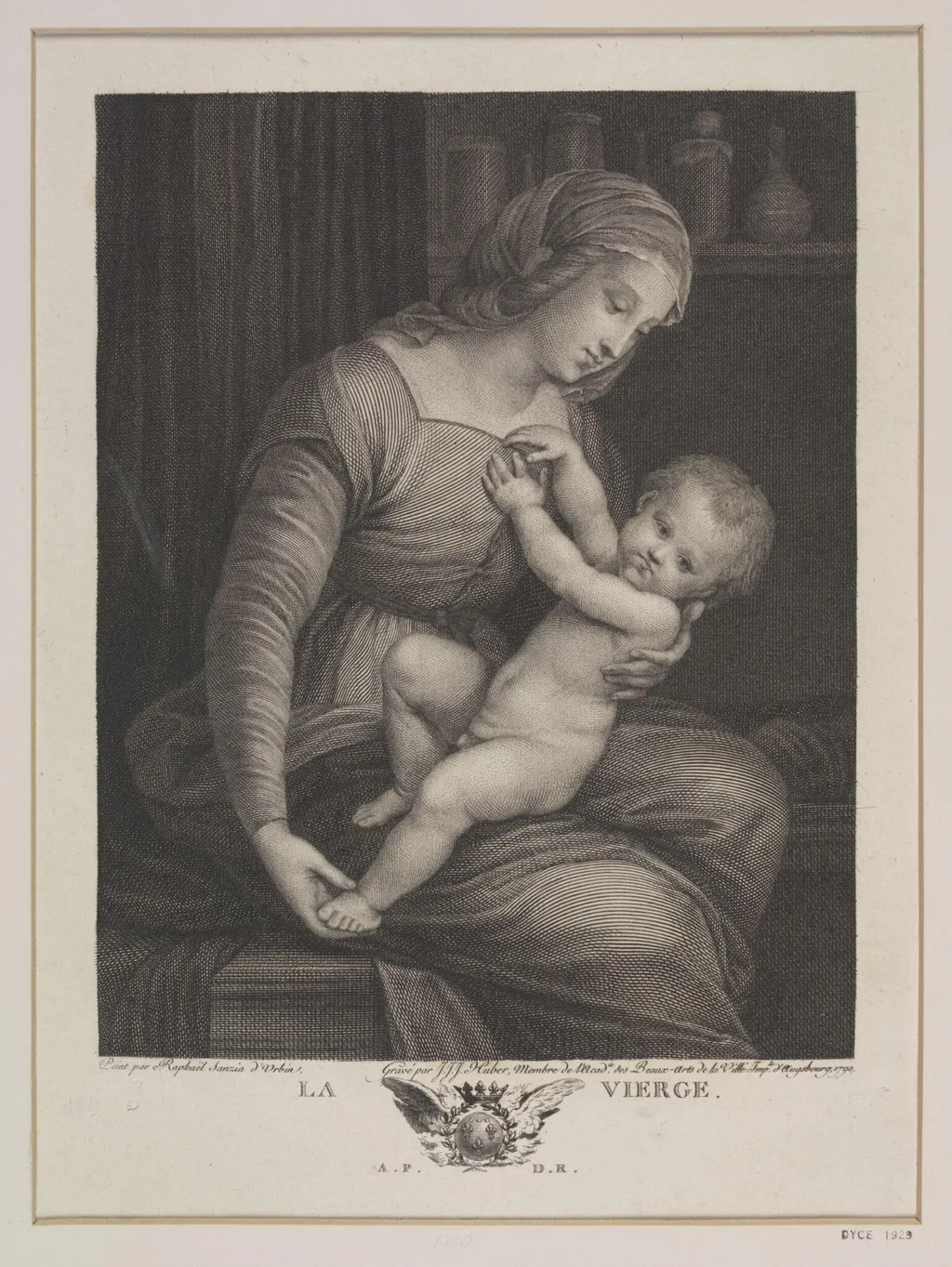
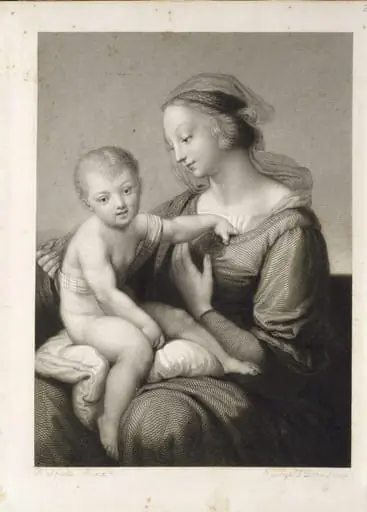
The Virgin Mary is a print by the Romanticist artist Joseph Ignaz Huber. It dates from 1788 and is held in the collection of the Victoria and Albert Museum.
About this work
Overview
The print’s restrained palette and focused lighting emphasize the intimate interaction between mother and child.
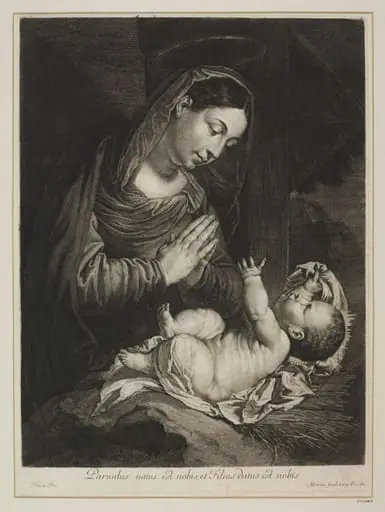
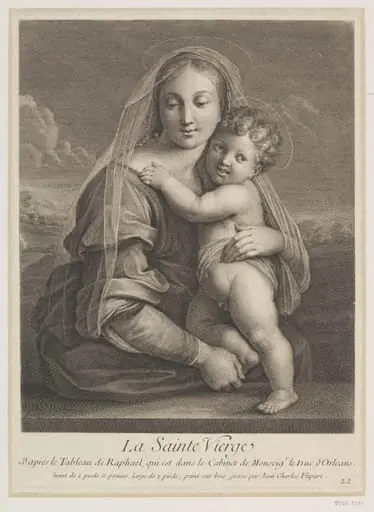
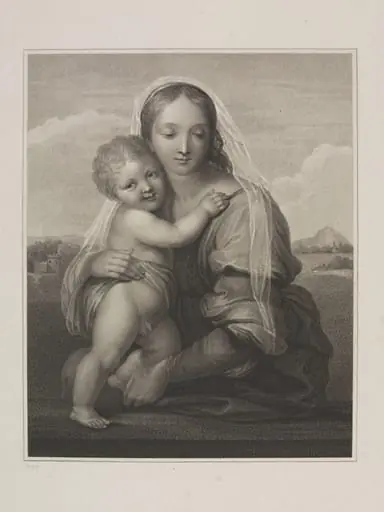
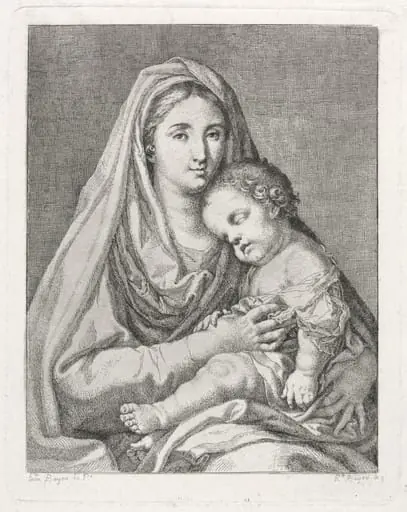
This print portrays the Virgin Mary seated with the infant Jesus, rendered in monochrome on paper. It derives from a composition originally painted by Raphael, adapted into a graphic medium. The artist’s signature appears as J. J. J. Huber, though some historical sources attribute the work to Joseph Ignaz Huber. The print’s restrained palette and focused lighting emphasize the intimate interaction between mother and child.
Subject & Meaning
The image presents a devotional scene common in Christian iconography: Mary as the tender mother, gazing down at Jesus, who looks upward with quiet curiosity. The absence of halos or overt symbols shifts focus to their quiet connection, suggesting humanity within sacred narrative. The dark, minimal background isolates the figures, reinforcing their spiritual significance through simplicity rather than ornament.
Technique & Style
The artist employs chiaroscuro to model form, using gradations of tone to define the folds of fabric and the contours of the figures. Soft shadows deepen the sense of volume, while the dark background enhances the luminosity of the skin and garments. Lines are precise yet subtle, avoiding heavy outlines, allowing light and shade to guide the viewer’s perception of depth and texture.
History & Provenance
The print was produced in the late 18th or early 19th century, likely as a reproductive engraving meant for wider dissemination of Raphael’s composition. Attribution has been debated, with references in 19th-century catalogues linking it to Joseph Ignaz Huber, while the print itself bears the initials J. J. J. Huber. Its circulation reflects the period’s demand for religious imagery in domestic and educational settings.
Context
During this era, reproductive prints played a key role in making renowned paintings accessible beyond elite collections. Raphael’s Madonnas were especially popular subjects, valued for their harmony and emotional restraint. This print aligns with a broader trend of translating High Renaissance ideals into graphic form for private devotion and artistic study across Europe.
Legacy
Though not widely celebrated as an original work, the print preserves a widely admired composition through the medium of engraving. It contributes to the transmission of Raphael’s visual language into later centuries, demonstrating how religious imagery was sustained through reproduction. Its quiet execution reflects the enduring appeal of maternal tenderness as a subject in Western art.
Artist & collection
Artist
Joseph Ignaz Huber spent his life carving tiny woodblocks in a Munich attic, inking them so carefully you can still smell the linseed oil 250 years later.