Artwork
A Palace with an Arched Bridge (A Roman Villa)
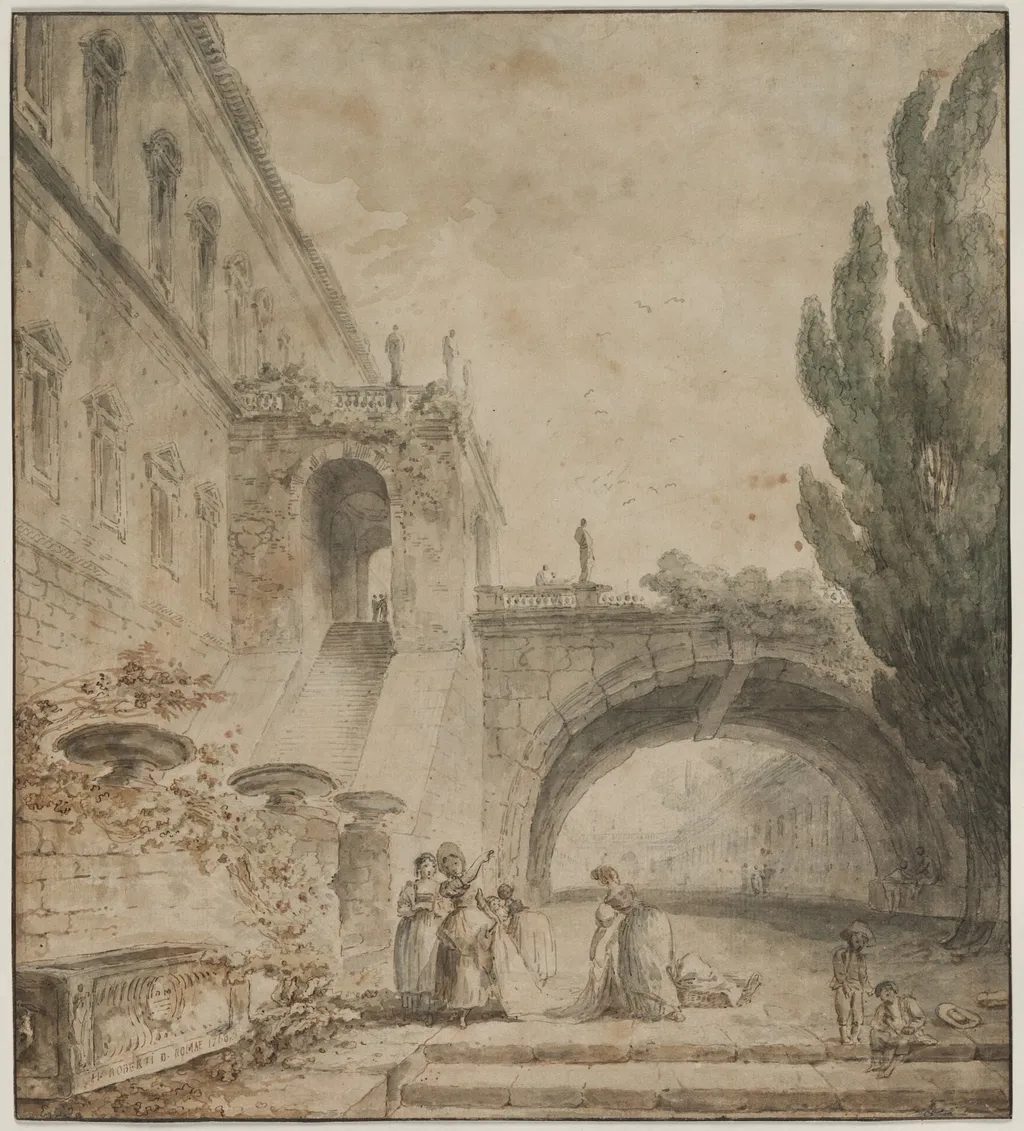
A Palace with an Arched Bridge (A Roman Villa) is a drawing by the Romanticist artist Hubert Robert. It dates from 1760 and is held in the collection of the Cleveland Museum of Art.
About this work
Overview
The composition reflects Robert’s deep engagement with Italy’s built environment, filtered through personal interpretation rather than topographical accuracy.
This watercolor by Hubert Robert, created after five years in Rome, presents an imagined architectural scene rather than a documented location. It blends elements drawn from Roman ruins, villas, and garden structures into a cohesive yet fictional landscape. The composition reflects Robert’s deep engagement with Italy’s built environment, filtered through personal interpretation rather than topographical accuracy.
Subject & Meaning
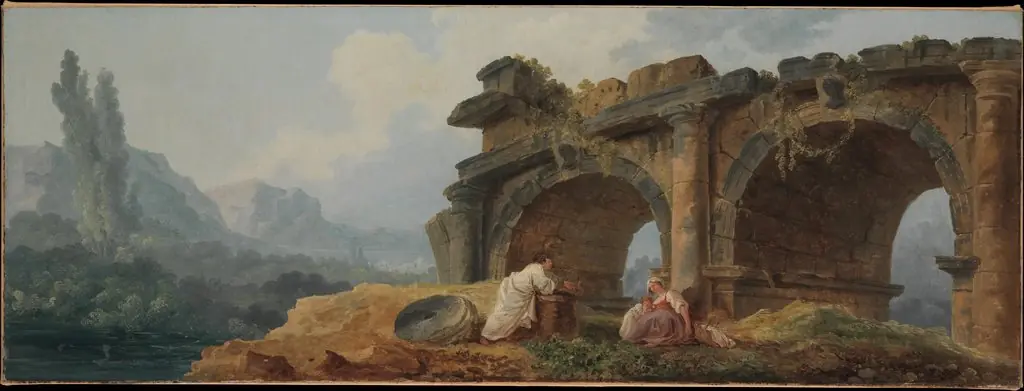
The scene centers on a grand stone palace connected to a monumental arched bridge spanning a river. Washerwomen at work along the banks introduce everyday human activity into the setting, contrasting the grandeur of ancient architecture with humble, ongoing life. This juxtaposition suggests a quiet meditation on time—how enduring structures coexist with transient, ordinary routines.
Technique & Style
Robert employed watercolor with delicate washes to suggest light, texture, and atmosphere. The architectural forms are rendered with precise linework, while the foliage and figures are loosely indicated, creating a balance between structure and spontaneity. The softness of the medium enhances the dreamlike quality of the invented scene, reinforcing its poetic rather than documentary intent.
History & Provenance
Robert produced this work during his extended stay in Rome, where he studied classical and Renaissance architecture extensively. Though the drawing is not tied to a specific site, it reflects the visual vocabulary he absorbed from sites like the Villa d'Este and the Roman Forum. The piece remained in his personal collection until later entering institutional hands, though its early ownership trail is not fully documented.
Context
In late 18th-century Europe, there was growing interest in ruins and romanticized antiquity. Robert’s fantasies aligned with this taste, offering viewers idealized visions of the past infused with contemporary life. Unlike strict topographers, he prioritized mood and composition, contributing to a broader trend of architectural imagination that influenced later landscape painting and design.
Legacy
Robert’s invented vistas helped redefine architectural drawing as a vehicle for poetic expression rather than mere record. His fusion of real elements into fictional compositions inspired generations of artists to treat historical architecture as a flexible language. This work exemplifies his role in shaping the aesthetic of the picturesque in European art.
Artist & collection
Artist
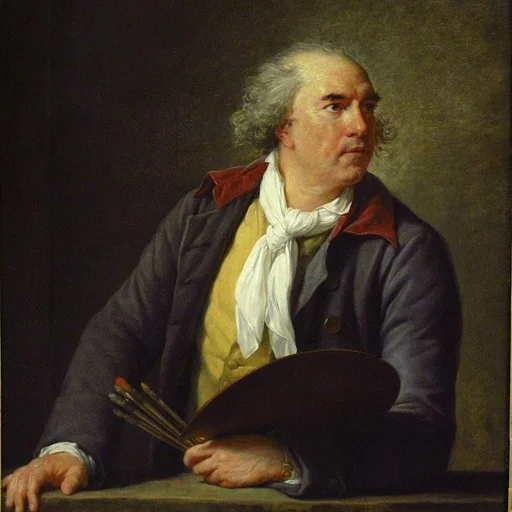
Hubert Robert (French pronunciation: ; 22 May 1733 – 15 April 1808) was a French painter in the school of Romanticism, noted especially for his landscape paintings and capricci, or semi-fictitious picturesque depictions of ruins in Italy…

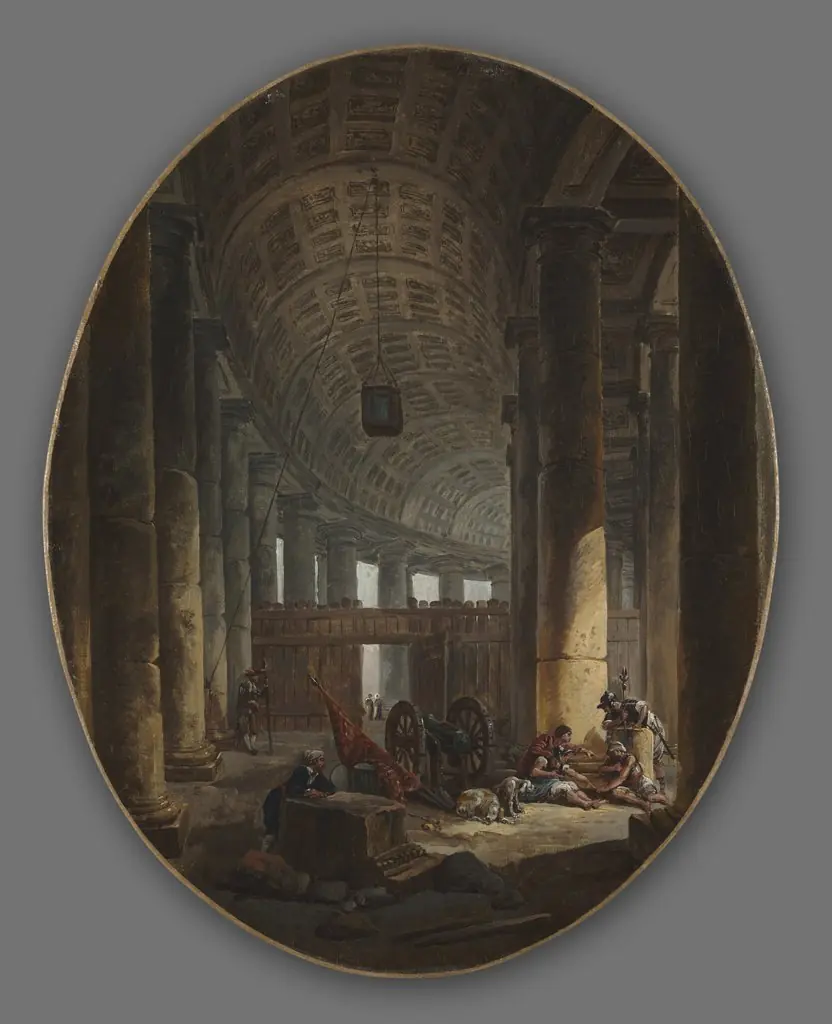
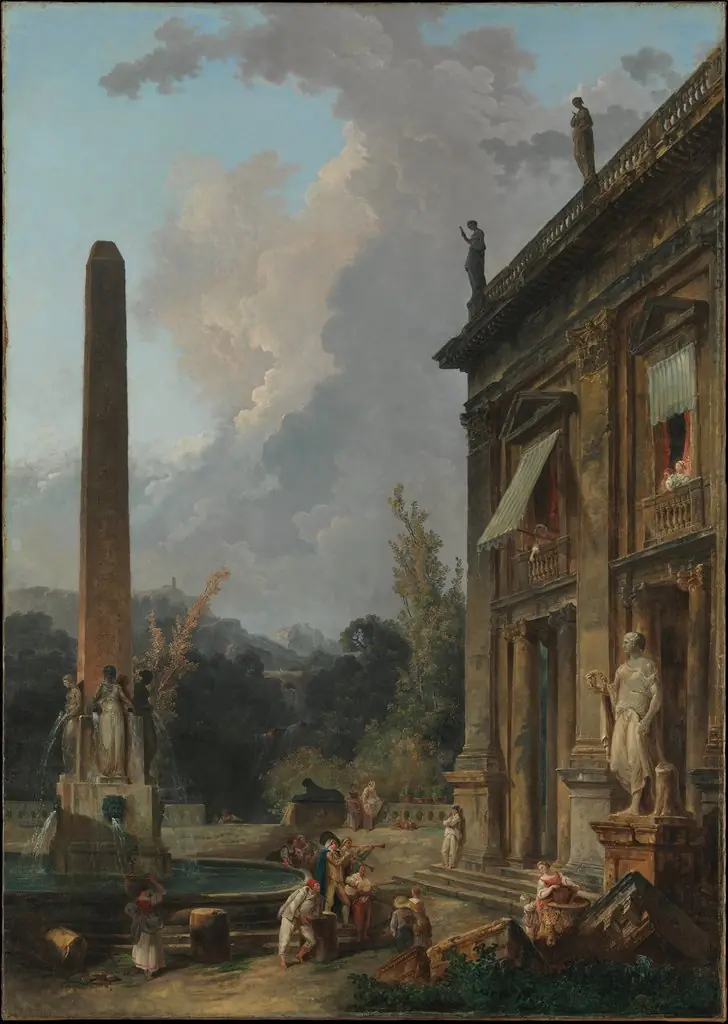
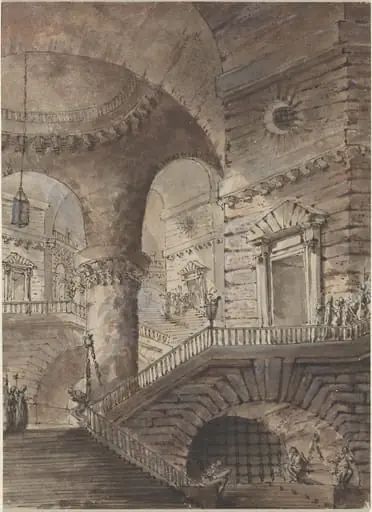 Roman Prison
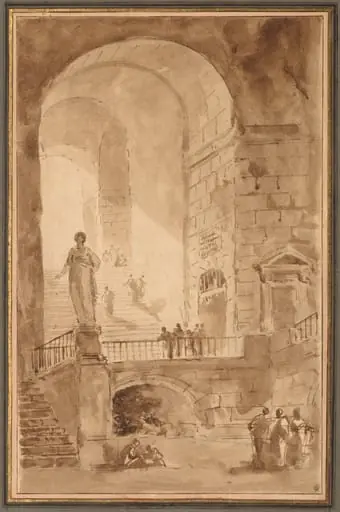 Vaulted Staircase
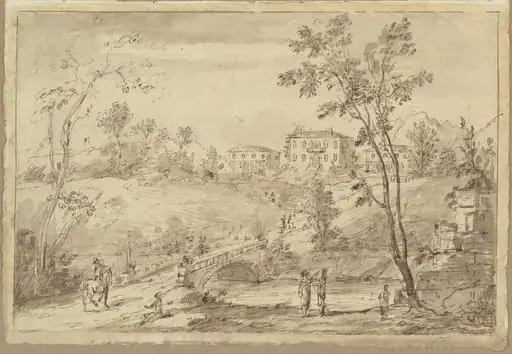 Landscape with a Bridge
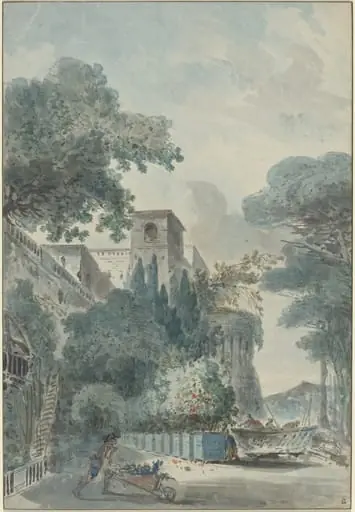 L'Allee de Grenadiers
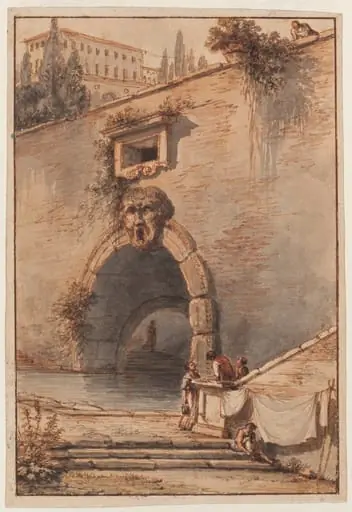 View of an Ancient Roman Bridge with a Mascaroon
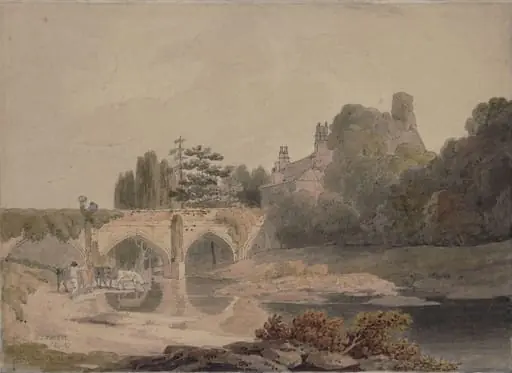 Eltham bridge, Kent
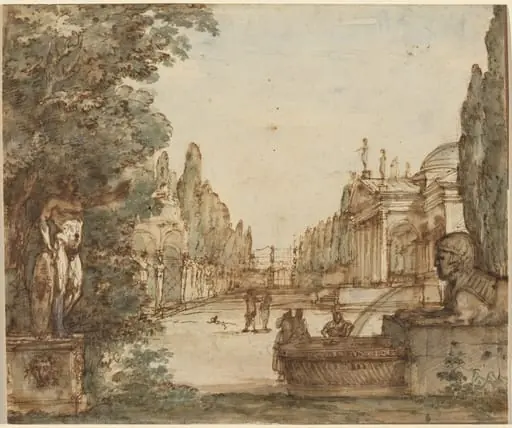 Capriccio with a Palladian Villa
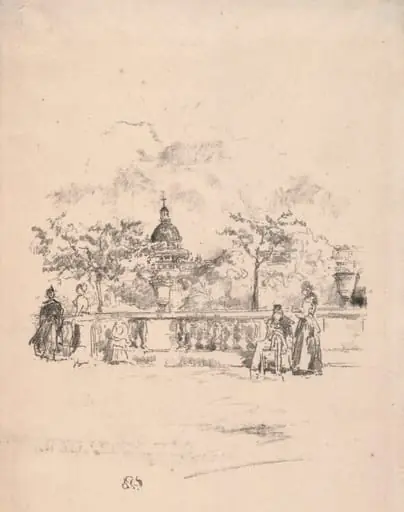 Pantheon from the Terrace of the Luxembourg Gardens
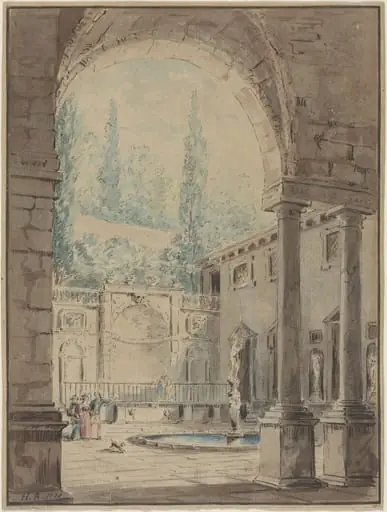 Courtyard of the Villa Pliniana
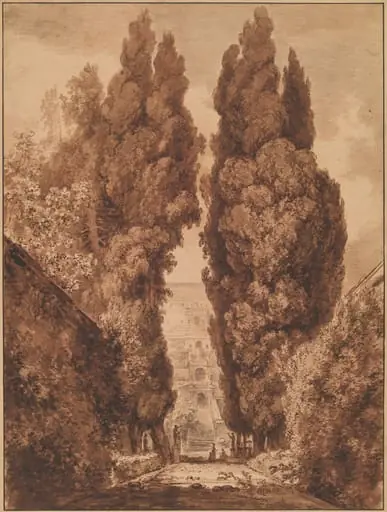 The Avenue of Cypresses at Villa d'Este
 Doorway and Vine
 The Statue in Front of Ruins