Artwork
Roman Ruins, Villa Pamfili
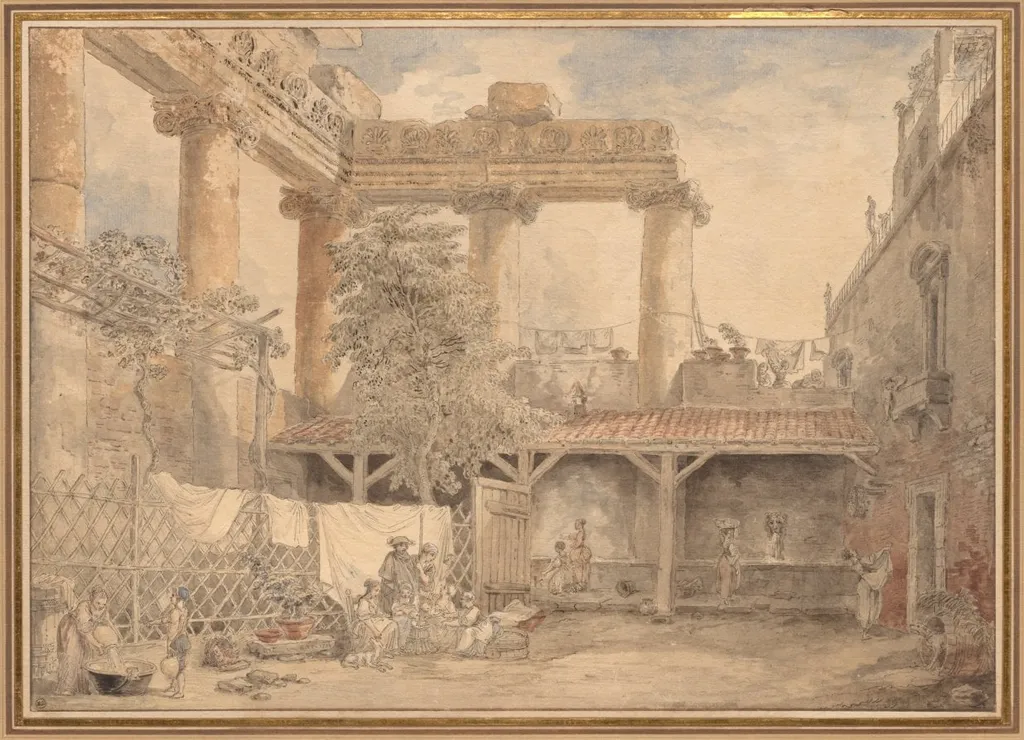
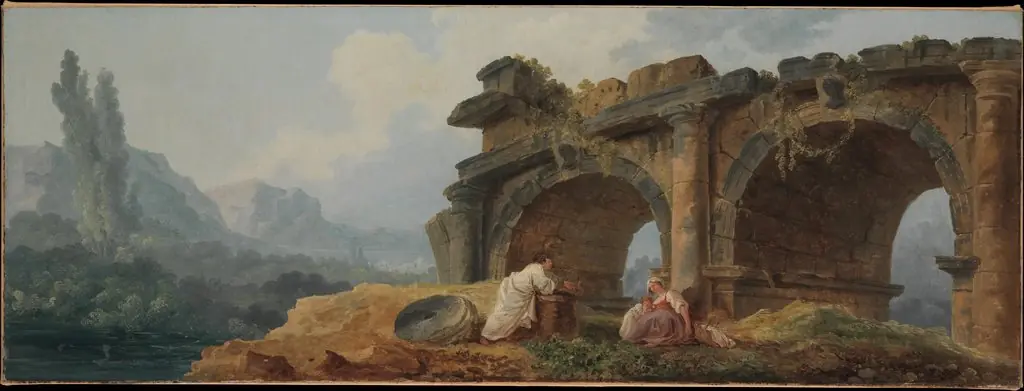
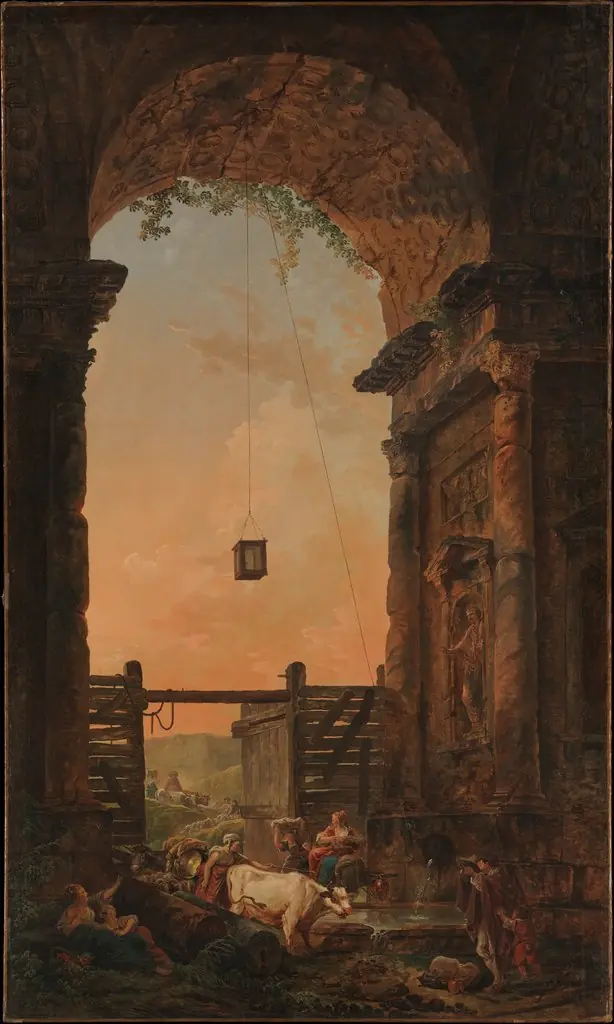
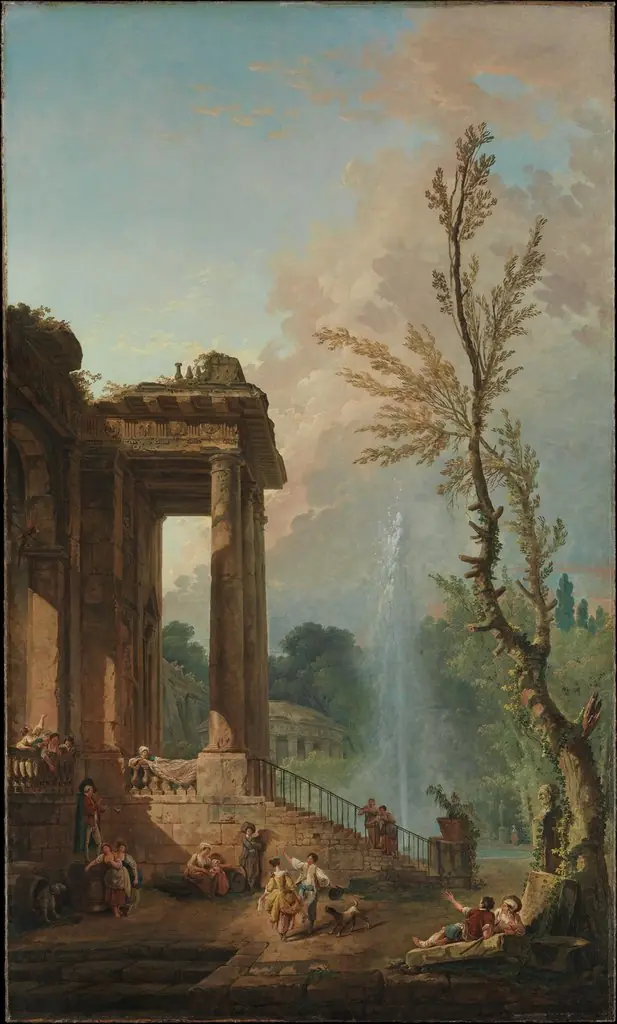
Roman Ruins, Villa Pamfili is a drawing by the Romanticist artist Hubert Robert. It dates from 1774 and is held in the collection of the Cleveland Museum of Art.
About this work
You see crumbling Roman arches and columns, overgrown with weeds, while people in 1700s clothes stroll and chat among them.
You see crumbling Roman arches and columns, overgrown with weeds, while people in 1700s clothes stroll and chat among them.
Hubert Robert spent years sketching ruins in Italy, then painted them back in Paris. He liked showing how time turns grand buildings into quiet backdrops for everyday life. The nickname “Robert of Ruins” stuck because he kept coming back to the idea.
To see more of this kind of scene, look up *subject: france, 18th century*.
Overview
This pencil drawing by Hubert Robert captures the quiet interplay between ancient architecture and contemporary life in 18th-century Rome. Though titled 'Roman Ruins, Villa Pamfili,' the site depicted bears no direct connection to that location. Instead, its architectural elements likely reference the Temple of Saturn in the Roman Forum. Robert produced such sketches during his years in Italy, later transforming them into finished works in Paris.
Subject & Meaning
The drawing portrays ordinary figures—dressed in 18th-century attire—moving casually among crumbling columns and overgrown arches. Rather than idealizing antiquity, Robert emphasizes its decay as a natural backdrop to daily routines. This juxtaposition suggests a meditation on time’s erosion of grandeur, where human activity persists undisturbed by the passage of centuries.
Technique & Style
Executed in delicate pencil, the drawing balances precise architectural detail with loose, atmospheric rendering of vegetation and figures. Robert’s linework captures structural decay without sentimentality, while the soft shading suggests weathered stone and dappled light. His approach prioritizes observation over dramatic effect, aligning with the quiet realism characteristic of his ruin studies.
History & Provenance
Robert created this work during his extended stay in Italy, where he made numerous sketches of ancient sites. Upon returning to Paris, he reused these studies for paintings and prints over many years. The drawing’s title, likely assigned later, reflects a common but inaccurate association with the Villa Pamphili. Its origins lie in Robert’s personal archive of Italian sketches, later dispersed through collections and exhibitions.
Context
In the 18th century, fascination with classical antiquity shaped European art and thought. Robert’s focus on ruins aligned with broader intellectual currents, including Enlightenment inquiries into history and impermanence. Unlike grand historical narratives, his scenes offered intimate, unheroic views of decay—reflecting a shift toward contemplative, rather than celebratory, representations of the past.
Legacy
Robert earned the enduring nickname 'Robert of Ruins' for his consistent thematic focus, a label coined by Denis Diderot. His drawings influenced later artists interested in the aesthetic of decay and the quiet dignity of forgotten spaces. By framing ruins as living environments rather than relics, he expanded the possibilities of landscape and architectural drawing in European art.
Artist & collection
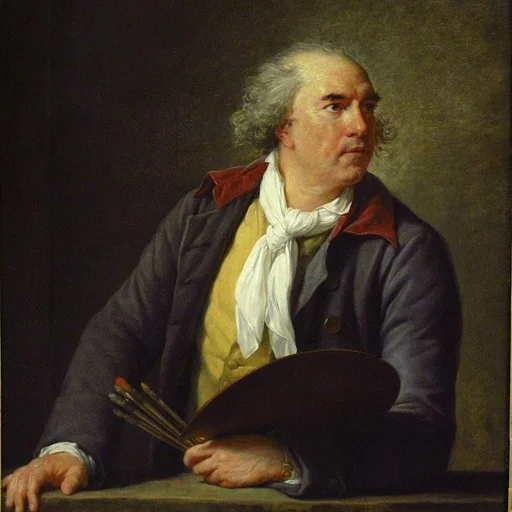
Artist
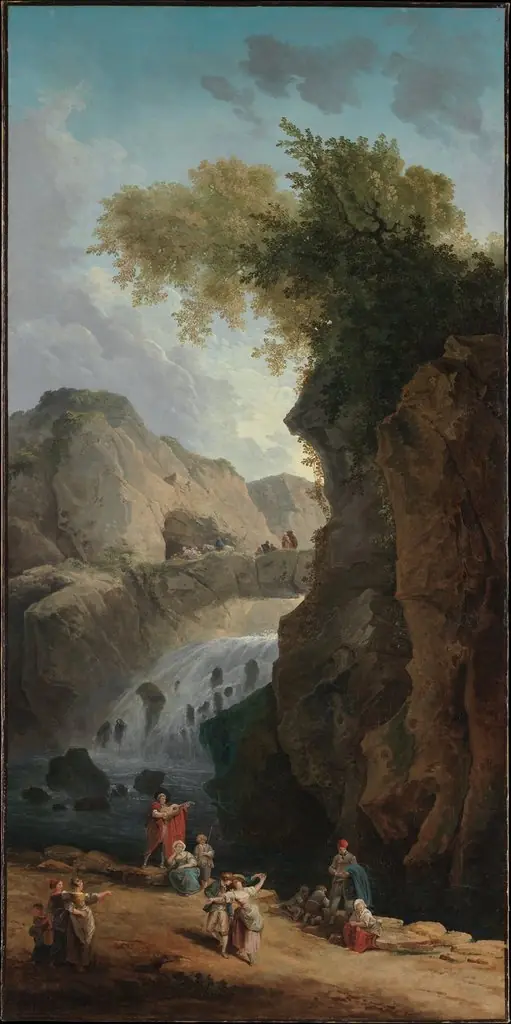
Hubert Robert (French pronunciation: ; 22 May 1733 – 15 April 1808) was a French painter in the school of Romanticism, noted especially for his landscape paintings and capricci, or semi-fictitious picturesque depictions of ruins in Italy…

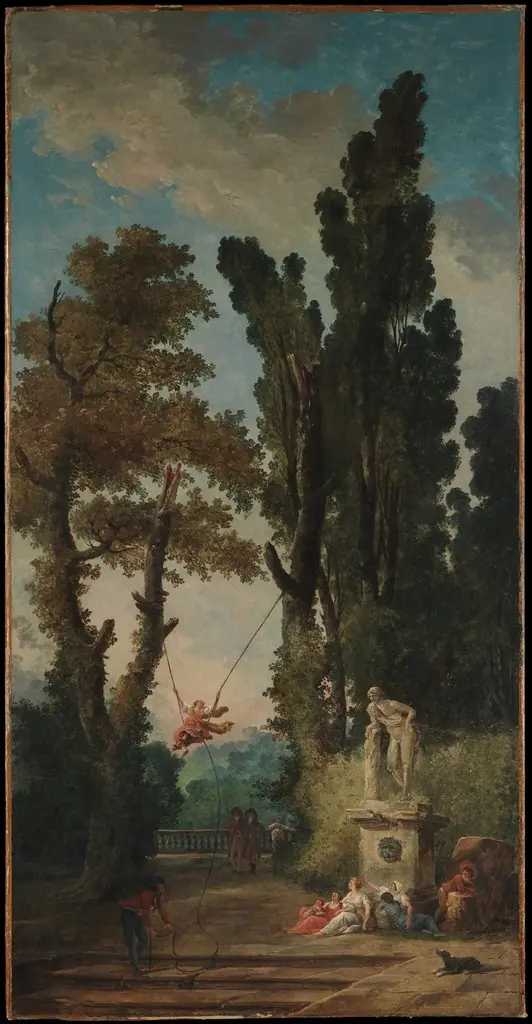
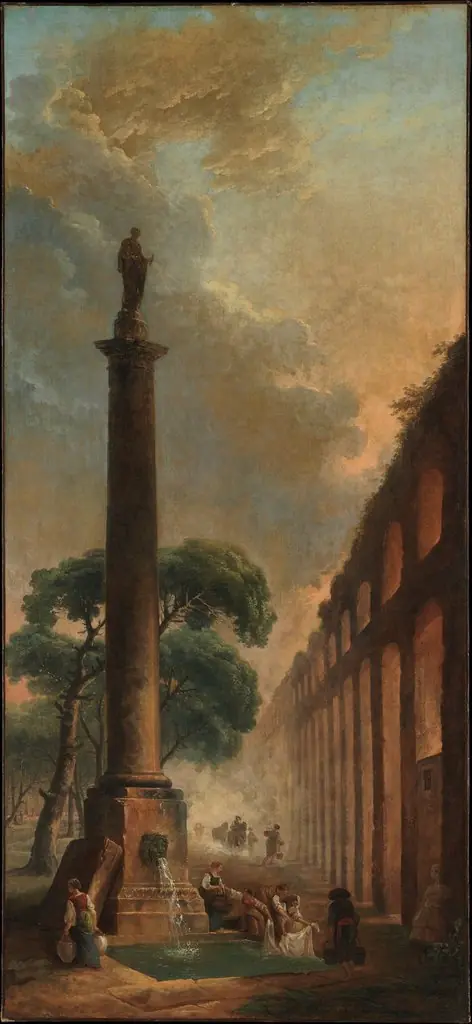
 Landscape with Classical Ruins
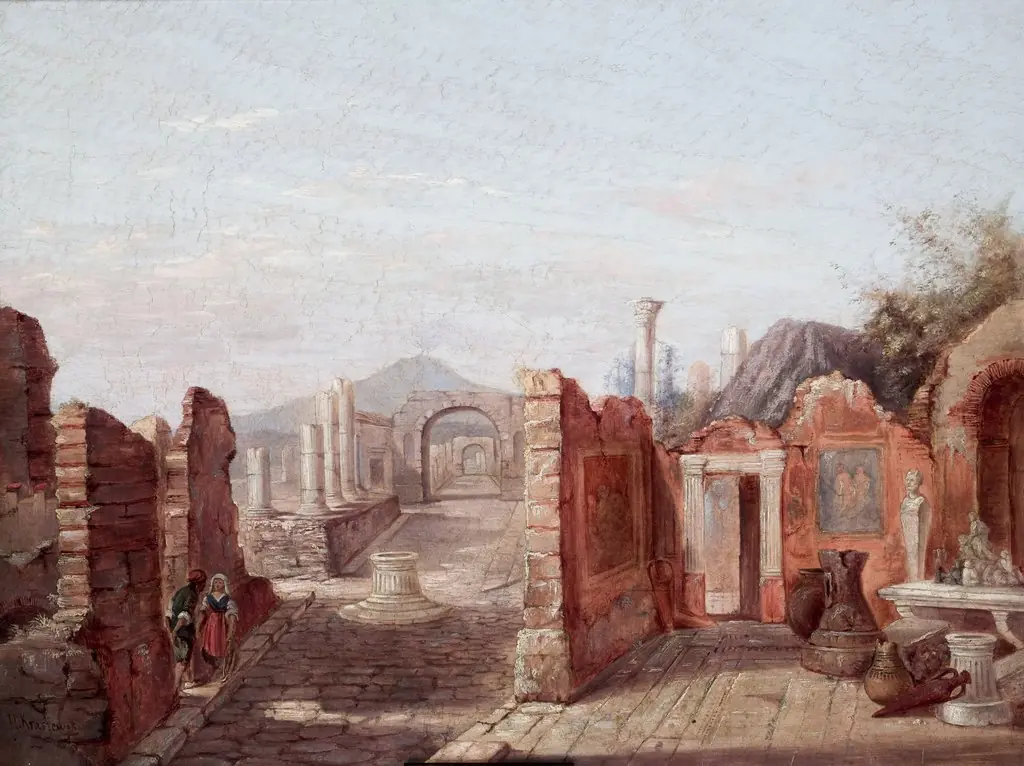 Ruins of Pompeii
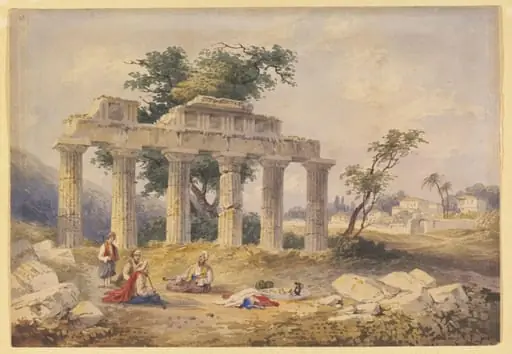 Temple at Boudroun, Halicarnassus
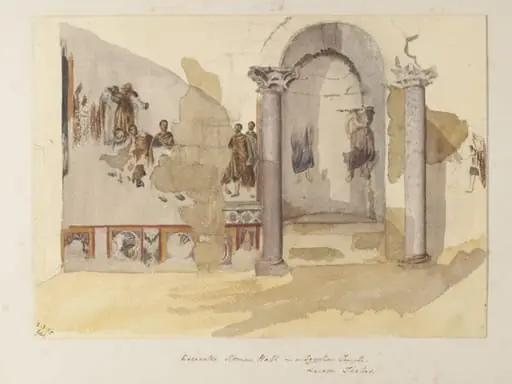 `Excavated Roman Hall in an Egyptian Temple - Luxor. Thebes'
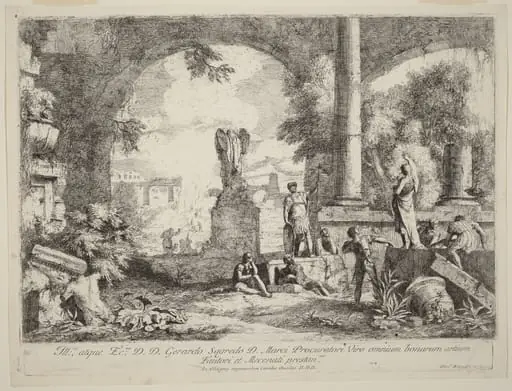
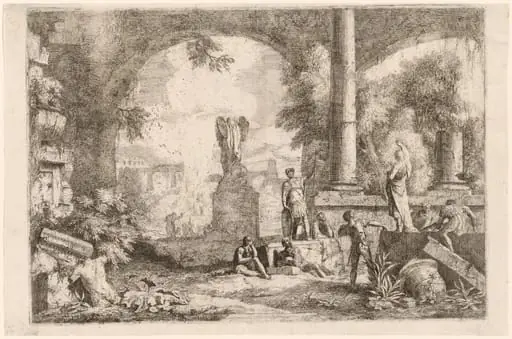 Capriccio of Antique Ruins with Men Gazing at a Classical Orator
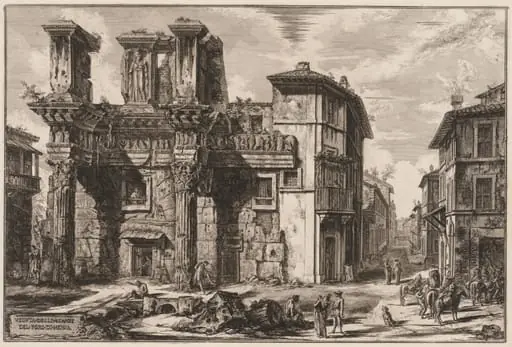 Views of Rome: Forum of Nerva
 A Temple of Victory
 Buildings near Rome
 Tomb of Scipios
 Architekturstück