Artwork
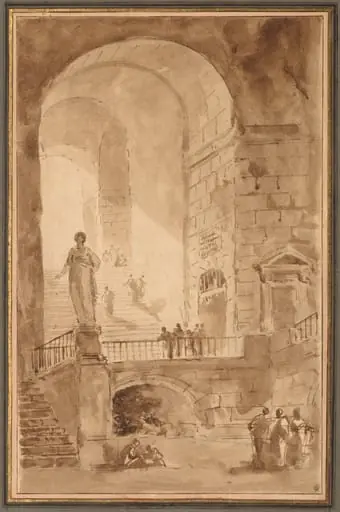
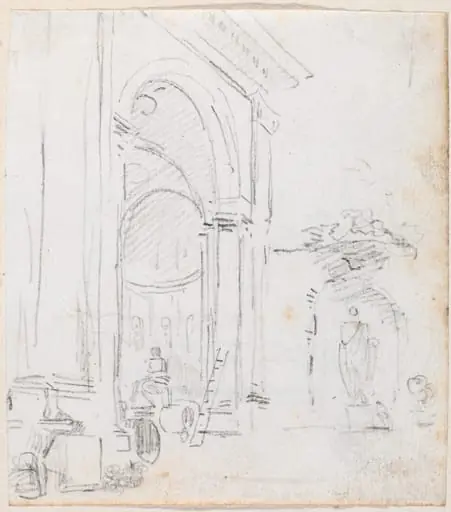
Figures on a Monumental Interior Stairway [recto]
![Figures on a Monumental Interior Stairway [recto], by Hubert Robert, graphite, 1760](https://artifactworldgallery.com/img/hubert-robert--figures-on-a-monumental-interior-stairway-recto--6662e6de2172f65b-w1024.webp)
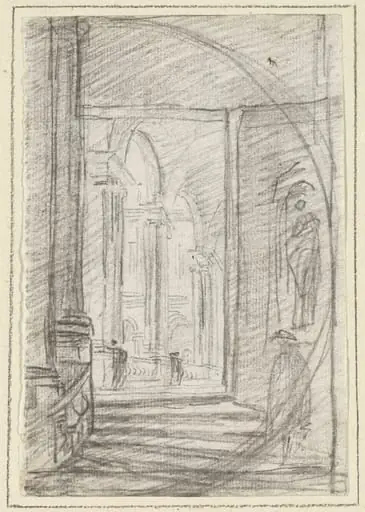
Figures on a Monumental Interior Stairway [recto] is a graphite drawing by the Romanticist artist Hubert Robert. It dates from 1760 and is held in the collection of the National Gallery of Art.
About this work
Overview
Created around 1760, this graphite drawing by Hubert Robert captures a vast interior staircase with three figures in varied poses.
Created around 1760, this graphite drawing by Hubert Robert captures a vast interior staircase with three figures in varied poses. Executed on laid paper, it reflects Robert’s early engagement with architectural space and human presence within it. The work is not a finished painting but a preparatory study, revealing his method of observing and reimagining monumental environments through rapid, expressive mark-making.
Subject & Meaning
Three figures occupy the staircase: one stands rigidly at the summit, gripping a long vertical object; another sits mid-flight, gazing downward; a third kneels at the base, facing the seated figure. Their postures suggest an unspoken narrative—perhaps waiting, observing, or confronting. The absence of clear context invites interpretation, emphasizing mood over story, and aligning with Robert’s interest in evoking atmosphere through isolated human gestures.
Technique & Style
Robert employed loose, fluid graphite lines to convey texture and motion. The rough walls and worn steps are rendered with hatched and smudged strokes, while the figures are suggested with minimal detail, focusing on posture and gesture. Light falls unevenly, creating stark contrasts that enhance the sense of depth and drama. The sketch’s immediacy reveals Robert’s preference for capturing transient effects over polished finish.
History & Provenance
This drawing belongs to Robert’s extensive body of architectural sketches made during his formative years in Italy and later in France. Though its early ownership is undocumented, it aligns with studies held in major collections that trace his development as a designer of capricci. Its survival underscores the value placed on his preparatory work, even when not intended for public display.
Context
In the 1760s, Robert was refining his approach to combining real and imagined architecture, influenced by Roman ruins and French grandeur. This drawing reflects a broader trend among artists to use sketching as a tool for exploring spatial dynamics and emotional tone. Unlike finished works, such studies prioritized observation and experimentation, serving as visual notebooks for later compositions.
Legacy
Robert’s sketches, including this one, helped redefine the role of drawing in French art—shifting it from mere preparation to a medium of expressive inquiry. His ability to infuse architectural spaces with psychological tension influenced later generations of landscape and interior painters, particularly those drawn to the interplay of structure and human presence.
Artist & collection
Artist
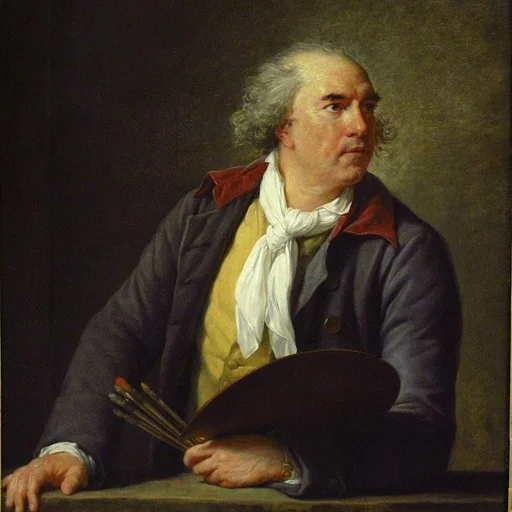
Hubert Robert (French pronunciation: ; 22 May 1733 – 15 April 1808) was a French painter in the school of Romanticism, noted especially for his landscape paintings and capricci, or semi-fictitious picturesque depictions of ruins in Italy…

![Palatial Mantelpiece with a Scene of Ancient Sacrifice [recto], by Austrian 16th Century](https://artifactworldgallery.com/img/austrian-16th-century--palatial-mantelpiece-with-a-scene-of-ancient-sacrifice-recto--6818e7e0eb258b13-w320.webp)