Artwork
Imaginary View of Rome with Equestrian Statue of Marcus Aurelius, the Column of Trajan and a Temple
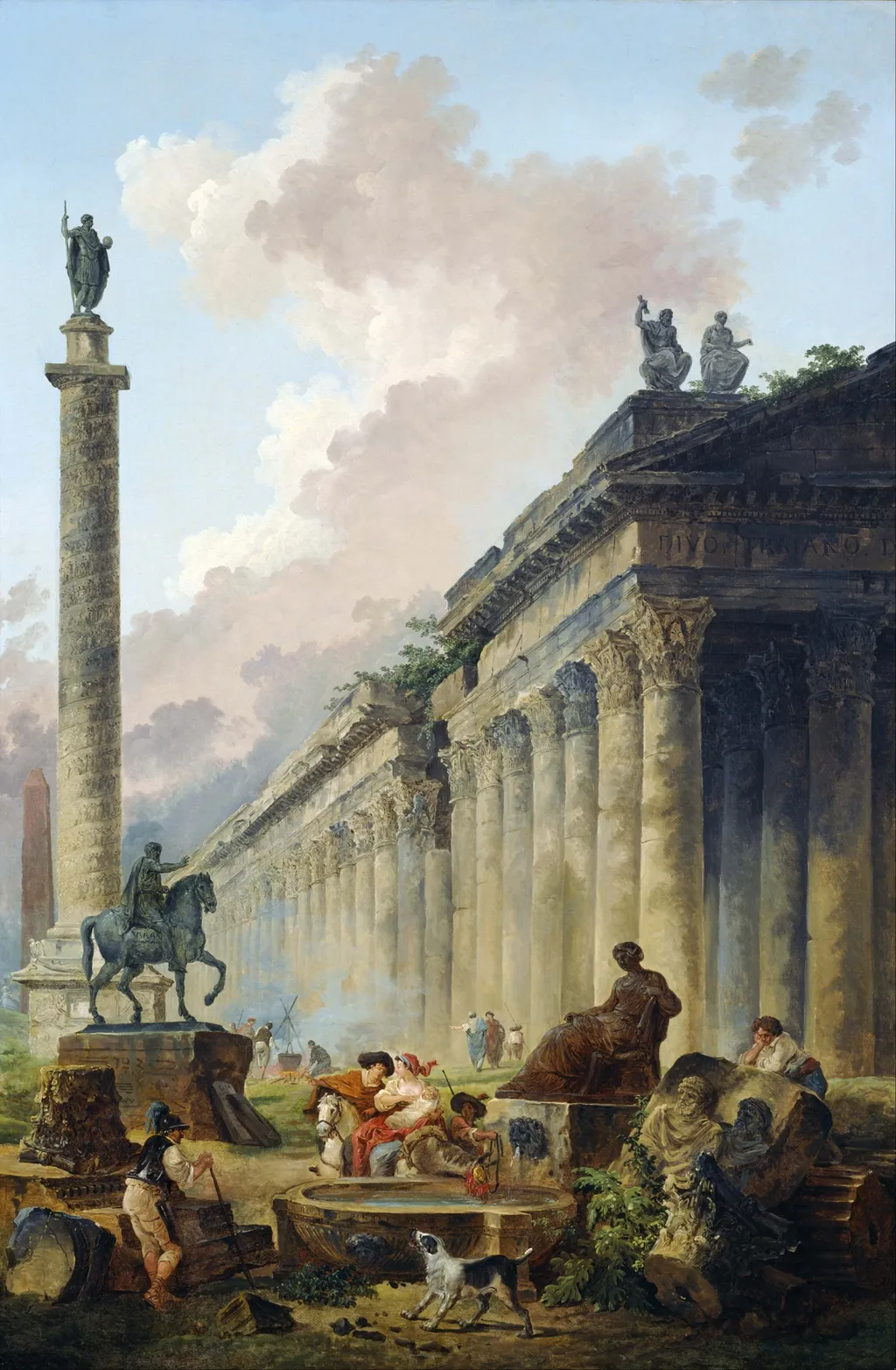
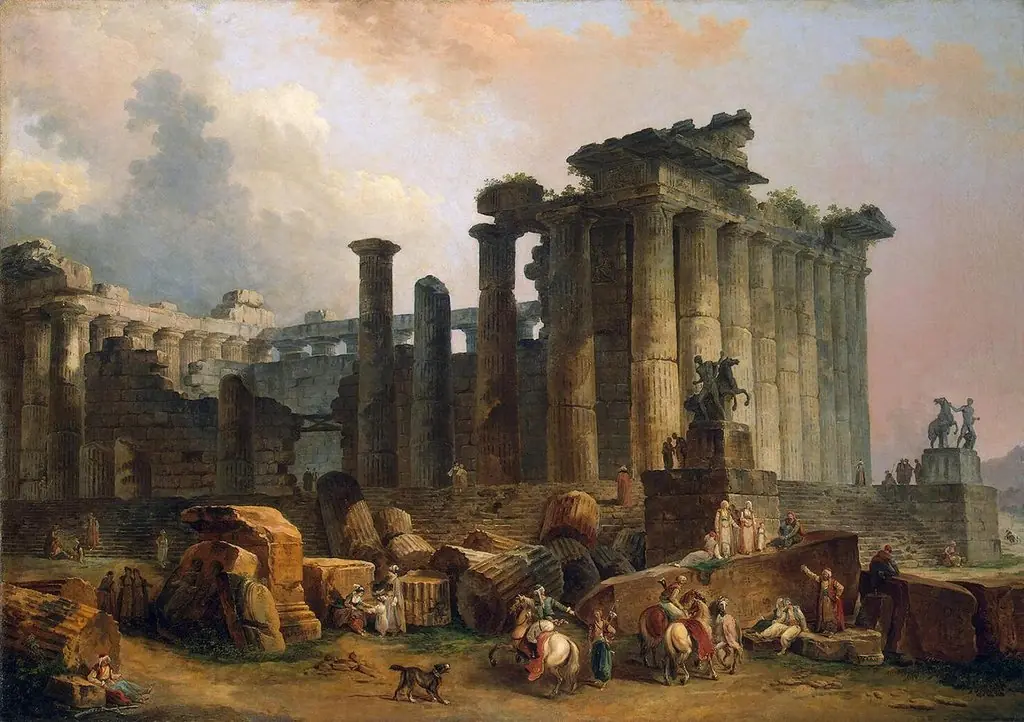
Imaginary View of Rome with Equestrian Statue of Marcus Aurelius, the Column of Trajan and a Temple is an oil painting by the Rococo painting artist Hubert Robert. It dates from 1794 and is held in the collection of the National Museum of Western Art.
About this work
Overview
Robert, known for his imaginative ruinscapes, combined real monuments with invented architectural elements to construct a harmonious, dreamlike cityscape.
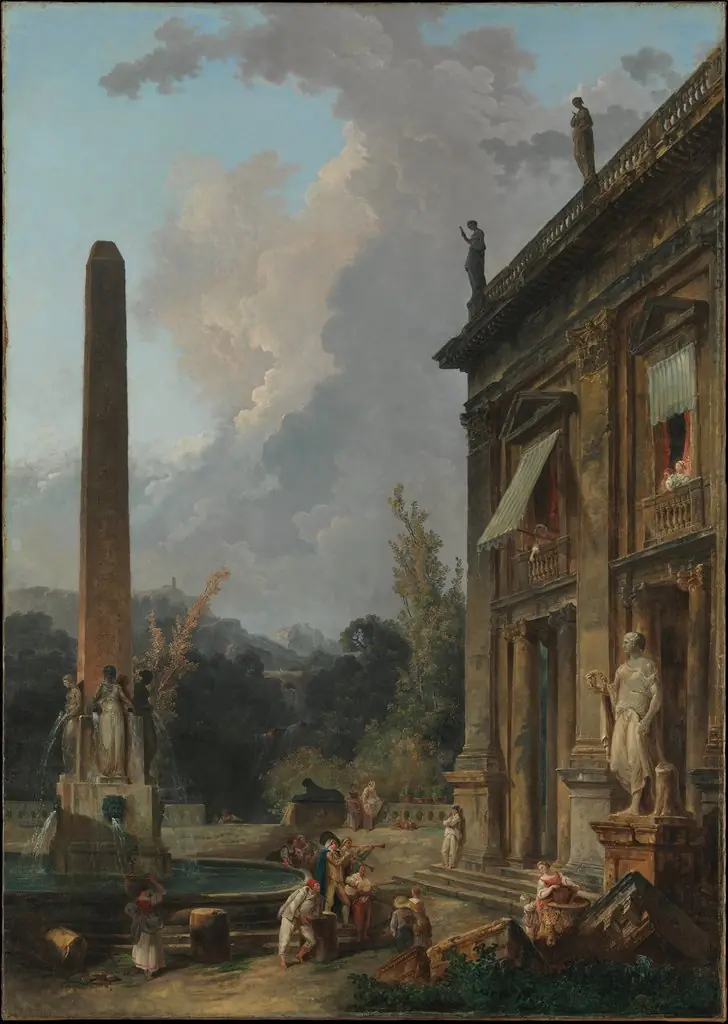
Painted in 1794 by French artist Hubert Robert, this oil on canvas depicts a fictionalized panorama of ancient Rome. Robert, known for his imaginative ruinscapes, combined real monuments with invented architectural elements to construct a harmonious, dreamlike cityscape. The work reflects his fascination with classical antiquity and the passage of time, rendered in a luminous, atmospheric style that blends observation with poetic invention.
Subject & Meaning
The painting assembles three iconic Roman structures—the equestrian statue of Marcus Aurelius, the Column of Trajan, and a grand temple—into a single, non-historical composition. These elements, surrounded by quiet figures going about daily routines, suggest a contemplative vision of antiquity as a living, inhabited past. The scene evokes neither grandeur nor decay, but a serene coexistence between human presence and enduring stone.
Technique & Style
Robert employed soft chiaroscuro to model forms and create spatial depth, with warm sunlight bathing the ruins in a gentle glow. The brushwork is precise yet fluid, allowing textures of weathered stone and draped clothing to emerge without excessive detail. The composition is carefully balanced, guiding the eye from the foreground temple to the distant column, reinforcing a sense of orderly, timeless perspective.
History & Provenance
Created during Robert’s mature period, the painting emerged after his return from Italy and amid the political upheavals of the French Revolution. It was likely made for private collectors drawn to the vogue for classical ruins. The work entered the National Museum of Western Art’s collection through later acquisitions, reflecting its enduring appeal in the study of 18th-century landscape imagination.
Context
Robert’s capricci responded to Enlightenment-era interest in archaeology and the sublime, while also catering to Grand Tour tastes. Unlike strict topographical views, his works offered idealized, emotionally resonant interpretations of antiquity. This painting aligns with a broader trend among French artists who reimagined Roman ruins as meditative spaces, separate from political or religious symbolism.
Legacy
Robert’s imaginative reconstructions influenced later 19th-century landscape painters and architects interested in romanticized antiquity. His ability to blend real monuments with poetic invention set a precedent for how classical ruins were visually interpreted beyond documentary accuracy. This painting remains a key example of how art could transform historical fragments into tranquil, timeless visions.
Own this work as a print
Artist & collection
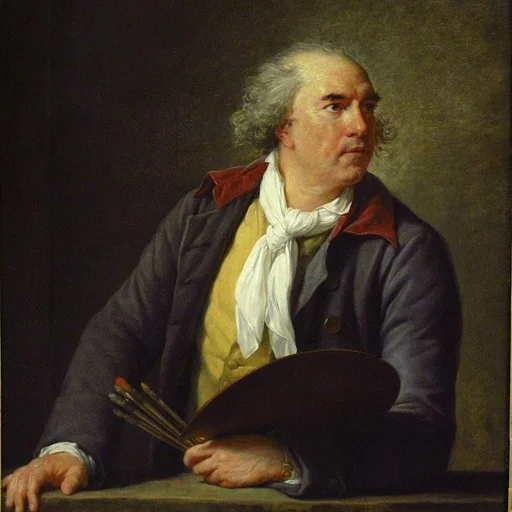
Artist
Hubert Robert (French pronunciation: ; 22 May 1733 – 15 April 1808) was a French painter in the school of Romanticism, noted especially for his landscape paintings and capricci, or semi-fictitious picturesque depictions of ruins in Italy…