Artwork
Ruins of a Doric Temple
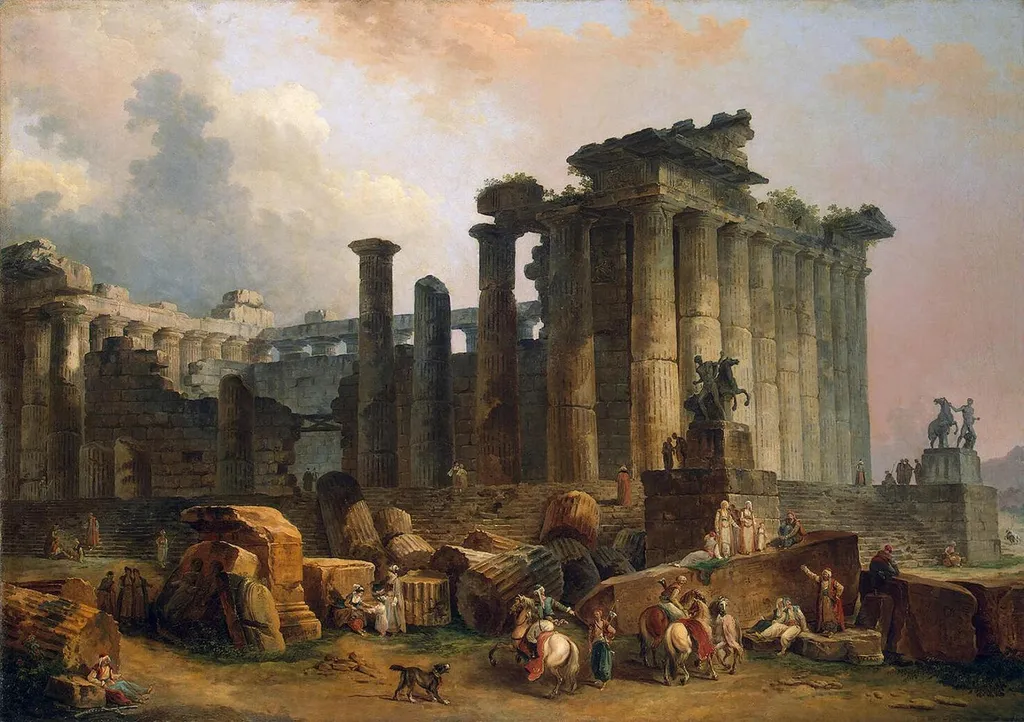
Ruins of a Doric Temple is an oil painting by the Rococo painting artist Hubert Robert. It dates from 1792 and is held in the collection of the Hermitage Museum.
About this work
Overview
The work belongs to the Hermitage Museum’s collection and reflects a broader 18th-century fascination with antiquity in decline.
Painted in 1792 by French artist Hubert Robert, this oil on canvas depicts the fragmented remains of a classical Doric temple. Robert, known for his imaginative renderings of ancient architecture, blends observed ruins with poetic invention. The scene unfolds under a muted, overcast sky, emphasizing the quiet erosion of time. The work belongs to the Hermitage Museum’s collection and reflects a broader 18th-century fascination with antiquity in decline.
Subject & Meaning
The painting presents a tranquil yet desolate scene: scattered figures—pedestrians, riders, and seated observers—move among the broken columns and weathered stones. Their presence suggests contemplation rather than reverence, framing the ruins as a site of quiet reflection. The absence of active worship or restoration implies a cultural shift, where ancient grandeur has become a passive backdrop to contemporary life.
Technique & Style
Robert employs a restrained palette of earth tones—ochres, grays, and browns—to evoke the aged stone and overcast atmosphere. Chiaroscuro models the architectural forms, lending volume to the crumbling columns and rocky terrain. Detailed rendering of clothing and horse tack grounds the scene in realism, while the hazy sky softens edges, enhancing the sense of distance and temporal decay.
History & Provenance
Created during the French Revolution, the painting emerged amid growing interest in classical antiquity as a cultural reference point. Robert, who had studied in Rome, drew from firsthand sketches of ruins. The work entered the Hermitage collection in the late 18th or early 19th century, likely through imperial acquisition, reflecting Catherine the Great’s patronage of European art tied to classical themes.
Context
While often linked to Romanticism for its emotional tone, the painting also engages with Enlightenment-era antiquarianism. Unlike the ornamental frivolity of Rococo, Robert’s work favors sober observation, aligning more closely with the emerging taste for historical authenticity. His capricci—hybrids of real and imagined ruins—responded to European elites’ fascination with archaeology and the passage of time.
Legacy
Robert’s treatment of ruins influenced later 19th-century landscape painters and archaeologically minded artists. His ability to merge topographical accuracy with atmospheric mood set a precedent for depicting historical sites as sites of memory. Though not widely celebrated in his lifetime, his works became touchstones for understanding how visual culture engaged with the ruins of antiquity.
Own this work as a print
Artist & collection
Artist
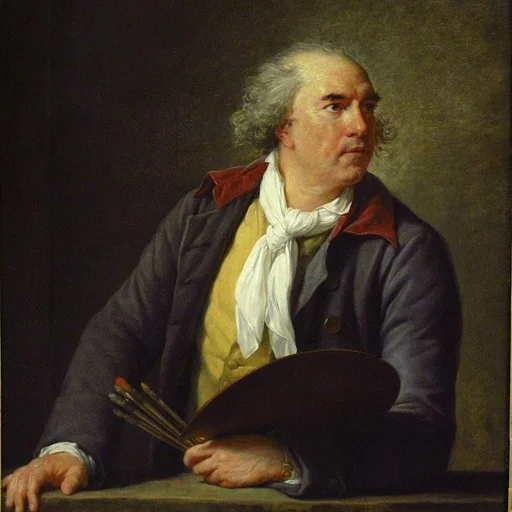
Hubert Robert (French pronunciation: ; 22 May 1733 – 15 April 1808) was a French painter in the school of Romanticism, noted especially for his landscape paintings and capricci, or semi-fictitious picturesque depictions of ruins in Italy…

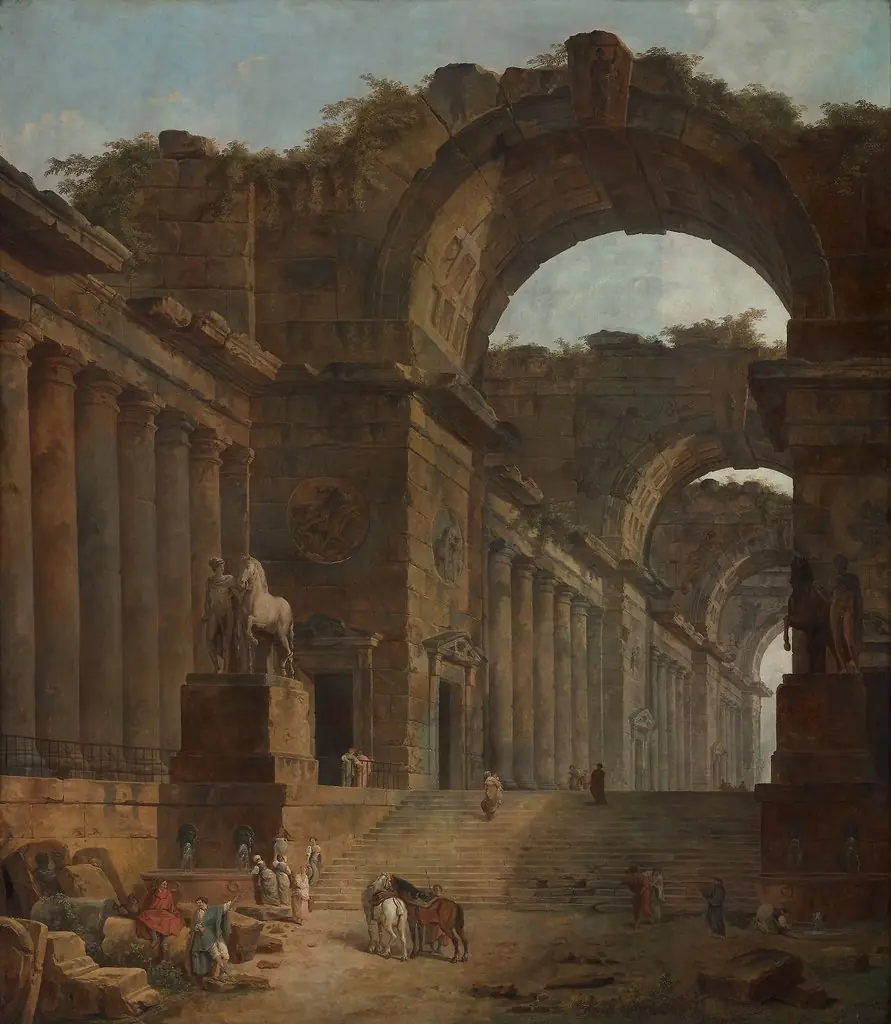 The Fountains
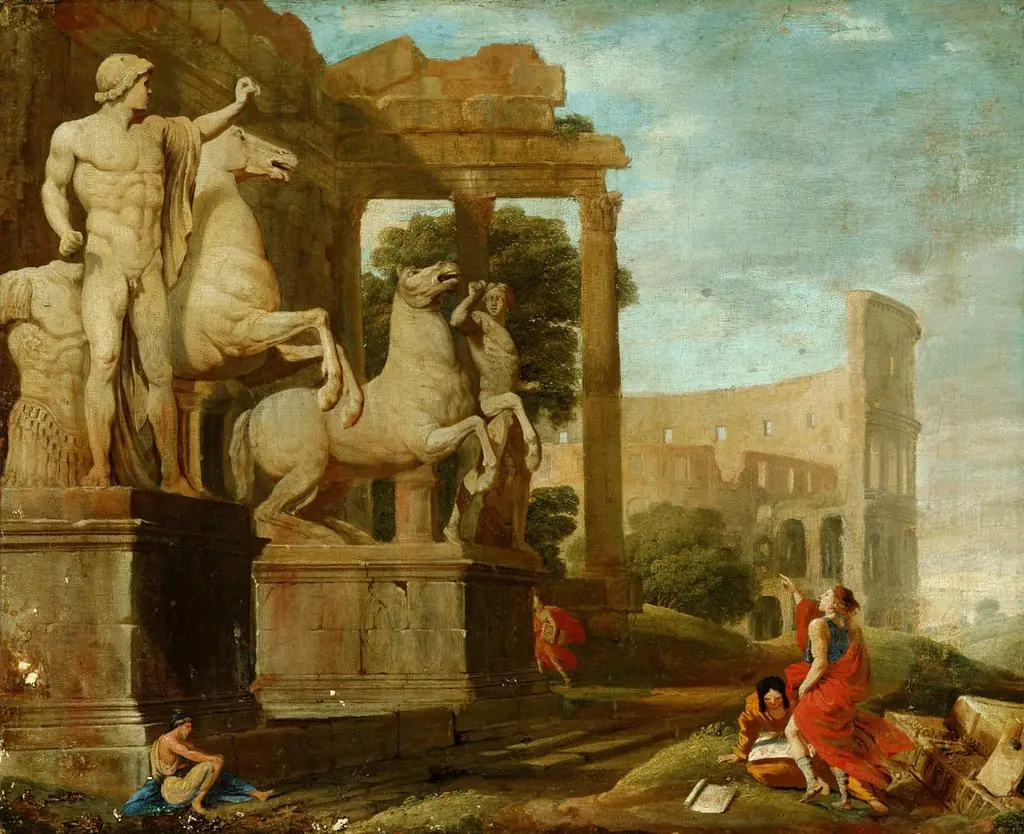 Ruinenlandschaft mit Dioskuren und Kolosseum
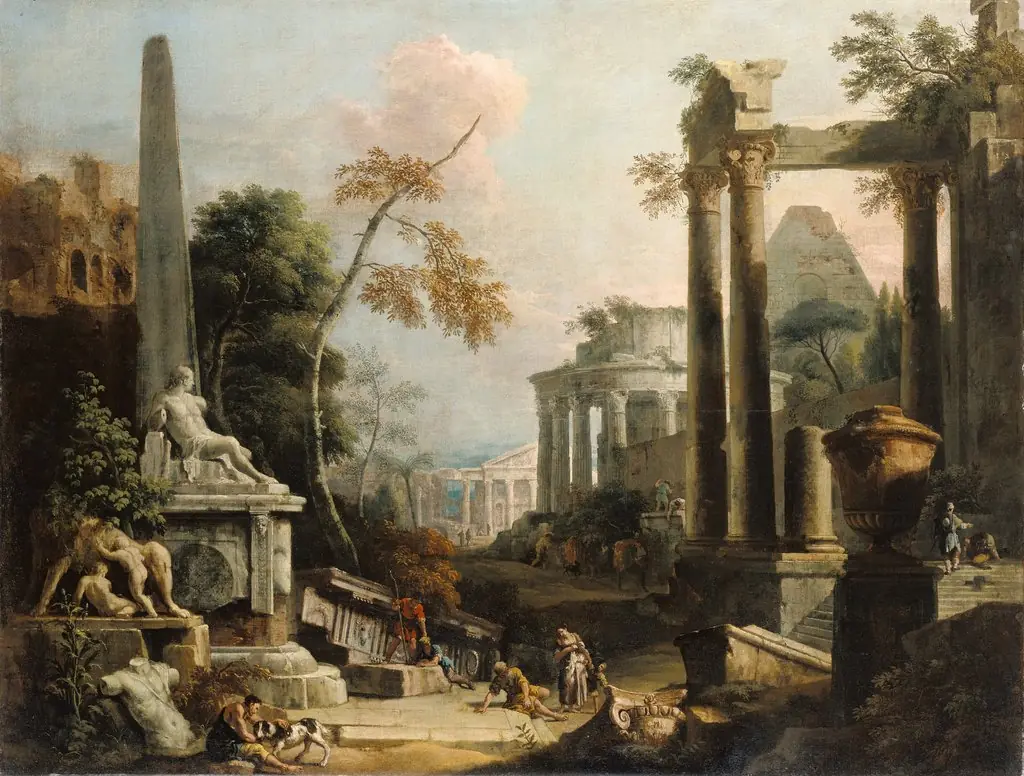 Landscape with Classical Ruins and Figures
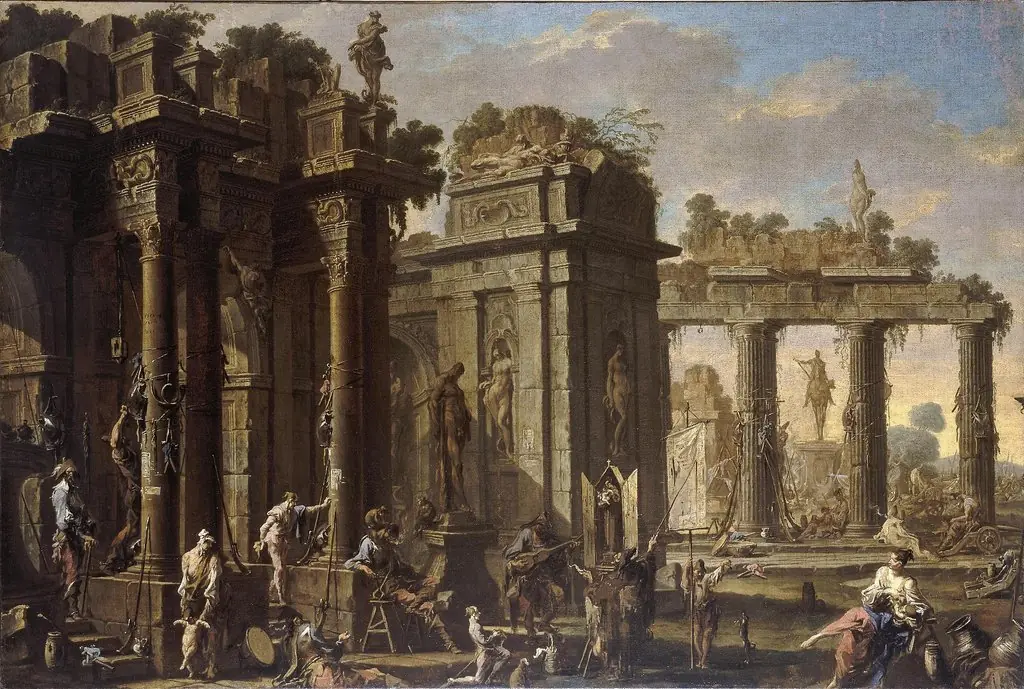 Banditti at Rest
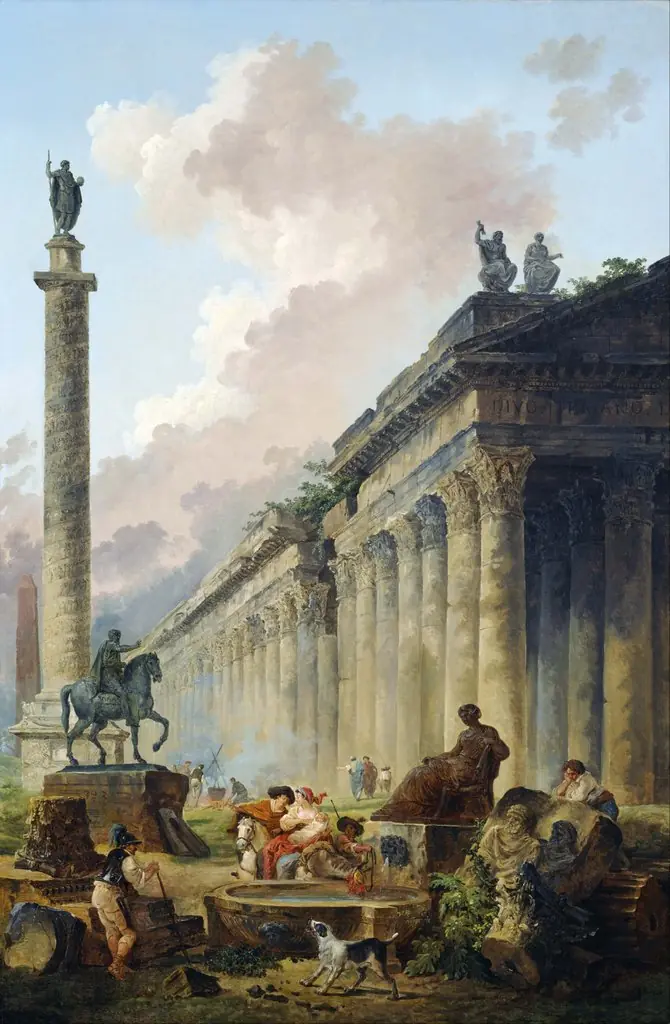 Imaginary View of Rome with Equestrian Statue of Marcus Aurelius, the Column of Trajan and a Temple
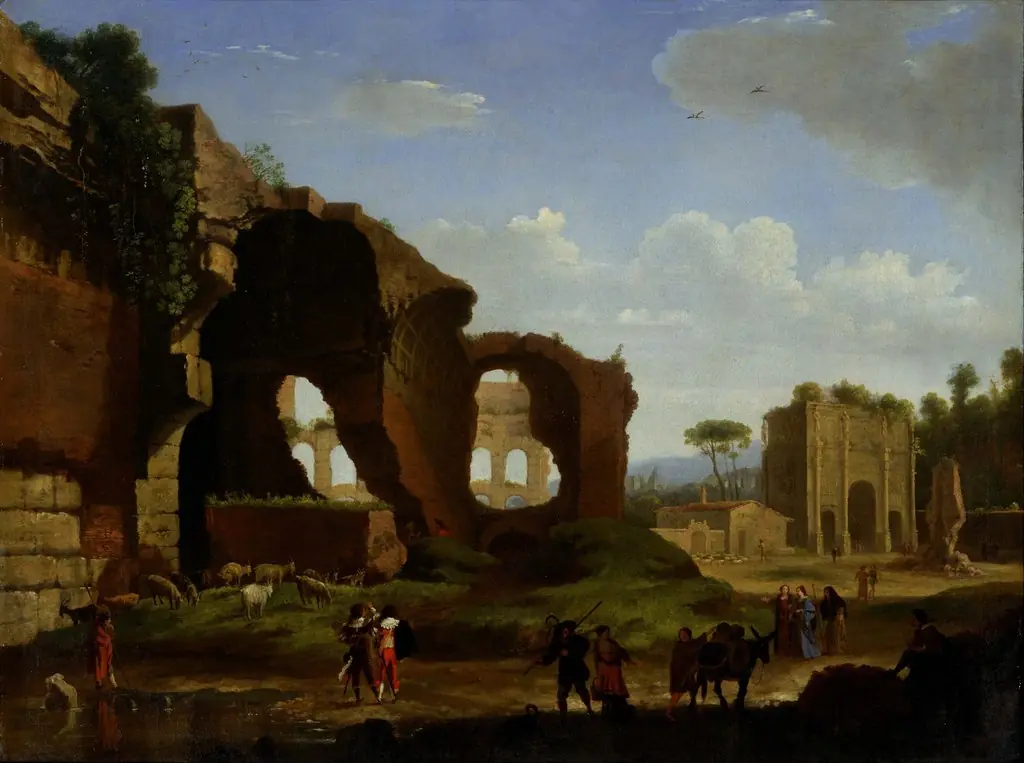 A Roman View of the Ruins of the Temple of Venus and Rome with the Colosseum and the Arch of Constantine
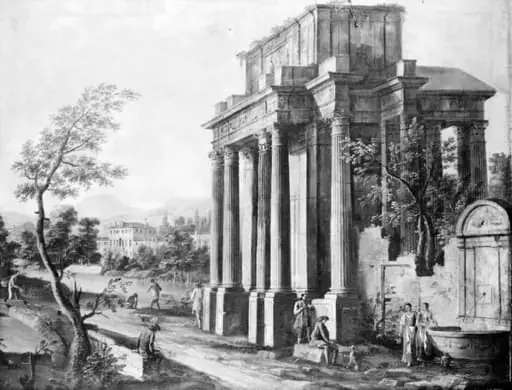 Architectural Study with Columns and a Fountain
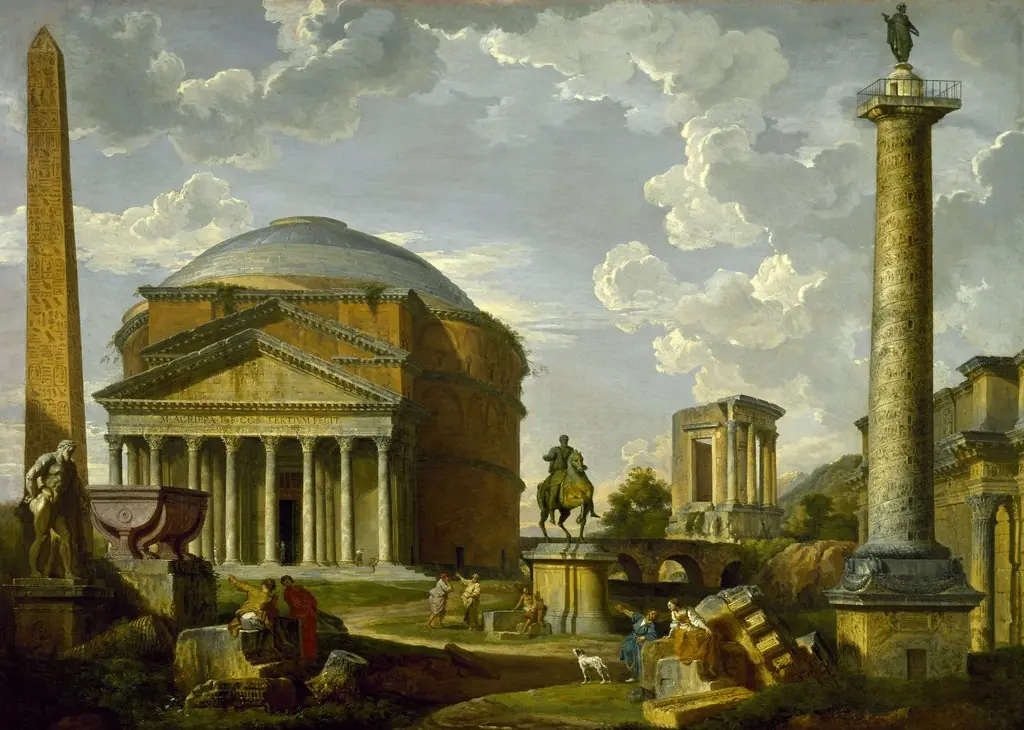 Fantasy View with the Pantheon and other Monuments of Ancient Rome
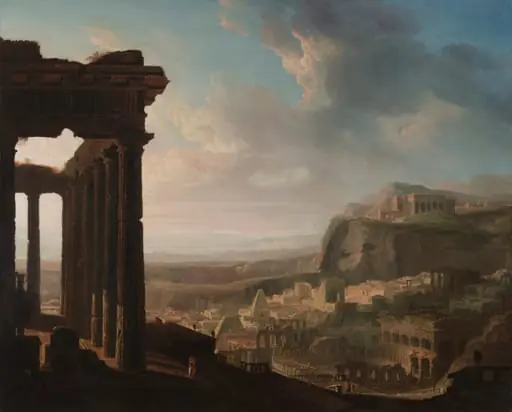 Ruins of an Ancient City
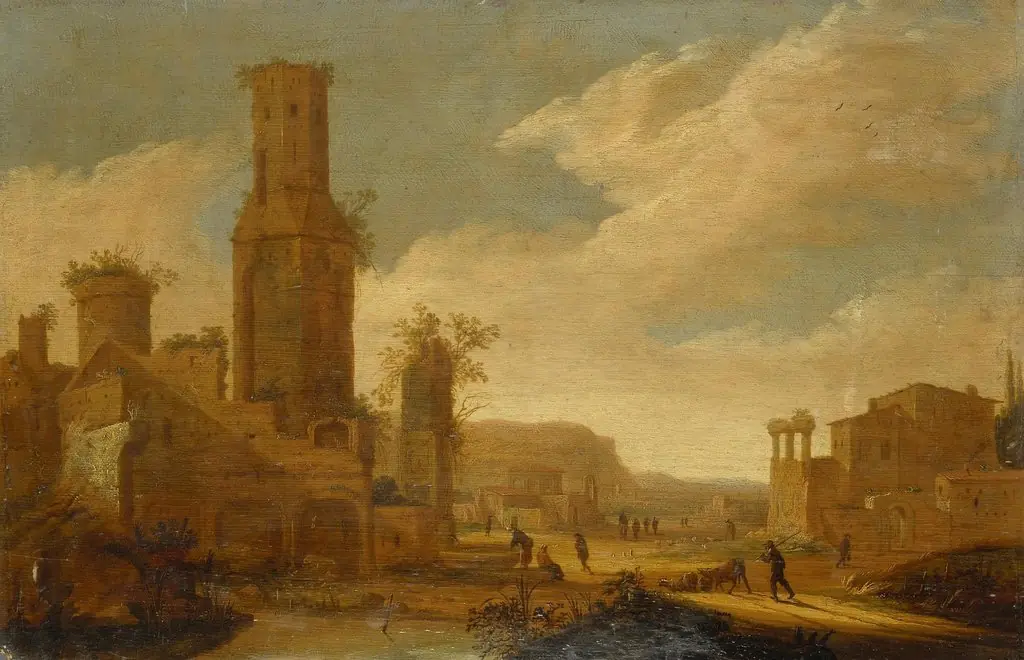 Landscape with Ruins
 Classical Landscape
 A Capriccio of Roman Ruins