Artwork
The Artist's Studio
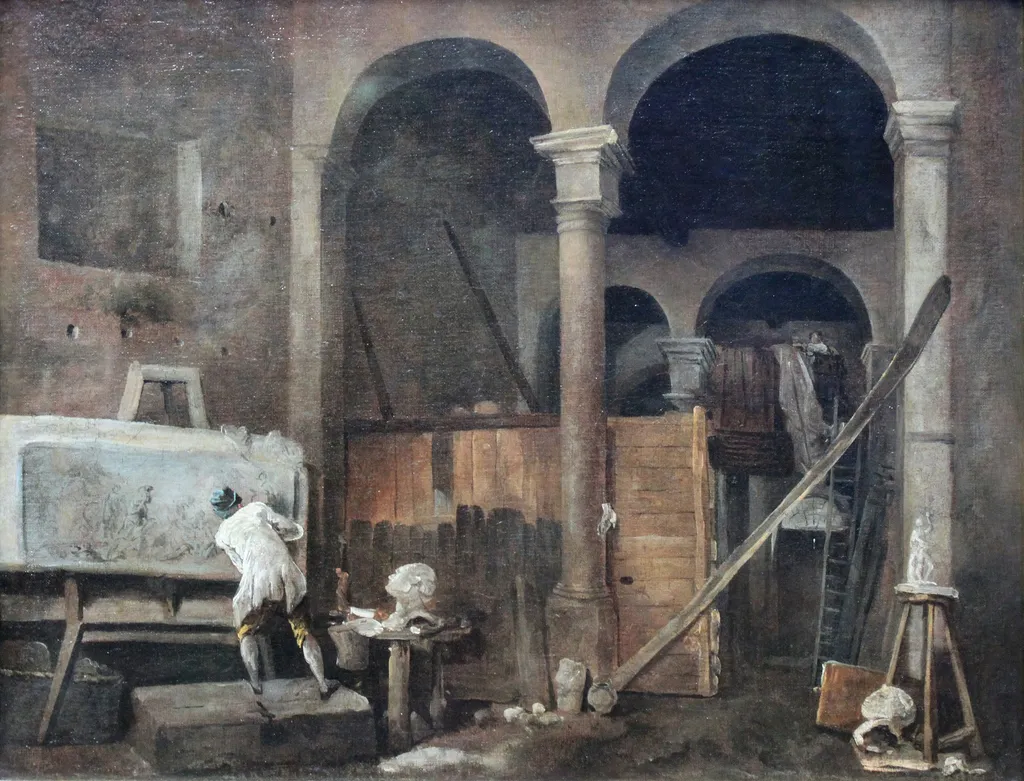
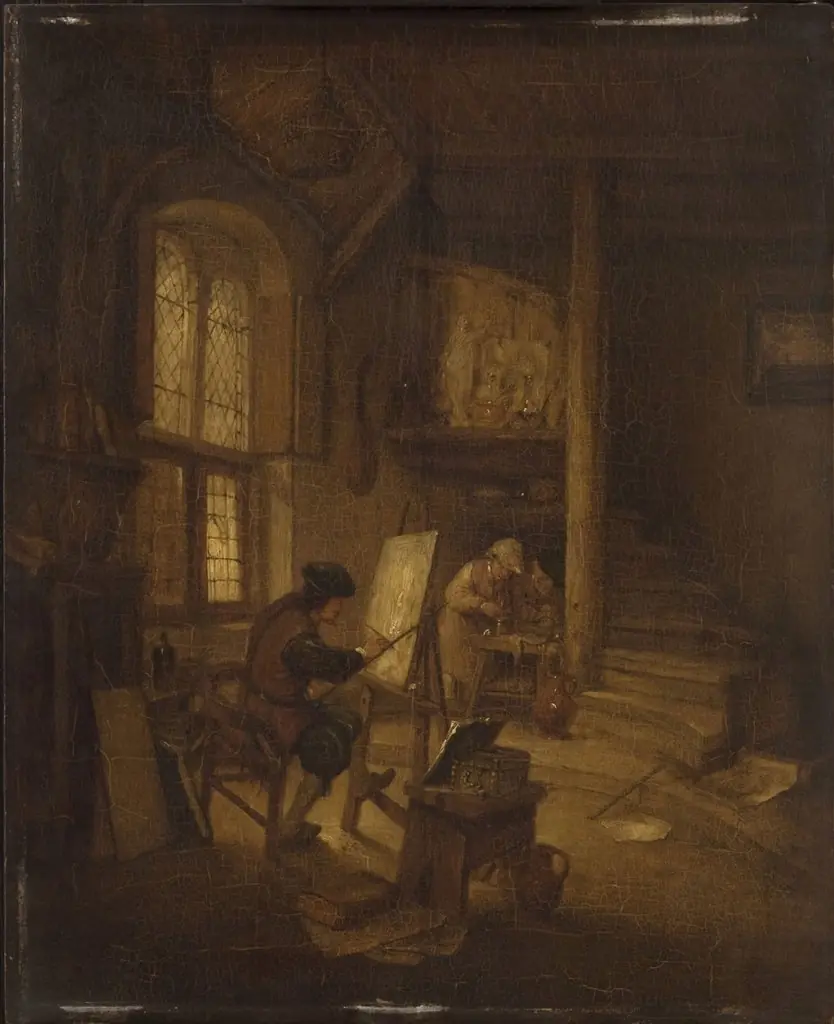
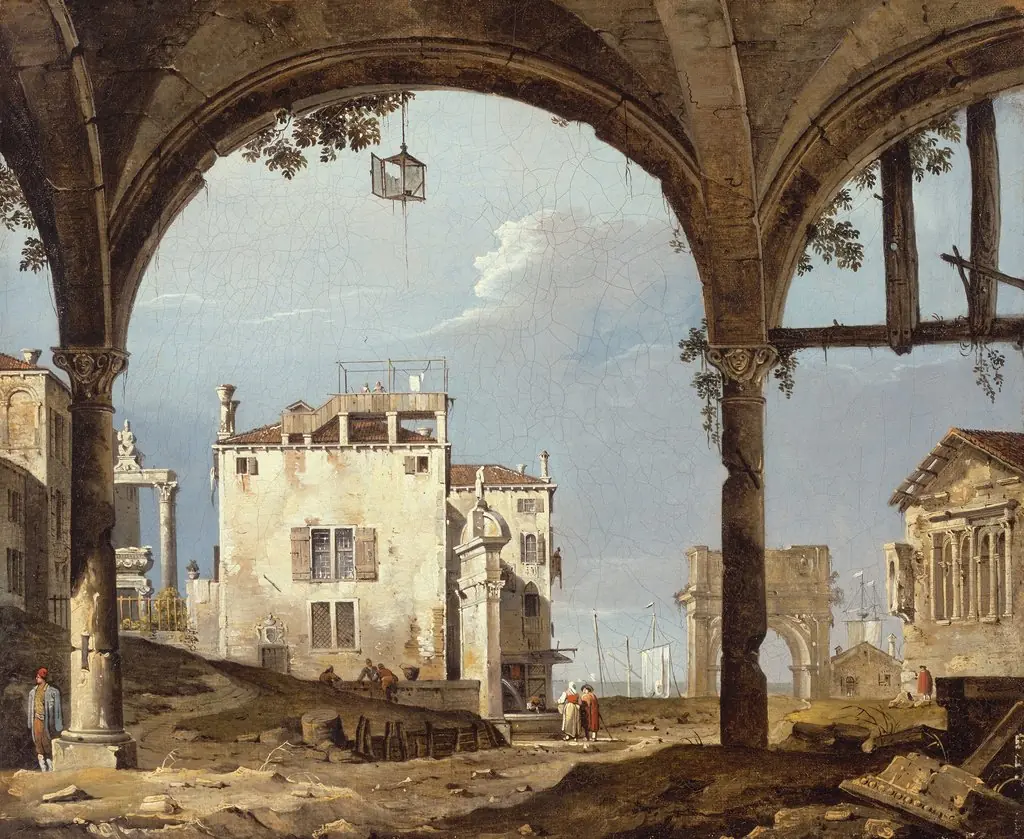
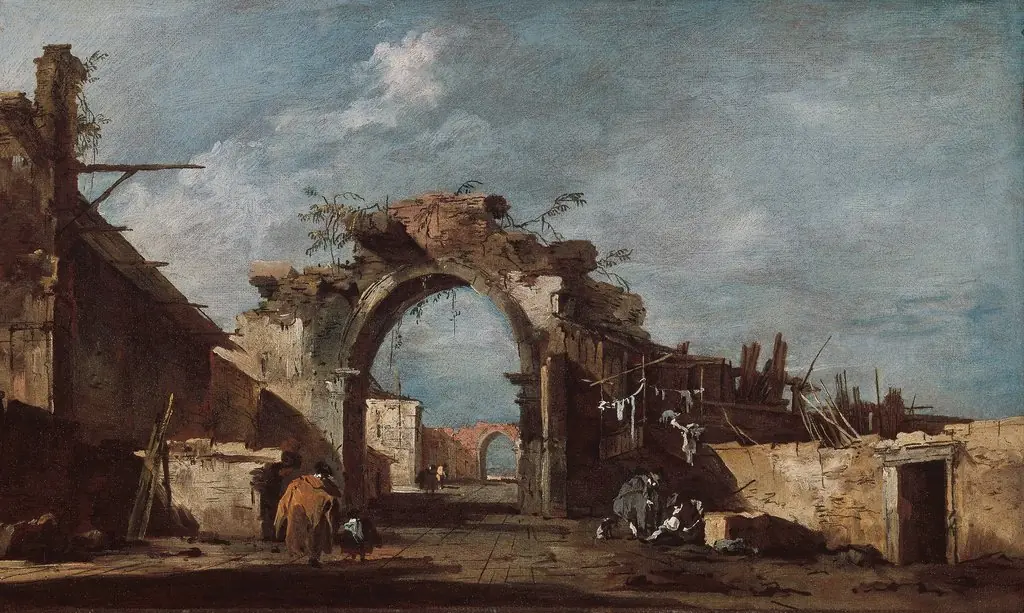
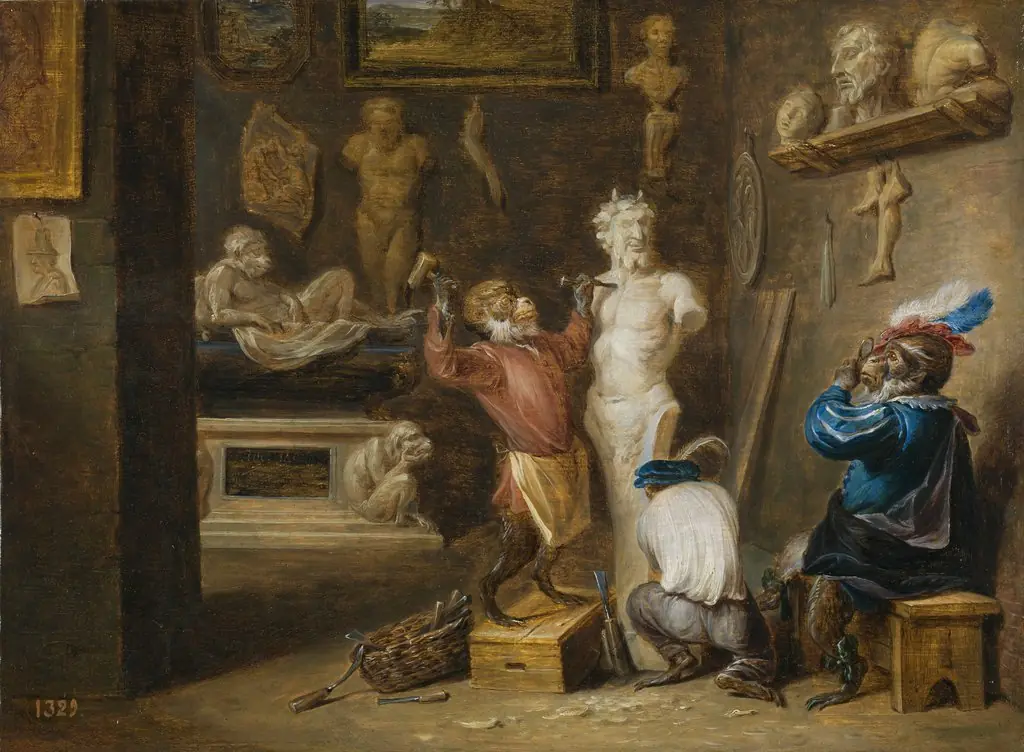
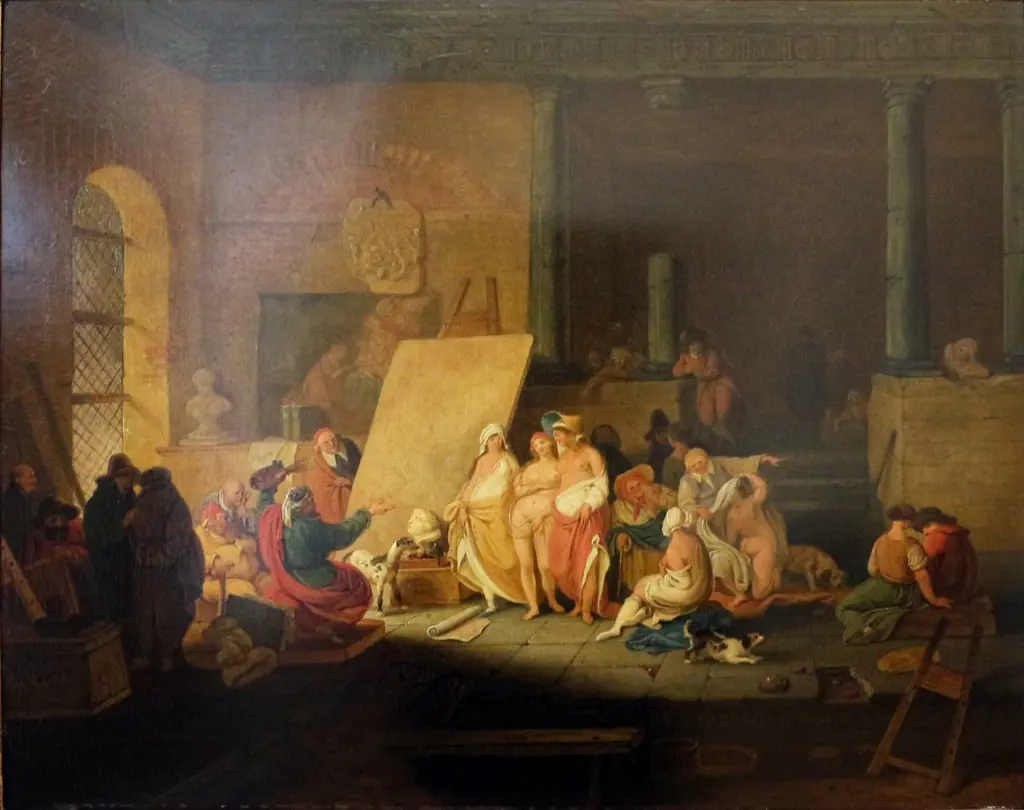
The Artist's Studio is an unspecified painting by the Rococo painting artist Hubert Robert. It dates from 1760 and is held in the collection of the Städel Museum.
About this work
Overview
Though often linked to Romanticism later in his career, Robert’s approach here aligns with the Rococo era’s interest in intimate, detailed environments.
Painted in 1760 by Hubert Robert, this interior scene captures a painter at work within his own studio. Though often linked to Romanticism later in his career, Robert’s approach here aligns with the Rococo era’s interest in intimate, detailed environments. The composition blends observation with a sense of ordered chaos, reflecting the daily rituals of artistic creation rather than grand narrative.
Subject & Meaning
The central figure, a painter in simple attire, is engaged in the act of creation, his posture suggesting focused movement. Surrounding him are tools, sculptures, and architectural fragments—objects that signify the artist’s intellectual and material world. The scene is not idealized; it presents the studio as a working space, where inspiration arises from accumulated objects and habitual practice.
Technique & Style
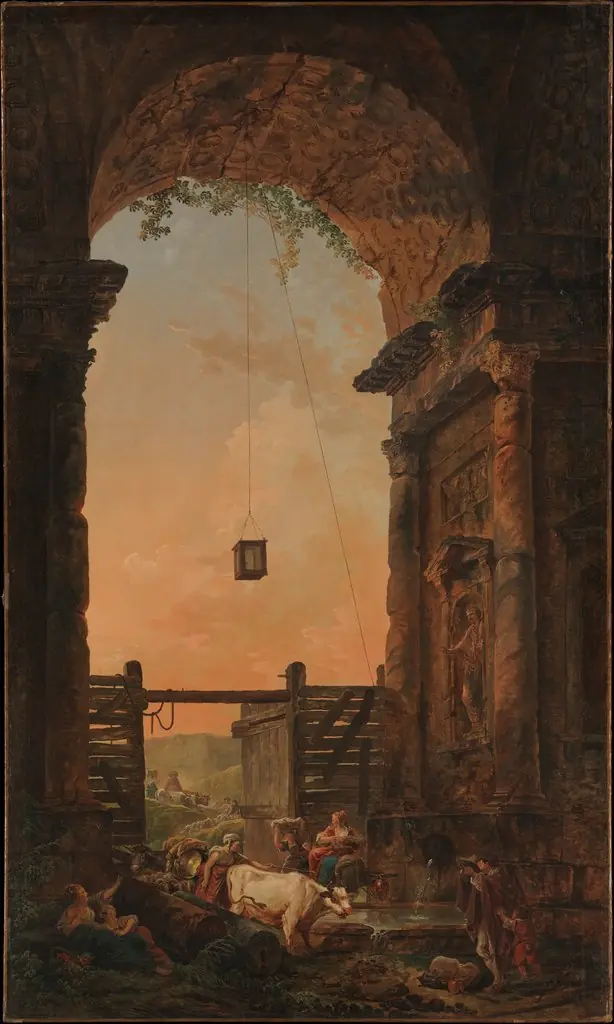
Robert employs subtle tonal contrasts to model forms and suggest spatial depth, with light filtering through the archway to illuminate the artist and his canvas. Colors are muted yet warm, enhancing the sense of a contained, lived-in environment. The arrangement of objects follows a careful compositional rhythm, balancing clutter with clarity, and avoiding theatricality in favor of quiet realism.
History & Provenance
The painting entered the Städel Museum’s collection in the 19th century, where it remains today. It was likely acquired during a period of growing interest in artist studios as subjects in their own right. While not widely exhibited in its early years, its quiet authenticity has since drawn scholarly attention for its unembellished portrayal of creative labor.
Context
In mid-18th-century France, depictions of artists at work were becoming more common, moving away from mythological or allegorical themes. Robert’s studio scene reflects a broader cultural shift toward valuing the artist’s process and environment. His familiarity with ruins and antiquities informs the objects within the painting, linking contemporary practice to classical heritage.
Legacy
Though less celebrated than his ruin paintings, this work contributed to a genre that emphasized the studio as a site of intellectual and tactile engagement. Later artists, particularly in the 19th century, would revisit similar themes, but Robert’s early example remains notable for its restraint and attention to the ordinary rhythms of artistic life.
Own this work as a print
Artist & collection
Artist
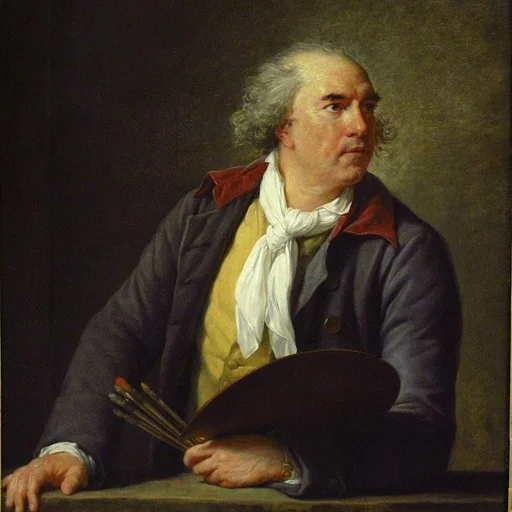
Hubert Robert (French pronunciation: ; 22 May 1733 – 15 April 1808) was a French painter in the school of Romanticism, noted especially for his landscape paintings and capricci, or semi-fictitious picturesque depictions of ruins in Italy…