Artwork
The Listening Servant
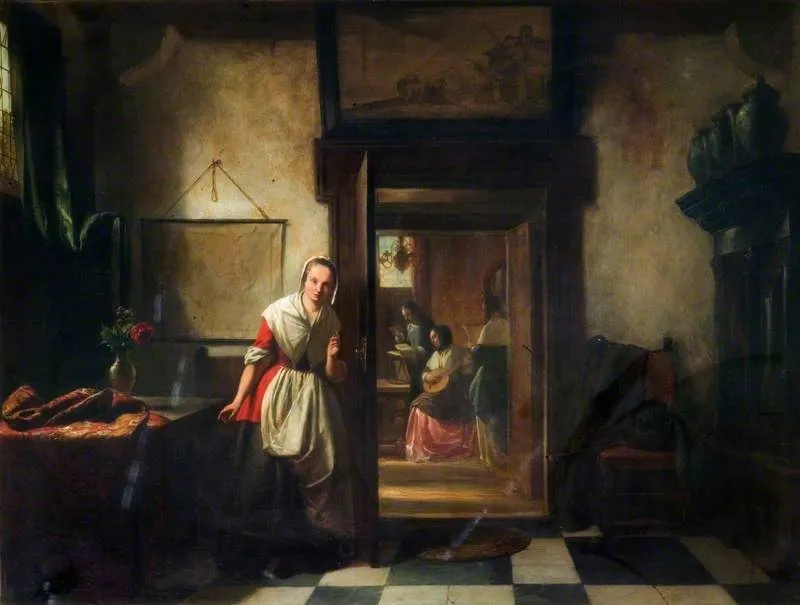
The Listening Servant is an oil painting by the Realist artist Hubertus van Hove. It dates from 1853 and is held in the collection of the Victoria and Albert Museum.
About this work
Overview
The Listening Servant is an 1853 oil painting by Dutch artist Hubertus van Hove, part of the Victoria and Albert Museum's collection. It captures a moment of quiet attention, featuring a servant poised in a doorway, absorbed in listening.
Subject & Meaning
The painting focuses on a female servant in a red dress and white apron, her hand raised to her ear, intently listening to a conversation among a group in the dimly lit background. Her posture and the composition draw the viewer's focus to her act of listening.
Technique & Style
Van Hove employs chiaroscuro, leveraging strong contrasts between light and dark to create depth and volume. This technique enhances the intimate, quiet atmosphere of the scene, characteristic of van Hove's realism, particularly in his genre paintings.
History & Provenance
Created in 1853 by Hubertus van Hove, a Dutch painter trained by his father Bartholomeus van Hove and Hendrik van de Sande Bakhuyzen, the work transitioned from his early landscape focus to successful genre scene productions. It is now held by the Victoria and Albert Museum.
Context
Emerging from van Hove's shift towards genre scenes, The Listening Servant reflects 19th-century Dutch realism's emphasis on everyday life's nuanced moments, often capturing the unobtrusive roles of servants within domestic settings.
Legacy
While specific legacy details of The Listening Servant are not prominently highlighted, it contributes to the broader appreciation of 19th-century Dutch genre painting and van Hove's contribution to the realism movement, offering insights into the daily life and social dynamics depicted in his work.
Artist & collection
Artist
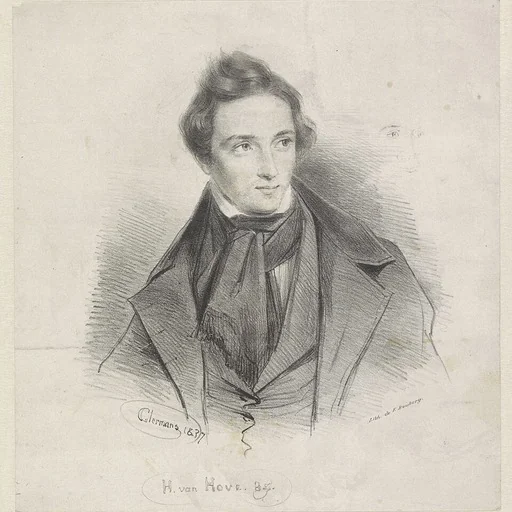
Hubertus (Huib) van Hove (13 May 1814, in The Hague – 14 November 1865? Antwerp) was a Dutch painter, the son of Bartholomeus van Hove (1790–1880) and a teacher of some artists who became members of the Hague…

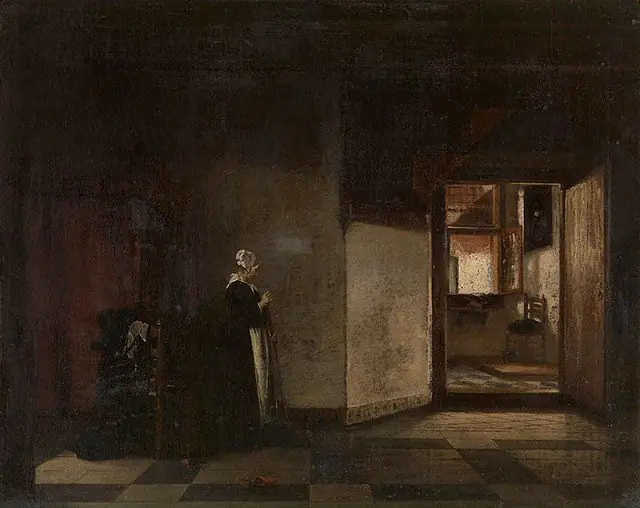 A Dutch Interior
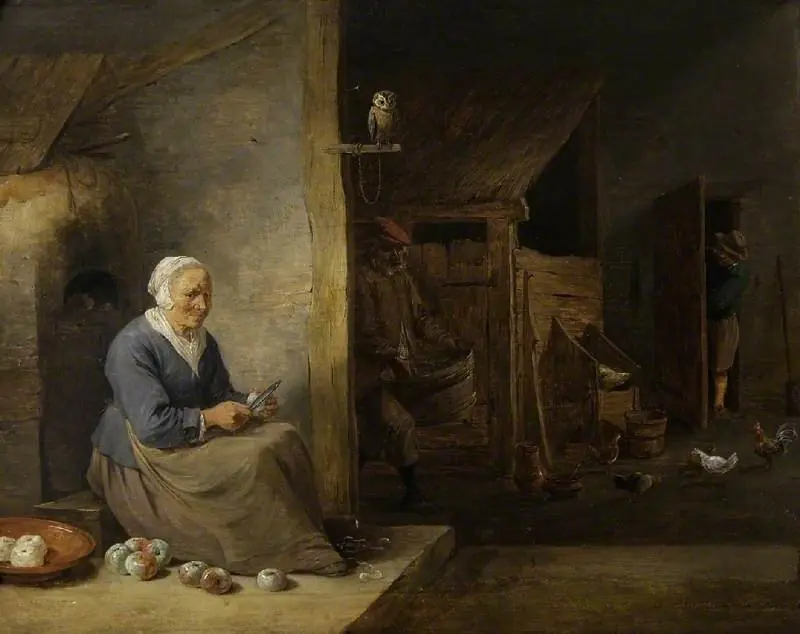 Interior, with an old woman peeling apples
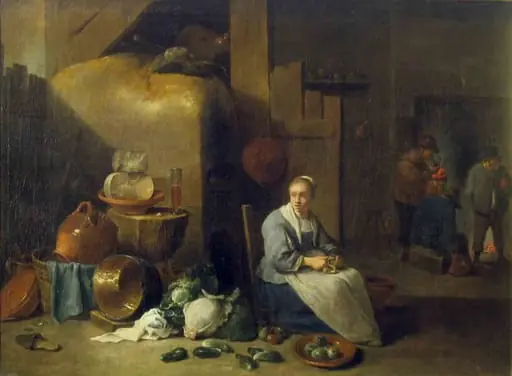 Interior flamand (olandez)
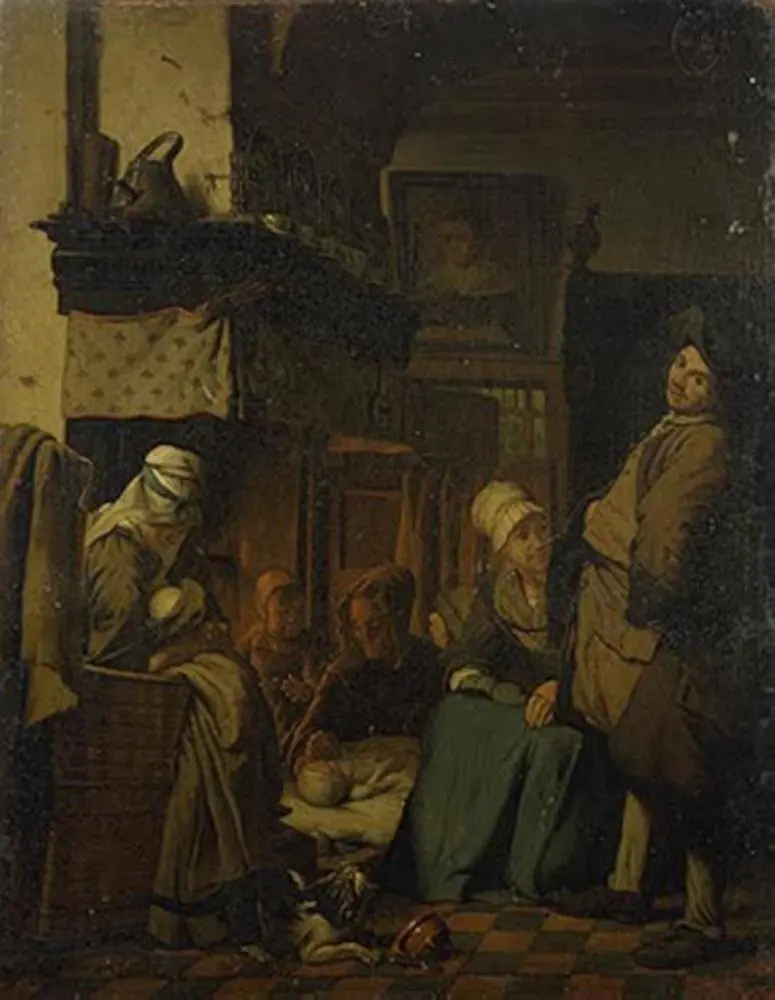 Genre Scene
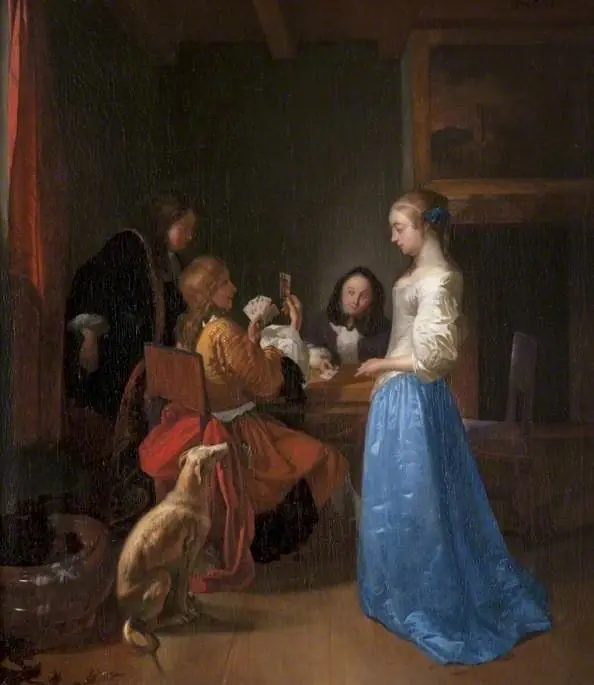 The Queen of Hearts
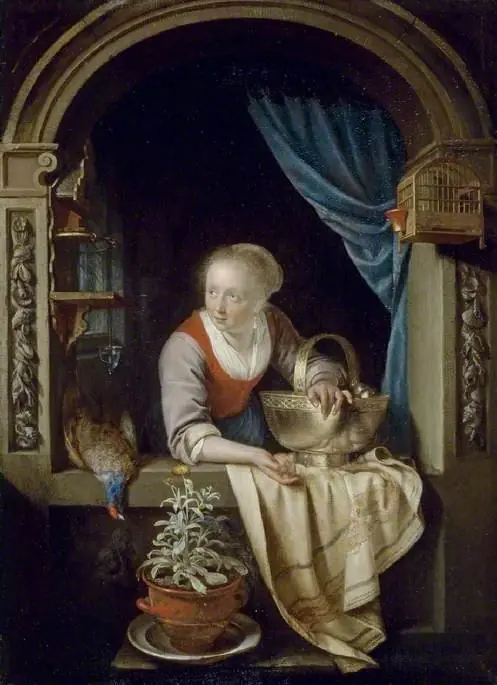 Woman at a Window with a Copper Bowl of Apples and a Cock Pheasant
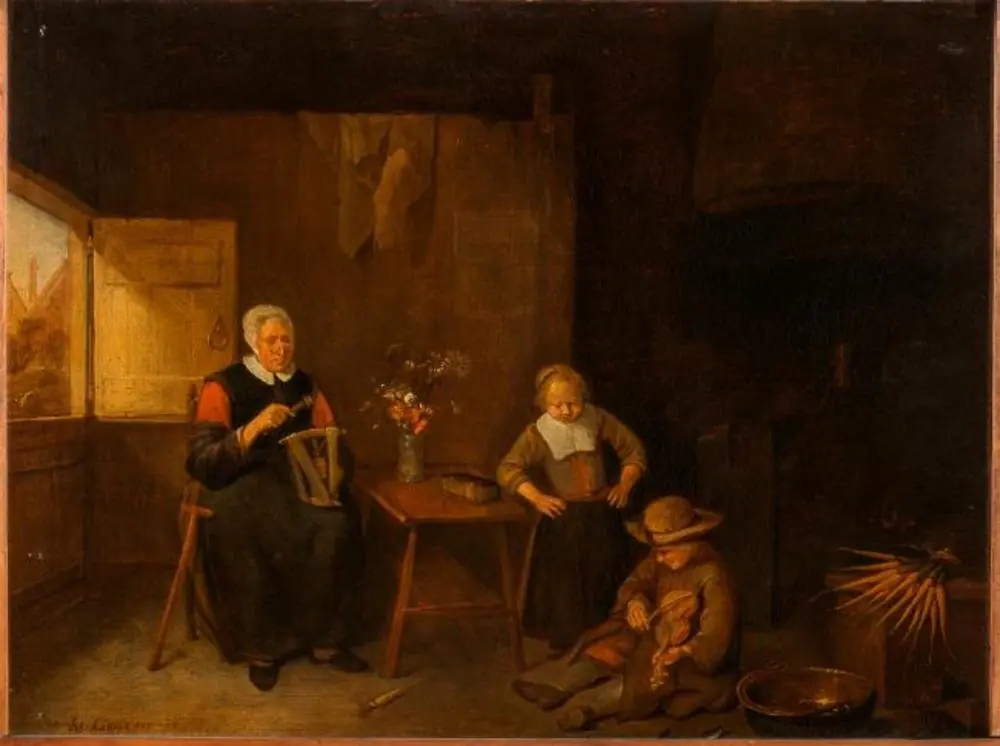 An Old Woman Twisting Threads and Two Children in the Room
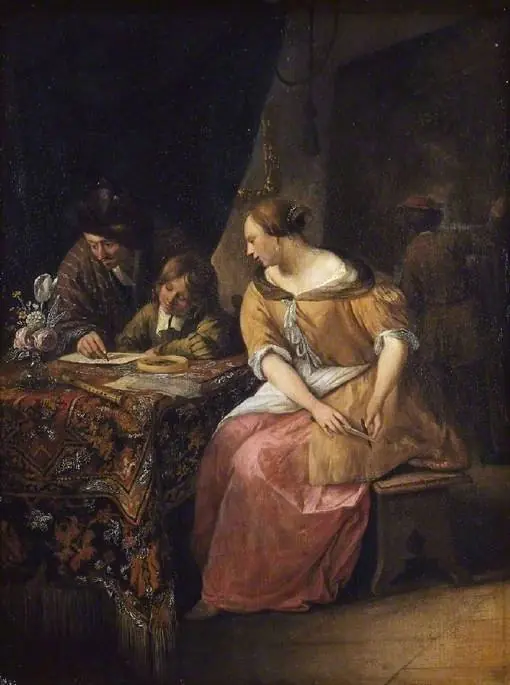 Interior with a Painter and His Family
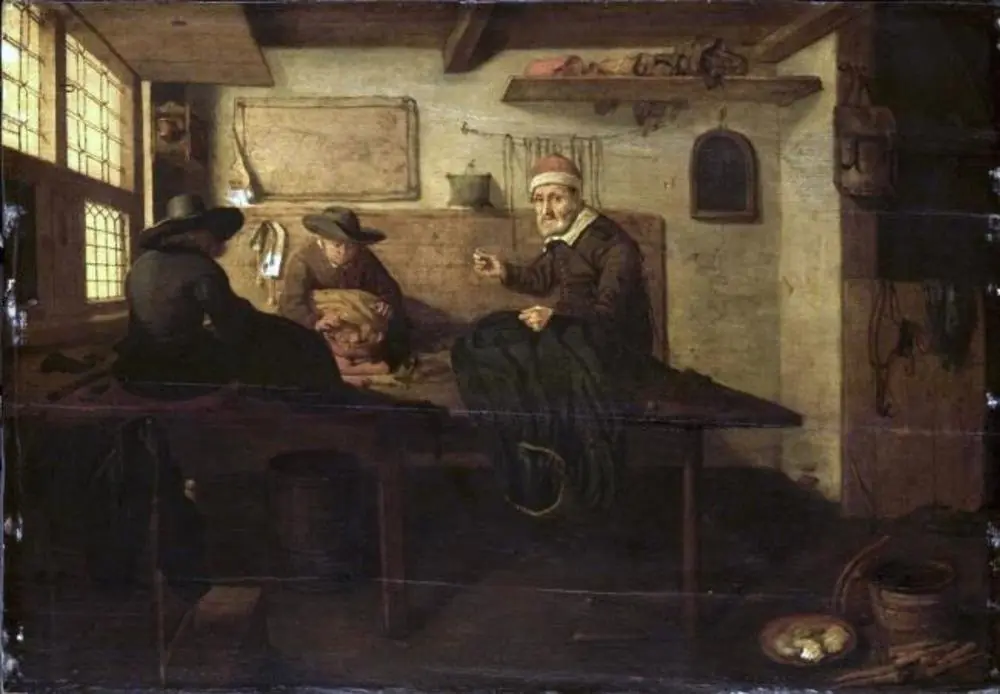 The Tailor
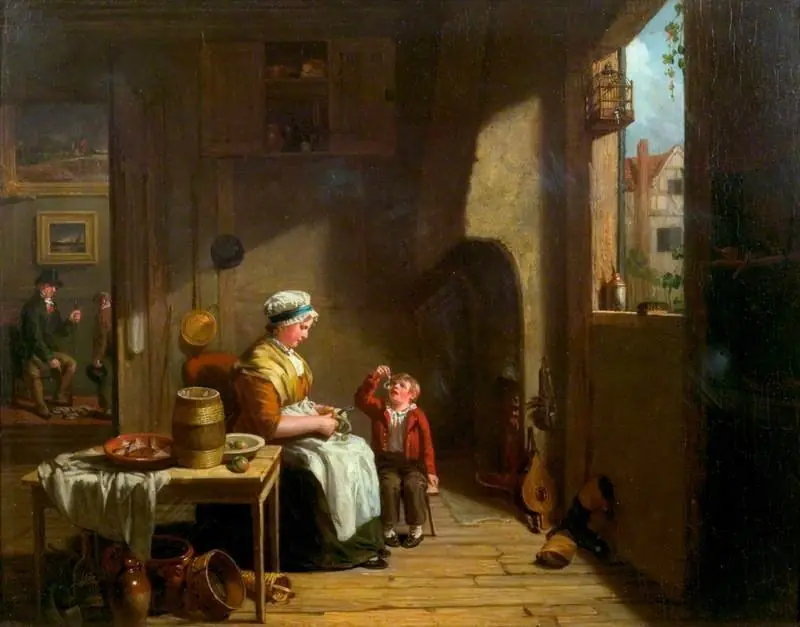 A Country Kitchen
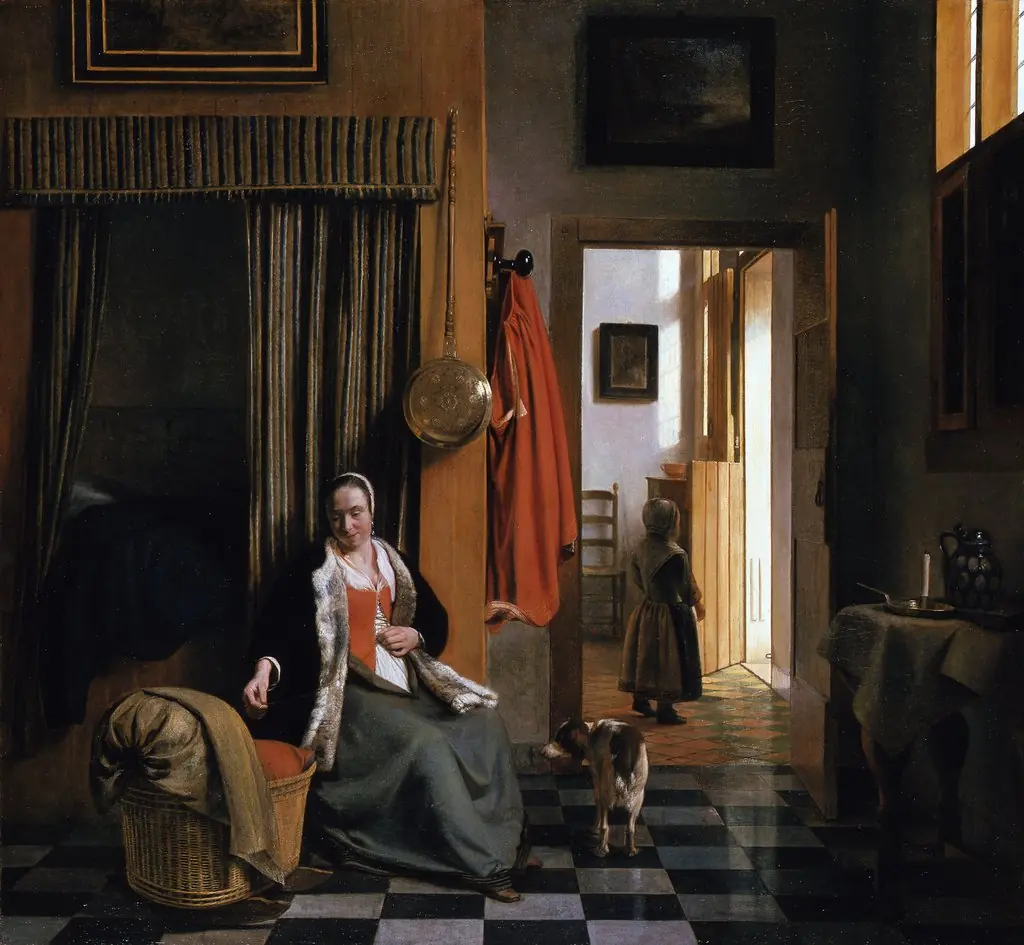 Mother Lacing Her Bodice beside a Cradle
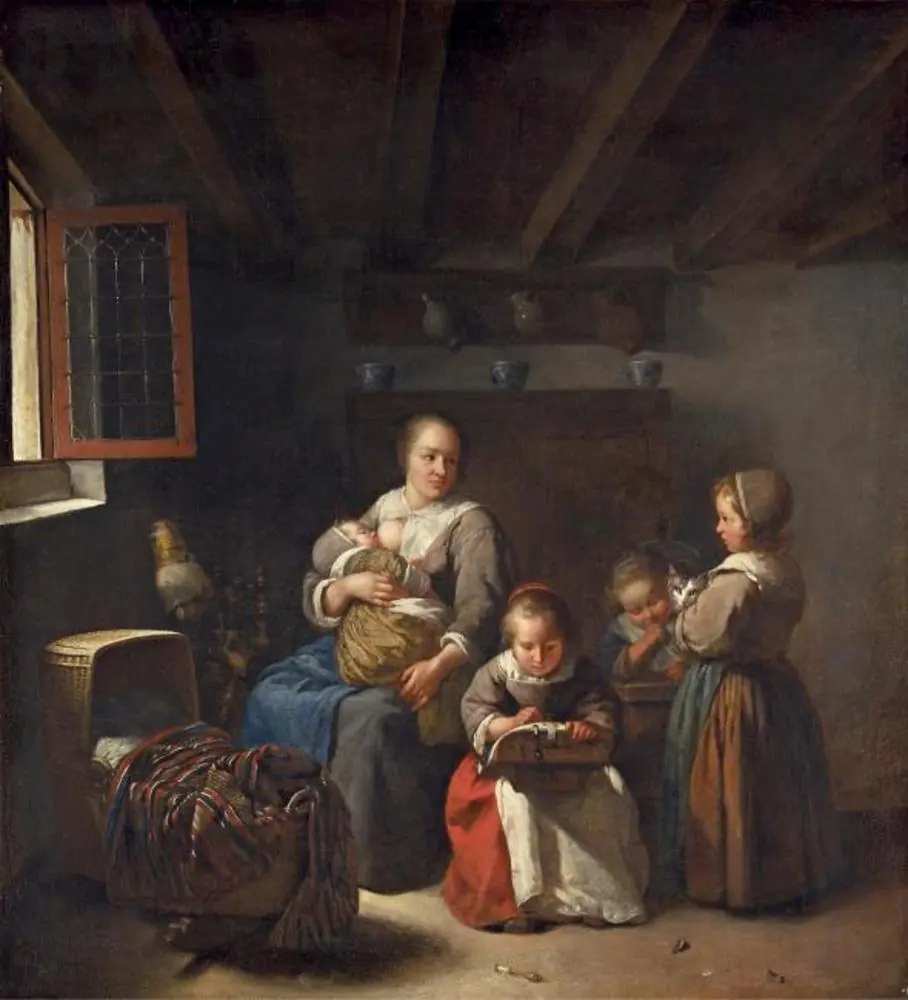 Nursing mother with three girls