Artwork
Singerie: The Concert
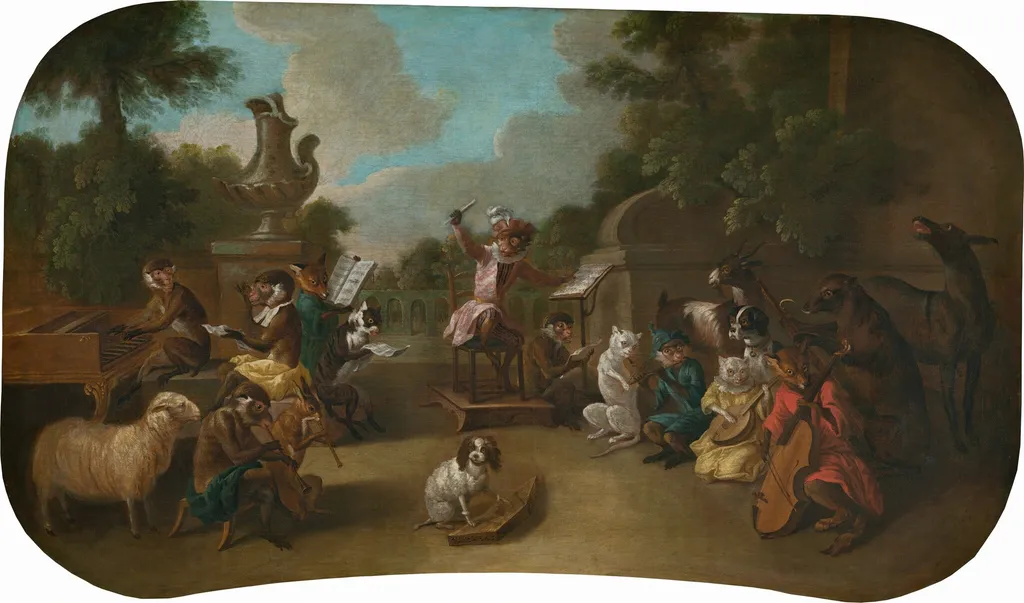
Singerie: The Concert is an oil painting by the Baroque artist Christophe Huet. It dates from 1739 and is held in the collection of the National Gallery of Art.
About this work
Overview
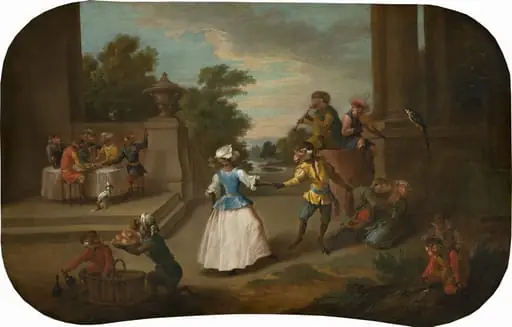
Christophe Huet’s oil on canvas, dated around 1739, presents a whimsical tableau titled Singerie: The Concert. In a landscaped garden setting, a troupe of primates, attired in contemporary dress, engage in a musical performance, while a sheep and a dog observe from the periphery. The composition balances detailed foliage with a prominent vase, framing the animated scene.
Subject & Meaning
Here, a conducting monkey leads companions playing harp, violin and other instruments, underscoring the folly of affectation.
The work belongs to the ‘singerie’ tradition, wherein monkeys mimic human activities to satirize social pretensions. Here, a conducting monkey leads companions playing harp, violin and other instruments, underscoring the folly of affectation. The inclusion of domestic animals as spectators amplifies the commentary, suggesting that even the simplest creatures can recognize the absurdity of human affectation.
Technique & Style
Executed in oil, Huet employs a refined palette typical of early‑Rococo interiors, with soft, luminous colors that render both the fur and fabrics. Precise brushwork defines the instruments and foliage, while broader strokes suggest the garden’s depth. The artist’s handling of light creates a gentle chiaroscuro, highlighting the figures against the verdant backdrop.
History & Provenance
Created circa 1739, the painting reflects Huet’s prolific output of decorative panels for aristocratic residences. Although specific ownership records are sparse, the work likely circulated among French elite collectors who favored the playful, allegorical motifs popular in mid‑18th‑century decorative arts.
Context
Singerie emerged in the French court as a lighthearted critique of aristocratic manners, often employed in interior decoration to amuse and instruct. Huet, active in the decorative arts of the period, contributed numerous such scenes to salons and garden pavilions, aligning his practice with the broader Rococo fascination with wit, nature, and theatricality.
Artist & collection