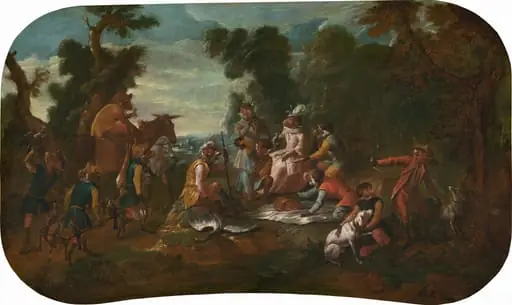
Artwork
Singerie: The Painter
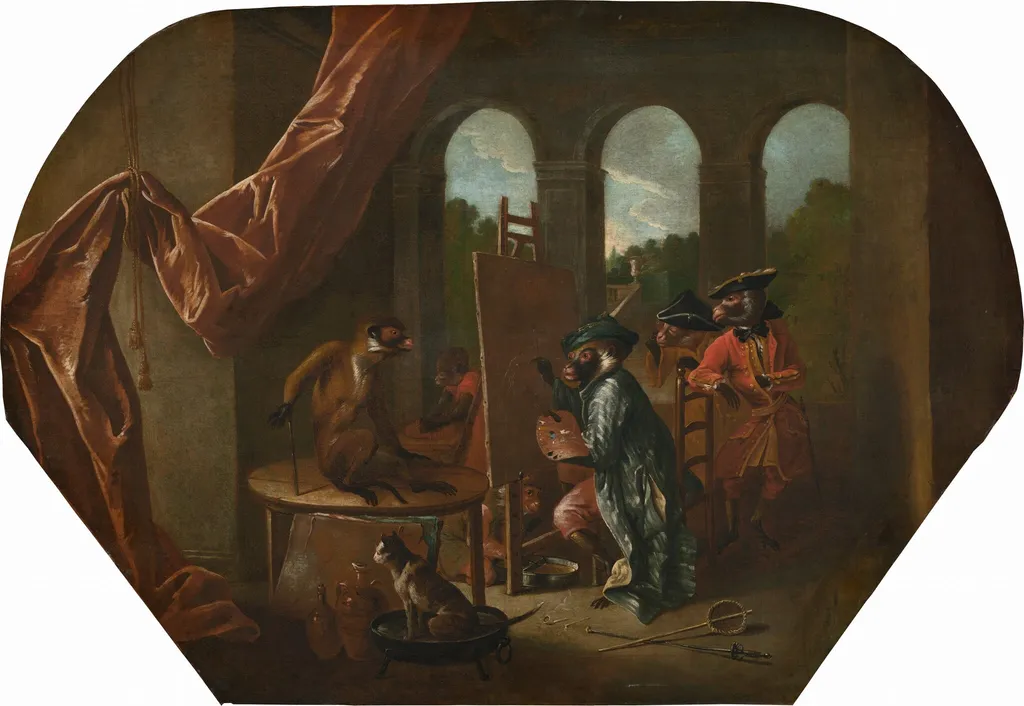
Singerie: The Painter is an oil painting by the Baroque artist Christophe Huet. It dates from 1739 and is held in the collection of the National Gallery of Art.
About this work
Overview
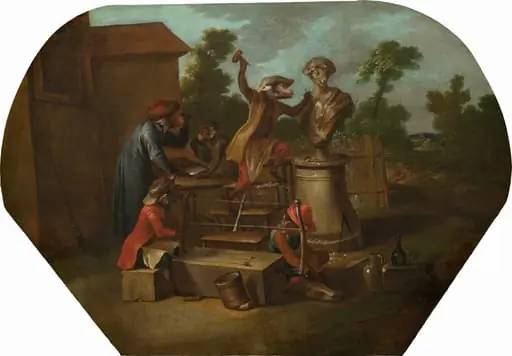
Christophe Huet’s oil on canvas, dated around 1739, presents a whimsical interior scene populated by anthropomorphic monkeys. The composition centers on a primate artist at work on an easel, surrounded by similarly attired companions and a cat perched on a metal pan. The setting is defined by arched windows that admit light into the studio‑like space.
Subject & Meaning
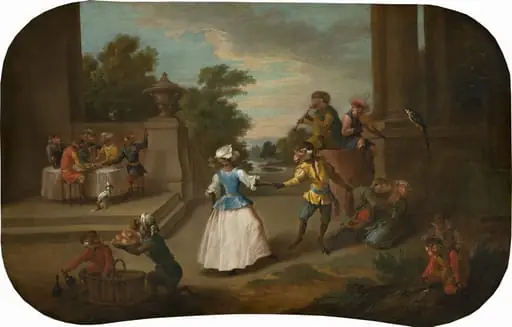
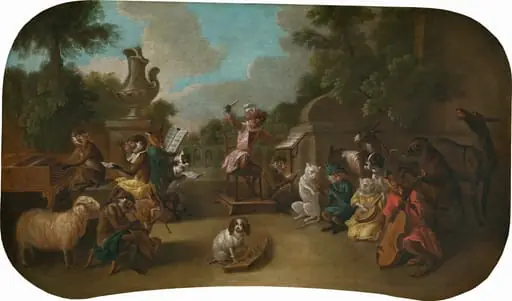
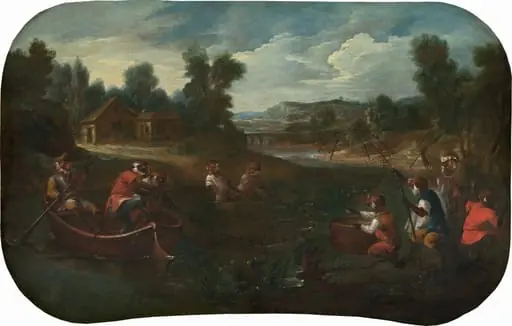
The work belongs to the genre of singerie, a playful tradition that depicts monkeys imitating human behavior. Here the monkeys assume the roles of painters, patrons, and onlookers, offering a satirical commentary on artistic practice and the pretensions of the art world, while the cat adds a touch of domestic realism.
Technique & Style
Executed in oil, Huet employs a refined Baroque palette with warm earth tones and subtle chiaroscuro to model the figures. The brushwork is detailed, especially in the rendering of fabrics and the textures of the monkeys’ fur, while the architectural elements are rendered with a measured linear clarity typical of French court painting of the period.
History & Provenance
Created circa 1739, the painting was likely commissioned for a private collection interested in the fashionable novelty of singerie. It later entered public holdings in the 19th century, though specific ownership records remain sparse, reflecting the limited documentation of decorative works from Huet’s workshop.
Context
Singerie flourished in the early 18th‑century French Baroque, aligning with a broader taste for allegorical and humorous subjects in aristocratic interiors. Huet, a court painter, contributed to this trend by integrating the genre’s characteristic satire with the technical polish expected of royal commissions, situating the piece within both decorative art and courtly amusement.
Artist & collection