Artwork
Singerie: The Picnic
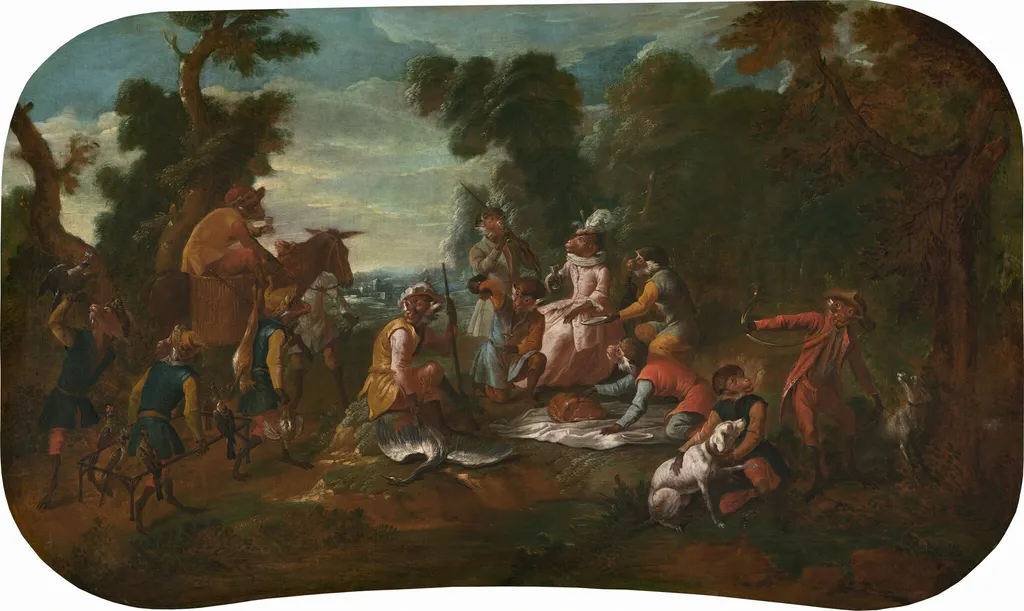
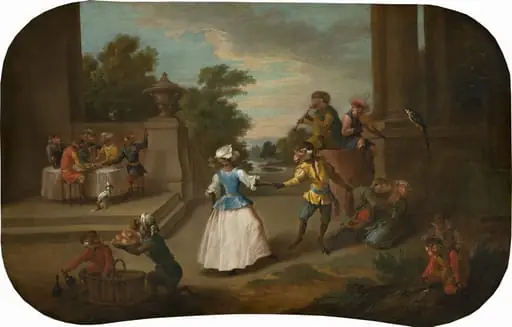
Singerie: The Picnic is an oil painting by the Baroque artist Christophe Huet. It dates from 1739 and is held in the collection of the National Gallery of Art.
About this work
Overview
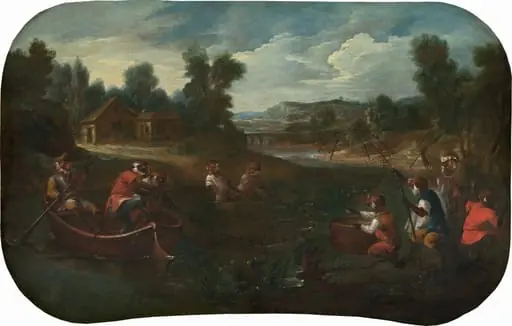
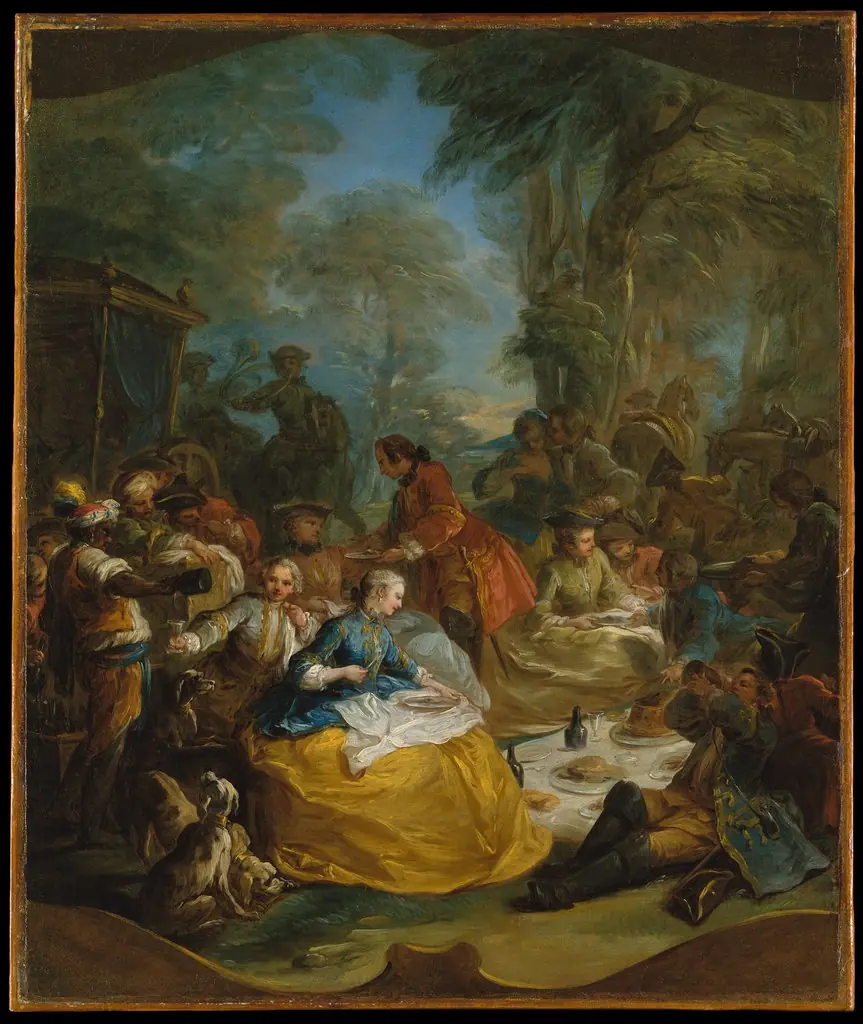
Christophe Huet’s oil on canvas, dated around 1739, presents a whimsical tableau titled Singerie: The Picnic. The composition gathers a group of primates, attired in contemporary dress, seated around a woodland table laden with food and drink. Their expressions are rendered with a sober gravity, echoing the demeanor of human participants at a social gathering.
Subject & Meaning
The work depicts monkeys assuming the roles of genteel picnickers, a visual pun that reflects the 18th‑century fascination with anthropomorphic satire. By placing the animals in a familiar leisure setting, Huet invites viewers to contemplate the thin line between nature and culture, and to humorously critique the pretensions of aristocratic pastime.
Technique & Style
Executed in oil, the painting showcases Huet’s deft handling of texture, from the sheen of fabrics to the dappled foliage. The brushwork balances detailed rendering of the monkeys’ features with a softer atmospheric background, aligning the piece with the decorative Rococo sensibility while maintaining a clear, narrative focus.
Context
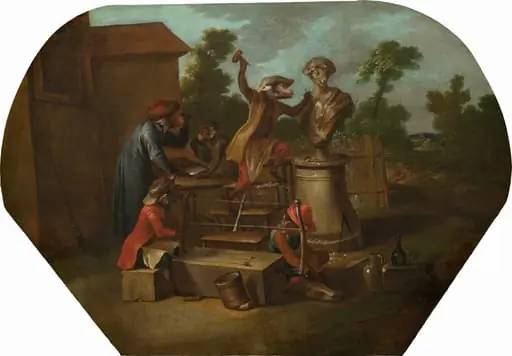
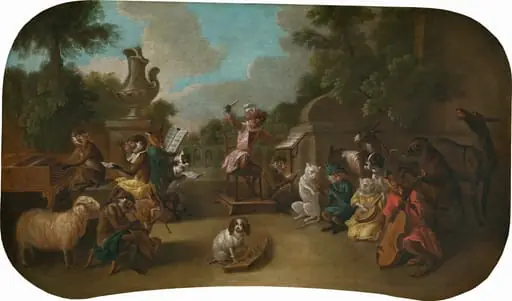
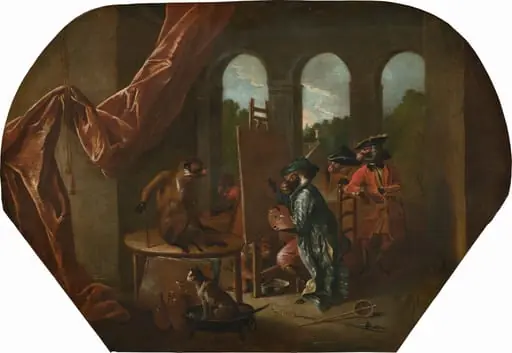
Singerie, the genre of depicting monkeys in human activities, enjoyed considerable popularity in the early‑1700s, especially in French decorative arts. Huet’s contribution reflects this trend, aligning his work with contemporaneous tapestries and porcelain that employed the same playful motif to entertain elite audiences.
Legacy
While not as widely reproduced as later animal satires, Huet’s picnic scene remains a representative example of the singerie tradition. It continues to inform studies of how 18th‑century artists used humor and anthropomorphism to comment on social customs, and it appears in collections that explore the period’s decorative narratives.
Artist & collection