Artwork
Singerie: The Sculptor
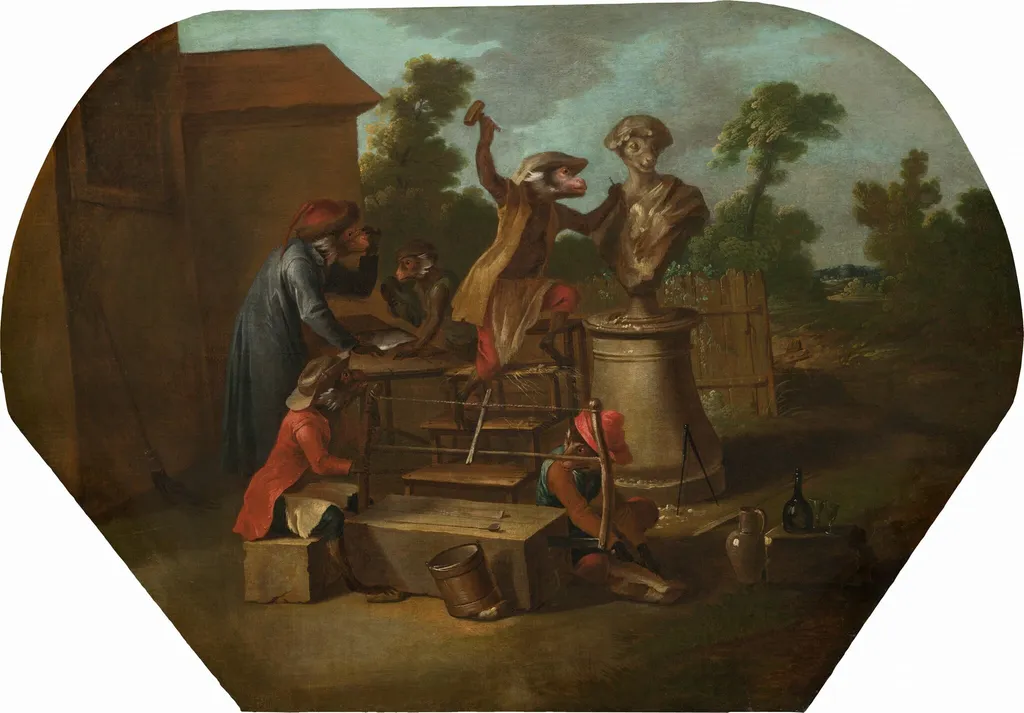
Singerie: The Sculptor is an oil painting by the Baroque artist Christophe Huet. It dates from 1739 and is held in the collection of the National Gallery of Art.
About this work
Overview
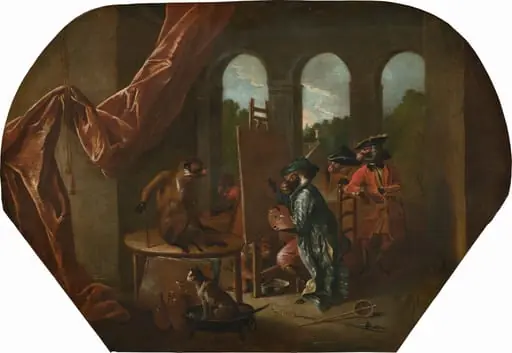
Christophe Huet’s oil on canvas, dated around 1739, presents a whimsical workshop populated by anthropomorphic monkeys. The figures are arranged around a central pedestal that supports a sculptural work, creating a tableau that blends humor with a subtle commentary on artistic practice.
Subject & Meaning
The composition depicts a group of primates dressed in contemporary attire, each engaged in tasks that mirror those of human artisans. One monkey balances on a chair while wielding a tool, another observes the statue from a block, suggesting an allegorical reflection on the processes of creation and critique within the arts.
Technique & Style
Executed in the Baroque idiom, the painting employs a dynamic arrangement of figures and a rich palette to convey movement and depth. Huet’s brushwork renders the textures of fabrics and the sheen of polished surfaces, while the chiaroscuro lighting accentuates the three‑dimensionality of the sculptural centerpiece.
Context
Singerie, the genre of depicting monkeys imitating human behavior, flourished in 18th‑century French decorative arts. Huet’s work aligns with this trend, using the playful motif to comment on the pretensions of artistic labor during a period when the French court favored elaborate, theatrical visual narratives.
Legacy
While not as widely reproduced as other Baroque works, the painting exemplifies the intersection of satire and fine art that characterized the later phases of the movement. It continues to be cited in studies of genre painting for its nuanced blend of humor, allegory, and technical skill.
Artist & collection