Artwork
By the Fire – Scene from Morocco
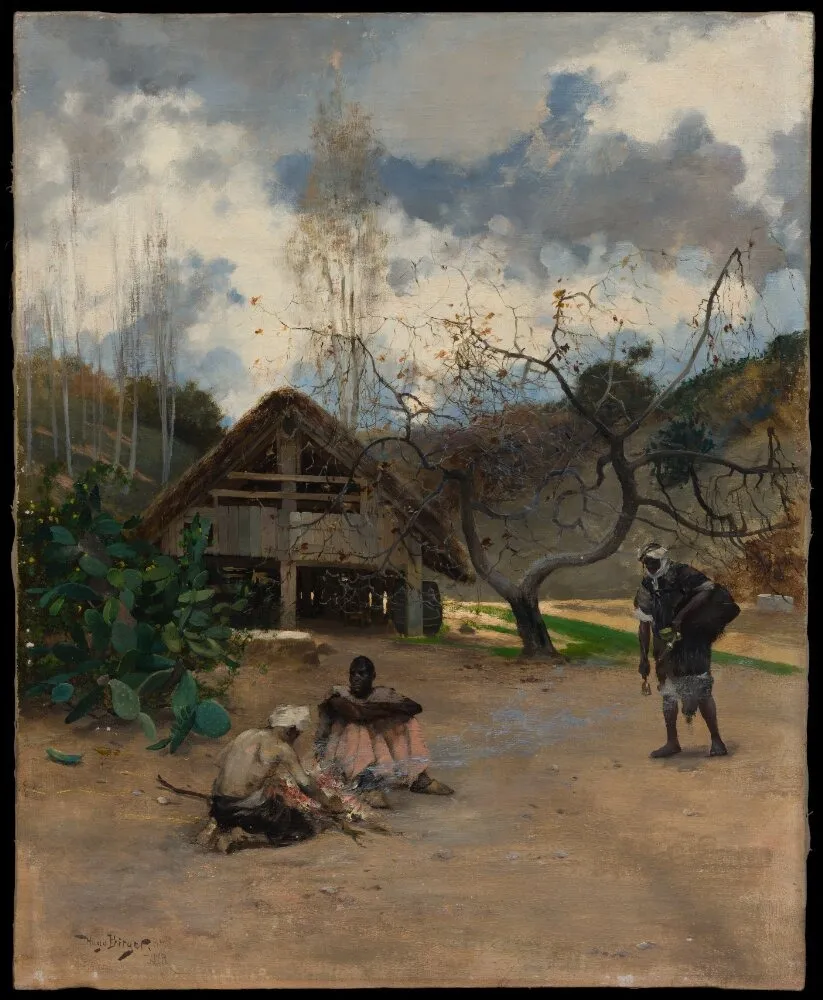
By the Fire – Scene from Morocco is an oil painting by the Impressionist artist Hugo Birger. It is held in the collection of the Nationalmuseum.
About this work
Overview
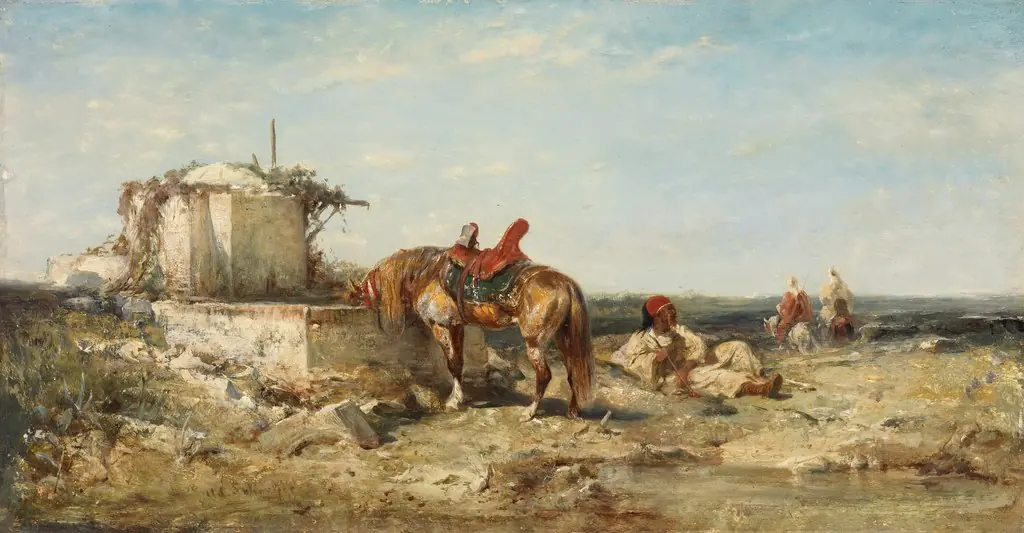
Painted in 1892 by Swedish artist Hugo Birger, this oil work captures a quiet nocturnal moment in a North African landscape. The scene, set in a desert environment, centers on a small group gathered near a fire. The painting is part of the Nationalmuseum’s collection in Stockholm, reflecting Birger’s interest in travel and ethnographic observation during the late 19th century.
Subject & Meaning
The painting portrays an intimate, unguarded moment among local figures seated around a fire, their identities softened by shadow and distance. No narrative is explicitly stated, but the composition suggests rest, communal warmth, or quiet reflection after daylight. The absence of facial detail invites contemplation rather than identification, emphasizing atmosphere over individual story.
Technique & Style
Birger employs loose, fluid brushwork to convey texture and movement, particularly in the flickering firelight and the dry, wind-swept ground.
Birger employs loose, fluid brushwork to convey texture and movement, particularly in the flickering firelight and the dry, wind-swept ground. Warm ochres and deep umbers dominate the palette, contrasting with cool night tones in the background. The lighting is subdued and directional, modeling forms gently without harsh definition, suggesting an intuitive grasp of tonal harmony over dramatic chiaroscuro.
History & Provenance
Created during Birger’s travels in North Africa, the painting entered the Nationalmuseum’s collection shortly after its completion. It reflects a broader European fascination with Orientalist themes in the late 1800s, though Birger’s approach avoids exoticism, favoring quiet observation. The work remained in Sweden throughout its documented history, with no known public exhibitions beyond institutional holdings.
Context
In the 1890s, Scandinavian artists increasingly traveled beyond Europe, drawn by cultural curiosity and the allure of unfamiliar landscapes. Birger’s work aligns with this trend, yet differs from more theatrical Orientalist paintings by emphasizing stillness and restraint. His focus on ordinary moments, rather than spectacle, situates the piece within a quieter, more introspective branch of travel-inspired art.
Legacy
Though not widely reproduced or studied, the painting endures as a subtle example of Nordic engagement with non-European subjects. Its understated tone and technical sensitivity distinguish it from more sensationalized contemporaries. It contributes to a nuanced understanding of how Scandinavian artists interpreted foreign environments without resorting to stereotype or grandeur.
Artist & collection