Artwork
Under Trees, Marcoussy
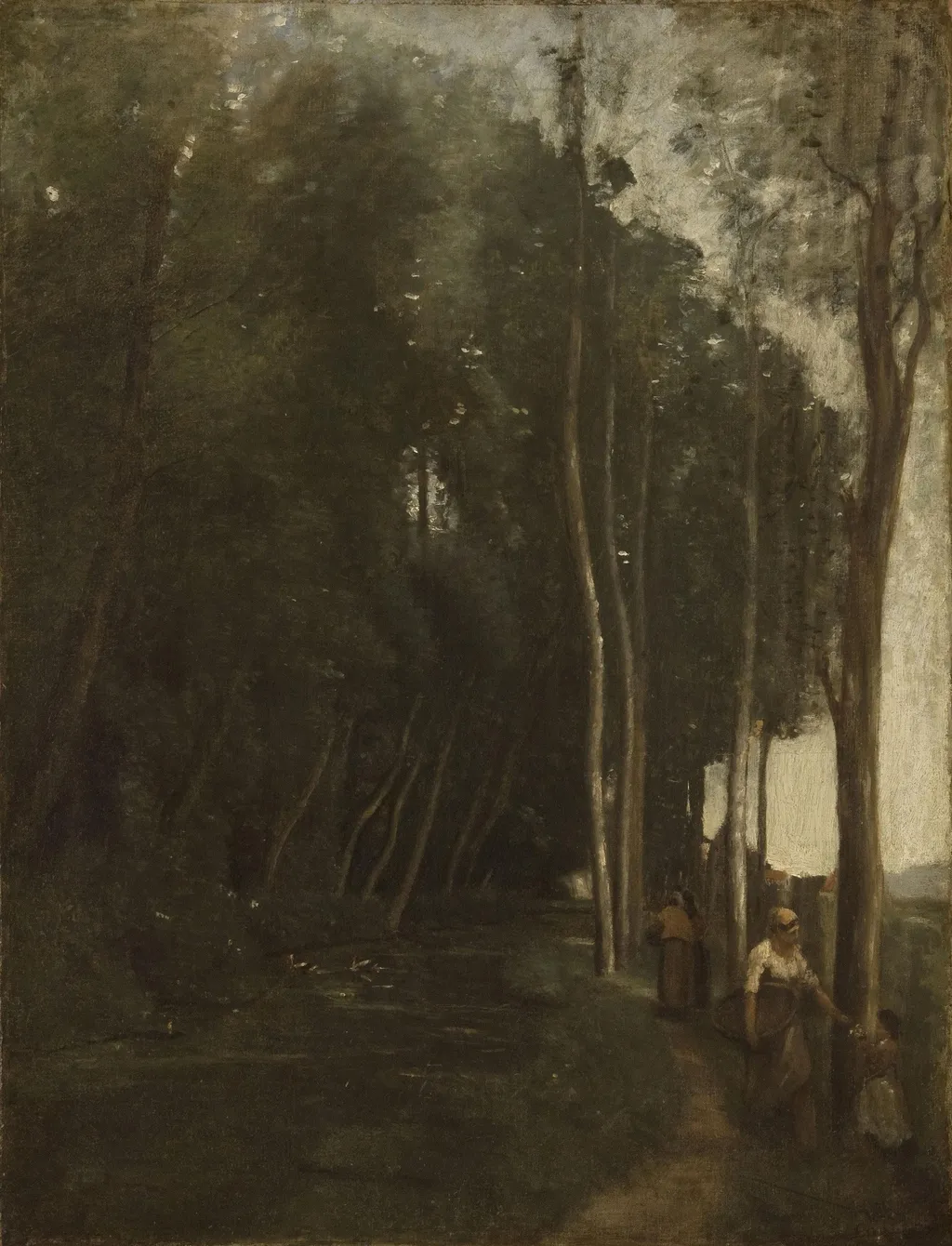
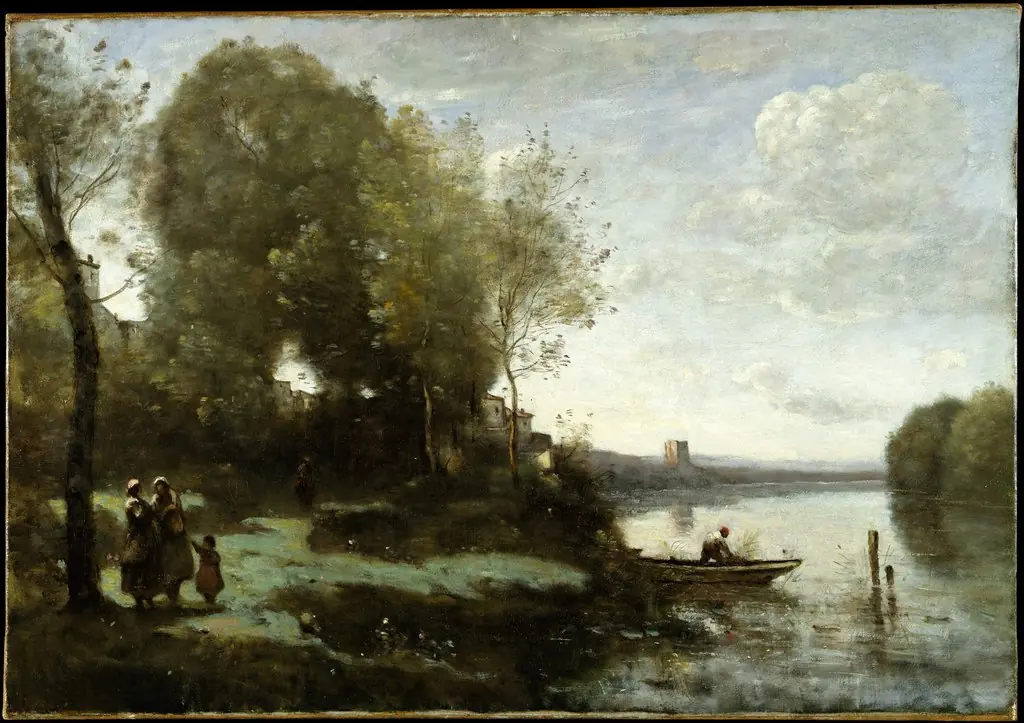
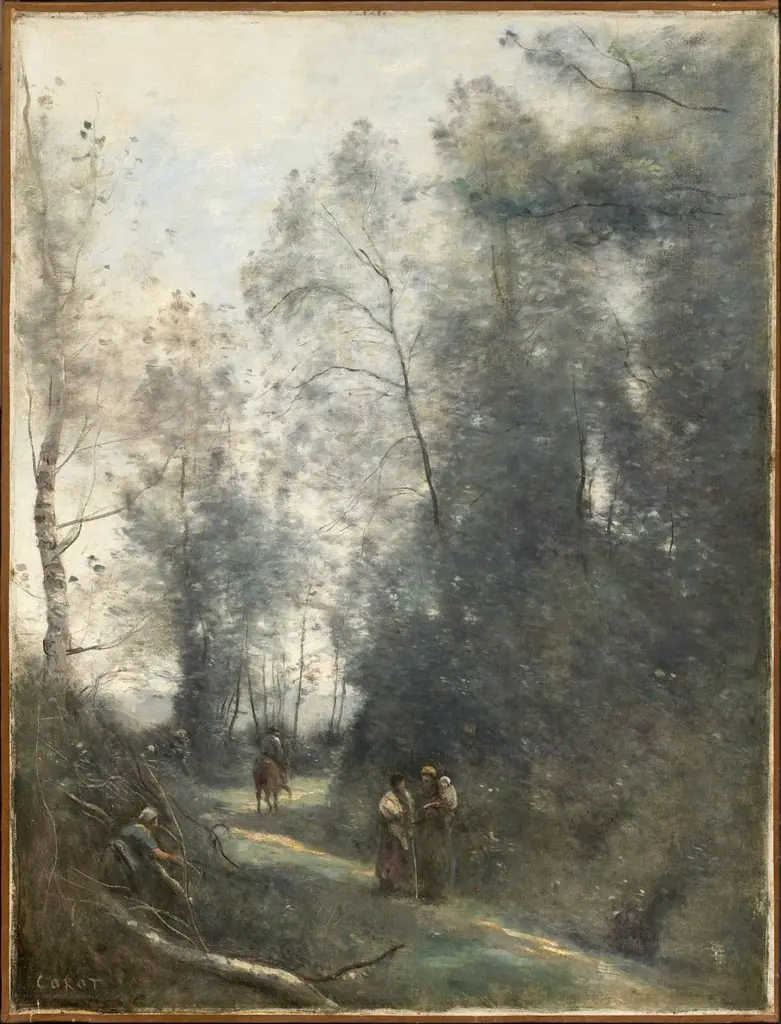
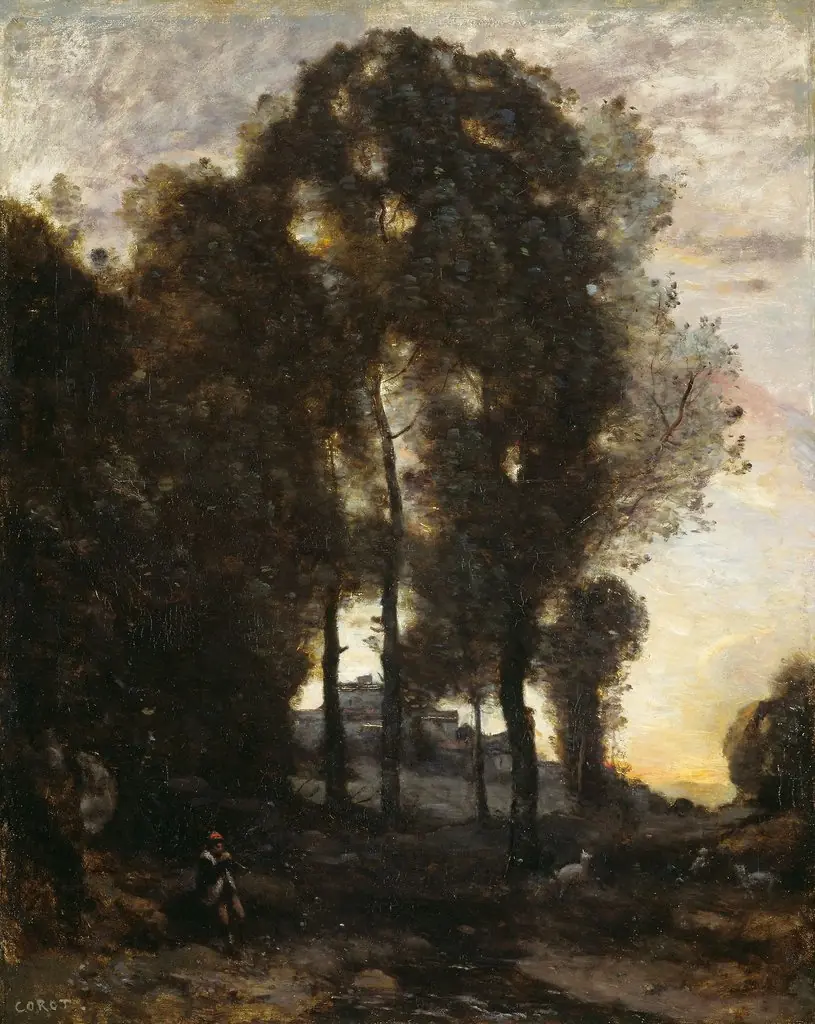
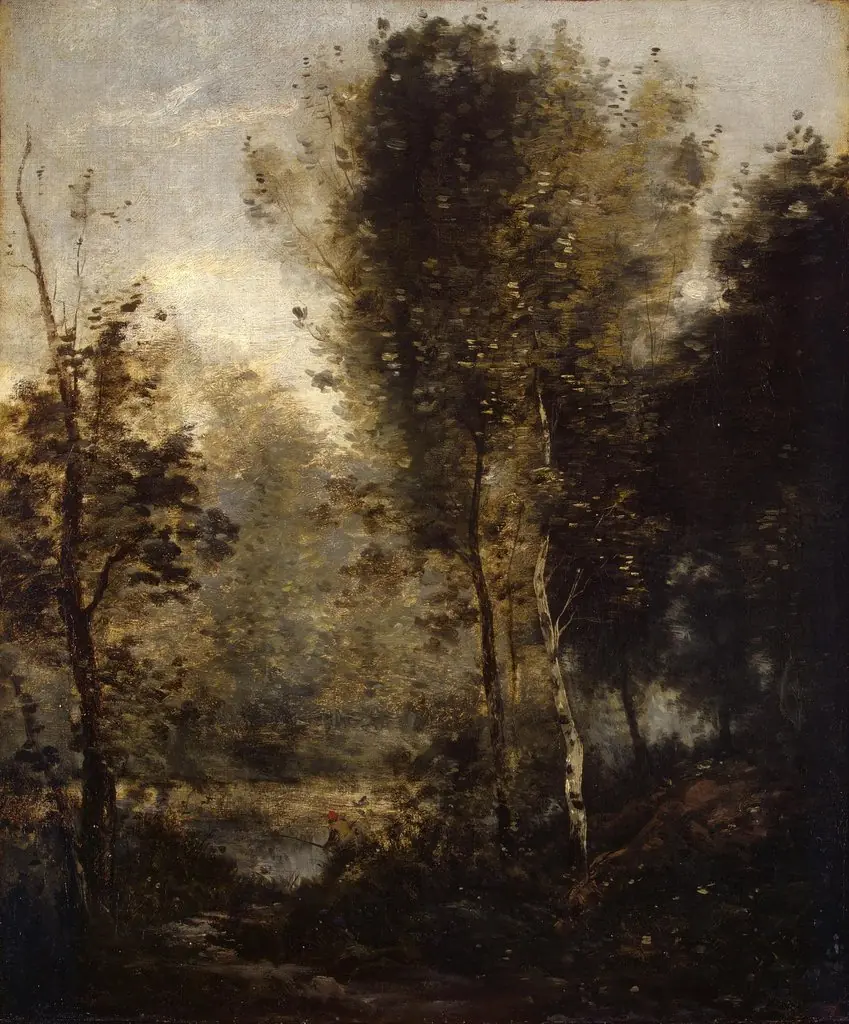
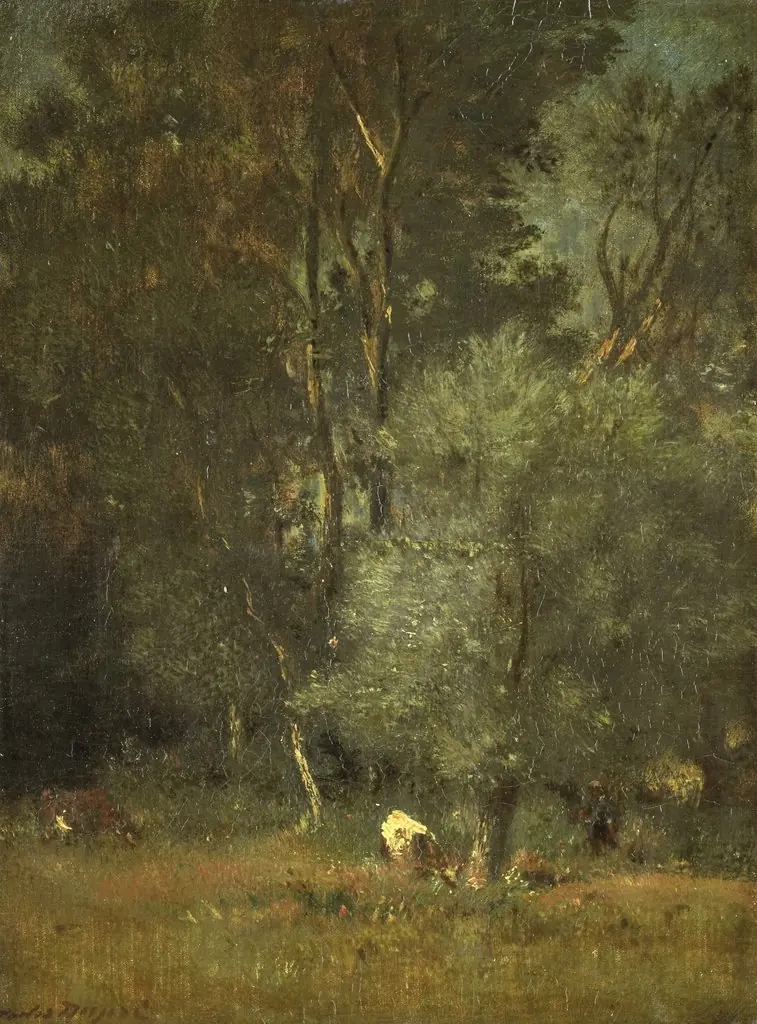
Under Trees, Marcoussy is an oil painting by the Barbizon school artist Jean Baptiste Camille Corot. It dates from 1845 and is held in the collection of the Philadelphia Museum of Art.
About this work
Overview
Corot, a key figure in 19th-century French landscape painting, captured the scene with a restrained palette and subtle tonal shifts.
Painted around 1845, *Under Trees, Marcoussy* is an oil on canvas landscape by Jean-Baptiste-Camille Corot, depicting a quiet woodland near the village of Marcoussy. Corot, a key figure in 19th-century French landscape painting, captured the scene with a restrained palette and subtle tonal shifts. The work reflects his evolving approach to observing nature directly, bridging academic traditions and emerging outdoor practices that would influence later generations.
Subject & Meaning
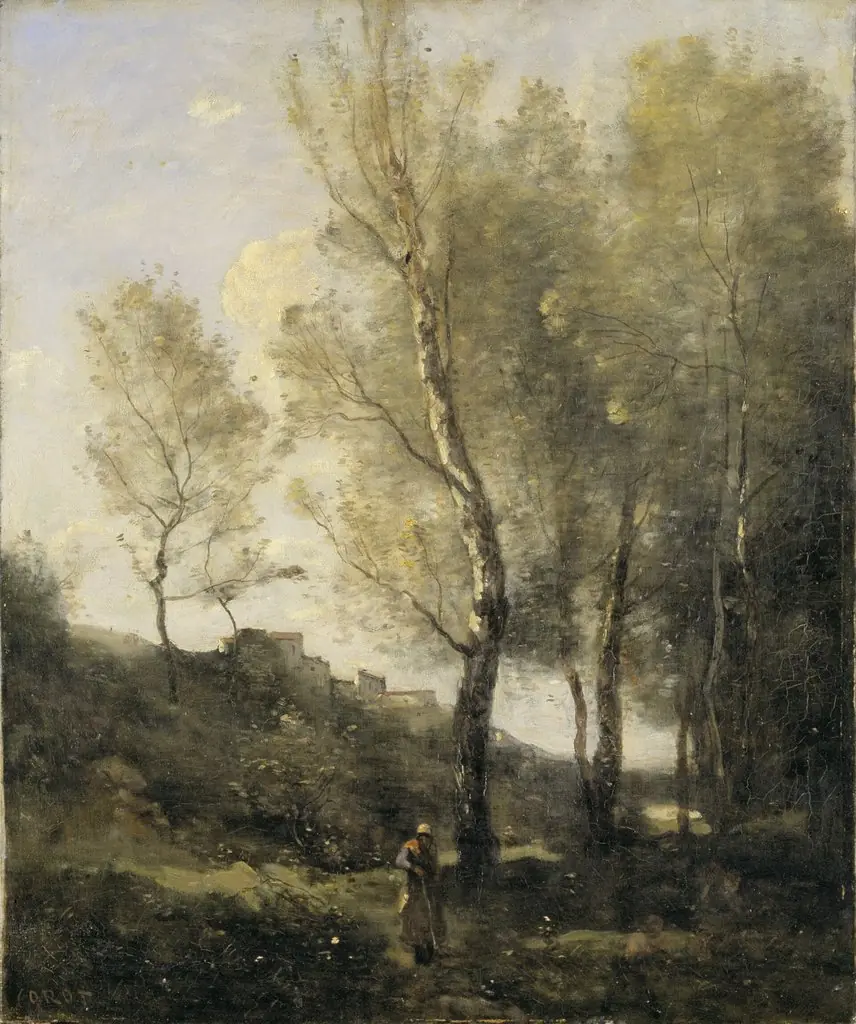
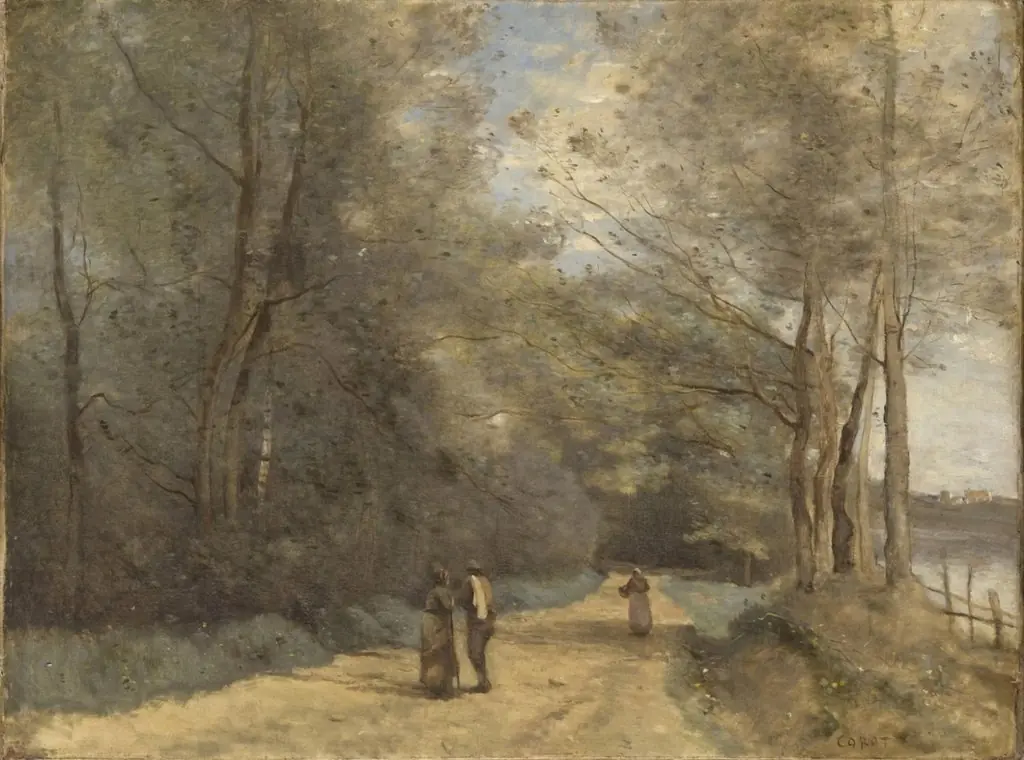
The painting presents a secluded forest path, framed by dense trees and dappled light filtering through the canopy. Figures, faintly rendered in the foreground, suggest quiet human presence without disrupting the solitude of the scene. There is no narrative drama—only the stillness of a rural moment, emphasizing harmony between earth and observer. Corot’s intent appears to be contemplative, inviting reflection rather than storytelling.
Technique & Style
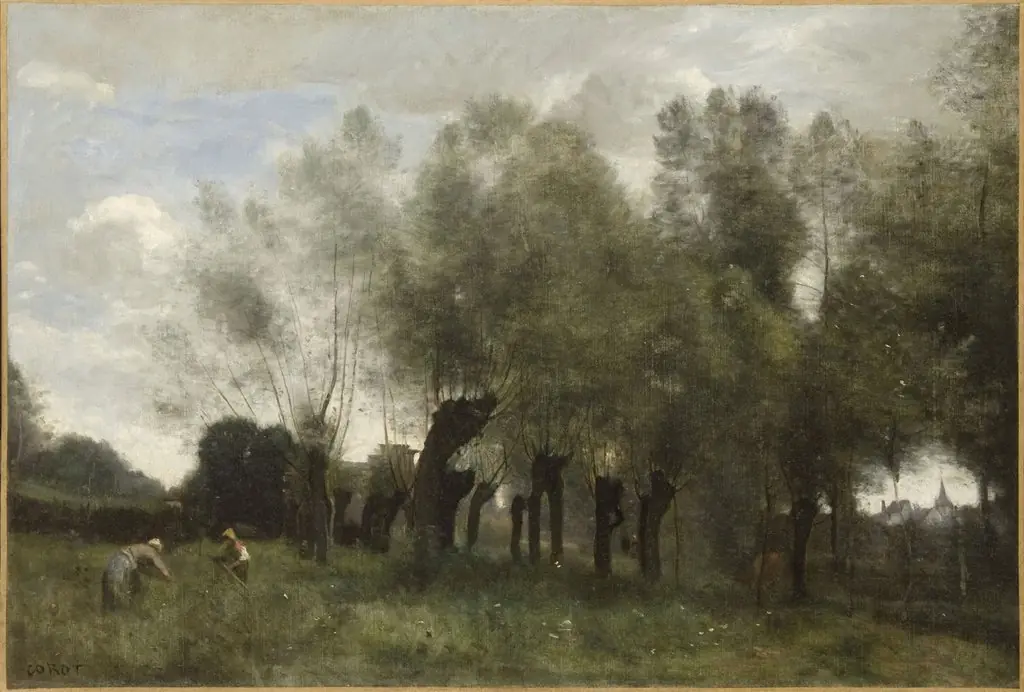
Corot employed soft brushwork and layered glazes to achieve a hazy, atmospheric effect. Colors are muted—olive greens, earthy browns, and pale sky tones—creating depth through subtle value transitions rather than sharp contrast. The composition leads the eye along the path into the distance, while loose, almost sketch-like handling of foliage suggests spontaneity. His method prioritized light and mood over detailed definition, aligning with early plein-air tendencies.
History & Provenance
Created during Corot’s frequent visits to the forested areas near Marcoussy, the painting remained in private hands until entering the Philadelphia Museum of Art’s collection. Its documented history is modest, reflecting its status as a personal study rather than a public commission. The work’s quiet character likely contributed to its preservation through changing artistic tastes, eventually finding a home in a major American institution.
Context
Corot worked amid the rise of the Barbizon School, a group of artists who rejected idealized landscapes in favor of observed rural scenes. While not a formal member, his practice aligned with their ethos: painting outdoors, valuing natural light, and treating nature with reverence. His approach, though rooted in classical composition, subtly undermined academic conventions, paving a path toward Impressionist sensibilities without overtly breaking from tradition.
Legacy
Though not widely exhibited during his lifetime, *Under Trees, Marcoussy* exemplifies Corot’s role as a transitional figure in landscape painting. His emphasis on atmospheric tone and direct observation influenced younger artists, including the Impressionists, who later expanded his methods. The painting endures as a quiet testament to his ability to convey peace through restraint, offering a model of lyrical realism that resonates beyond its era.
Own this work as a print
Artist & collection
Artist
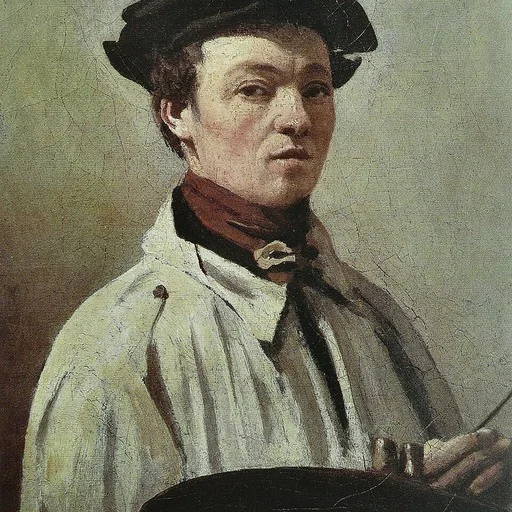
Jean-Baptiste-Camille Corot (UK: KORR-oh, US: kə-ROH, kor-OH; French: ; 16 July 1796 – 22 February 1875), or simply Camille Corot, was a French landscape and portrait painter as well as a printmaker in etching.