Artwork
Hoher Gull
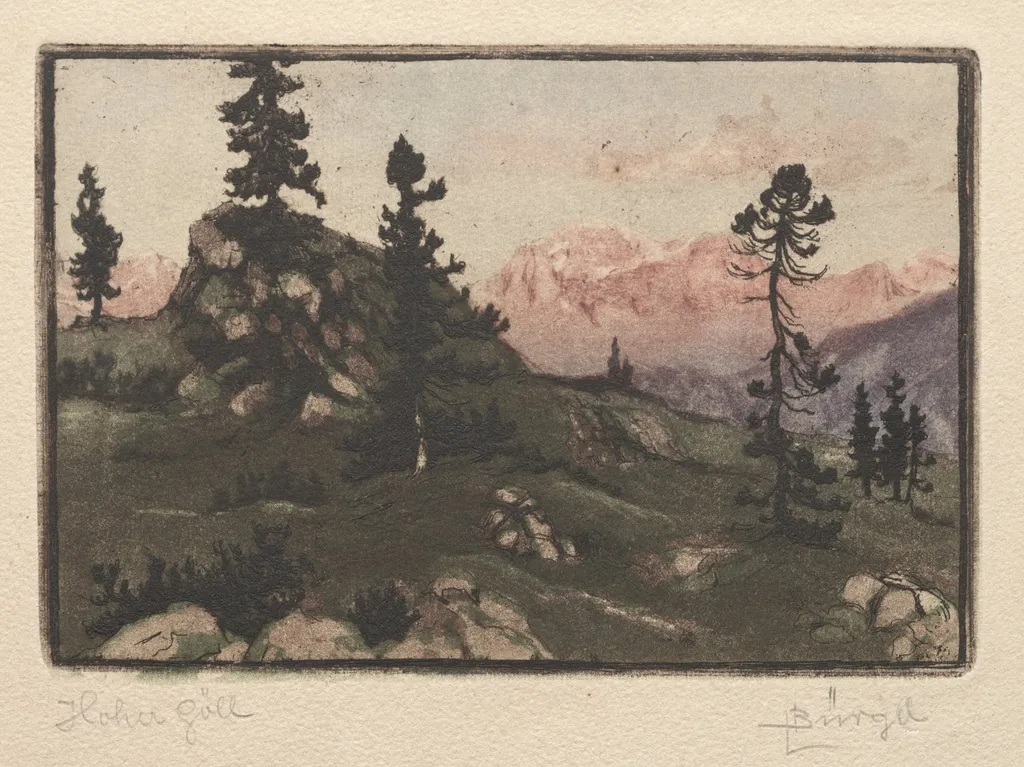
Hoher Gull is a print by Hugo Burghel. It dates from 1888 and is held in the collection of the Cleveland Museum of Art.
About this work
The foreground has scattered boulders and a few small bushes, while the background fades into soft, pink-tinged hills.
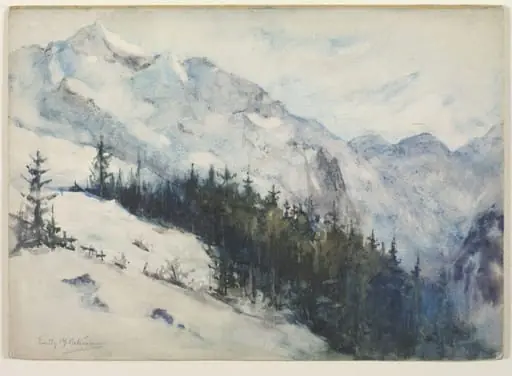
This painting shows a quiet mountain scene with tall pine trees on rocky slopes. The foreground has scattered boulders and a few small bushes, while the background fades into soft, pink-tinged hills. Light colors—greens, browns, and muted blues—keep the mood calm.
The artist’s signature reads *"Hoher Gull"* and *"Burghel"* in the corners, hinting at a specific place or title. The brushwork is loose, with some areas blending smoothly while others have rougher strokes.
Look up Hugo Burghel (German, 1853–1903) to see more of his work.
Overview
Hoher Gull is a landscape print created around 1888 by the German artist Hugo Burghel. It depicts a tranquil alpine setting characterized by towering pines, rocky terrain, and distant hills washed in soft pink and muted tones. The work is part of the collection at The Cleveland Museum of Art and reflects Burghel’s interest in quiet, atmospheric natural scenes. Its title may reference a specific location, though its exact geographic identity remains unconfirmed.
Subject & Meaning
The scene presents a solitary mountain landscape, devoid of human figures or overt narrative. The emphasis on stillness and subtle color transitions suggests a contemplative engagement with nature. The inclusion of scattered boulders and sparse vegetation reinforces a sense of remote, untouched terrain. The title 'Hoher Gull' may denote a peak or region in the Alps, inviting association with German-speaking mountain culture without explicit symbolism.
Technique & Style
Burghel employed a loose, expressive technique with varied brushwork—smooth blends in the sky and distant hills contrast with textured, rougher strokes in the foreground rocks and foliage. The palette is restrained, dominated by earthy greens, browns, and cool blues, with faint pink hues suggesting twilight or atmospheric diffusion. The print’s tonal gradations and delicate handling of light convey mood over detail, aligning with late 19th-century tendencies toward lyrical realism.
History & Provenance
Created circa 1888, Hoher Gull entered the collection of The Cleveland Museum of Art at an unspecified date. Hugo Burghel, active in Germany during the late 1800s, produced a modest body of landscape works, many of which remain in private or regional collections. The signature 'Hoher Gull' and 'Burghel' in the corners suggests the artist both named and claimed the work, possibly indicating its origin as a personal or localized reference rather than a commissioned piece.
Context
Burghel worked during a period when German artists increasingly turned to rural and mountainous landscapes as subjects of quiet introspection, away from urban industrialization. His approach aligns with broader European trends favoring atmospheric effects and emotional resonance over topographical precision. Though not part of a major movement, his work reflects the enduring appeal of nature as a space for personal observation and calm.
Legacy
Hoher Gull remains one of the few documented works by Hugo Burghel, whose output was limited and largely unpublicized beyond regional circles. Its preservation in a major American museum underscores its value as a representative example of late 19th-century German landscape printmaking. While not widely studied, it contributes to a quieter, less documented strand of naturalist art from the period.
Artist & collection

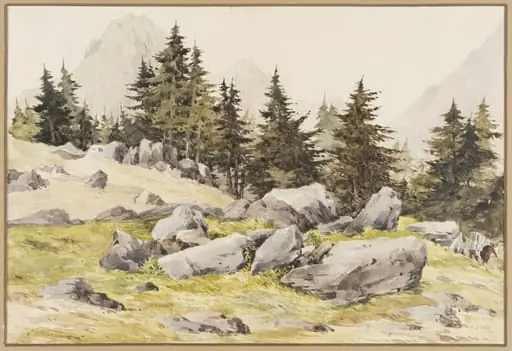 View at Handeck, Switzerland
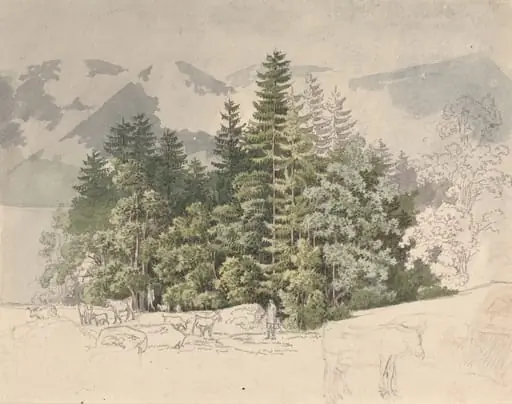 Alpine Landscape
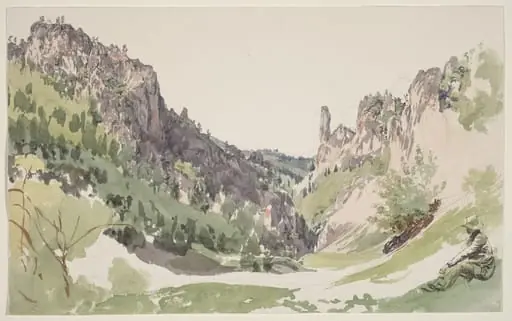 A Seated Man Contemplating a Sunlit Mountain Valley
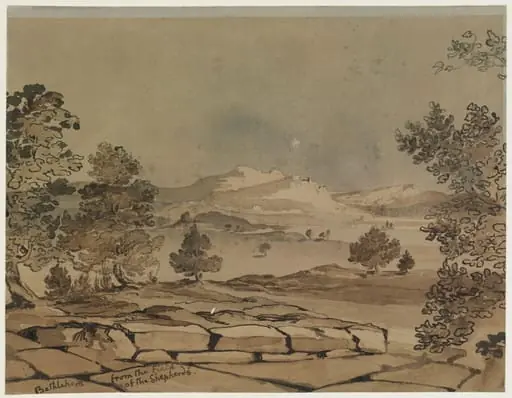 Bethlehem from the Field of the Shepherds
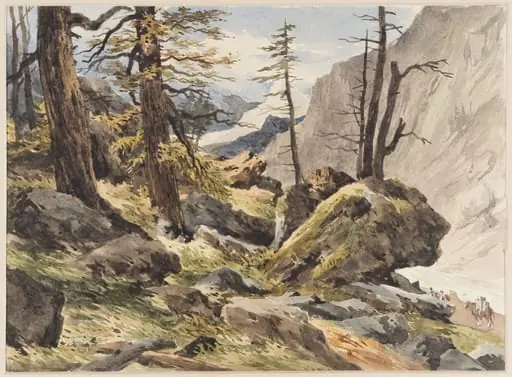 Road leading to Zermatt, Switzerland
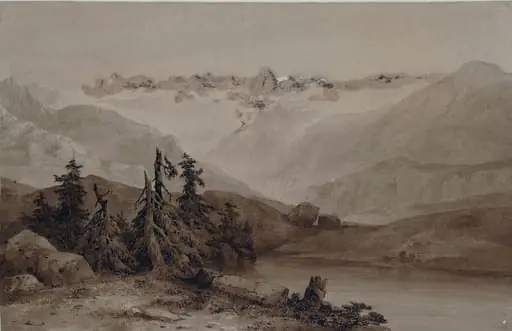 Chain of Mont Blanc
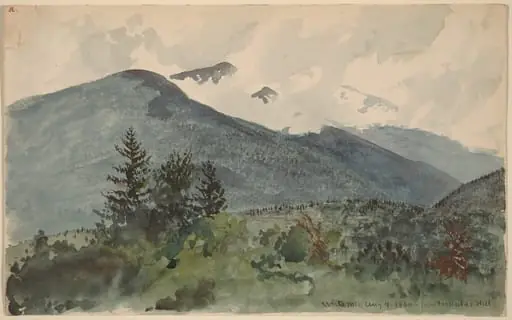 White Mountains from Fernald's Hill
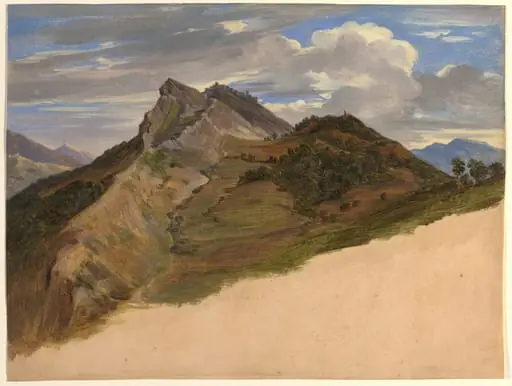 Civitella Seen from the North
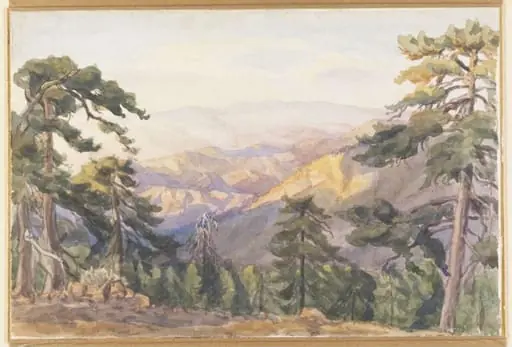 Sunset glow - Troodos, Cyprus
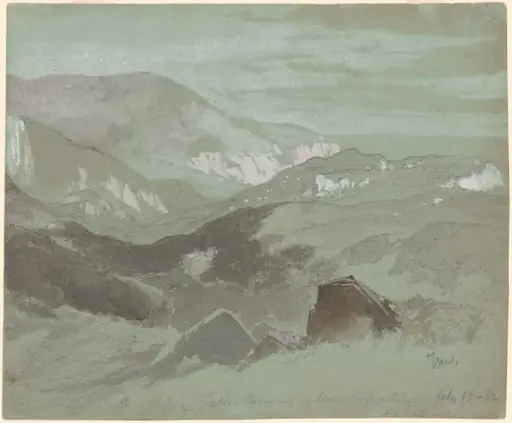 Cliffs of Ecclesbourne Near Hastings
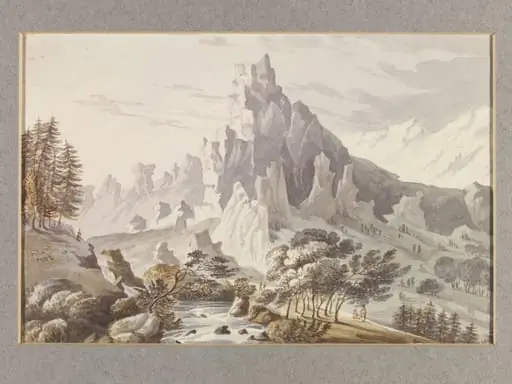 Cedar Forest & Snowy Peak on Mount Lebanon
 The Jungfrau