Artwork
Cliffs of Ecclesbourne Near Hastings
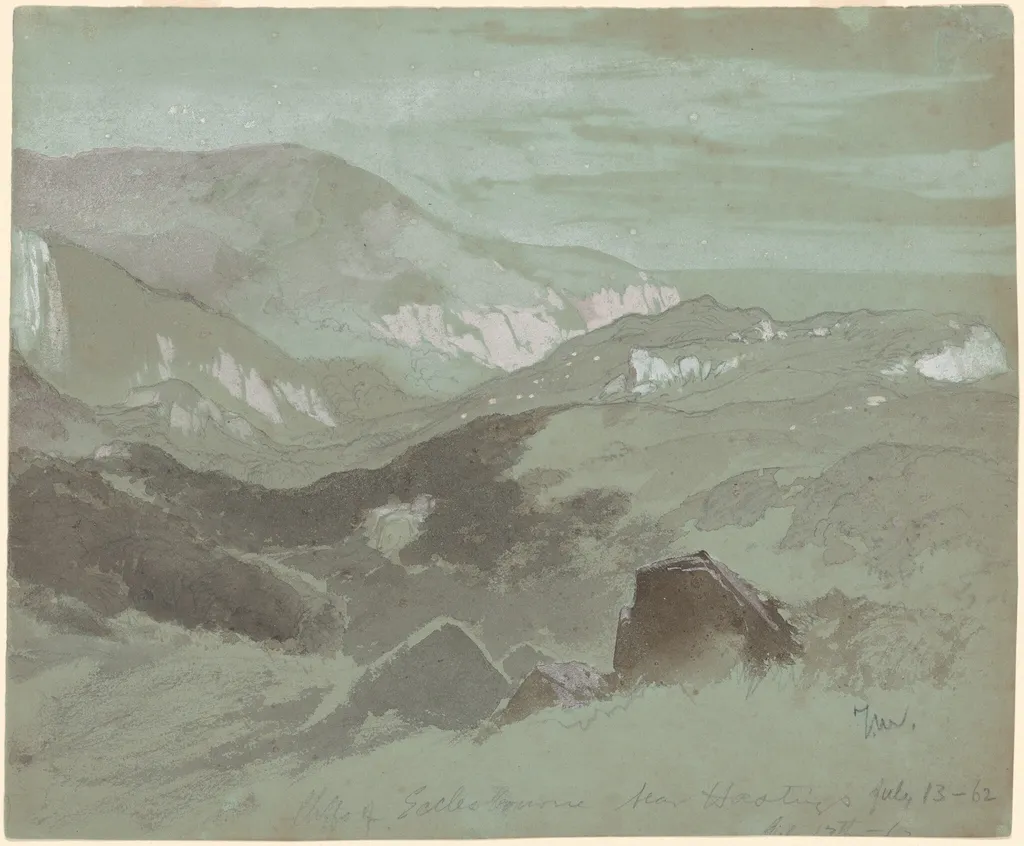
Cliffs of Ecclesbourne Near Hastings is a gouache drawing by the Impressionist artist Thomas Moran. It dates from 1862 and is held in the collection of the National Gallery of Art.
About this work
Overview
Thomas Moran’s 1862 drawing *Cliffs of Ecclesbourne Near Hastings* combines graphite, ink wash, and gouache on a gray wove paper support. The composition records a coastal scene on England’s southern shoreline, rendered with the precise observation characteristic of mid‑nineteenth‑century landscape drawing.
Subject & Meaning
The work depicts the chalk cliffs and sea‑capped rocks of Ecclesbourne, a locale near the town of Hastings. By focusing on the natural forms and atmospheric effects, Moran emphasizes the transient qualities of light and weather, inviting contemplation of the landscape’s enduring yet mutable character.
Technique & Style
Moran employs a layered approach: fine graphite lines establish structure, while ink washes provide tonal depth, and gouache highlights add localized color. This mixed‑media method reflects the Hudson River School’s emphasis on meticulous detail and a luminous, almost photographic rendering of natural scenery.
History & Provenance
Created while Moran was based in New York, the drawing predates his later fame for Western vistas. During this period he collaborated with his brother Edward Moran, a marine painter, and contributed illustrations to *Scribner’s Monthly*. The piece remains a testament to his early artistic development before his shift toward the Rocky Mountains.
Own this work as a print
Artist & collection
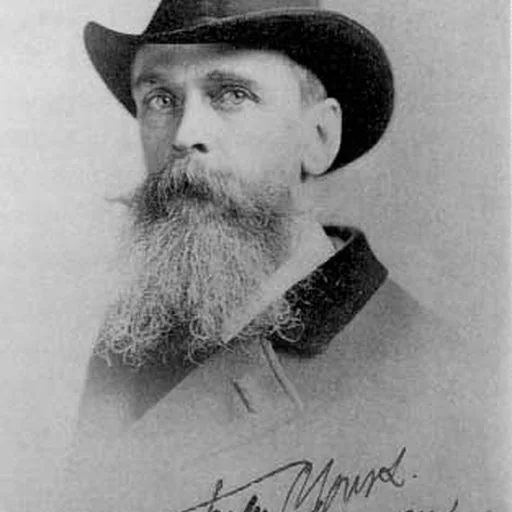
Artist
Thomas Moran (February 12, 1837 – August 25, 1926) was an American painter and printmaker of the Hudson River School in New York whose work often featured the Rocky Mountains.

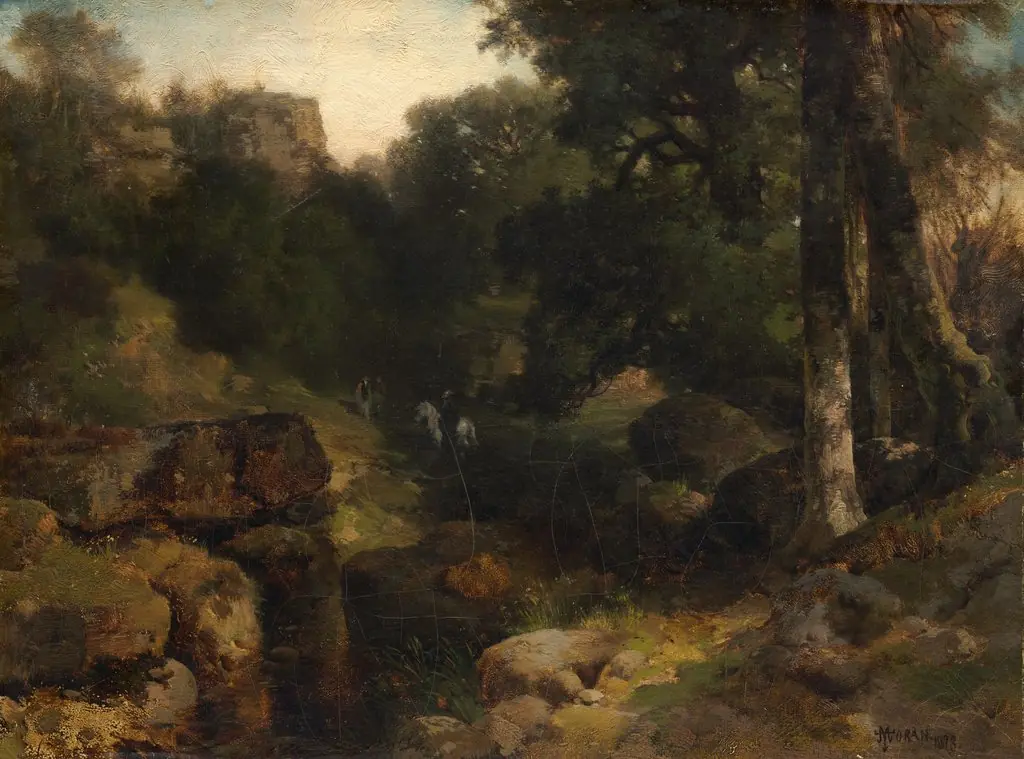
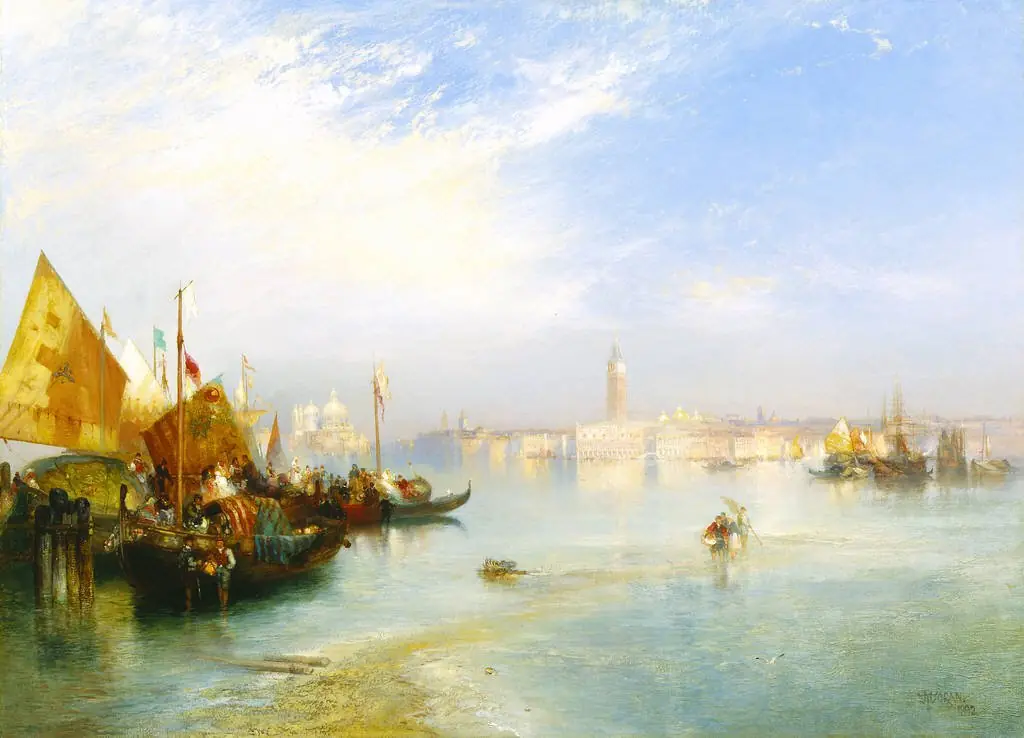
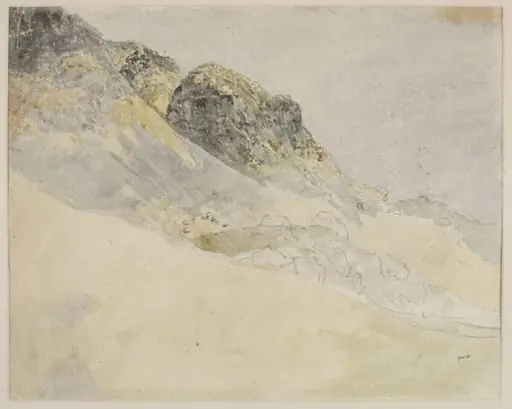 Untitled
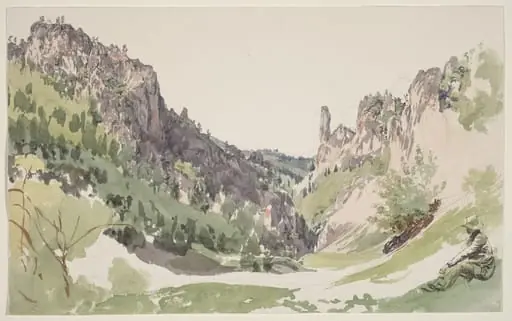 A Seated Man Contemplating a Sunlit Mountain Valley
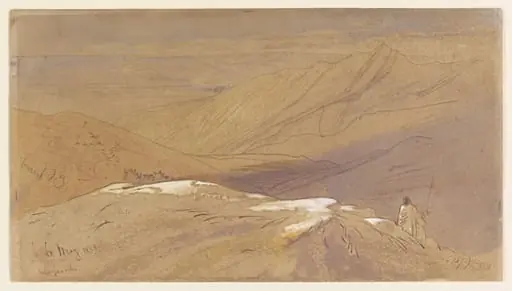 Near Jericho
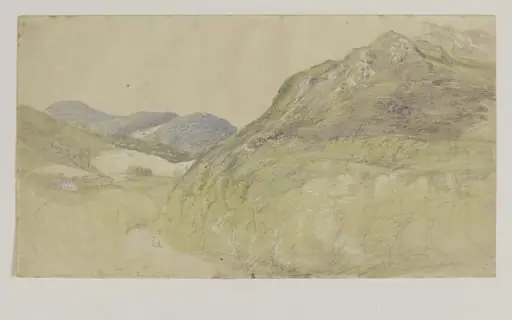 Near the Travellers Rest Inn, Dolgelly
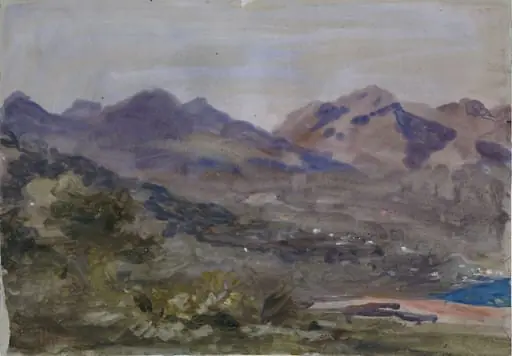 Above Mentone
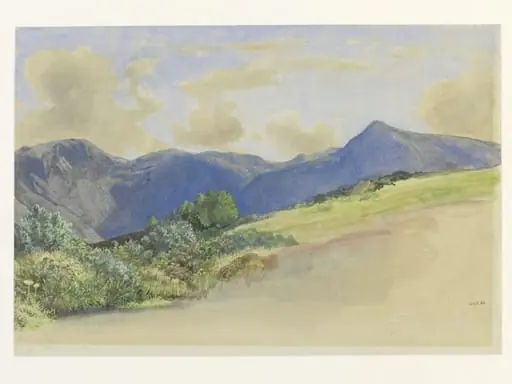 Goat fell, Isle of Arran
 View from the top of Honister Crag
 Mountainous Landscape in Italy : "Il Resegone"
 White Mountains from Fernald's Hill
 Hill-top under snow
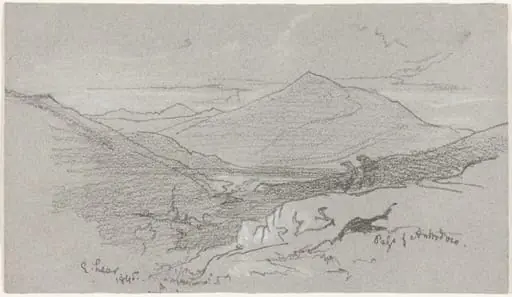 Mountainous View from Antrodoco
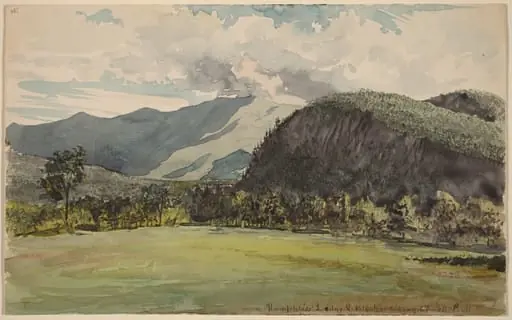 Humphrey's Ledge