Artwork
George Carleton, Bishop of Cheschester
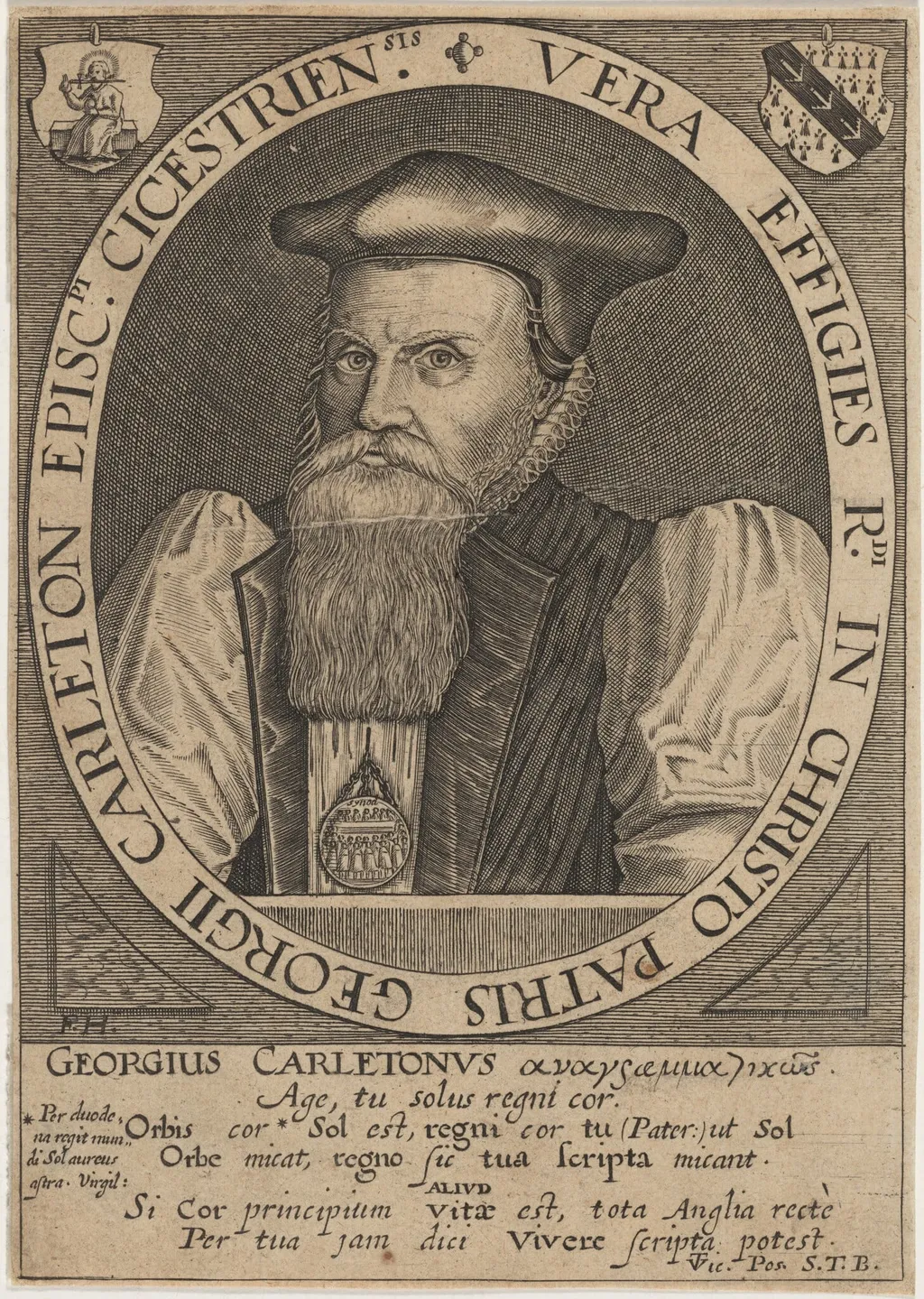
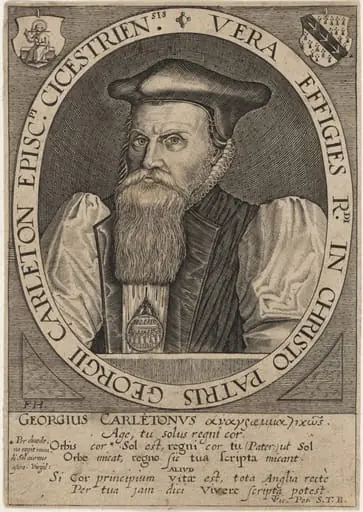
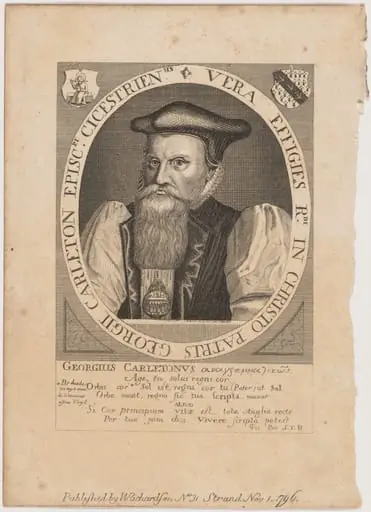
George Carleton, Bishop of Cheschester is an ink print by the Renaissance artist Frederik van Hulsen. It dates from 1620 and is held in the collection of the National Gallery of Art.
About this work
Overview
Rendered in monochrome, the portrait emphasizes detail through fine linear work typical of early 17th-century printmaking.
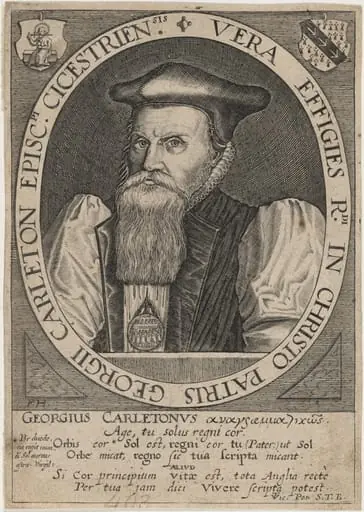
This 1620 engraving by Frederik van Hulsen depicts George Carleton, Bishop of Chester, in formal ecclesiastical attire. Rendered in monochrome, the portrait emphasizes detail through fine linear work typical of early 17th-century printmaking. The composition is centered and restrained, with no decorative elements beyond the subject’s clothing and inscribed text, reflecting the solemnity of his office.
Subject & Meaning
Carleton is portrayed as a senior churchman of the Anglican hierarchy, his age and gravity conveyed through a long white beard, furrowed brow, and tightly closed lips. The chain around his neck likely signifies a mark of office or honor. The Latin inscriptions identify him and affirm his ecclesiastical status, reinforcing the portrait’s function as a formal record rather than a personal likeness.
Technique & Style
Van Hulsen employed fine, controlled engraving lines to model the bishop’s face and robe, creating depth through cross-hatching and stippling. The plain background isolates the figure, directing attention to facial texture and the folds of fabric. The precision of the lines reflects the technical discipline of copperplate engraving, a method valued for its clarity and reproducibility in portraiture.
History & Provenance
Created in 1620, the print likely served to circulate Carleton’s image among clergy and patrons, a common practice for bishops of the period. Its survival suggests it was preserved in ecclesiastical or private collections. No record of its original commission exists, but its format aligns with contemporary printed portraits used for institutional recognition.
Context
In early 17th-century England, engraved portraits of clergy were tools of authority and memory, especially after the Reformation when visual representation of church leaders became more prominent. Carleton’s image, like others of the time, reflects the Church of England’s effort to project stability and continuity through standardized, dignified imagery.
Legacy
The engraving remains a primary visual source for Carleton’s appearance and the aesthetic norms of Anglican ecclesiastical portraiture. It contributes to the broader archive of early modern print culture, illustrating how religious figures were visually documented and disseminated before the advent of photography.
Artist & collection