Artwork
Falls of Niagara
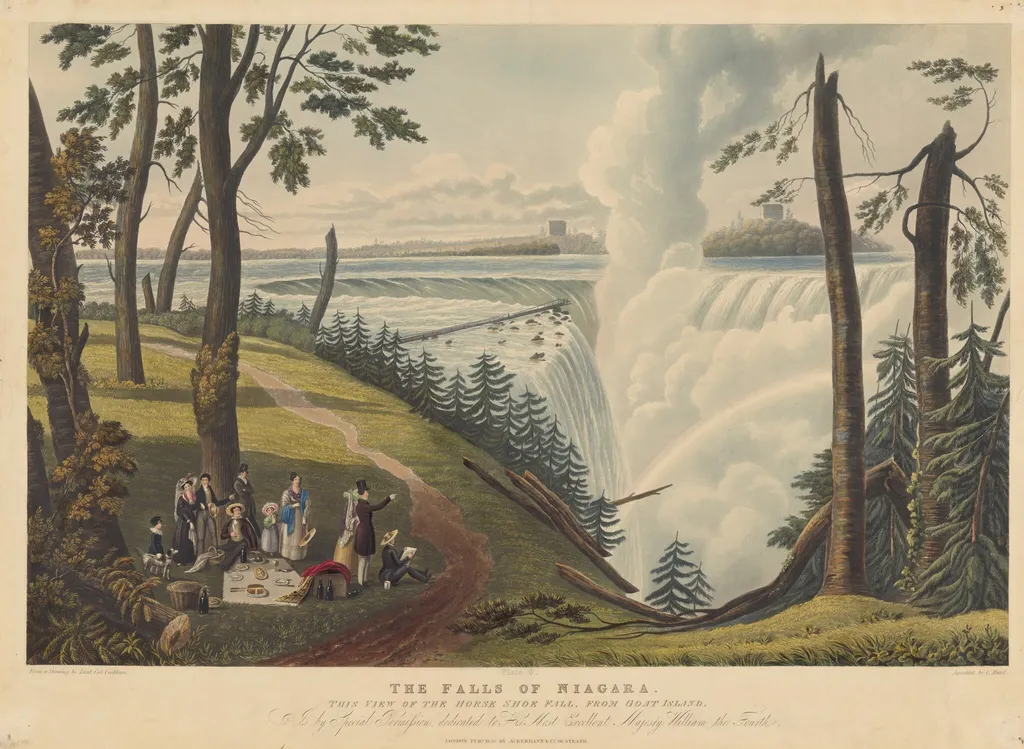
Falls of Niagara is an ink print by the Romanticist artist Charles Hunt. It dates from 1833 and is held in the collection of the National Gallery of Art.
About this work
That means it started as a metal plate, then ink was pushed into tiny dots.
You see a print of Niagara Falls in 1833. The water looks soft, almost like lace. The colors are muted—pinks and grays—because it’s an old print.
This is an aquatint with hand coloring. That means it started as a metal plate, then ink was pushed into tiny dots. Someone later painted color on top. It’s not a photo. It’s a careful guess at what the falls looked like then.
Try looking up another print by Hunt, Charles.
Overview
Charles Hunt’s 1833 aquatint titled “Falls of Niagara” presents an early nineteenth‑century view of the famous waterfall. Executed on wove paper, the print combines a tonal aquatint base with hand‑applied color, resulting in a subdued palette of pinks and grays that softens the cascade’s appearance.
Subject & Meaning
The image captures the Niagara Falls as a natural spectacle, emphasizing the delicate, lace‑like quality of the falling water. By rendering the scene in muted tones, Hunt conveys a romanticized atmosphere rather than a strictly documentary record, inviting viewers to contemplate the sublime character of the landscape.
Technique & Style
Hunt employed the aquatint process, etching a metal plate to create a network of fine dots that hold ink and produce tonal gradations. After printing, the work was hand‑colored, a common practice that allowed for individualized hues and enhanced depth. The combination yields a soft, atmospheric effect characteristic of early 19th‑century printmaking.
History & Provenance
Created in 1833, the print reflects contemporary European interest in North American scenery. While the original plate’s whereabouts are unclear, surviving impressions are held in several museum collections, documenting Hunt’s role in disseminating images of the falls during a period of growing transatlantic travel and curiosity.
Context
During the 1830s, Niagara Falls became a popular subject for artists and travelers, symbolizing both natural power and the promise of the New World. Hunt’s work aligns with the Romantic tradition that favored emotive landscapes, and its hand‑colored aquatint format catered to a market eager for affordable yet visually appealing depictions.
Artist & collection

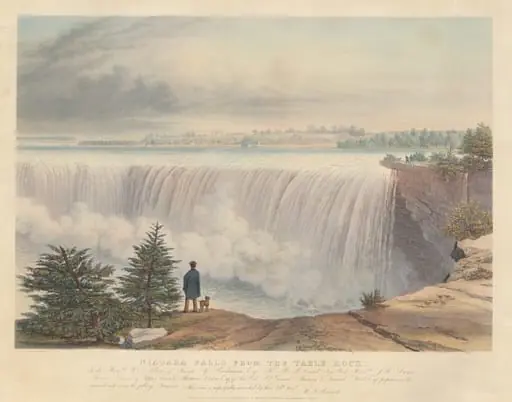 Niagara Falls from the Table Rock
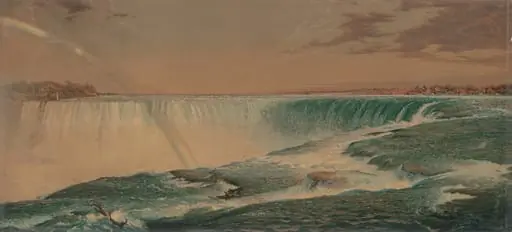 The Great Fall, Niagara
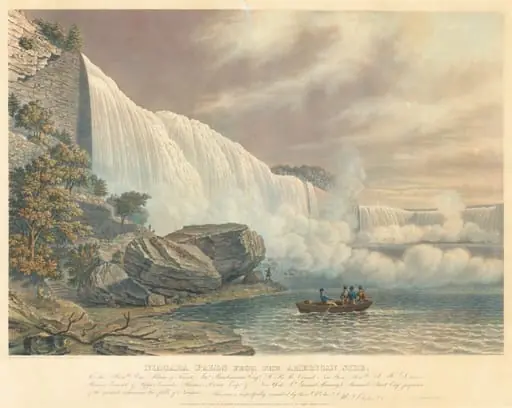 Niagara Falls from the American Side
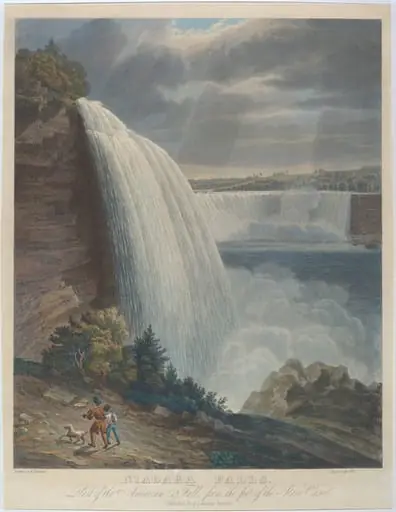 Niagara Falls from Foot of Staircase
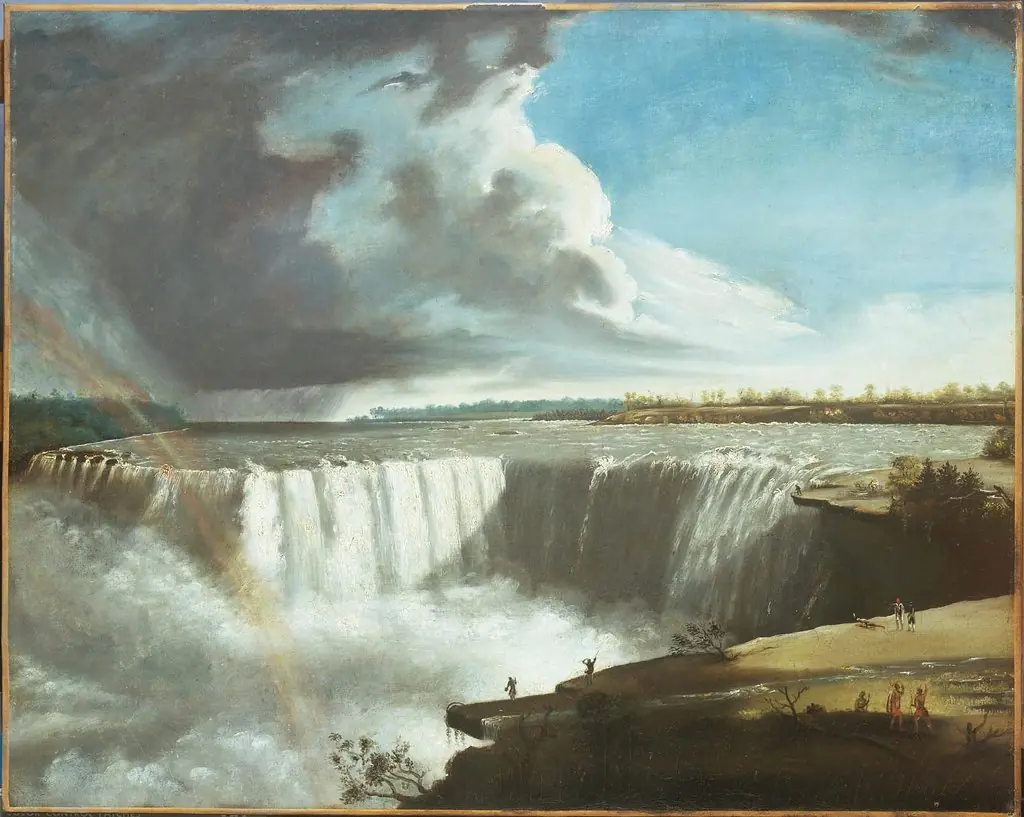 Niagara Falls from Table Rock
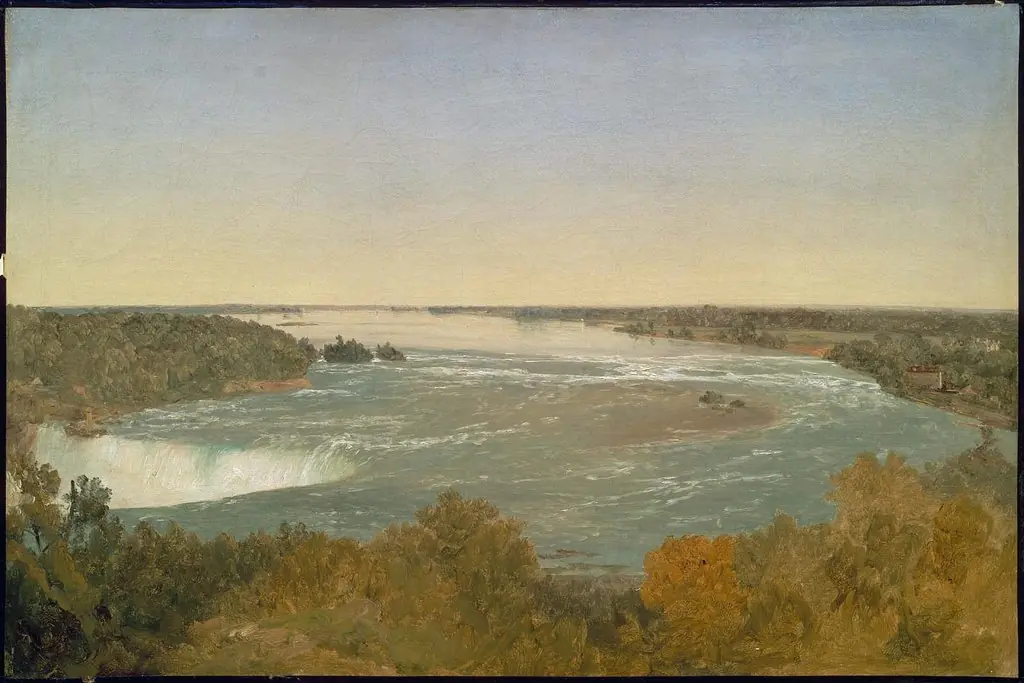 Niagara Falls and the Rapids
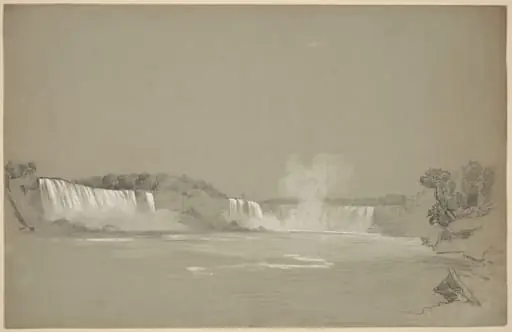 Niagara Falls
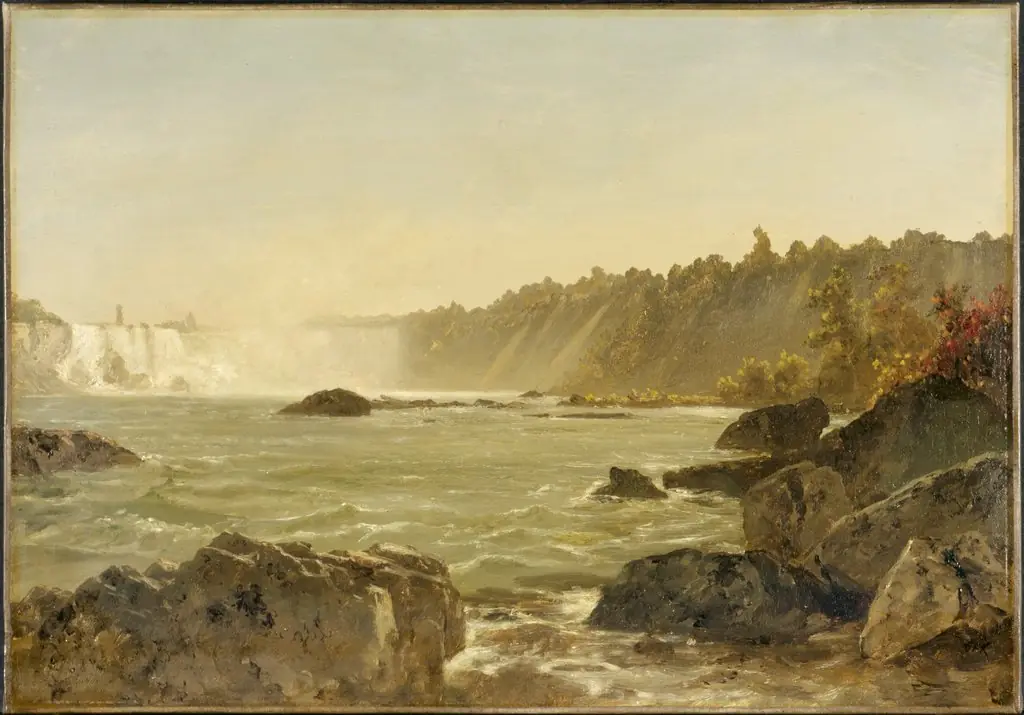 View of Niagara Falls
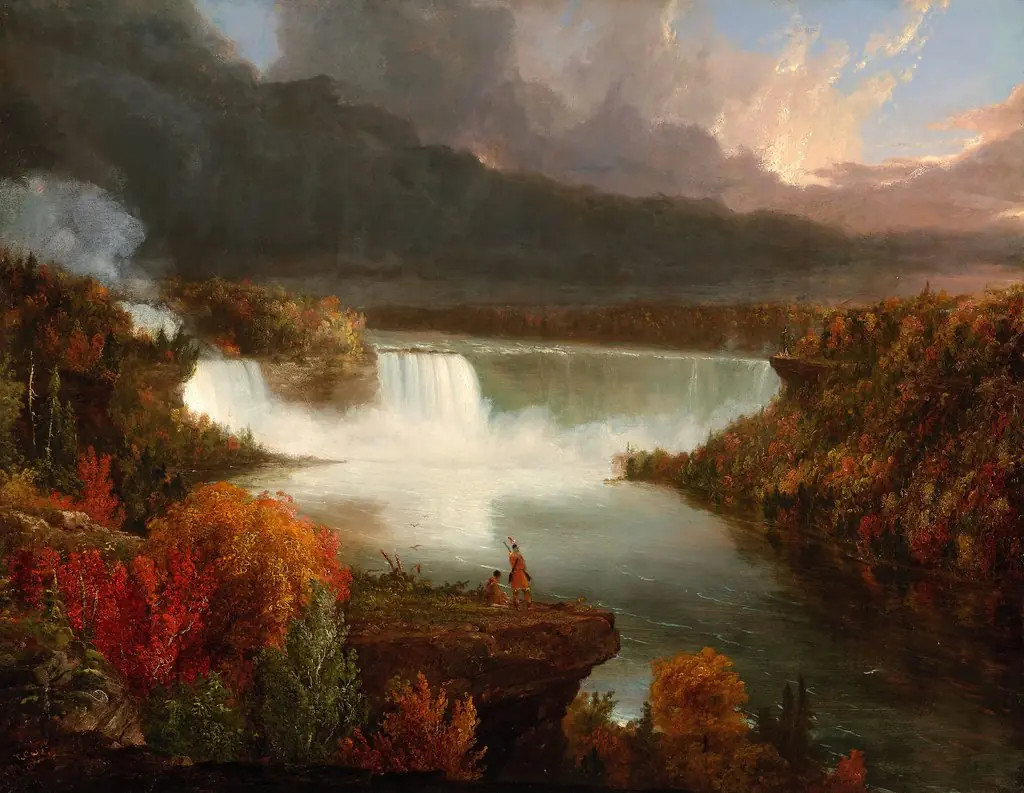 Distant View of Niagara Falls
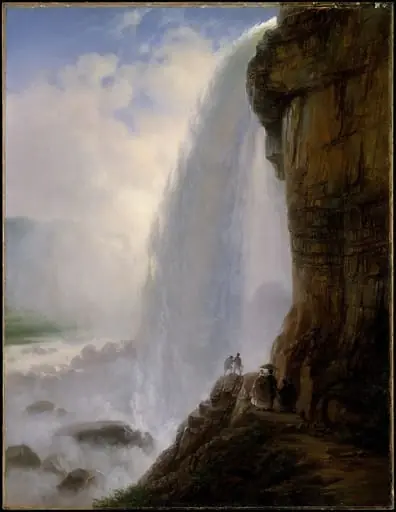 Underneath Niagara Falls
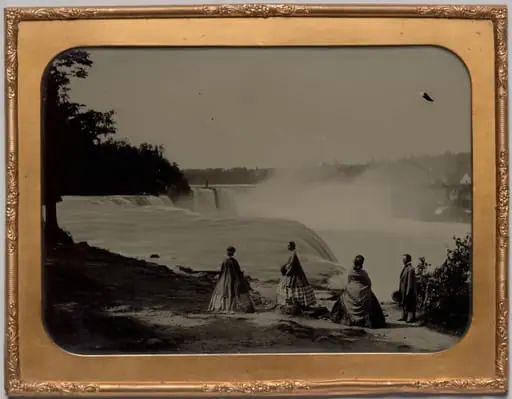 Niagara Falls with well-dressed group
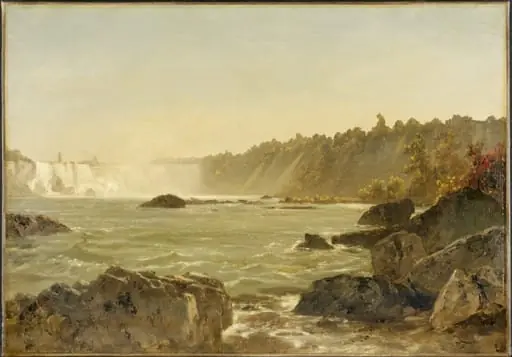 View of Niagara Falls
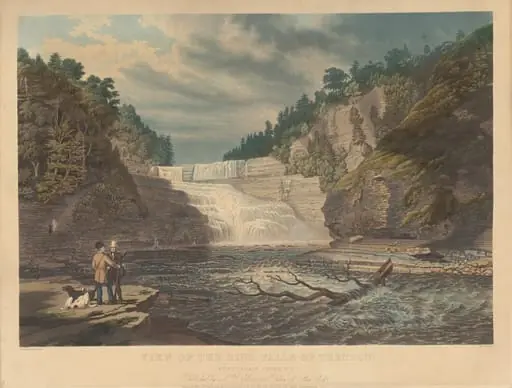 View of the High Falls of Trenton: West Canada Creek, N.Y.
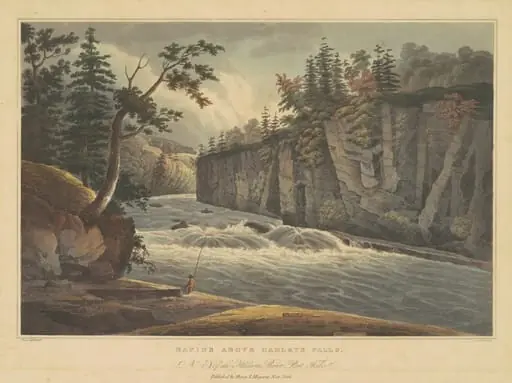 Rapids Above Hadley's Falls
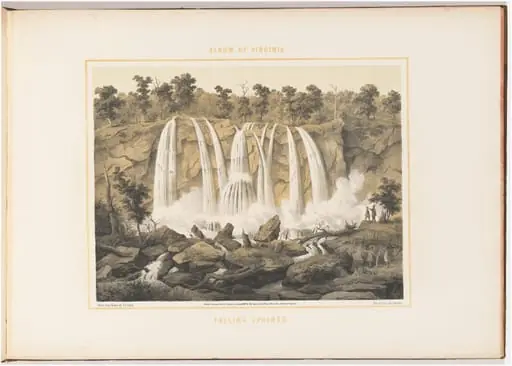 Falling Springs
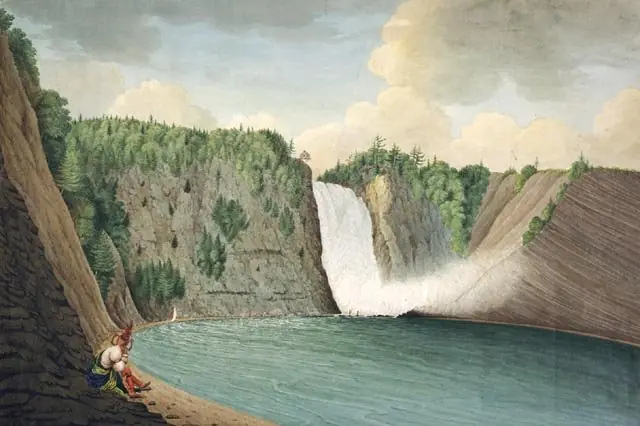 A View of the Montmorency Falls near Quebec
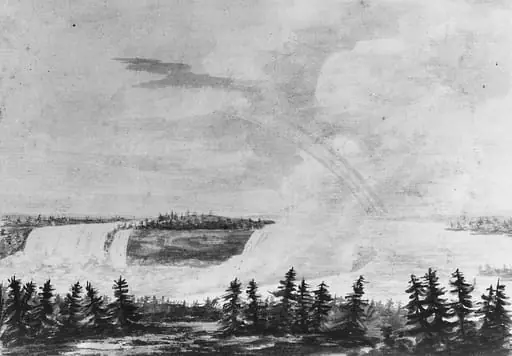 The Falls of Niagara (Copy after an Engraving in The Port Folio Magazine, March 1810)
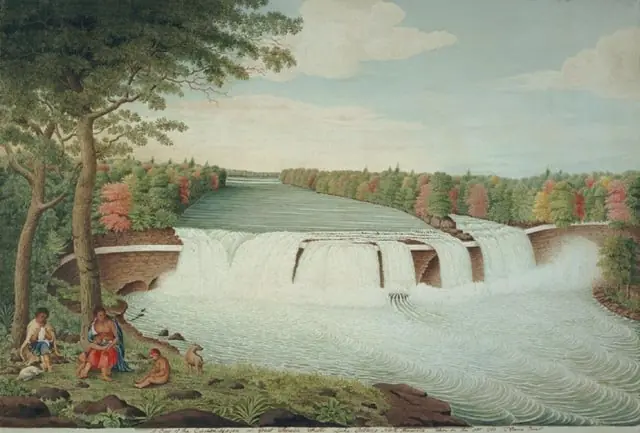 A View of the Casconchiagon or Great Seneca Falls, Lake Ontario, North America, Taken on the Spot 1766