Artwork
The Falls of Niagara (Copy after an Engraving in The Port Folio Magazine, March 1810)
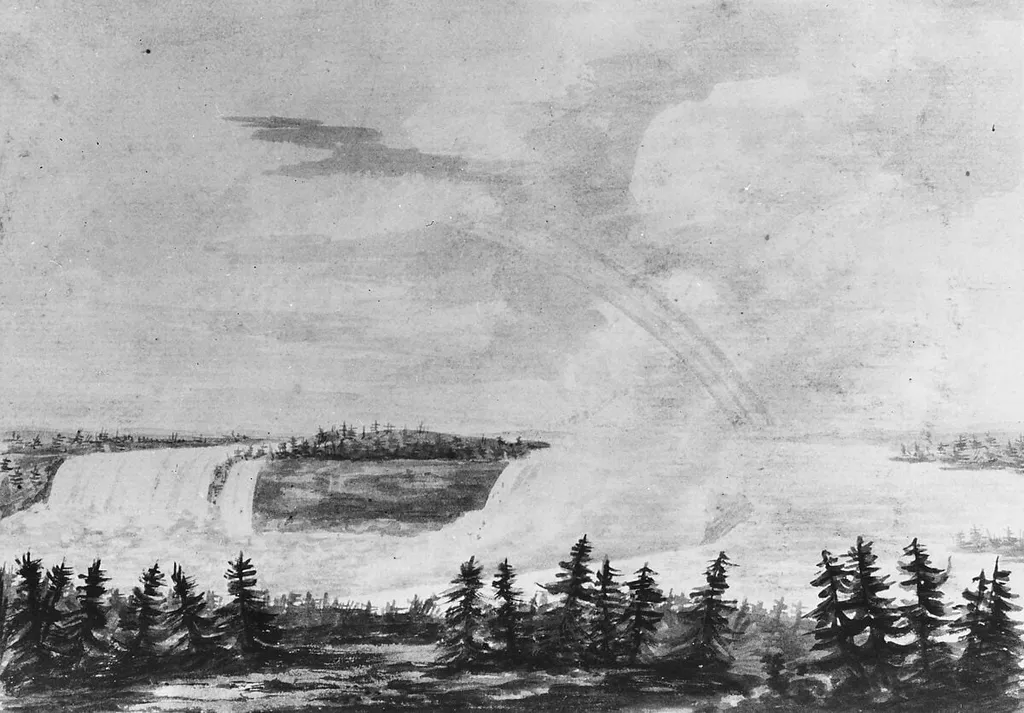
The Falls of Niagara (Copy after an Engraving in The Port Folio Magazine, March 1810) is a watercolor work on paper by the American Folk Art artist Pavel Petrovich Svinin|Alexander Wilson. It dates from 1811 and is held in the collection of the Metropolitan Museum of Art. Created around 1811, this watercolor by Pavel Petrovich Svinin belongs to the American Wing collection.
About this work
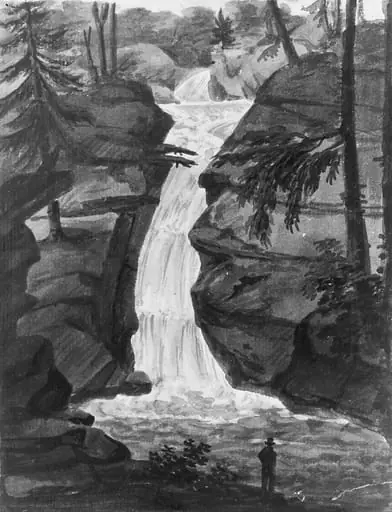
You see a bright watercolor of Niagara Falls: white water crashes over dark rocks, trees cling to the cliffs, and tiny people stand at the edge.
You see a bright watercolor of Niagara Falls: white water crashes over dark rocks, trees cling to the cliffs, and tiny people stand at the edge.
This painting is actually a copy of a printed engraving from 1810. The artist never saw the falls in person—he worked from a magazine picture. That makes it feel a little stiff, like a postcard.
If you like how watercolor builds light in layers, look up glazing.
Overview
Created around 1811, this watercolor by Pavel Petrovich Svinin belongs to the American Wing collection. Executed on white laid paper with watercolor and gouache, it reproduces an engraving that appeared in the March 1810 issue of The Port Folio. The image presents a panoramic view of Niagara Falls, rendered in a bright, layered palette.
Subject & Meaning
The composition centers on the powerful cascade of Niagara’s white water tumbling over dark, jagged rock faces. Clinging trees line the cliffs, and diminutive figures are positioned at the water’s edge, emphasizing the scale of the natural spectacle. The work conveys both the grandeur of the falls and the human fascination with witnessing such a force.
Technique & Style
Svinin employed watercolor and gouache in successive glazes, building luminosity through transparent layers. The approach yields a crisp delineation of rock and water, while the applied gouache adds opacity to the foreground foliage and figures. The overall effect is precise yet somewhat flat, reflecting the artist’s reliance on a printed source rather than direct observation.
History & Provenance
The piece is a direct copy of an engraving published in The Port Folio magazine in March 1810. Svinin never visited Niagara; his rendering is based solely on that printed image. The work entered the museum’s American Wing collection as part of a broader acquisition of early 19th‑century European depictions of American landscapes.
Context
During the early 1800s, European artists frequently reproduced American scenes from printed accounts, catering to a growing curiosity about the New World. This watercolor exemplifies that trend, illustrating how travel narratives and magazine engravings served as primary visual references for artists unable to journey abroad.
Artist & collection

Artist
Pavel Petrovich Svinin|Alexander Wilson
Pavel Petrovich Svinin loved to copy. In 1811 he traced a magazine print of Niagara Falls, blew it up in watercolor, and painted it on paper so tourists could hang it on their walls. He never saw the falls himself—just…

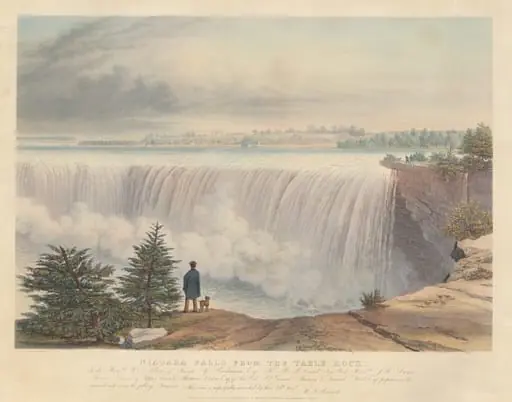 Niagara Falls from the Table Rock
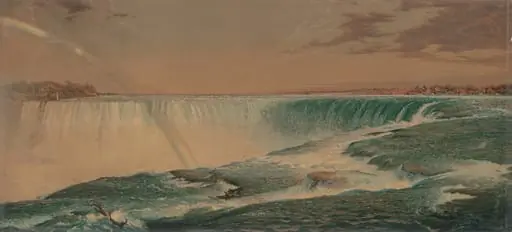 The Great Fall, Niagara
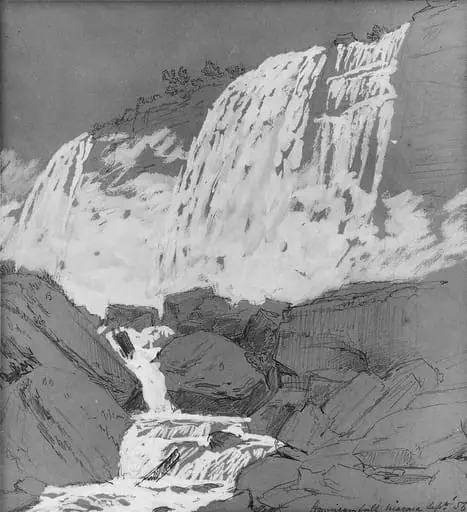 American Falls, Niagara
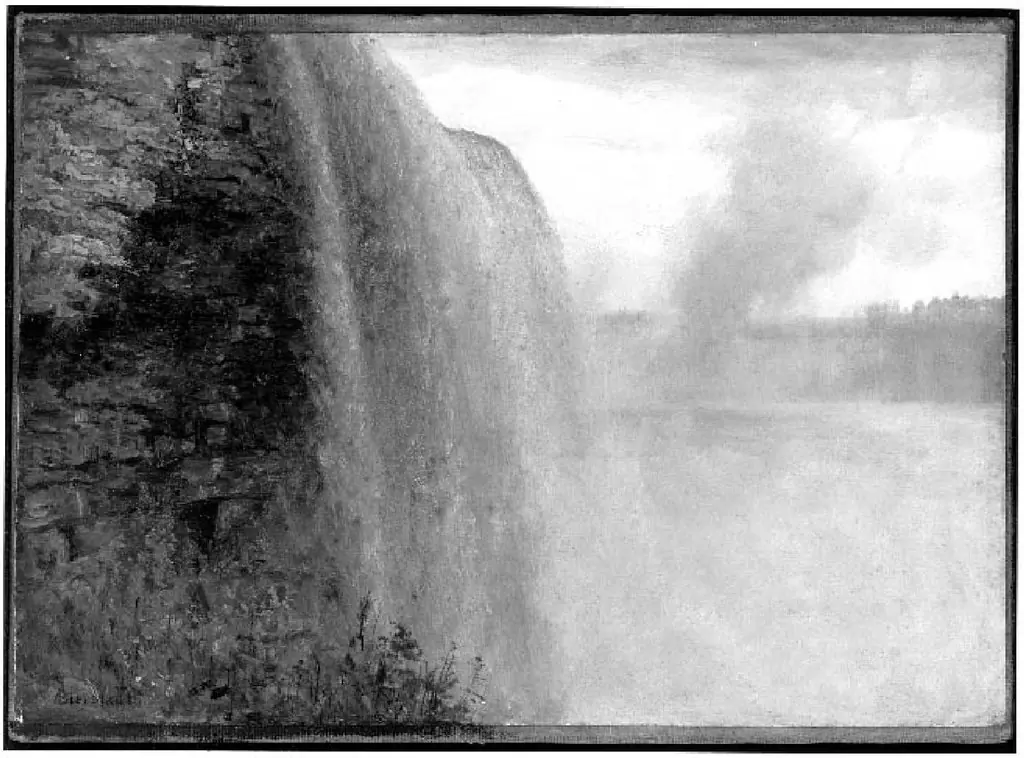 Niagara from the American Side
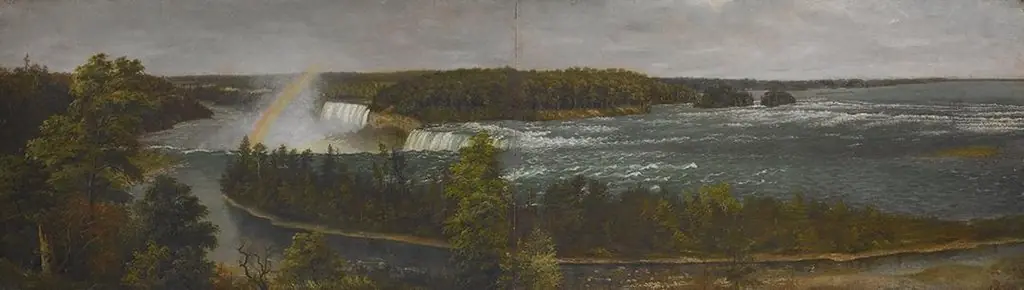 Niagara and the Rapids
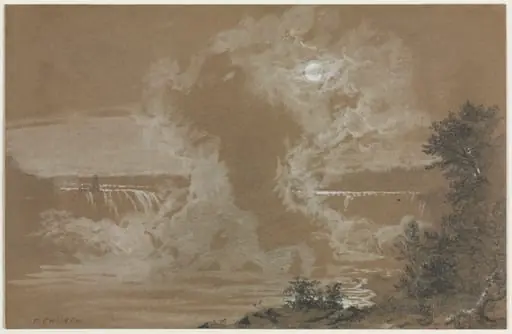 Niagara Falls by Moonlight
 Niagara Falls and the Rapids
 View on the Hudson River (Copy after Engraving by Weld and S. Springsguth in Weld, Travels Through the States of North America, 1807)
 Niagara Falls
 Niagara Falls from the American Side
 Upper Falls of Solomon's Creek (after an Engraving in The Port Folio Magazine, December 1809)