Artwork
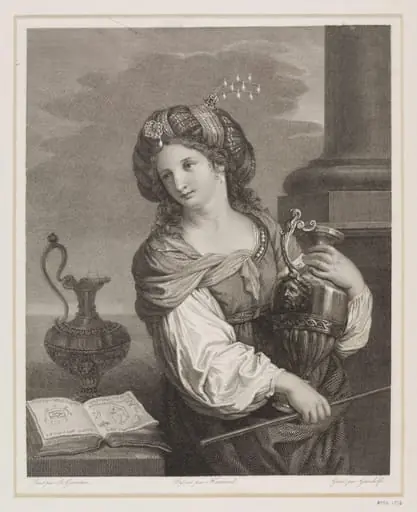
The Goldsmith's Daughter
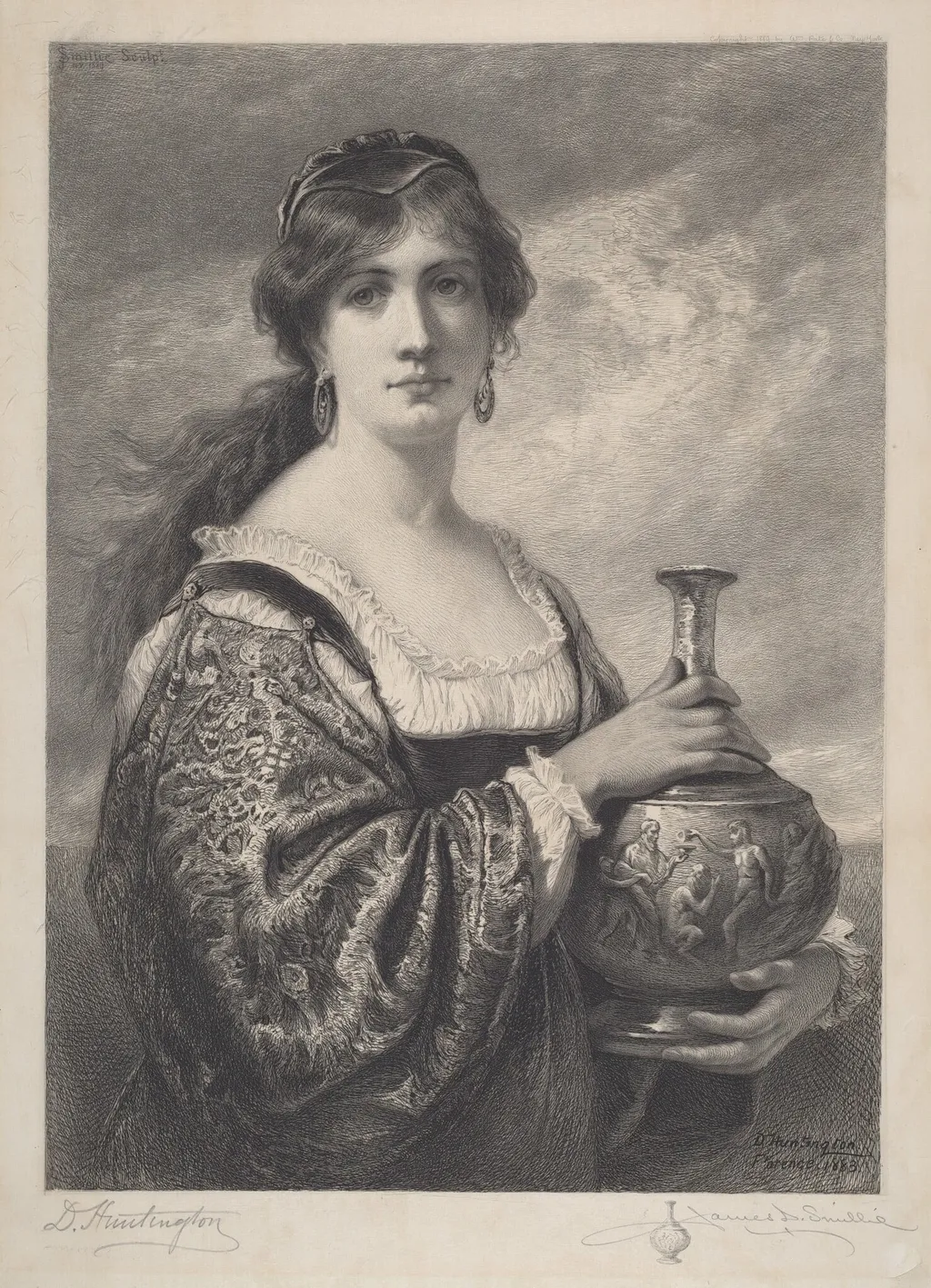
The Goldsmith's Daughter is an ink print by the Impressionist artist Daniel Huntington. It dates from 1889 and is held in the collection of the National Gallery of Art.
About this work
Overview
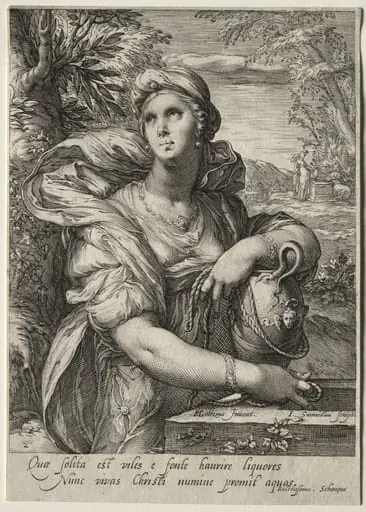
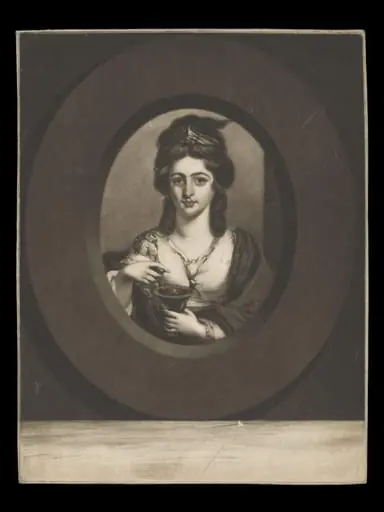
The Goldsmith’s Daughter is a print created in 1889 by American artist Daniel Huntington. Executed through a combination of etching, drypoint, and engraving, the work presents a single figure—a woman—holding an elaborately carved vase. The composition is rendered in monochrome, emphasizing line and tonal variation.
Subject & Meaning
The central figure is a woman with her hair pulled back, dressed in a high‑necked gown trimmed with lace and patterned detailing. She cradles a large, ornate vase, her hands resting gently upon it, suggesting a moment of quiet contemplation or a domestic ritual linked to the craft of goldsmithing.
Technique & Style
Huntington employed multiple intaglio processes: etching for broader tonal areas, drypoint for fine, velvety lines, and engraving for precise, crisp edges. The varied shading gives the dress and vase a palpable texture, creating a subtle illusion of three‑dimensional form within the flat plane of the print.
History & Provenance
The work was produced in the late nineteenth century, a period when Huntington, known primarily for his historical paintings, explored printmaking. Details of its ownership trail are limited, but the piece is catalogued among Huntington’s printed oeuvre and appears in several museum collections.
Context
Created during a revival of interest in traditional crafts, the image reflects contemporary fascination with artisanal labor and the aesthetic of the decorative arts. The title references the daughter of a goldsmith, aligning the subject with the material culture of metalwork and fine ornamentation prevalent in the era.
Artist & collection

Artist
Daniel Huntington (October 4, 1816 – April 19, 1906) was an American artist who belonged to the art movement known as the Hudson River School and later became a prominent portrait painter.