Artwork
Untitled
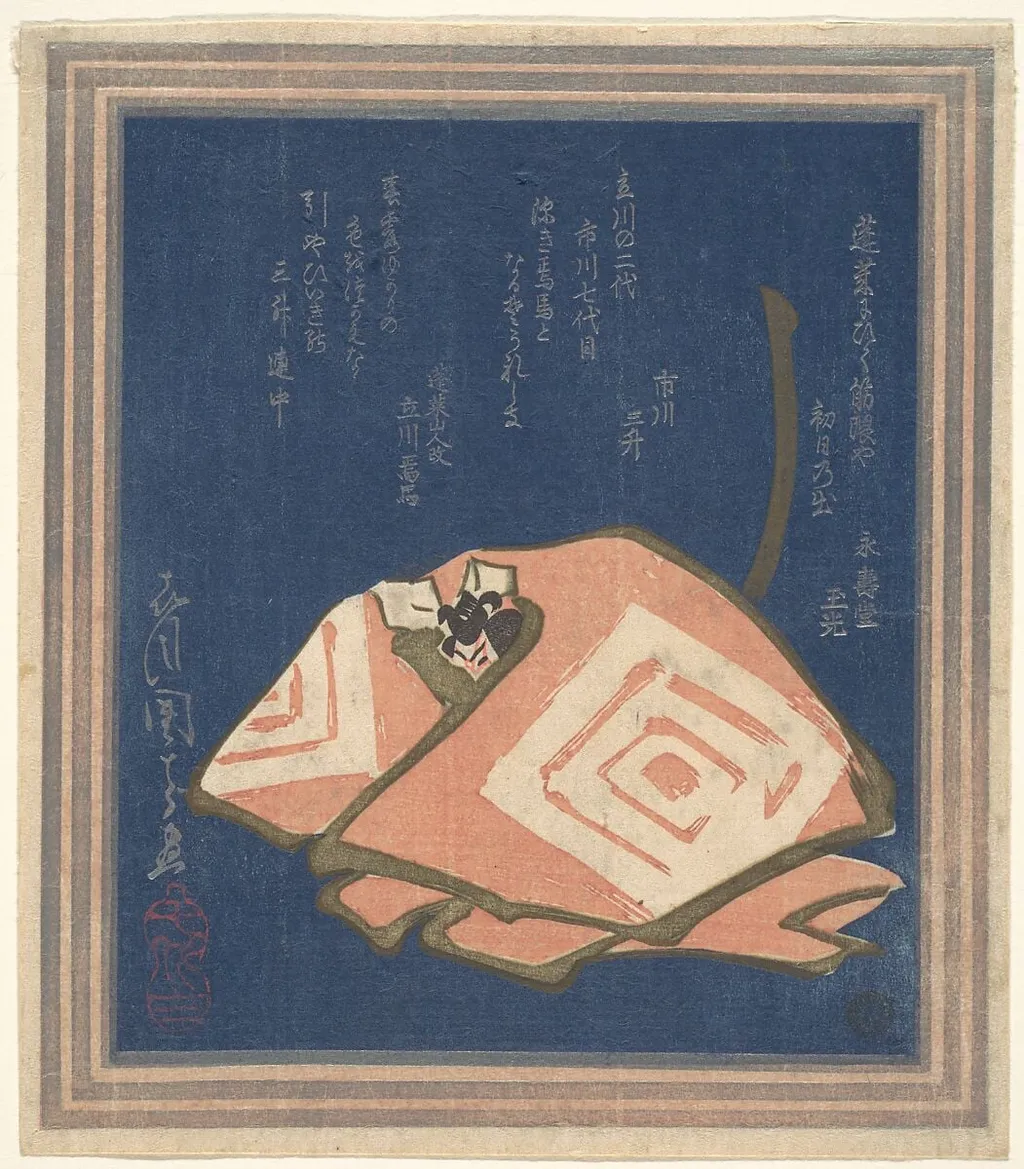
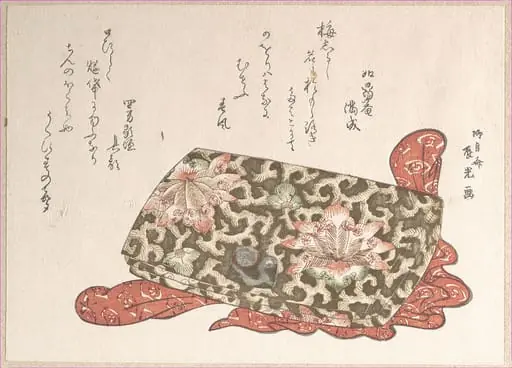
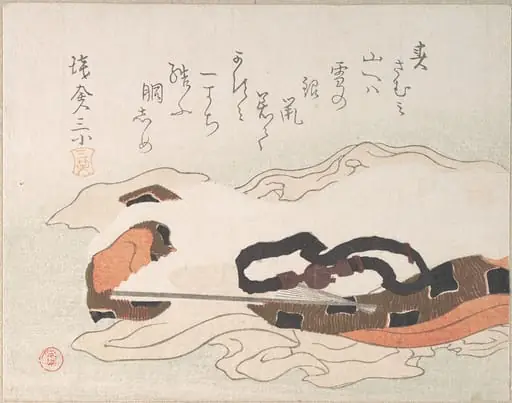
Untitled is an ink print by the Romanticist artist Ichikawa Danjūrō VII. It dates from 1825 and is held in the collection of the Metropolitan Museum of Art. This woodblock print, dated 1825, is a surimono—a privately commissioned print typically produced for seasonal or ceremonial occasions.
About this work
Overview
This woodblock print, dated 1825, is a surimono—a privately commissioned print typically produced for seasonal or ceremonial occasions.
This woodblock print, dated 1825, is a surimono—a privately commissioned print typically produced for seasonal or ceremonial occasions. Created by the actor Ichikawa Danjūrō VII, it features a folded cloth rendered in ink and color on paper. The Metropolitan Museum of Art holds the work, which exemplifies the refined aesthetic of early 19th-century Japanese print culture, blending simplicity with symbolic depth.
Subject & Meaning
The central motif is a folded cloth, its white surface marked by a square and bound with a plain rope. The deep blue background and sparse black ink suggest abstraction rather than literal representation. Japanese calligraphy encircles the image, likely containing poetic or ritual text. The object may symbolize purity, ritual offering, or theatrical props, evoking themes of ceremony and transience common in Edo-period aesthetics.
Technique & Style
Executed in the surimono tradition, the print employs precise woodblock carving and hand-coloring to achieve sharp contours and subtle tonal variation. Bold, unmodulated colors contrast with delicate ink details, enhancing the cloth’s illusion of volume. The composition is minimal, relying on negative space and clean lines to convey form, reflecting the influence of ukiyo-e conventions adapted for intimate, elite audiences.
History & Provenance
Produced in 1825, the print was likely commissioned by a patron connected to Ichikawa Danjūrō VII, possibly for a theatrical celebration or New Year’s gift. As a surimono, it was not mass-produced but circulated among connoisseurs. It entered the collection of The Metropolitan Museum of Art in the 20th century, preserved as an example of actor-centered print culture in late Edo Japan.
Context
Surimono prints emerged in the late 18th century as luxury items, often commissioned by poetry circles or theater patrons. Unlike commercial ukiyo-e, they prioritized artistic experimentation and literary allusion. Ichikawa Danjūrō VII, a celebrated kabuki actor, frequently appeared in such prints, linking performance culture with visual art. This work reflects the intersection of theater, poetry, and printmaking in Edo’s elite circles.
Legacy
Though not widely known outside specialist circles, this print exemplifies the quiet sophistication of surimono production. It preserves a moment when actor identity, poetic expression, and printmaking converged in private, non-commercial contexts. Its preservation in major collections underscores its value as a cultural artifact of Edo-period artistic refinement, rather than popular spectacle.
Artist & collection

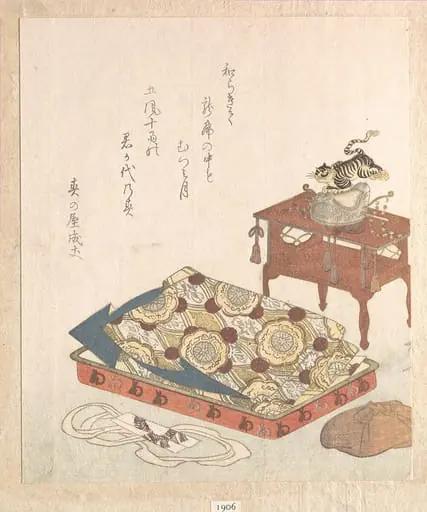 舞楽衣装『春雨集』 摺物帖|Costume for Bugaku Court DanceFrom the Spring Rain Collection (Harusame shū), vol. 1
 Untitled
 Untitled
 Untitled
 Untitled
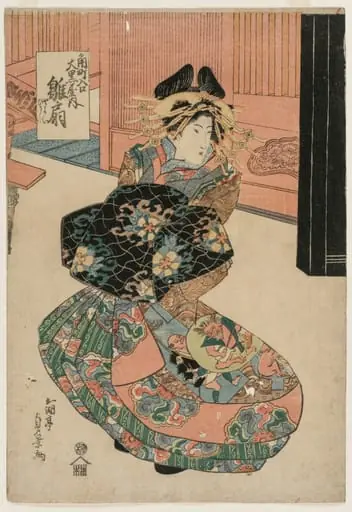 The Courtesan Hinaogi of the Daikokuya at the Entrance of Kadomachi
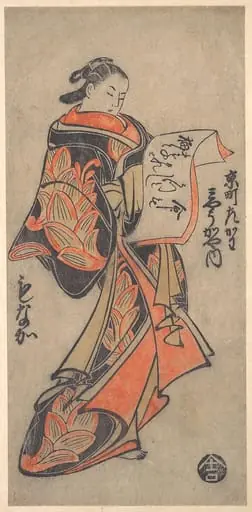 Untitled
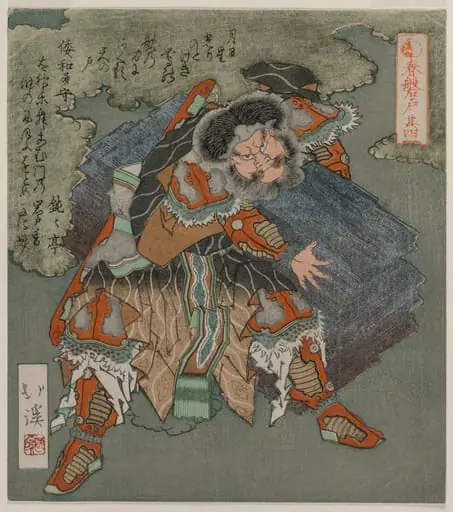 Ama no Tajikara no Mikoto from The Cave Door of Spring
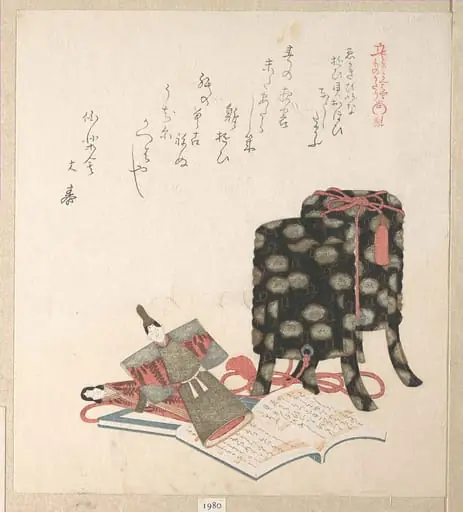 Untitled
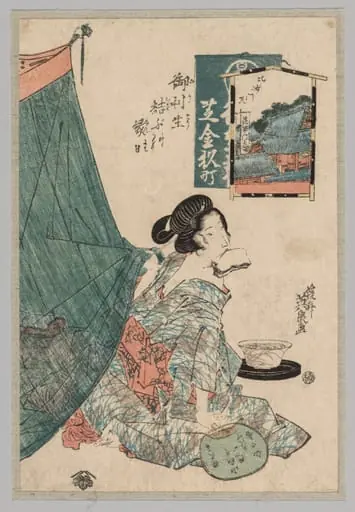 Woman with Papers in Mouth and Fan in Hand
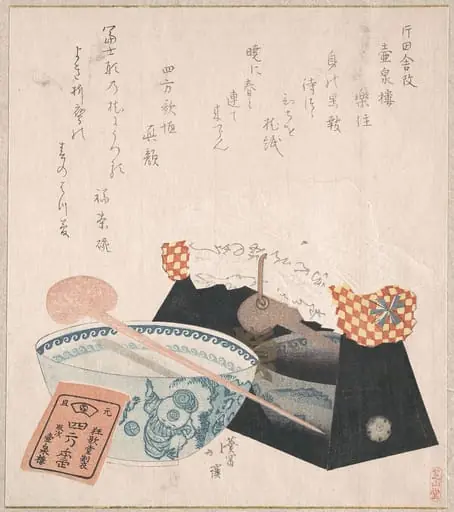 Untitled
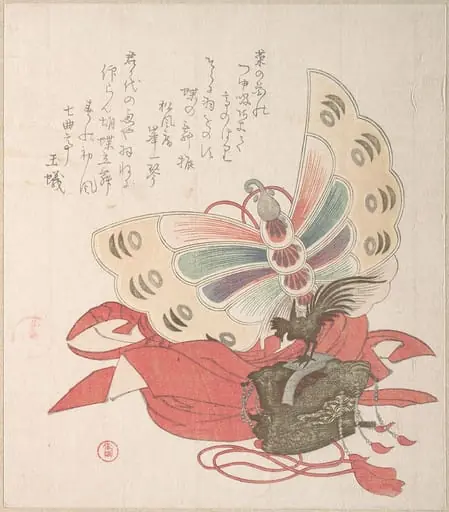 『春雨集』 摺物帖窪俊満画 胡蝶舞の衣装|Spring Rain Collection (Harusame shū), vol. 2: Costume for the Butterfly Dance (Kochō no mai)