Artwork
Untitled
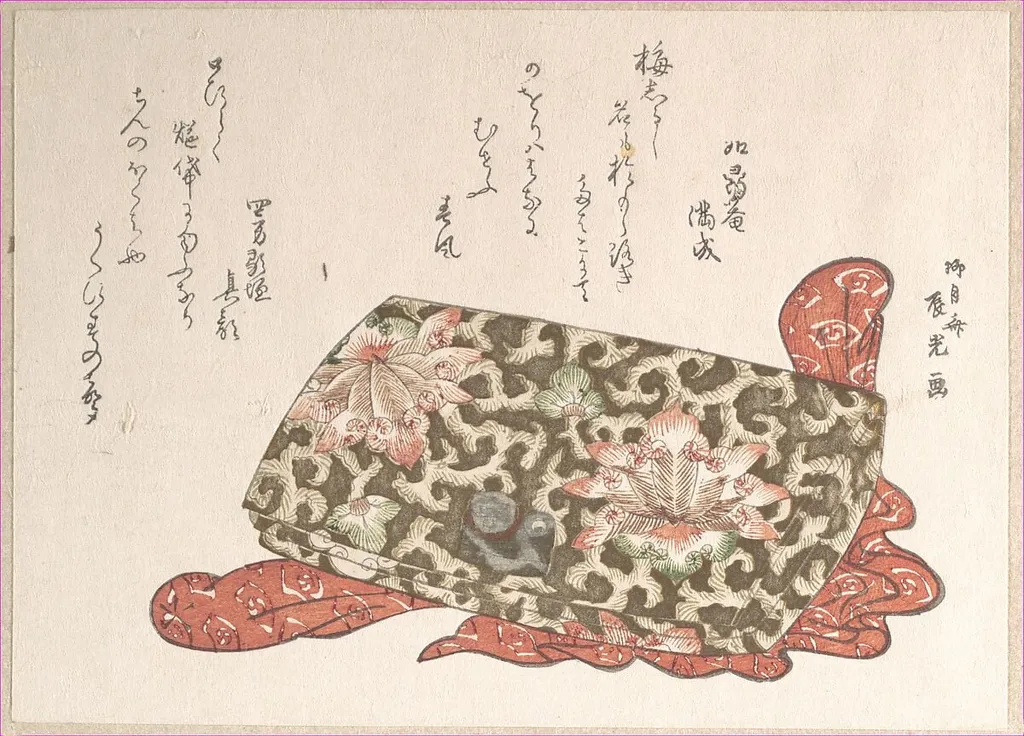
Untitled is an ink print by the Romanticist artist Ryūgetsusai Shinkō. It dates from 1814 and is held in the collection of the Metropolitan Museum of Art.
About this work
Overview
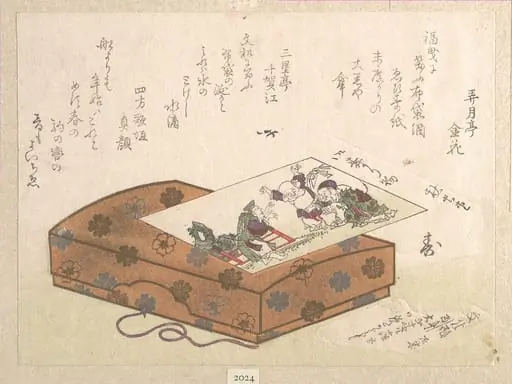
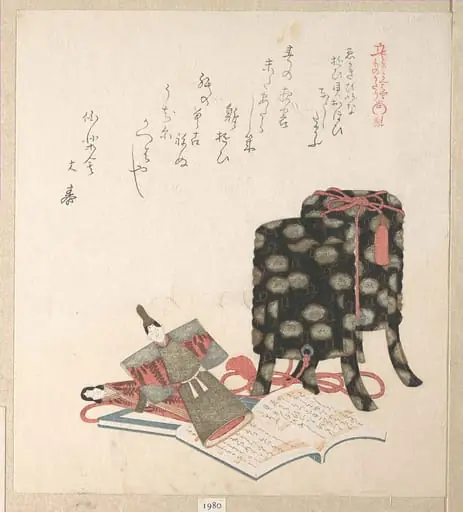
This woodblock print, created around 1814 by Ryūgetsusai Shinkō, is a surimono—a privately commissioned print often produced for special occasions. Made with ink and color on paper, it depicts a single ornate box resting on a folded red cloth. The composition is intimate and restrained, emphasizing texture and detail over narrative. It is part of the collection at The Metropolitan Museum of Art.
Subject & Meaning
The surrounding Japanese script, written in black ink, may contain a poem or inscription, common in surimono to convey seasonal or personal sentiment.
The subject is a small, decorated box, likely intended as a container for poetry slips or ceremonial objects. Its surface is densely patterned with floral motifs and tiny blue accents, suggesting luxury and care. The surrounding Japanese script, written in black ink, may contain a poem or inscription, common in surimono to convey seasonal or personal sentiment. The box’s placement on a crumpled cloth implies a moment of quiet reverence.
Technique & Style
The print employs fine woodblock carving to render intricate surface patterns and subtle textures. Soft tones of brown, green, and red dominate, with selective use of bright blue for contrast. The red cloth is rendered with delicate folds and creases, achieved through careful ink gradation and line work. Cross-hatching and fine linework enhance the illusion of material depth, reflecting the precision typical of high-quality surimono production.
History & Provenance
Produced in the early 19th century during the Edo period, this print was likely commissioned by a member of the literati or a poetry circle. Surimono were not sold publicly but distributed as gifts among patrons and artists. The work entered The Metropolitan Museum of Art’s collection through documented acquisitions of Japanese prints, preserving its original context as a refined, non-commercial object.
Context
Surimono emerged as a niche art form among Japan’s educated elite, blending poetry, calligraphy, and printmaking. Unlike mass-produced ukiyo-e, these prints were limited in number and often featured experimental techniques. This work reflects the cultural value placed on subtlety, seasonal themes, and tactile beauty, aligning with aesthetic ideals of wabi-sabi and refined understatement in Edo-period Japan.
Legacy
Though not widely known outside specialist circles, this print exemplifies the quiet sophistication of Edo-period private printmaking. Its preservation in a major museum underscores its significance as a cultural artifact of refined taste. It continues to inform contemporary studies of Japanese print techniques and the intersection of visual art with literary expression in pre-modern Japan.
Artist & collection

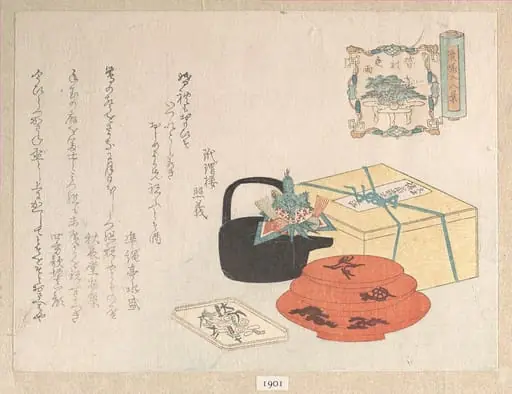 Untitled
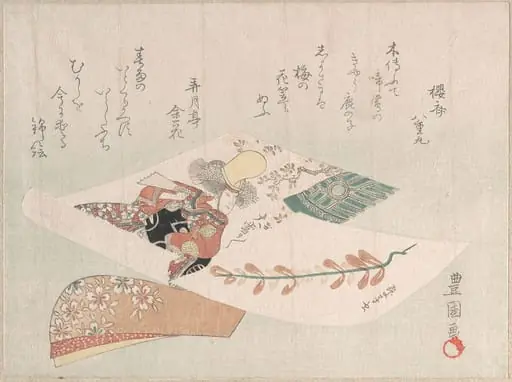 Untitled
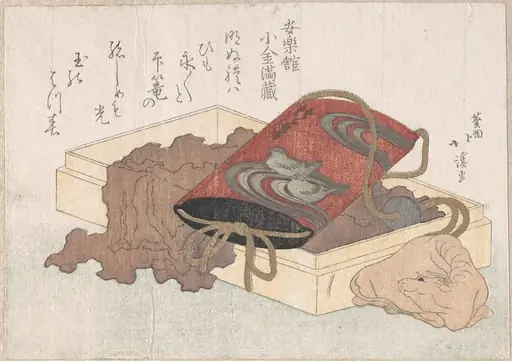 印籠と牛根付『春雨集』 摺物帖|Lacquer Inrō with Waterbirds and Ox-shaped Netsuke in a BoxFrom the Spring Rain Collection (Harusame shū), vol. 3
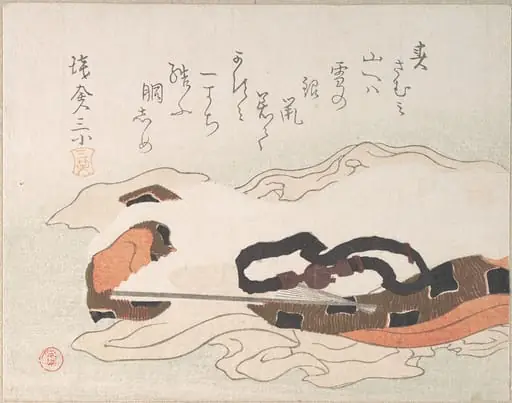 Untitled
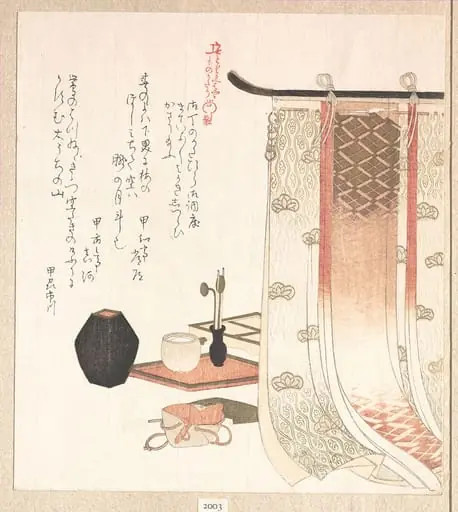 Untitled
 Untitled
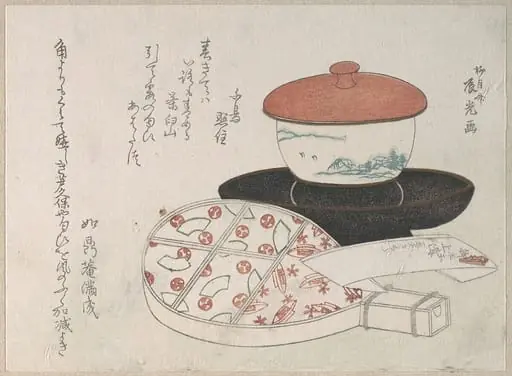
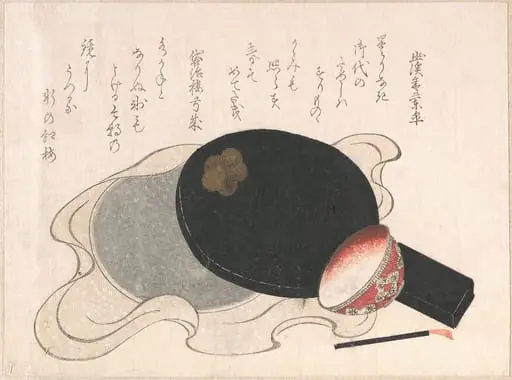
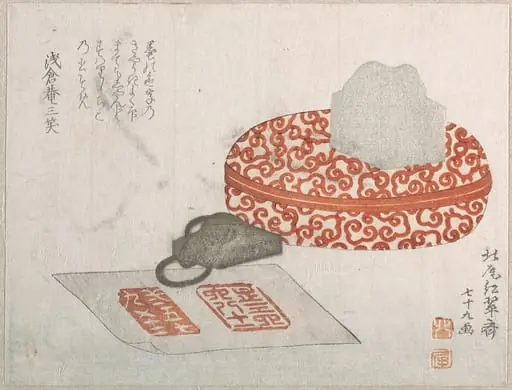 判子と赤肉箱|Seals and a Carved Lacquer Container for Seal Ink
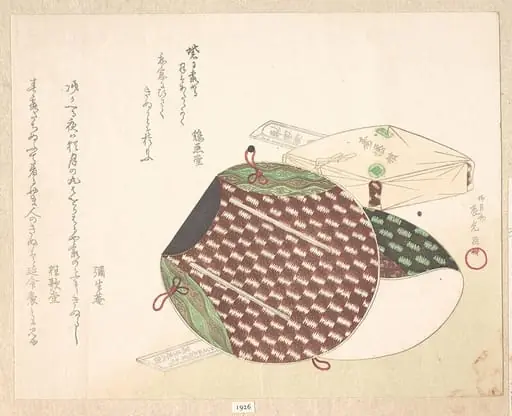
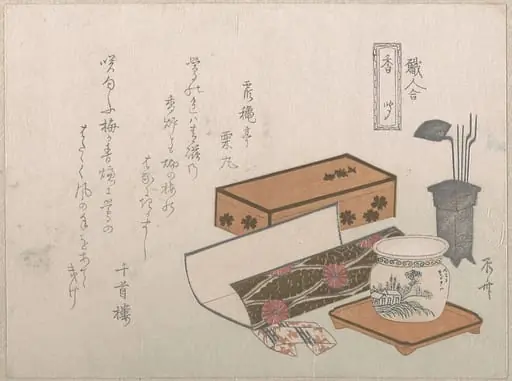 「職人合香聞 」|Utensils for the Incense Ceremony, “Incense Master” (Kōgiki), from the series An Array of Artisans
 Untitled
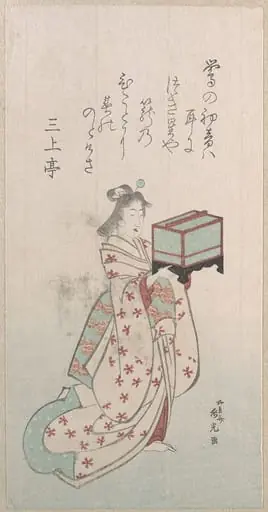
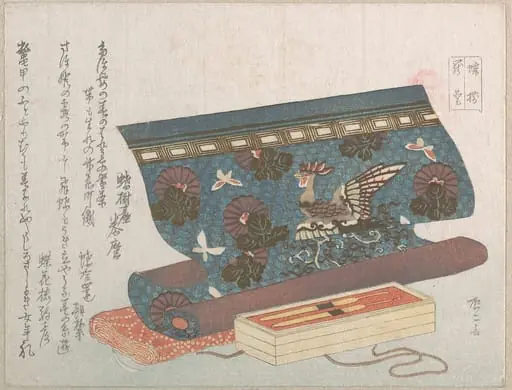 『蝶揃・寵愛』帯と簪|Roll of Cloth for an Obi and Tortoise-shell Hair Ornaments (“Presents for One’s Beloved”), from the Butterfly Series, from Spring Rain Surimono Album (Harusame surimono-jō, vol. 3)
 Untitled
 Untitled