Artwork
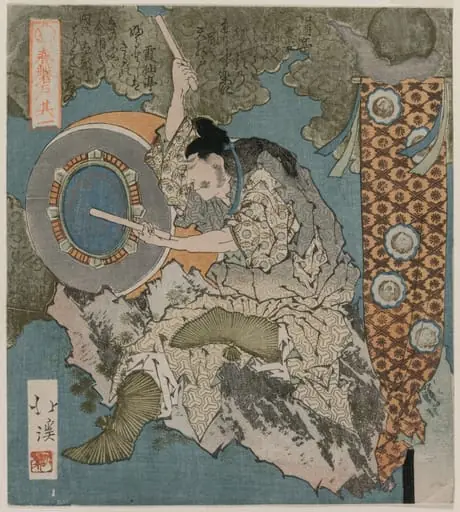
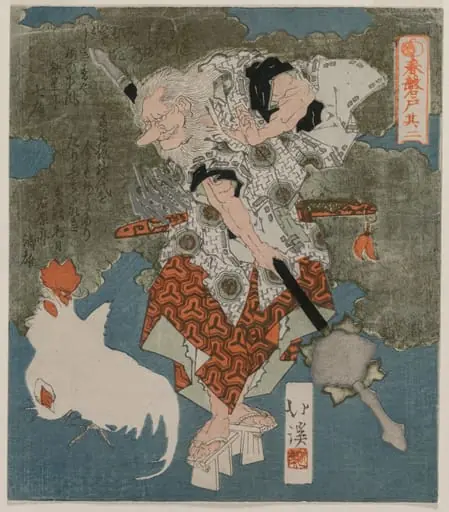
Ama no Tajikara no Mikoto from The Cave Door of Spring
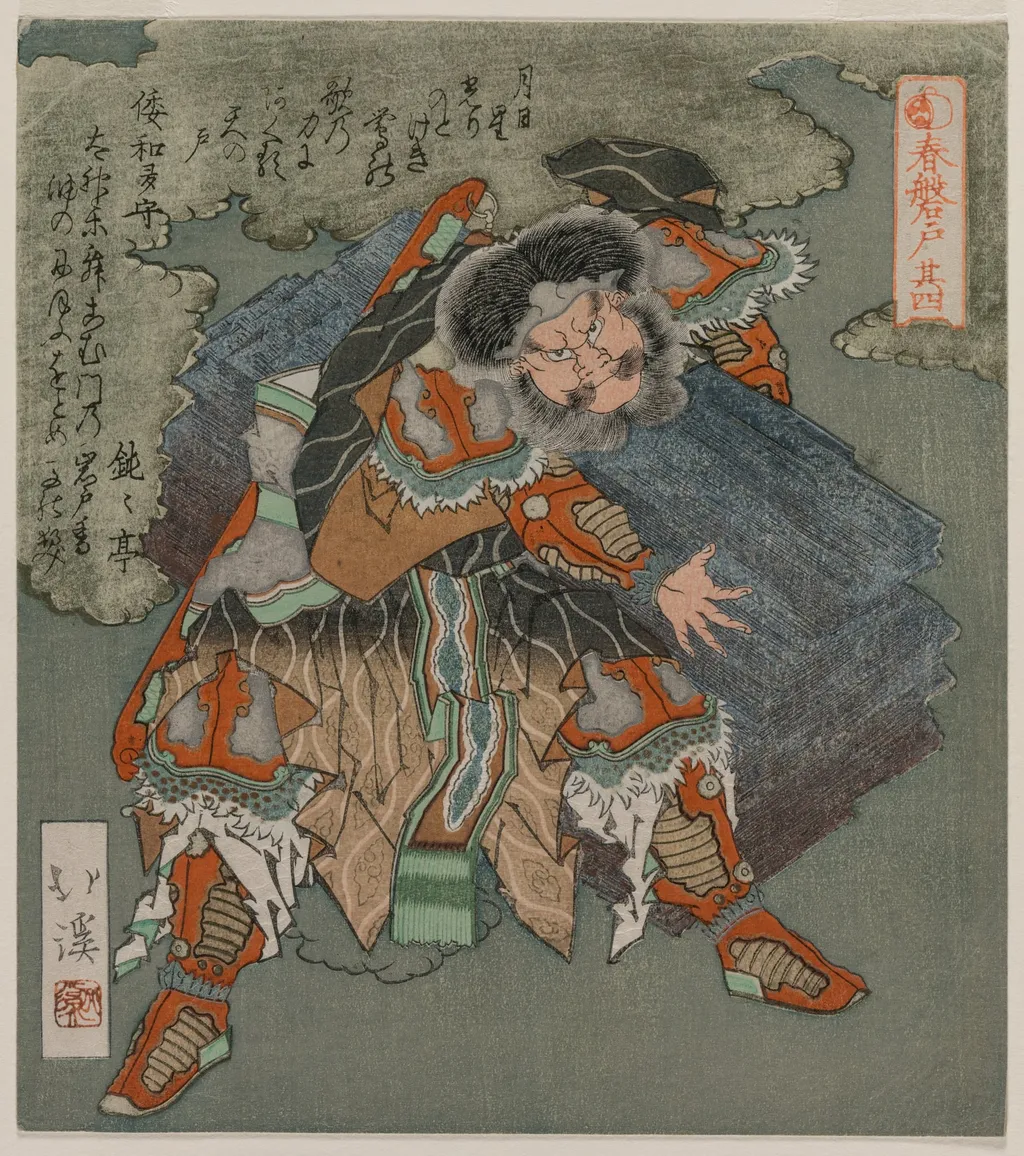
Ama no Tajikara no Mikoto from The Cave Door of Spring is a print by the Romanticist artist Totoya Hokkei. It dates from 1825 and is held in the collection of the Cleveland Museum of Art.
About this work
The story behind this image is interesting - Amaterasu was offended by her brother and hid in a cave, causing darkness on earth.
This painting shows a scene from Japanese mythology.
It depicts a moment from the legend of Amaterasu, the Shinto Sun Goddess.
The story behind this image is interesting - Amaterasu was offended by her brother and hid in a cave, causing darkness on earth.
The attempts to lure her out were creative, with music and dance.
A mirror hung from a tree finally caught her attention.
This legend is still part of Japanese culture.
You can learn more about this style by looking at the work of artist: Totoya Hokkei (Japanese, 1780–1850)
Overview
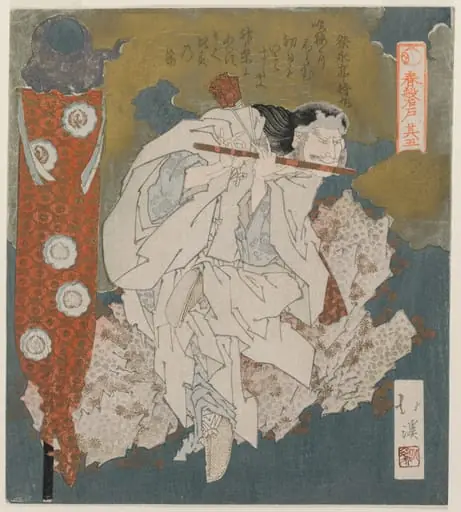
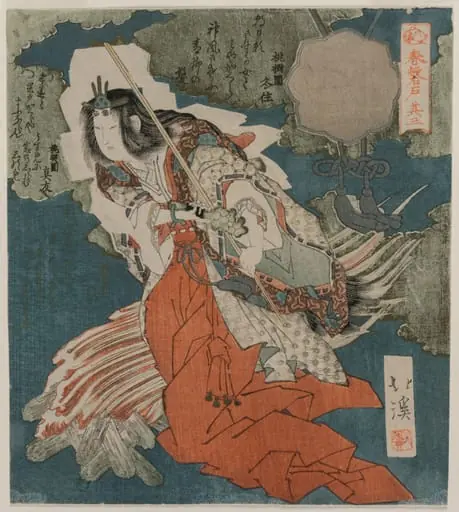
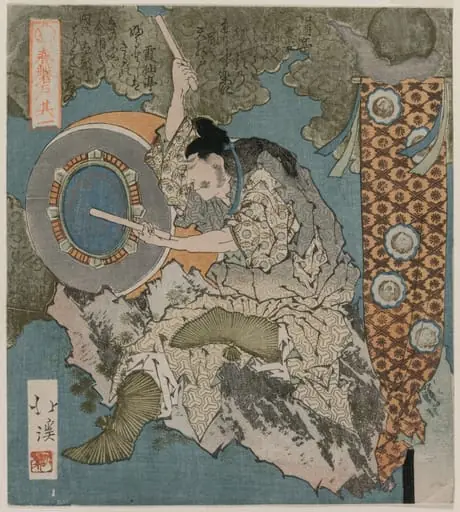
A print from a set of five images, Ama no Tajikara no Mikoto from The Cave Door of Spring illustrates a scene from Japanese mythology.
Subject & Meaning
The image depicts a moment from the legend of Amaterasu, the Shinto Sun Goddess, who hid in a cave after being offended by her brother, causing darkness on earth. The scene is part of the story where attempts are made to lure her out.
Technique & Style
The print is set against a blue evening sky with embossed clouds enriched with gold, silver, and copper, showcasing a distinctive style characteristic of Japanese surimono prints.
Context
The legend of Amaterasu remains significant in Japanese culture, and this print is an interpretation of that myth, likely influenced by the work of artists such as Totoya Hokkei.
Own this work as a print
Artist & collection
Artist
Totoya Hokkei (魚屋 北渓; 1780–1850) was a Japanese artist best known for his prints in the ukiyo-e style.