Artwork
Portret de bătrână
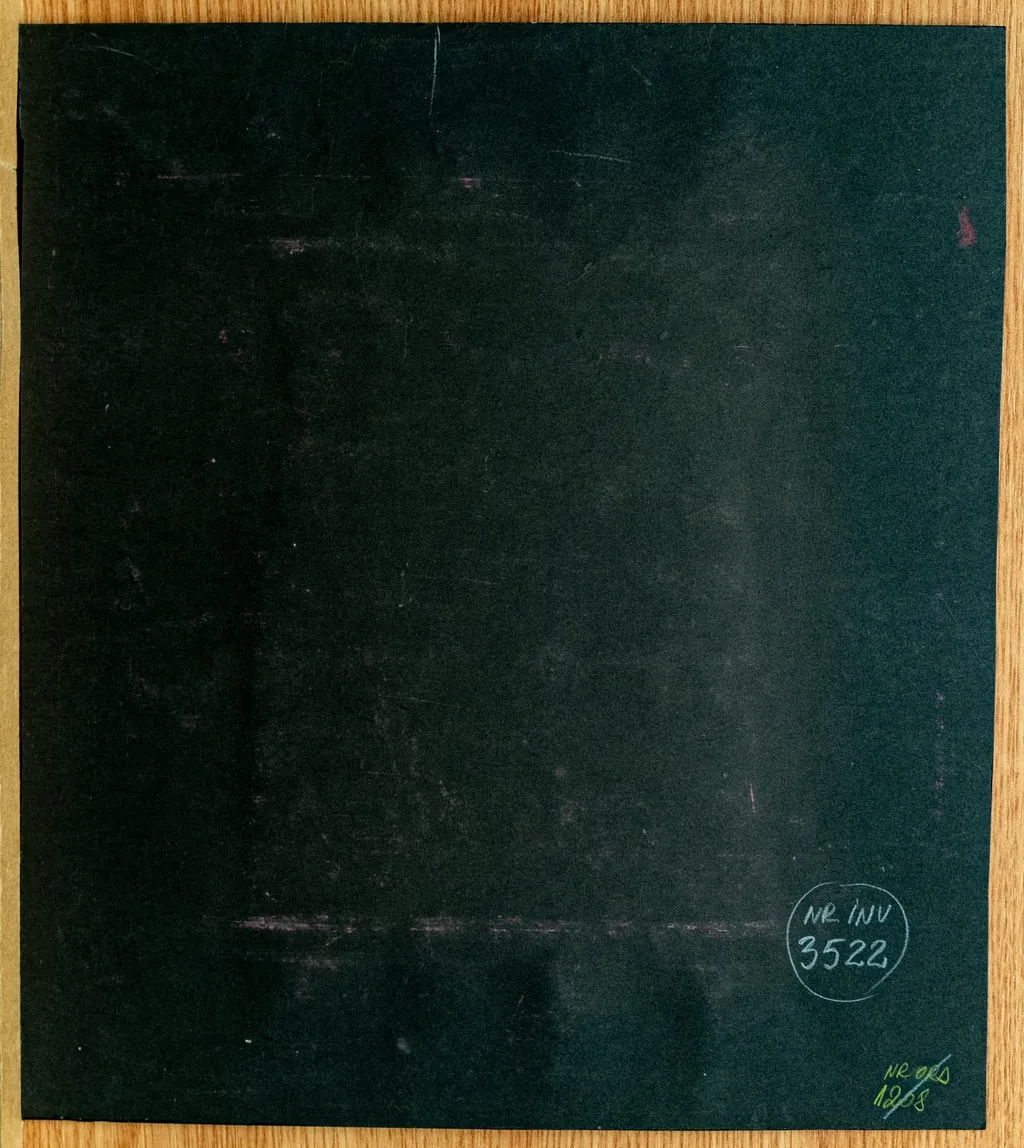
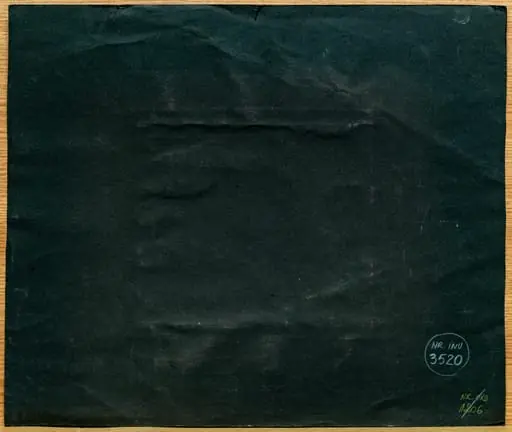
Portret de bătrână is a print by Eugenia Iftodi. It is held in the collection of the Gavrila Simion Eco-Museum Research Institute Tulcea. This image is a photograph of a small, damaged sheet of paper or cardboard, dominated by a blackened square with faint surface scratches.
About this work
The handwritten text in the corner adds to the sense of authenticity and suggests that the image may be a record of some kind.
The image shows a black square with a few faint marks and scratches on it. There is a circular stamp in the bottom-right corner with the text "NR INV 3522" inside it. In the bottom-right corner, there is also some handwritten text that reads "NR 1268".
The image appears to be a photograph of a piece of paper or cardboard with some markings on it. The circular stamp suggests that it may be some kind of official document or certificate. The handwritten text in the corner adds to the sense of authenticity and suggests that the image may be a record of some kind.
If you're interested in learning more about the artist behind this image, you might want to look up Iftodi, Eugenia.
Overview
This image is a photograph of a small, damaged sheet of paper or cardboard, dominated by a blackened square with faint surface scratches. A circular stamp in the lower right bears the inscription 'NR INV 3522,' indicating institutional cataloging. Adjacent to it, handwritten numerals 'NR 1268' suggest an additional archival reference. The object appears to be a documentation fragment rather than an artistic composition, possibly linked to a collection or inventory system.
Subject & Meaning
The blackened square and scattered marks offer no representational content. Its significance lies not in imagery but in its function as a physical artifact—likely a label, tag, or mount once attached to an artwork or document. The handwritten and stamped identifiers imply it served administrative purposes within a cultural institution, preserving traceable links to a larger collection.
Technique & Style
The surface shows signs of physical wear: abrasions, smudging, and fading. The black field may result from oxidation, adhesive residue, or deliberate darkening to obscure prior markings. The stamp is mechanically impressed, while the handwriting is casual and utilitarian. No artistic intent is evident; the visual qualities arise from handling, storage, and time.
History & Provenance
The stamp and handwritten numbers suggest this fragment originated from a museum or archive, possibly Romania’s National Museum of Art, given the reference to Eugenia Iftodi. It may have once secured or labeled a work now cataloged under INV 3522. The handwritten 'NR 1268' could denote an earlier inventory number, indicating reclassification over time.
Context
This object reflects the behind-the-scenes infrastructure of art institutions—labels, mounts, and inventory tags that ensure traceability. Such fragments are rarely preserved unless tied to notable figures or lost works. Its survival hints at the historical importance of Eugenia Iftodi’s work, which may have been cataloged under these numbers before being relocated or reclassified.
Legacy
Though devoid of visual artistry, the fragment endures as evidence of archival practice. It connects to Eugenia Iftodi’s oeuvre through institutional records, preserving the material trace of how her work was managed and remembered. Its value lies in its role as a silent witness to collection history, not aesthetic form.
Artist & collection
Artist
Eugenia Iftodi made prints and drawings of everyday life in mid-20th-century Romania.
Museum
Gavrila Simion Eco-Museum Research Institute Tulcea
Continue through works from the same source collection.