Artwork
Podeț
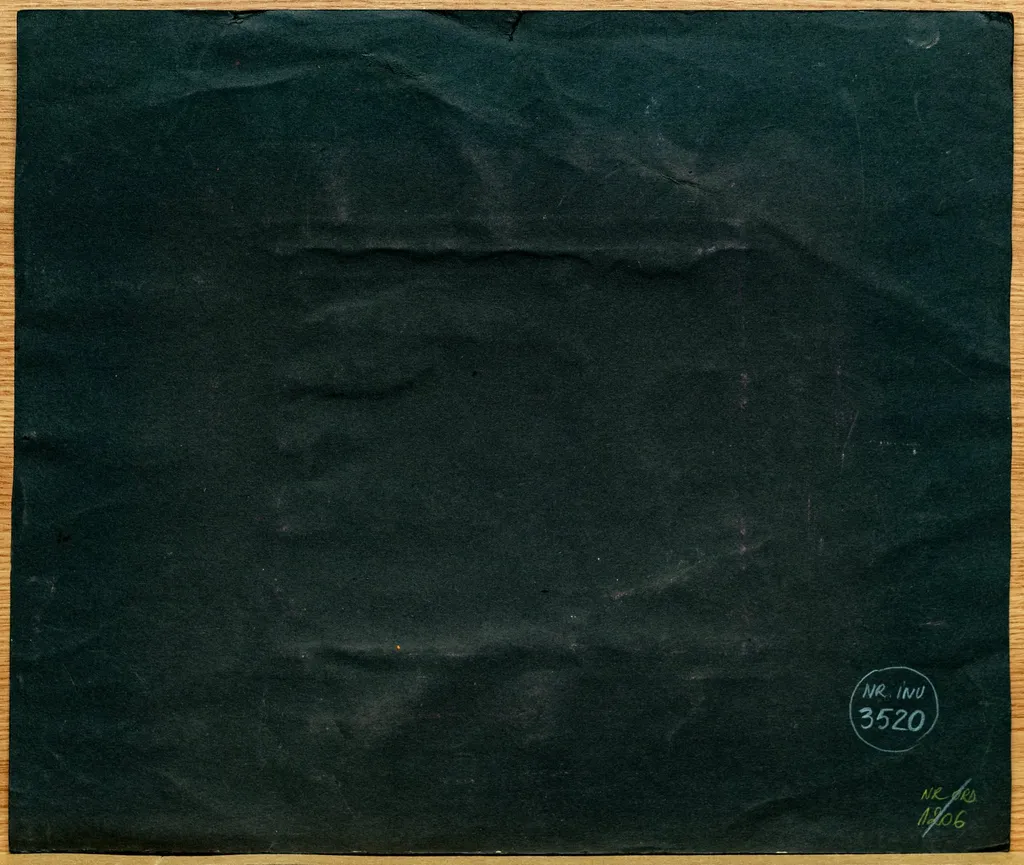
Podeț is a print by Eugenia Iftodi. It is held in the collection of the Gavrila Simion Eco-Museum Research Institute Tulcea.
About this work
Overview
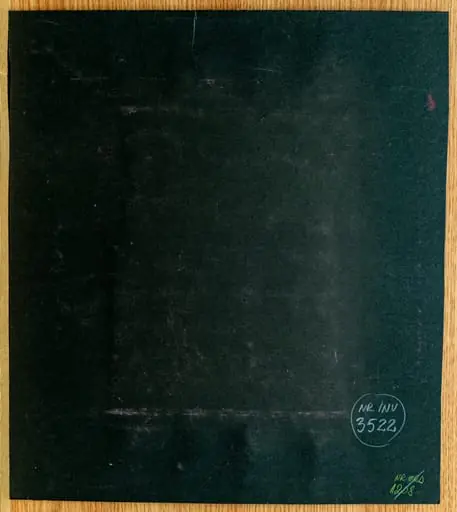
Podeț is a monochromatic print characterized by near-total darkness, with subtle surface irregularities suggesting texture rather than form.
Podeț is a monochromatic print characterized by near-total darkness, with subtle surface irregularities suggesting texture rather than form. The image lacks clear subject matter, relying instead on tonal nuance and material presence. A handwritten label in the corner provides minimal identification, reinforcing the work’s quiet, archival quality. Its title, meaning 'floodplain' in Romanian, implies a landscape absent from the visual field.
Subject & Meaning
Though titled after a natural geographical feature, Podeț offers no literal depiction of land or water. The absence of recognizable imagery invites contemplation of absence, memory, or erosion—themes resonant with the artist’s broader interest in quiet, overlooked environments. The work functions less as representation and more as an imprint of absence, echoing the quiet persistence of place beyond visible form.
Technique & Style
The print employs a minimalist approach, using dense black ink to create a field of near-uniform darkness. Faint smudges and unevenness suggest hand-applied pressure or altered surface texture, possibly from direct contact with a worn plate or improvised printing method. The style aligns with Eugenia Iftodi’s preference for restrained, material-driven processes that prioritize tactility over narrative.
History & Provenance
Podeț is part of a body of work by Eugenia Iftodi, documented in the collection of the Museum of Ethnography. Its production date and exhibition history remain unrecorded in public sources. The handwritten label indicates it was cataloged systematically, likely as part of a larger series of experimental prints made during the artist’s focus on non-representational forms in the late 20th century.
Context
Iftodi’s work emerged in a Romanian artistic climate where state-sponsored realism dominated. Her prints, including Podeț, diverged by embracing silence and ambiguity. These pieces were often made in private, shared among small circles, and rarely exhibited publicly. They reflect a quiet resistance to overt political imagery, favoring introspective materiality instead.
Legacy
Podeț exemplifies a strand of Romanian conceptual printmaking that prioritized process over product. Though not widely known outside regional circles, its influence persists in contemporary artists exploring the limits of visibility and the poetic potential of absence. The work remains a quiet reference point for those examining how minimal means can evoke complex environmental and emotional landscapes.
Artist & collection
Artist
Eugenia Iftodi made prints and drawings of everyday life in mid-20th-century Romania.
Museum
Gavrila Simion Eco-Museum Research Institute Tulcea
Continue through works from the same source collection.

 Portret de bătrână
 S 18 - Peisaj la Sulina (Răsărit de soare pe Dunăre)
 Natură statică cu flori
 Tata
Tata Ma 2 - Peisaj la Măcin (Crâng)
 S 9 - Peisaj la Sulina
 Cap de bărbat
 Convoi spre ghilotină
 Portret din profil
 S7 - Peisaj la Sulina (Stradă cu case și stâlp de telegraf)
 Peisaj
 S5 - Peisaj la Sulina (Stradă cu pomi și casă)