Artwork
Vesuvius and the Bay of Naples from Posilipo
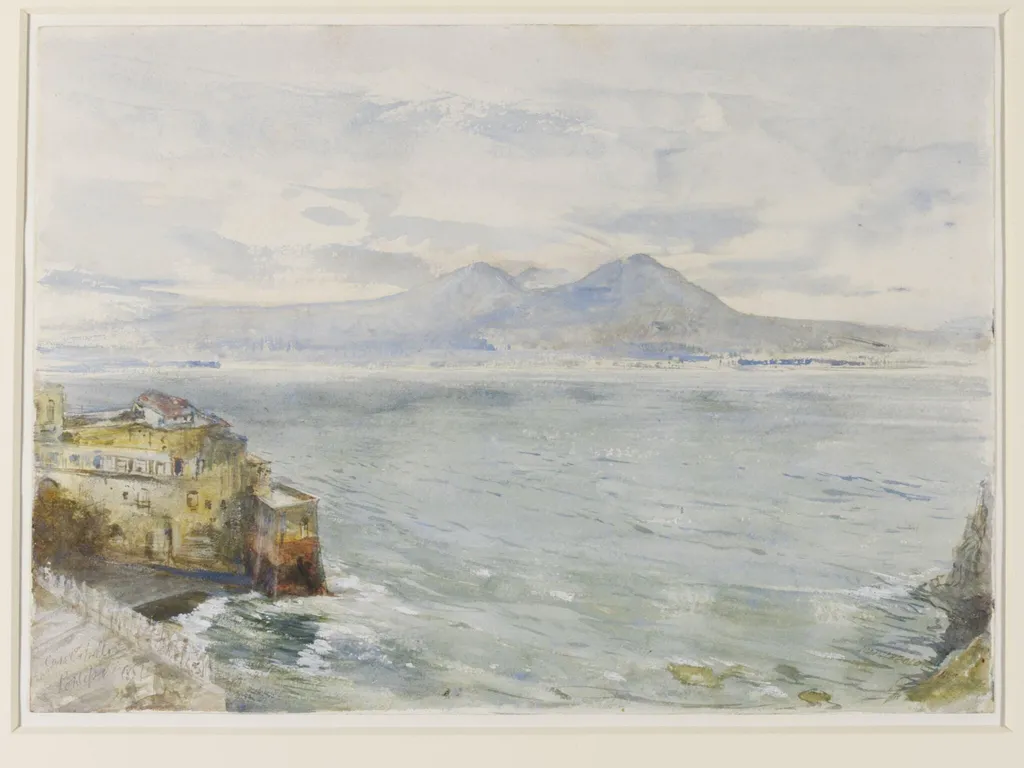
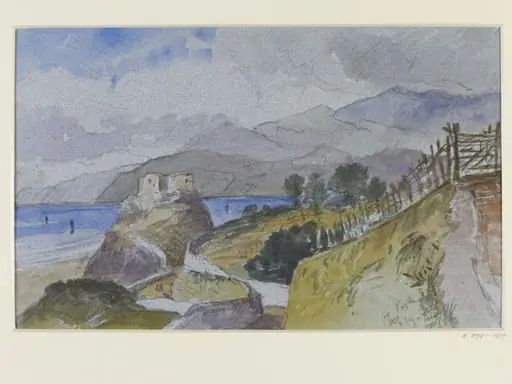
Vesuvius and the Bay of Naples from Posilipo is a watercolor work on paper by the British Romanticist artist John William Inchbold. It dates from 1857 and is held in the collection of the Victoria and Albert Museum.
About this work
Overview
Executed in transparent washes, it presents a serene coastal view with minimal detail, emphasizing atmosphere over precision.
John William Inchbold created this watercolour in 1857, capturing the landscape from Posilipo overlooking the Bay of Naples. The work is signed and dated by the artist, reflecting his direct engagement with the scene. Executed in transparent washes, it presents a serene coastal view with minimal detail, emphasizing atmosphere over precision. The quiet composition invites contemplation rather than dramatic spectacle.
Subject & Meaning
The painting portrays Vesuvius as a distant, hazy form rising above the bay, its presence subdued rather than threatening. A weathered stone structure extends over the water, suggesting human habitation in harmony with nature. The stillness of the sea and soft sky conveys a sense of temporal pause, aligning with 19th-century Romantic sensibilities that valued quiet observation over grandeur.
Technique & Style
Inchbold employed loose, fluid brushwork and diluted pigments to evoke light and air. The watercolour’s transparency allows the paper’s whiteness to suggest reflections on the water, while muted earth tones and pale blues unify the scene. Edges blur gently between land, sea, and sky, avoiding sharp definition. This approach prioritizes mood and atmospheric effect over topographical accuracy.
History & Provenance
The work was completed during Inchbold’s travels in southern Italy, a period when British artists increasingly sought inspiration in Mediterranean landscapes. It entered the Victoria and Albert Museum’s collection through established channels of 19th-century British watercolour acquisition, preserving its original condition and signature. No significant alterations or later additions are recorded.
Context
Inchbold’s painting reflects a broader trend among British watercolourists who turned to Italy for its light and classical scenery. Unlike earlier topographical views, this work emphasizes personal perception and emotional tone. It aligns with the aesthetic of artists like Turner and Constable, who valued subjective experience over documentary precision in landscape representation.
Legacy
The painting remains a quiet example of mid-19th-century British watercolour practice, valued for its restraint and sensitivity to natural light. It contributes to the understanding of how artists translated transient effects of atmosphere into portable, intimate works. Though not widely exhibited, it continues to inform scholarly study of watercolour as a medium for lyrical observation.
Artist & collection
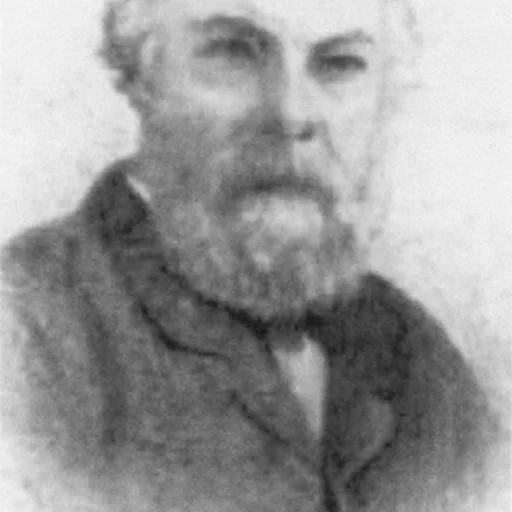
Artist
John William Inchbold (29 August 1830 – 23 January 1888) was an English painter who was born in Leeds, Yorkshire. His style was influenced by the Pre-Raphaelite Brotherhood. He was the son of a Yorkshire newspaper owner, Thomas Inchbold.