Artwork
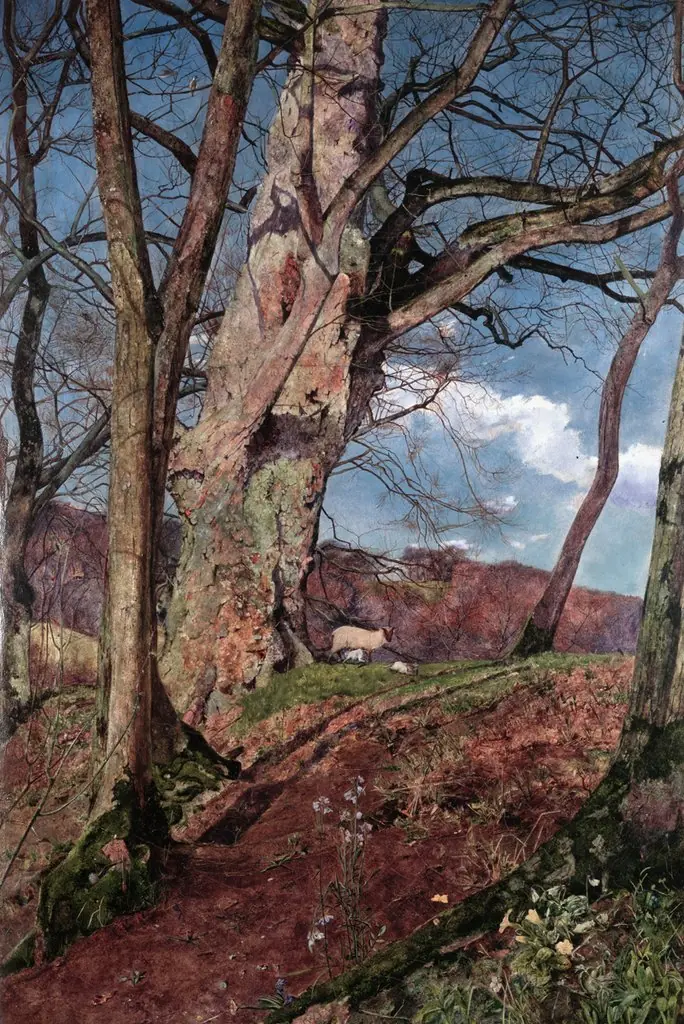
A Study, in March
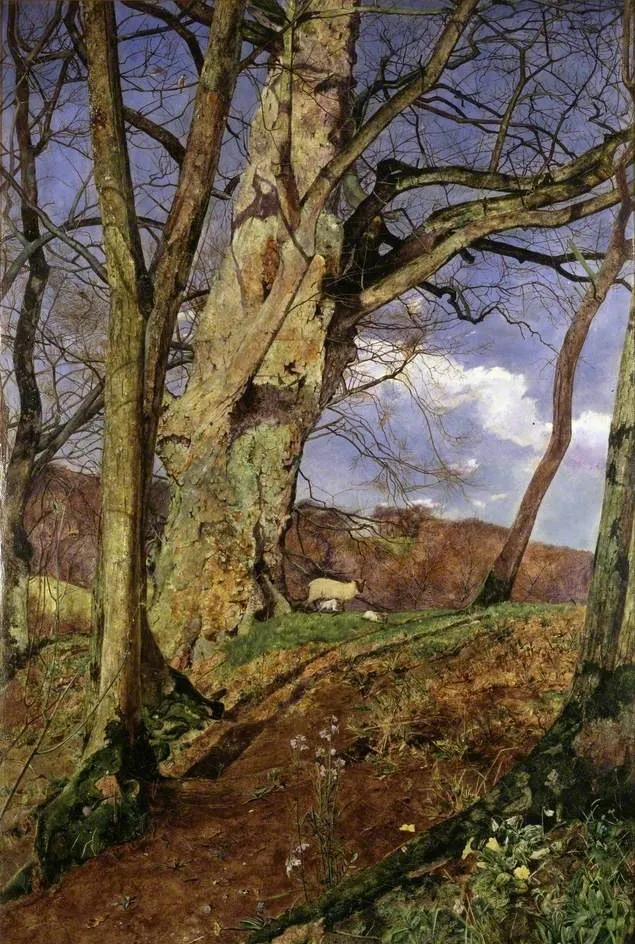
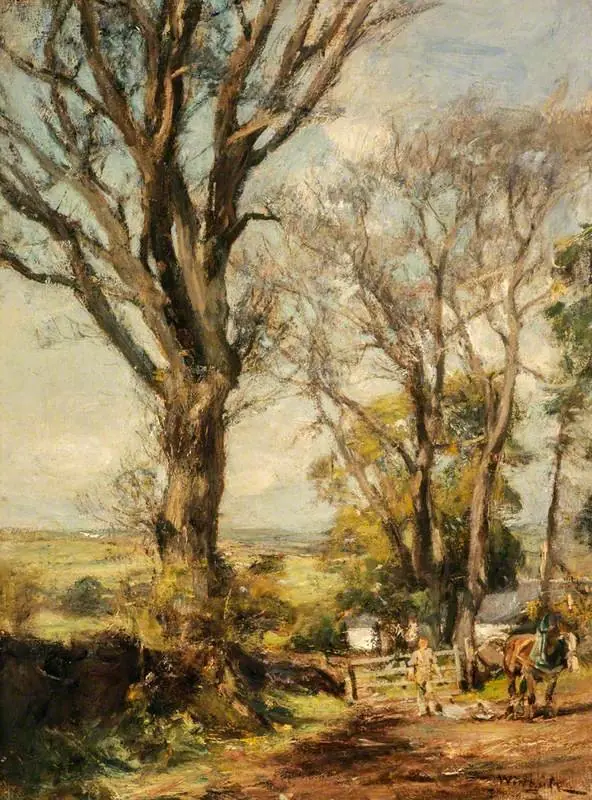
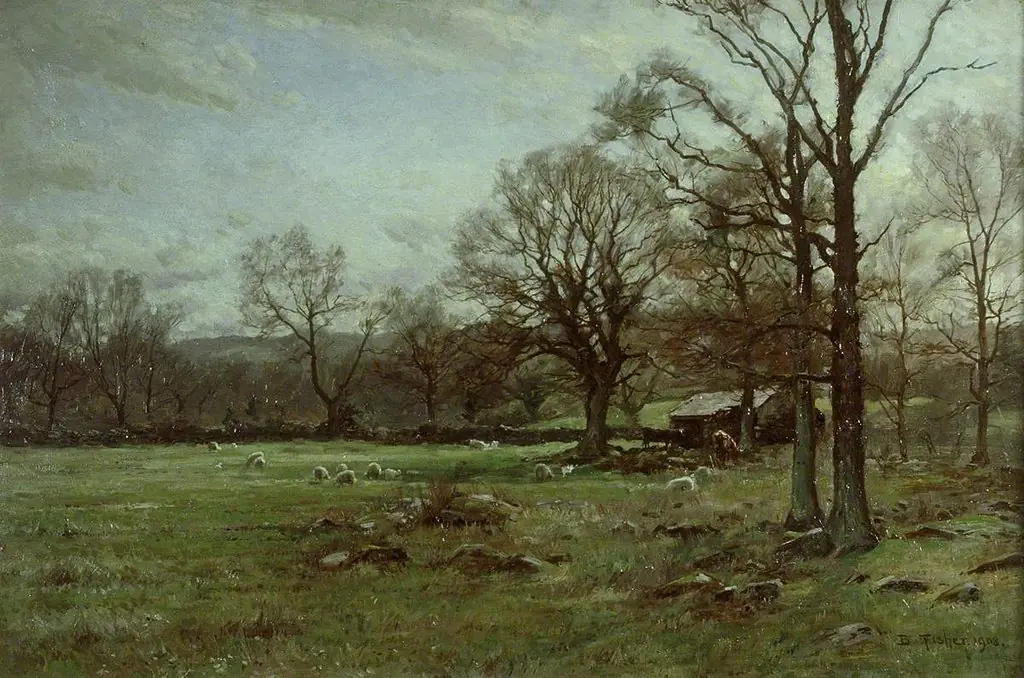
A Study, in March is an oil painting by John William Inchbold. It dates from 1869 and is held in the collection of the Ashmolean Museum.
About this work
Overview
John William Inchbold created *A Study, in March* circa 1869 using oil on canvas. Though born in Leeds to a newspaper proprietor, he became closely associated with the Pre-Raphaelite circle, absorbing their emphasis on close observation of nature. The painting is a landscape study, not a narrative scene, focusing on atmospheric quietude and the subtle interplay of light and form in early spring.
Subject & Meaning
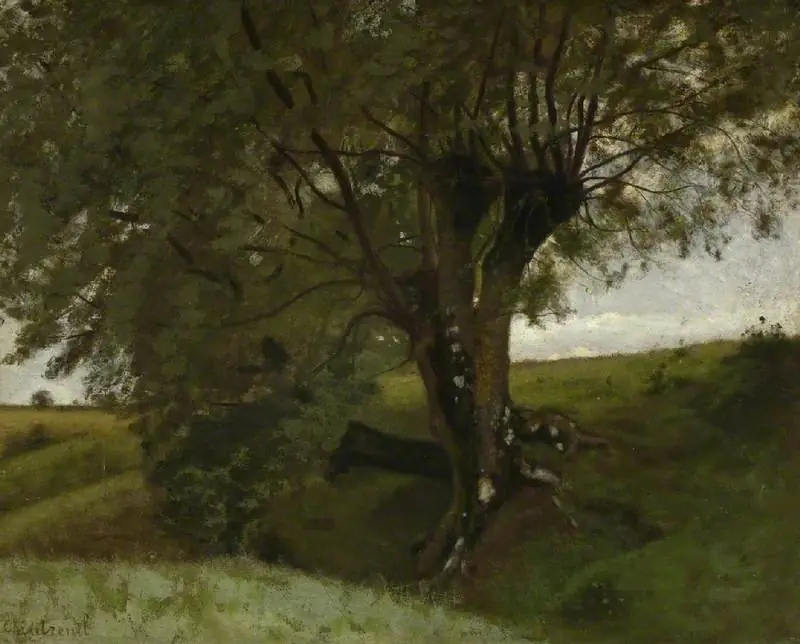
Its leafless branches reach upward into a pale, cloud-dappled sky, suggesting the transition between winter and spring.
The painting centers on a bare, moss-covered tree standing alone against a gentle hillside. Its leafless branches reach upward into a pale, cloud-dappled sky, suggesting the transition between winter and spring. There is no human presence or symbolic event—only the stillness of nature in a moment of quiet renewal. The composition invites contemplation rather than storytelling, emphasizing endurance and seasonal change.
Technique & Style
Inchbold employed a restrained palette of muted grays, greens, and soft blues, avoiding dramatic contrasts. The tree’s textured bark and moss are rendered with careful brushwork, while the sky is thinly painted to suggest atmospheric depth. Light is diffused evenly, minimizing harsh shadows—chiaroscuro is present but subdued, serving to model form rather than create drama.
History & Provenance
Painted during Inchbold’s mature period, *A Study, in March* emerged from his travels and sketching expeditions in the English countryside. It was likely made as a preparatory study or independent work, reflecting his shift from detailed Pre-Raphaelite realism toward a more lyrical, tonal approach. The painting remained in private hands until entering a public collection in the 20th century.
Context
In the late 1860s, Inchbold was part of a broader movement among British artists seeking to move beyond academic conventions by painting directly from nature. While aligned with Pre-Raphaelite ideals of truth to observation, his work diverged in its emotional restraint. This painting reflects a quieter, more introspective strand of landscape painting emerging in Britain at the time.
Legacy
Though less widely known than his Pre-Raphaelite peers, Inchbold’s *A Study, in March* exemplifies a transitional moment in 19th-century British art—where detailed naturalism gave way to atmospheric sensitivity. The work influenced later tonalists and landscape painters who prioritized mood over narrative, contributing to the evolution of British plein air painting.
Artist & collection
Artist
John William Inchbold (29 August 1830 – 23 January 1888) was an English painter who was born in Leeds, Yorkshire. His style was influenced by the Pre-Raphaelite Brotherhood. He was the son of a Yorkshire newspaper owner, Thomas Inchbold.