Artwork
A Couple on a Terrace Surrounded by Attendants and Musicians
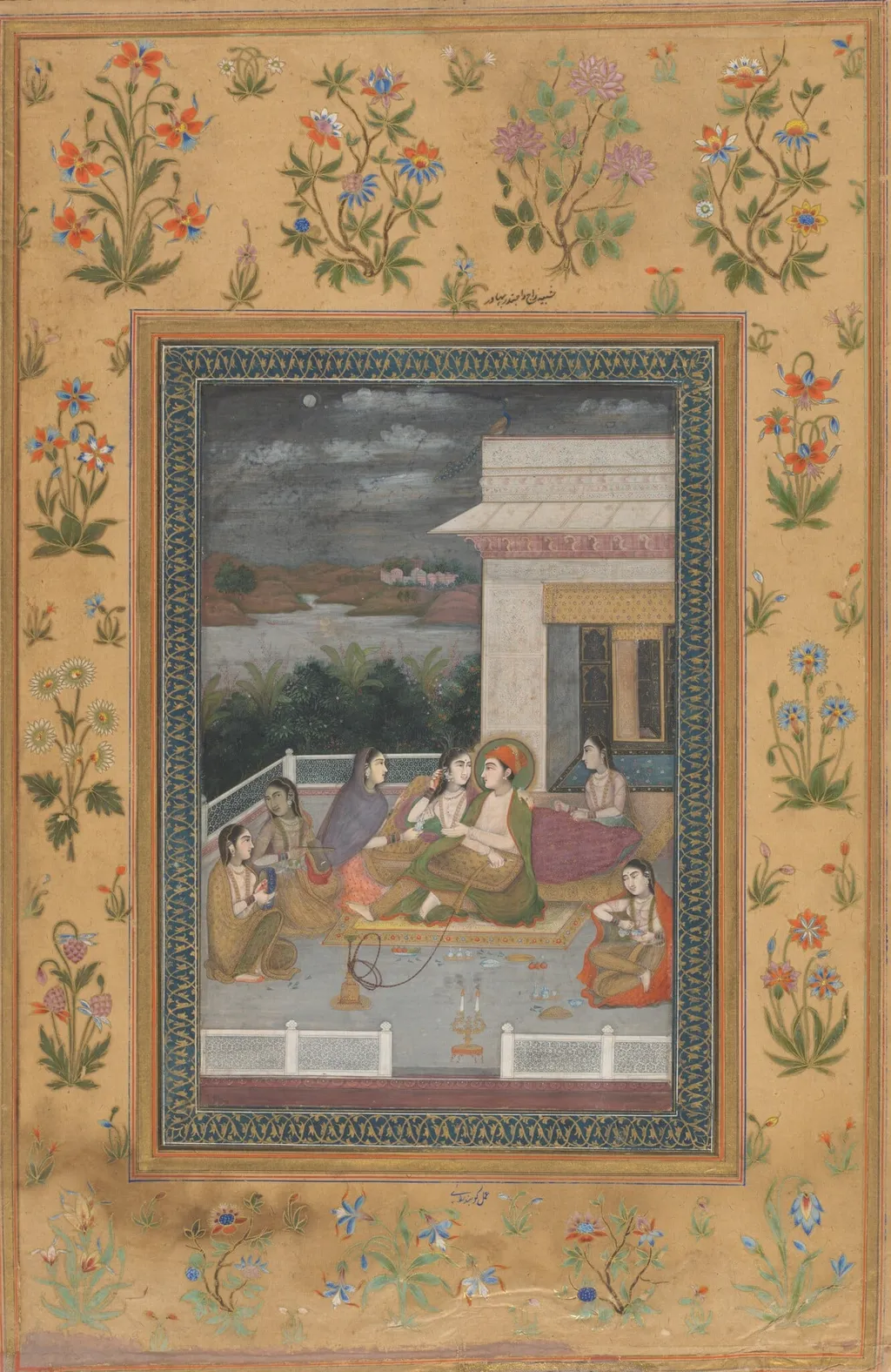
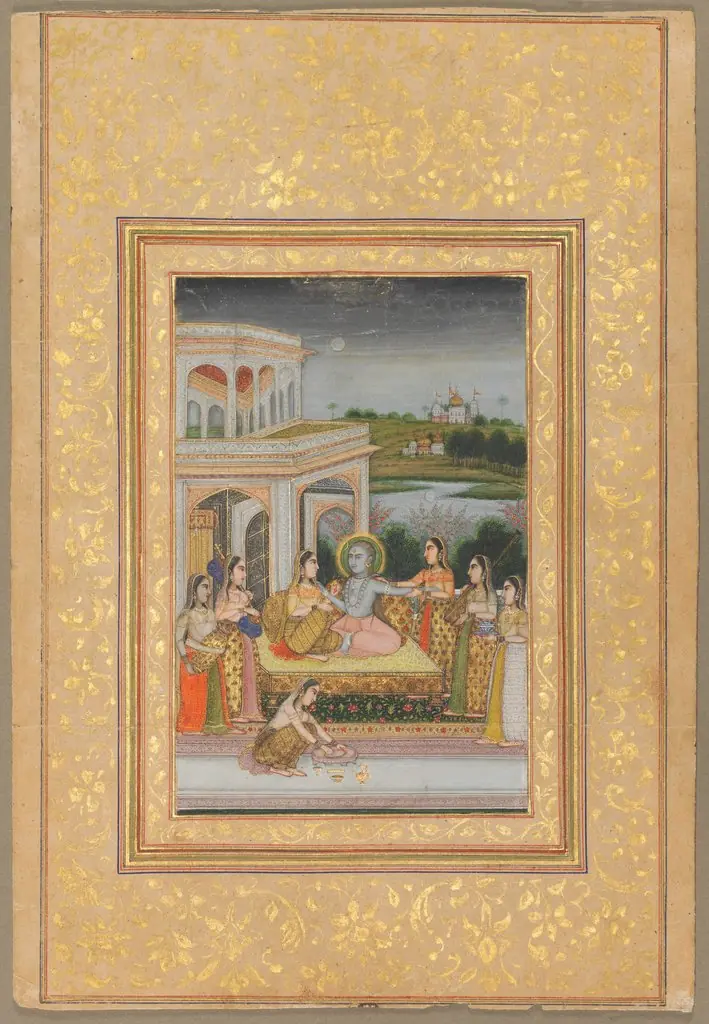
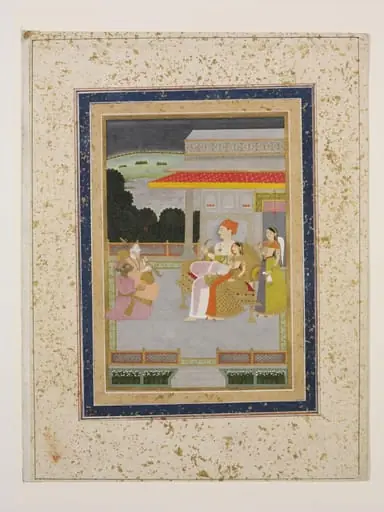
A Couple on a Terrace Surrounded by Attendants and Musicians is a watercolor drawing by the Baroque artist Indian 18th Century. It dates from 1701 and is held in the collection of the National Gallery of Art.
About this work
Overview
The composition is framed by ornamental vines and floral motifs, with gold highlights enhancing the sense of refinement.
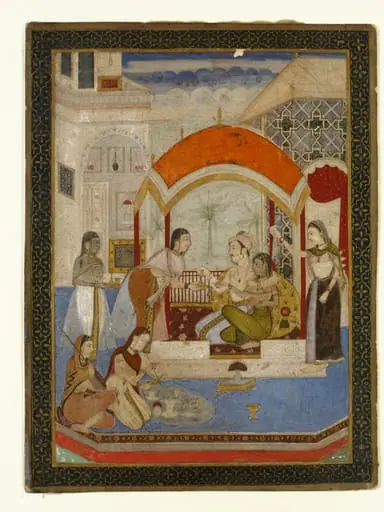
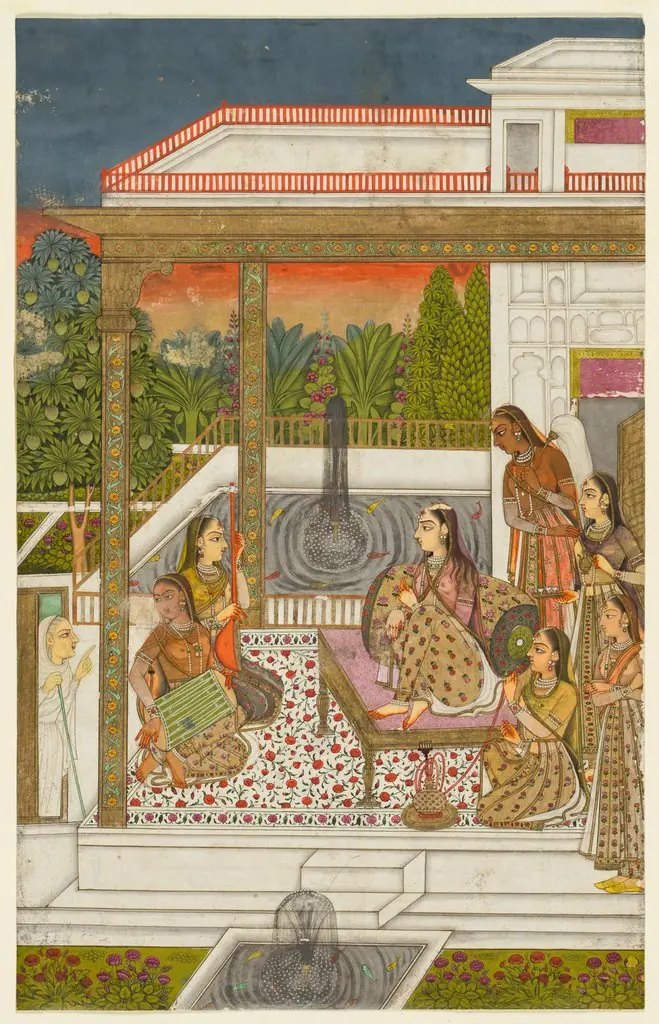
This delicate drawing, executed in watercolor and gold on paper, depicts a seated couple on a terraced platform, attended by three figures and accompanied by musicians. The composition is framed by ornamental vines and floral motifs, with gold highlights enhancing the sense of refinement. A distant architecture and moonlit landscape recede behind them, suggesting an idealized outdoor setting. The work exemplifies the refined aesthetic of Persian manuscript illustration, where luxury and serenity are conveyed through subtle color gradations and metallic accents.
Subject & Meaning
The central pair, distinguished by their attire—a man in a red hat and green robe, a woman in dark garments and pale complexion—likely represent nobility in a private, contemplative moment. Their attendants and musicians imply ritualized leisure, common in courtly scenes of the period. The tranquil setting, framed by architecture and nature, evokes an idealized realm of harmony and elevated status, reflecting ideals of refined existence rather than a specific historical event.
Technique & Style
The artist employed layered watercolor glazes to achieve luminous tones, building color gradually for depth and subtlety. Gold leaf accents outline patterns and highlight surfaces, adding luminosity without overwhelming the delicate washes. The flowing, vegetal borders echo Islamic decorative traditions, while the spatial recession into a moonlit horizon demonstrates a sophisticated handling of perspective within a flattened, intimate composition.
History & Provenance
Created in the Persianate tradition, likely during the 16th or 17th century, this work was probably part of a manuscript or album page intended for private aristocratic viewing. Its preservation on mounted paper suggests careful handling and collection, typical of imperial or elite libraries. Exact origins remain undocumented, but stylistic elements align with Safavid or post-Safavid court workshops in Iran or Mughal India.
Context
This image reflects the cultural emphasis on refined leisure among Persian and Mughal elites, where music, nature, and courtly companionship formed part of an aesthetic ideal. Similar scenes appear in illustrated poetry manuscripts and album collections, blending literary themes with visual elegance. The use of gold and watercolor was standard in luxury book arts, where material richness and technical precision signaled both artistic mastery and social prestige.
Legacy
Though not widely known outside specialized collections, this work contributes to the broader understanding of Persian miniature traditions, particularly in how intimacy and grandeur coexist in small-scale formats. Its preservation highlights the enduring value placed on delicate, hand-crafted imagery in Islamic artistic heritage, influencing later collectors and scholars interested in the intersection of poetry, patronage, and visual culture.
Artist & collection

Artist
These artists painted delicate portraits and court scenes on paper, using fine watercolors and gold.