Artwork
Gabriel Cortois de Pressigny
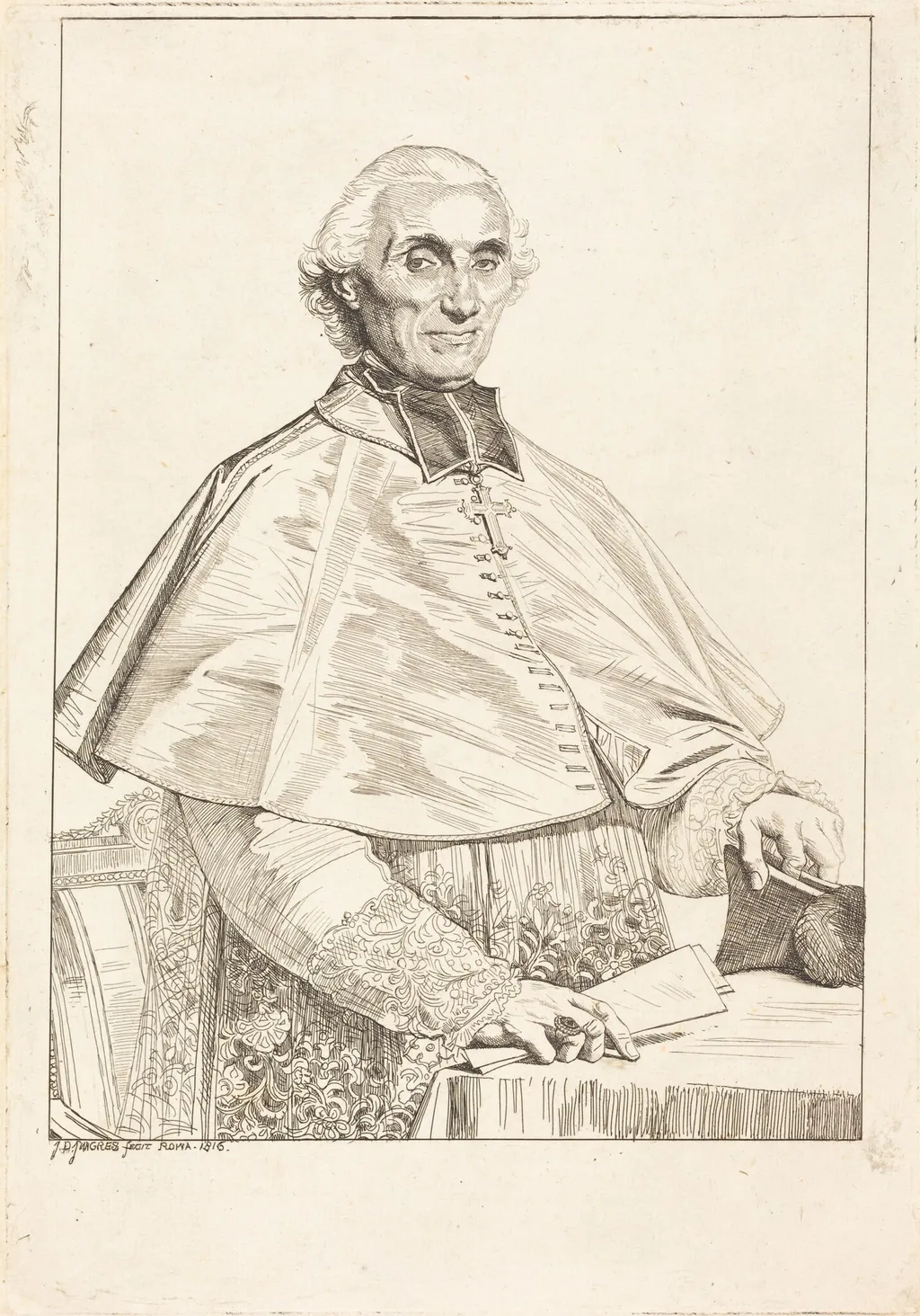
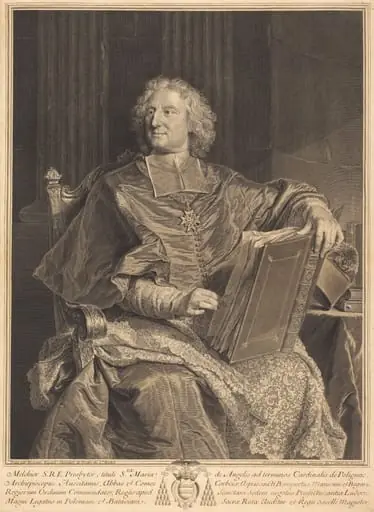
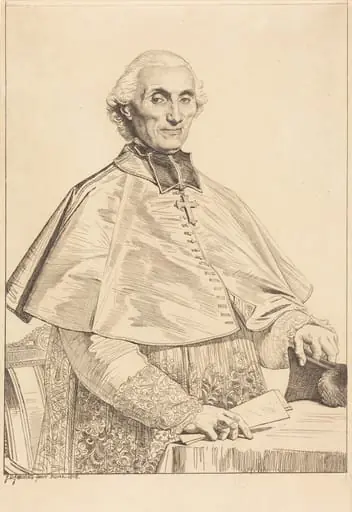
Gabriel Cortois de Pressigny is an ink print by the Romanticist artist Jean Auguste Dominique Ingres. It dates from 1816 and is held in the collection of the National Gallery of Art.
About this work
Overview
Created in 1816, this etching by Jean-Auguste-Dominique Ingres depicts Gabriel Cortois de Pressigny, a French bishop and academician.
Created in 1816, this etching by Jean-Auguste-Dominique Ingres depicts Gabriel Cortois de Pressigny, a French bishop and academician. Executed on laid paper, the work belongs to Ingres’s early portraiture, produced during his formative years in Rome. Though primarily known as a painter, Ingres used printmaking to explore likeness and formal precision, often capturing figures of intellectual and ecclesiastical stature.
Subject & Meaning
The subject, Gabriel Cortois de Pressigny, was a bishop and member of the Académie des Beaux-Arts, embodying the institutional authority of French academic culture. His attire—elaborate robe, powdered wig, and formal posture—signals clerical rank and scholarly dignity. The held document suggests engagement with intellectual or ecclesiastical duties, reinforcing his identity as a custodian of tradition during a period of artistic upheaval.
Technique & Style
Ingres employed etching to achieve fine, controlled lines that define the texture of fabric, the fall of the wig, and the subtlety of facial features. The use of cross-hatching and delicate tonal gradations reveals his mastery of linear precision. Unlike expressive Romantic styles emerging at the time, this work prioritizes clarity, restraint, and anatomical accuracy, reflecting his commitment to classical draftsmanship.
History & Provenance
The print was made during Ingres’s stay in Rome, where he was refining his technique and cultivating connections within French academic circles. It likely served as a personal or professional gift, given the sitter’s status. The work remained within scholarly and collector circles in France, with later examples entering public collections through institutional acquisitions in the 19th and 20th centuries.
Context
In 1816, France was navigating a cultural shift from Neoclassicism toward Romanticism. Ingres, aligned with academic ideals, used portraiture to uphold the dignity of established institutions. This etching reflects his role as a defender of tradition, even as younger artists embraced emotional intensity. His prints, though less celebrated than his paintings, were vital in disseminating his aesthetic principles.
Legacy
Though overshadowed by his large-scale paintings, Ingres’s etchings influenced later generations through their emphasis on line and form. Artists such as Henri Matisse studied his precision, recognizing in these works a foundation for modernist simplification. This portrait endures as a quiet testament to Ingres’s belief in drawing as the core of artistic expression, beyond stylistic trends.
Artist & collection

Artist
Jean-Auguste-Dominique Ingres was a French Neoclassical painter. Ingres was profoundly influenced by past artistic traditions and aspired to become the guardian of academic orthodoxy against the ascendant Romantic…