Artwork
Cardinal de Polignac
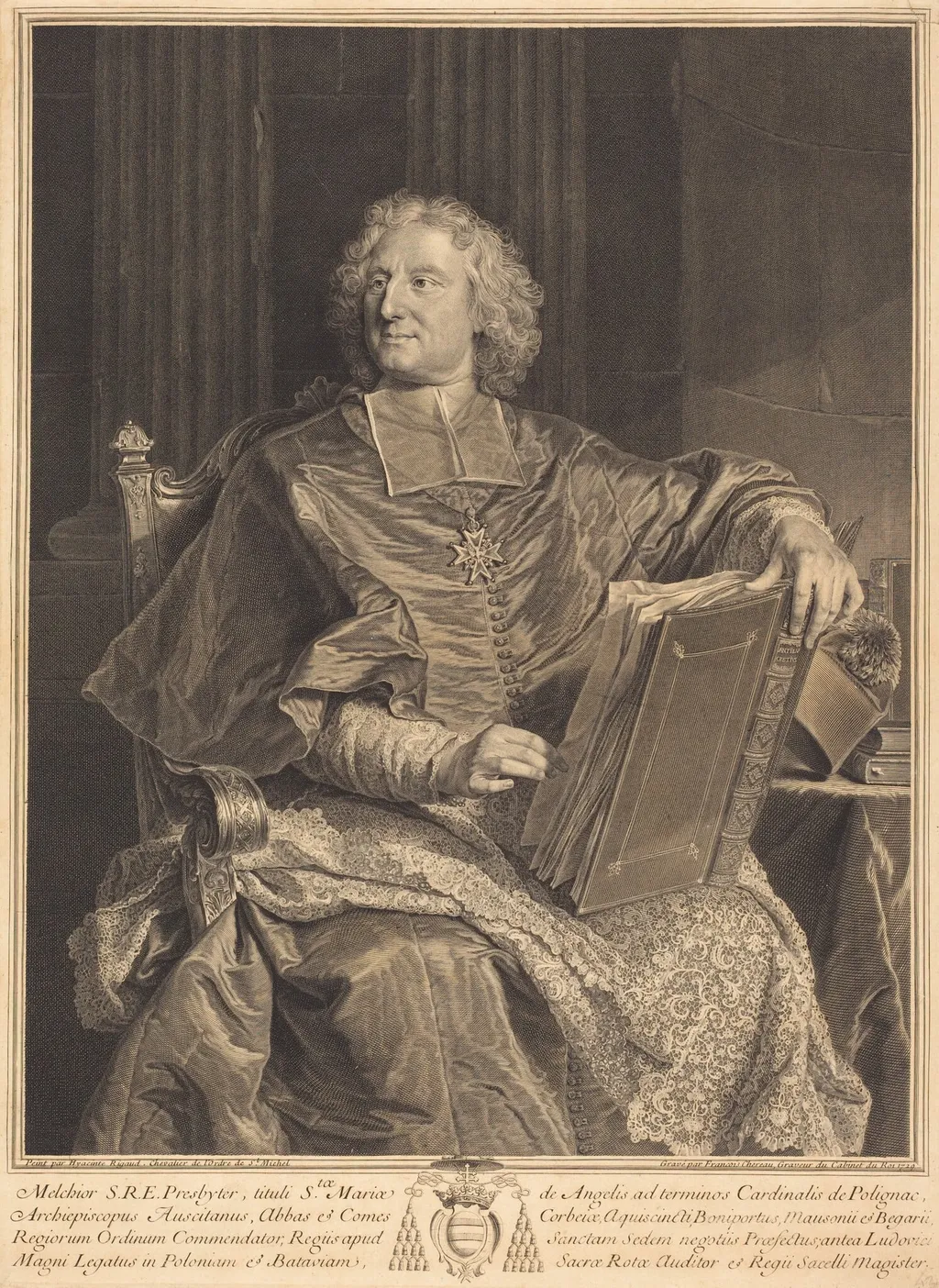
Cardinal de Polignac is an ink print by the Baroque artist François Chereau I. It dates from 1729 and is held in the collection of the National Gallery of Art. François Chéreau I’s 1729 engraving presents the French cardinal known as de Polignac.
About this work
Overview
François Chéreau I’s 1729 engraving presents the French cardinal known as de Polignac. Executed in black‑and‑white, the image shows the cleric seated, his posture dignified, with a book opened in one hand and the other arm resting on the chair’s arm. The composition is framed by a plain backdrop that emphasizes the figure’s elaborate costume and insignia.
Subject & Meaning
The portrait identifies the sitter as Cardinal de Polignac, a high‑ranking ecclesiastic distinguished by the star‑shaped badge on his chest, a symbol of his cardinalate. The inclusion of an open book suggests scholarly or theological authority, while his solemn expression and formal pose convey the gravitas associated with his religious and political roles in early‑18th‑century France.
Technique & Style
Created by incising a metal plate, the engraving employs fine line work to render intricate details such as the lace trim on the robe, the curls of the wig, and the texture of the fabric. The stark contrast of ink against the paper produces a crisp, precise image characteristic of French printmaking in the early Georgian period.
History & Provenance
The print was produced in 1729, during a prolific period for Chéreau’s workshop, which specialized in portrait engravings of notable figures. While the original plate’s whereabouts are undocumented, surviving impressions have appeared in collections of French portraiture and are occasionally referenced in catalogues of 18th‑century prints.
Artist & collection


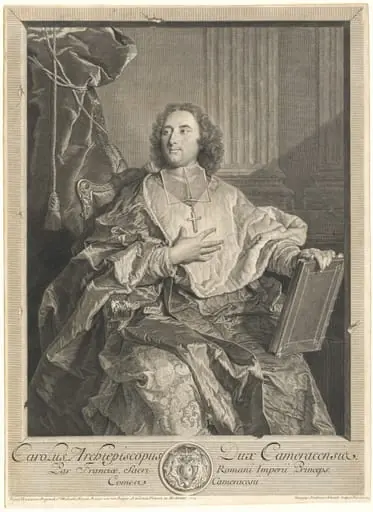 Monseigneur Louis-Charles d'Orléans de Saint-Albin, Archbishop of Cambrai
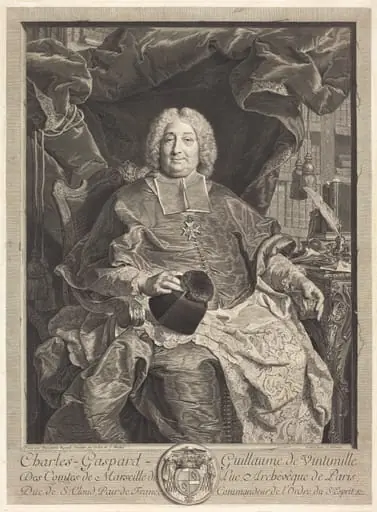 Charles-Gaspard-Guillaume de Vintimille du Luc, Archbishop of Paris
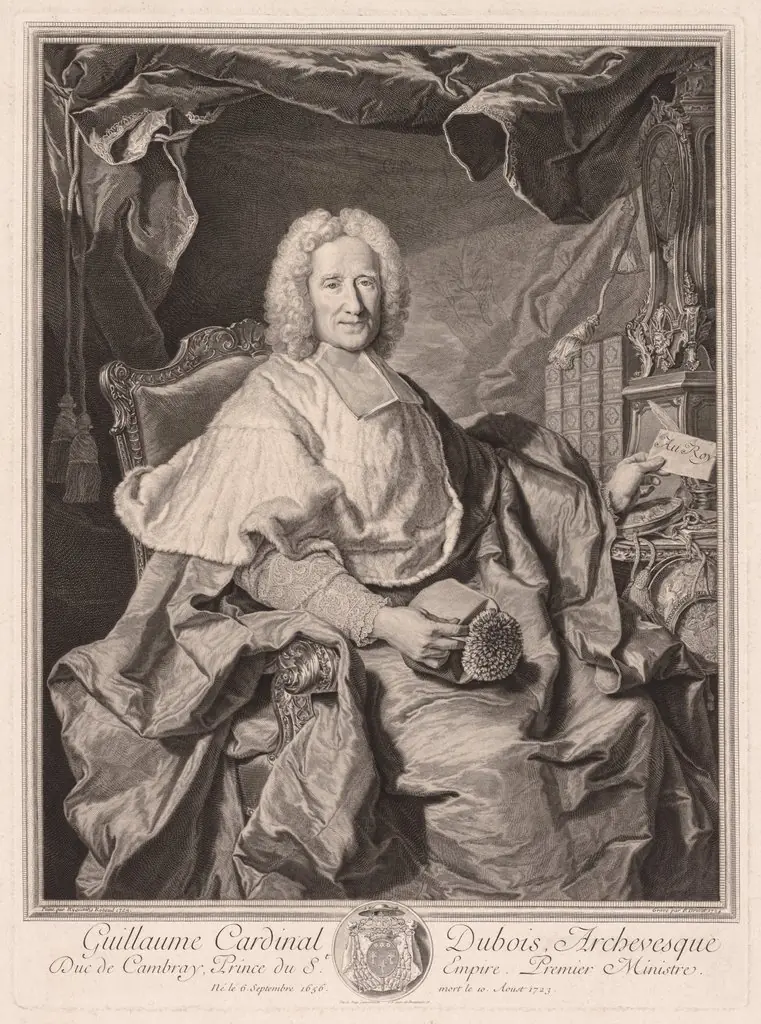 Sericulture (The Process of Making Silk)
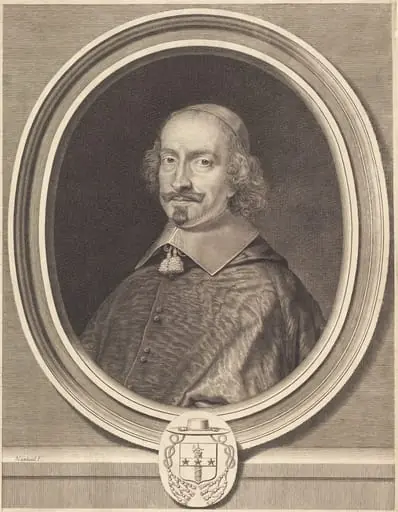 Cardinal Jules Mazarin
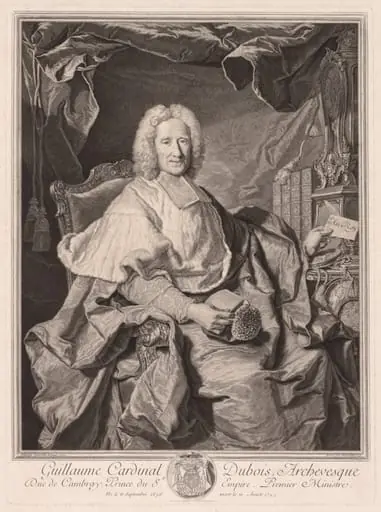 Cardinal Dubois
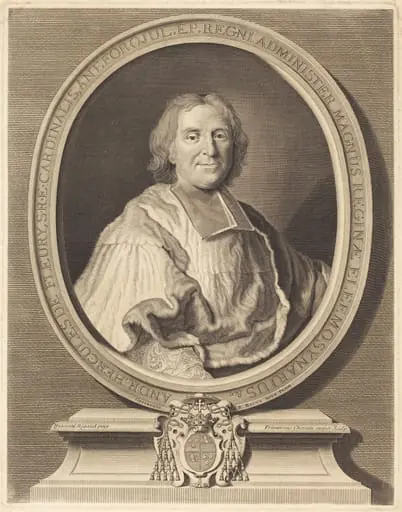
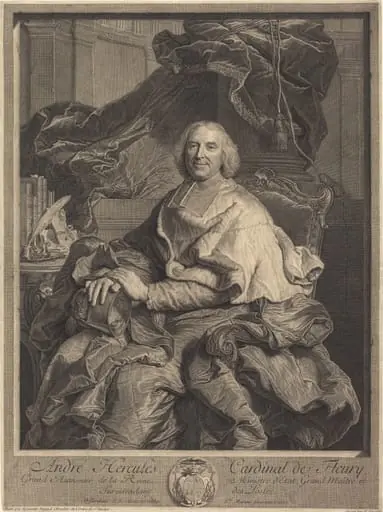 André Hercules, Cardinal de Fleury
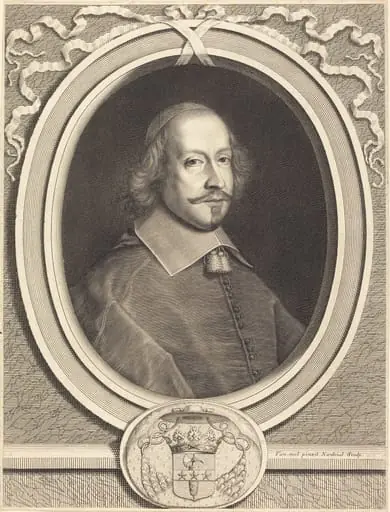 Cardinal Jules Mazarin
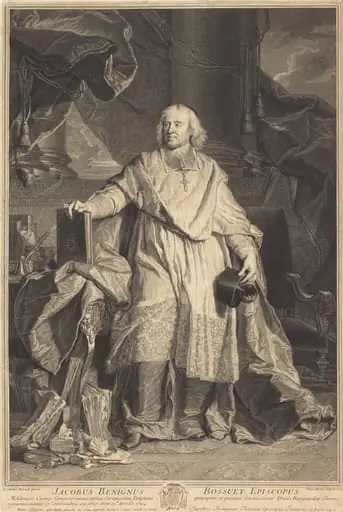 Jacques-Benigne Bossuet
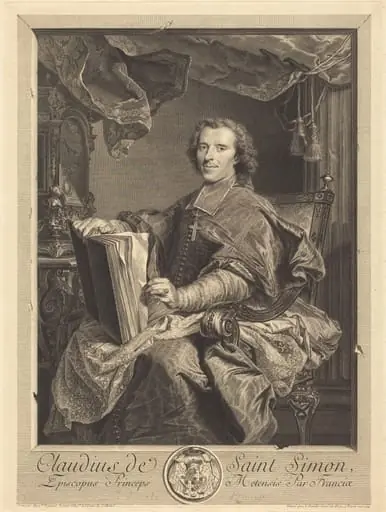 Claudius de Saint-Simon, Prince-Evêque de Metz