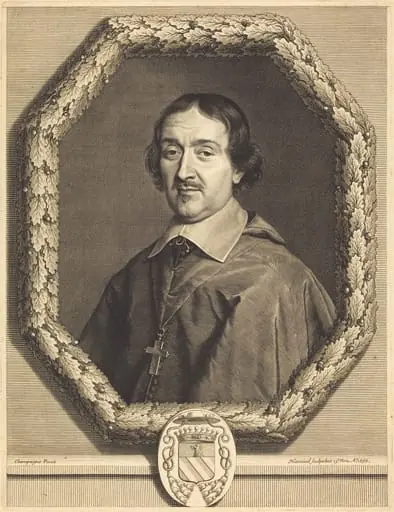
Artwork
Michel Colbert
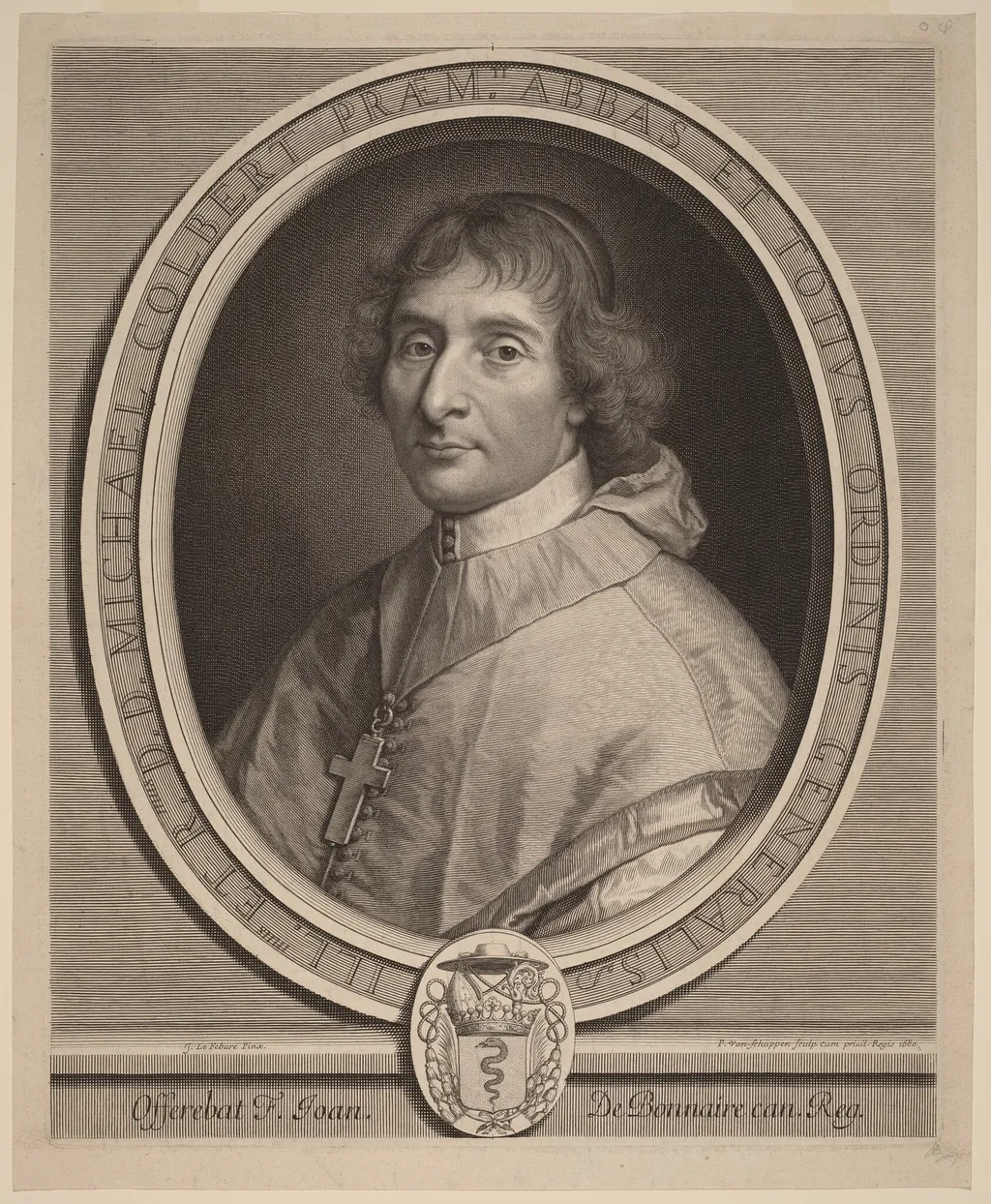
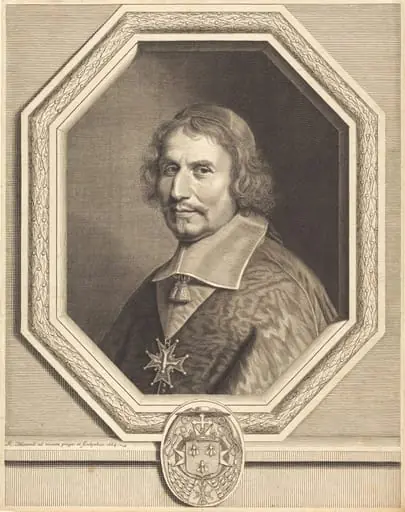
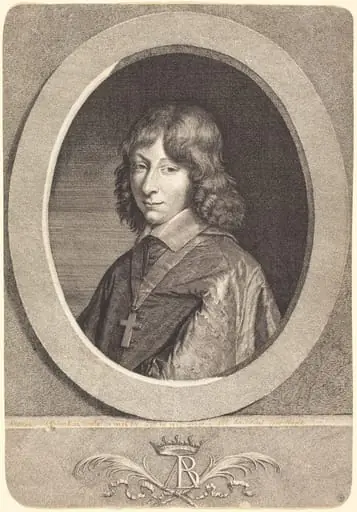
Michel Colbert is an ink print by the Baroque artist Peter Ludwig van Schuppen. It dates from 1680 and is held in the collection of the National Gallery of Art.
About this work
Overview
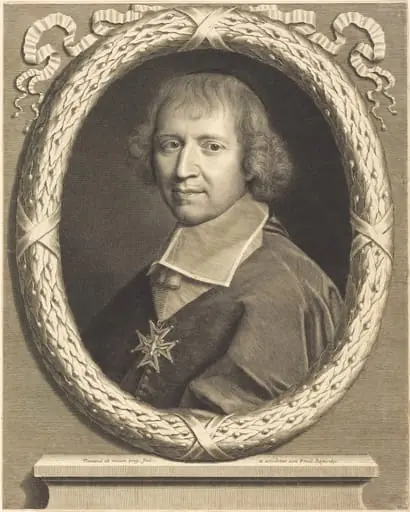
The composition centers on the subject’s face and upper torso, set against an unadorned background to emphasize his presence.
This black-and-white engraving, dated 1680, depicts Michel Colbert, a French administrator. Created by Peter Ludwig van Schuppen, the portrait is rendered in fine linear detail typical of intaglio printmaking. The composition centers on the subject’s face and upper torso, set against an unadorned background to emphasize his presence. The image is contained within an oval frame, with a small heraldic emblem below.
Subject & Meaning
Michel Colbert, son of the influential minister Jean-Baptiste Colbert, is portrayed with solemnity and dignity. His attire—a dark coat and lace collar—signals his status within the French bureaucratic elite. The chain around his neck likely denotes an honor or office, while the shield beneath bears symbols of ecclesiastical or royal authority, reinforcing his institutional role. The restrained expression conveys gravitas rather than individual personality.
Technique & Style
Van Schuppen employed precise engraving techniques to model form through cross-hatching and fine parallel lines. Subtle gradations of tone define the contours of the face, the texture of the lace, and the folds of the coat. The absence of tonal washes or color keeps the focus on line and contrast. The background remains uniformly light, ensuring the figure emerges with clarity and quiet intensity.
History & Provenance
The engraving was produced in 1680, during the height of Louis XIV’s reign, when portraiture served political and familial documentation. Van Schuppen, a Flemish artist active in France, specialized in reproductive prints of notable figures. This work likely circulated among administrative circles or was commissioned by Colbert’s family to affirm their standing within the royal court’s inner sphere.
Context
In late 17th-century France, engraved portraits were vital tools for disseminating the image of state officials. Unlike paintings, engravings could be reproduced and distributed widely, making them ideal for projecting authority. Michel Colbert’s portrait aligns with this tradition, reflecting the era’s emphasis on bureaucratic order and the visual representation of power through restrained, formal iconography.
Legacy
The engraving remains a documented example of how French administrative elites were visually represented in the late Baroque period. Though not widely known today, it contributes to the archive of state portraiture that shaped public perception of governance. Its technical precision and compositional discipline reflect the broader aesthetic values of institutional portraiture in early modern Europe.
Artist & collection