Artwork
Sylvester (Douglas) Lord Glenbervie; Katherine Anne (North) Glenbervie; Frederic (North) Earl of Guilford; Frederic Sylvester Douglas
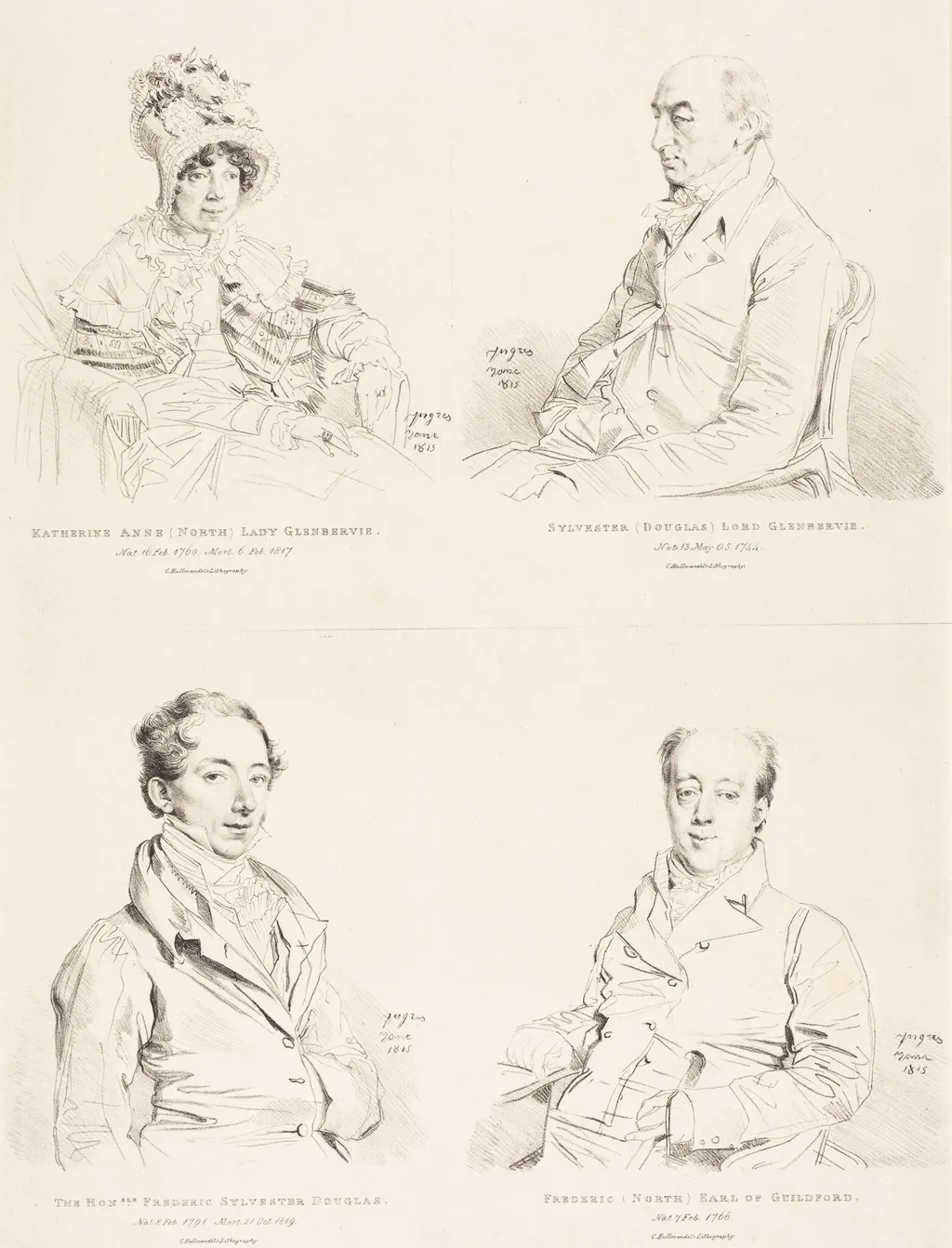
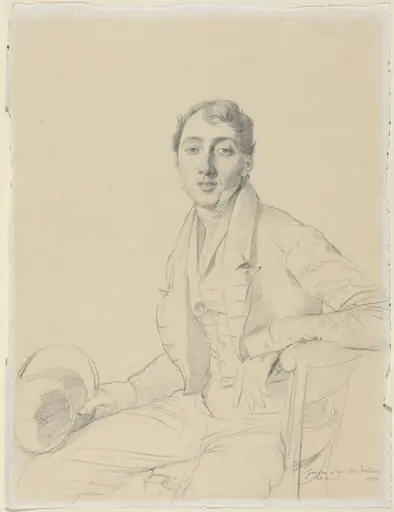
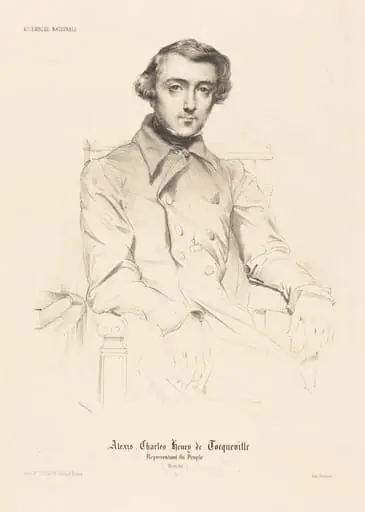
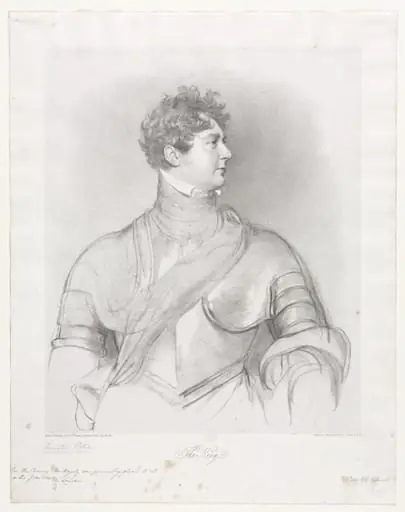
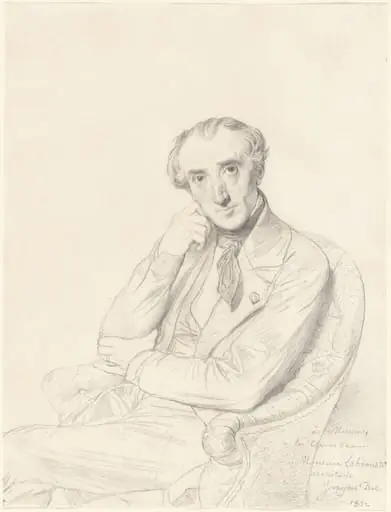
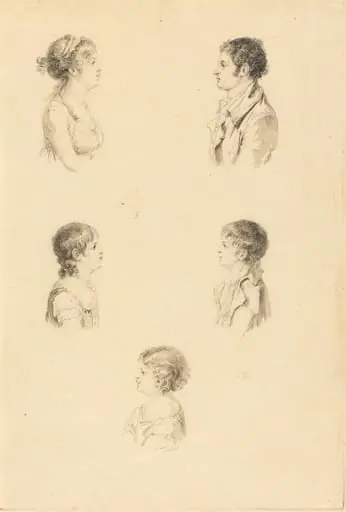
Sylvester (Douglas) Lord Glenbervie; Katherine Anne (North) Glenbervie; Frederic (North) Earl of Guilford; Frederic Sylvester Douglas is an ink print by the Romanticist artist Jean Auguste Dominique Ingres. It dates from 1815 and is held in the collection of the National Gallery of Art. In 1815 the French artist Jean‑Auguste‑Dominique Ingres produced a lithographic sheet that combines four individual portrait studies.
About this work
The bottom two show a younger man in a high-collared coat and an older man in a long jacket, both facing forward.
This sheet holds four quick sketches of people dressed in fancy 1800s clothes. The top two are a woman in a big hat and a man in a loose coat, both sitting. The bottom two show a younger man in a high-collared coat and an older man in a long jacket, both facing forward. The lines are light and sketchy, like someone jotting down ideas fast.
The artist signed each one in the corner with "Ingres 1815," showing these were done the same year. The names under each portrait hint at family ties—some share last names, suggesting they might be related.
Next, check out lithography to see how artists used this early printing trick to spread portraits like these.
Overview
In 1815 the French artist Jean‑Auguste‑Dominique Ingres produced a lithographic sheet that combines four individual portrait studies. Each likeness is rendered in a light, sketch‑like manner and bears the artist’s signature and date in the lower corner, confirming their simultaneous creation.
Subject & Meaning
The figures represented are Sylvester (Douglas) Lord Glenbervie, Katherine Anne (North) Glenbervie, Frederic (North) Earl of Guilford, and Frederic Sylvester Douglas. The recurrence of the surnames Glenbervie and Douglas suggests familial connections among the sitters, likely members of a single aristocratic lineage.
Technique & Style
Executed in lithography, the work employs delicate, rapidly drawn lines that convey the immediacy of a study rather than a finished painting. The attire—large hats, high‑collared coats, and formal jackets—reflects early‑nineteenth‑century aristocratic fashion, while the composition adheres to Ingres’s neoclassical emphasis on clear contour and controlled draftsmanship.
History & Provenance
Created during Ingres’s early career, the sheet illustrates his engagement with the emerging lithographic process as a means of reproducing portraiture. The consistent dating and signing indicate that the pieces were intended as a cohesive set, possibly commissioned by the family depicted.
Context
At a time when Romanticism was gaining momentum, Ingres remained committed to the academic principles of Neoclassicism, favoring linear precision over emotional excess. This lithograph, with its restrained drawing and emphasis on idealized form, exemplifies his resistance to contemporary stylistic shifts.
Artist & collection

Artist
Jean-Auguste-Dominique Ingres was a French Neoclassical painter. Ingres was profoundly influenced by past artistic traditions and aspired to become the guardian of academic orthodoxy against the ascendant Romantic…